The Remarkable Journey of Breast Transformation During Pregnancy
Pregnancy initiates a cascade of physiological transformations throughout a woman’s body, and the breasts undergo some of the most noticeable and dramatic changes. These modifications begin early in pregnancy and continue evolving throughout gestation and into the postpartum period. Understanding what happens to your breast tissue during this time helps expectant mothers prepare mentally and physically for these natural developments.
The breast changes experienced during pregnancy are not random or arbitrary—they represent a carefully orchestrated biological process designed to prepare your body for lactation and nurturing a newborn. Driven by hormonal fluctuations that intensify from the moment of conception, these transformations affect nearly every aspect of breast structure and function.
The Hormonal Orchestra Driving Breast Evolution
The foundation for all breast changes during pregnancy rests on three primary hormones: estrogen, progesterone, and prolactin. Understanding the role each plays provides insight into why your breasts change so dramatically.
Estrogen takes the lead role in initiating breast development during pregnancy. Beginning in the first trimester and continuing throughout gestation, elevated estrogen levels stimulate the growth of the breast duct system. This hormone essentially signals your breasts to expand their internal plumbing network—creating and branching the ducts through which milk will eventually flow. Additionally, estrogen influences the pigmentation of your skin, contributing to the darkening of your nipples and areola that many pregnant women observe.
Progesterone works synergistically with estrogen, contributing to both ductal and lobular growth. This hormone bears particular responsibility for the functional changes in your breast tissue. Progesterone increases the size and number of milk-producing glands called alveoli, creating the density and fullness many pregnant women experience. Additionally, progesterone prepares the alveolar cells to develop secretory capability—essentially equipping them with the machinery necessary for milk synthesis.
Prolactin gradually activates throughout pregnancy, laying the groundwork for milk production. Unlike estrogen and progesterone, which remain elevated throughout pregnancy, prolactin secretion increases steadily from the pituitary gland but returns to baseline levels after delivery. This hormonal pattern creates the conditions for lactation to begin after birth while preventing milk production during pregnancy itself.
Early Pregnancy: The First Signs of Change
Many women notice breast changes before taking a pregnancy test, making them one of the earliest physical indicators of conception. These initial transformations typically emerge between weeks two and four of pregnancy, coinciding with rising hormone levels.
- Sensitivity and tenderness: The nipples and surrounding breast tissue become remarkably sensitive to touch. This heightened sensitivity can range from mild awareness to genuine discomfort, potentially making even loose clothing feel irritating.
- Sensations of fullness: Many women describe a pleasant heaviness or swelling sensation in their breasts, even before any noticeable size increase occurs.
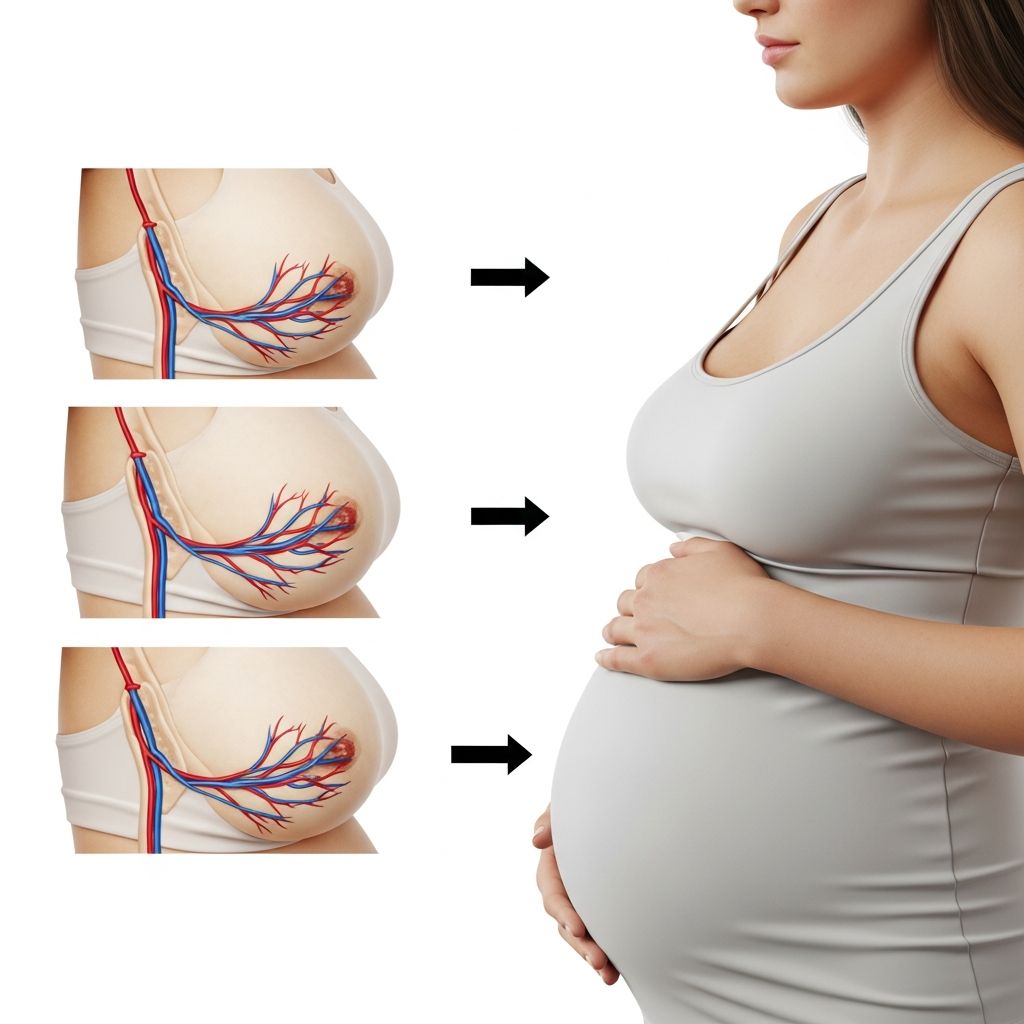
- Tingling and prickling: Increased blood flow to breast tissue creates unique sensations, with some women experiencing a tingling or prickling feeling as their vascular system expands to support breast development.
- Subtle enlargement: While dramatic size increases come later, the first trimester often brings subtle firmness and slight enlargement of breast tissue.
The Expanding Canvas: Size and Structural Changes
As pregnancy progresses into the second and third trimesters, the breast changes become increasingly visible and pronounced. The expansion that began subtly in early pregnancy accelerates dramatically.
Beginning around weeks six through eight, most women notice their breasts becoming noticeably larger. This growth typically continues throughout pregnancy, with many women requiring one to two cup size increases. The skin stretches to accommodate this expansion, and some women develop stretch marks as the skin loses elasticity under the pressure of rapid growth.
The physical weight and density of breast tissue increases substantially. Your breasts become heavier and more densely packed with glandular tissue, altering both their appearance and how they feel. This increased density reflects the microscopic structural changes occurring—the expansion of lobules and the progressive distention of milk ducts, particularly pronounced during the second and third trimesters.
On a microscopic level, the alveolar structure transforms dramatically. During the first trimester, the two-layer epithelial structure of non-pregnant breast tissue is maintained. However, by the second and third trimesters, the superficial layer differentiates into specialized colostrum-producing cells accompanied by plasma cells and leukocytes. The lobules enlarge progressively, and the lumens (the fluid-filled spaces within glands) become increasingly distended, preparing to store colostrum and eventually milk.
Visible Pigmentation Changes and Vascular Transformation
Beyond size and density, pregnancy creates striking visual changes in the appearance of your breasts and nipples.
Darkening of the areola and nipples: Most pregnancies cause the areola—the skin surrounding the nipple—to darken noticeably. This color shift results from hormonal influences on skin pigmentation and becomes more pronounced as pregnancy progresses. The nipples themselves typically darken alongside the areola, creating a more pronounced contrast with surrounding breast skin.
Prominent Montgomery glands: Small, raised bumps called Montgomery glands dot the areola surface, and during pregnancy these become much more noticeable. These glands secrete a moisturizing fluid that protects the nipple during the upcoming breastfeeding journey. The increased prominence of these glands represents another visible marker of breast preparation for lactation.
Darkened and prominent veins: Increased blood flow to breast tissue makes the veins beneath the skin surface more visible and prominent. These bluish or purplish lines become especially apparent as pregnancy advances and blood volume increases to support the growing demands of pregnancy.
The Texture and Sensation Shifts Throughout Gestation
Beyond the obvious visual and size-related changes, the texture and physical sensation of breast tissue undergoes transformation. The increased water content and hormonal changes create alterations in how your breasts feel both to examination and to your own touch.
Breast tissue becomes firmer and develops increased nodularity—a bumpy or granular quality—that makes clinical examination progressively more difficult as pregnancy advances. This change results from the development and expansion of the glandular tissue and ductal network throughout the breast. The combination of enlarged lobules, distended ducts, and increased stromal density creates a palpable texture quite different from non-pregnant breast tissue.
The itching sensation many pregnant women experience stems from the rapid skin stretching and the hormonal changes affecting skin sensitivity. As your skin expands to accommodate breast growth, it may feel uncomfortably tight, and the development of stretch marks may create additional itching sensations.
Colostrum Production: The Final Preparation
As pregnancy approaches completion, typically in the final weeks before delivery, the breast undergoes its most specific preparation for feeding. The colostrum-filled ducts represent the culmination of months of hormonal preparation.
On ultrasound examination in the final days of pregnancy, tubular hypoechoic structures become visible, representing colostrum-filled ducts ready for the newborn’s arrival. Colostrum differs significantly from mature breast milk in its composition, containing almost no fat, which explains why it appears as hypoechoic (darker) structures on imaging compared to the more echogenic (lighter) appearance of fat-rich mature milk.
The increased vascularity—blood vessel proliferation—in breast tissue becomes particularly evident during this final phase. This heightened blood supply supports the intensive glandular activity and prepares the tissue for the demands of milk production that will begin after birth.
Understanding Imaging Changes During Pregnancy and Lactation
Medical professionals use various imaging technologies to evaluate breast tissue during pregnancy, and understanding what these tools reveal helps demystify the internal changes occurring.
Mammographic examination reveals the most pronounced changes during early lactation and the late third trimester. The primary manifestation is increased breast size and density, reflecting the accumulation of glandular tissue and the engorgement of breast tissue with milk rich in fat content during lactation. For lactating patients undergoing mammography, nursing or pumping before the procedure can help reduce the density of engorged tissue, improving image quality.
Ultrasound provides even more detailed visualization of breast changes. Lobular growth during pregnancy is reflected by increased echogenicity—brightness—of normal breast parenchyma. During lactation, most breast tissue appears increasingly echogenic due to the combination of glandular enlargement and engorgement with fat-rich milk. Hypervascularity of breast tissue, visible on advanced ultrasound techniques, documents the increased blood flow supporting lactation.
Physical Discomfort and Management Strategies
While these changes are entirely normal and necessary, they often bring physical discomfort that expectant mothers should be prepared to address. Understanding what causes discomfort helps in developing effective management strategies.
The tenderness and hypersensitivity experienced by many pregnant women result directly from hormonal stimulation and the rapid expansion of breast tissue. This sensitivity often decreases somewhat in the later stages of pregnancy as women adapt to the new size and hormonal environment. Proper bra support becomes increasingly important as pregnancy progresses, and many women find that investing in well-fitting maternity or nursing bras provides significant relief.
The itching associated with stretch mark development can be managed through moisturizing lotions designed for pregnancy, though prevention may be limited by genetic factors and individual skin elasticity. The weight and heaviness of enlarged breasts can contribute to back and shoulder discomfort, making supportive bras and good posture increasingly important.
Postpartum Recovery and Long-Term Changes
Understanding what happens after delivery helps set realistic expectations for postpartum breast appearance and function. The timeline and extent of changes vary significantly among individuals.
Post-lactational involution—the process by which breast tissue returns toward its pre-pregnancy state—occurs at the cessation of milk production, driven by declining prolactin levels. This process typically takes approximately three months after cessation of breastfeeding, though the timeline varies based on individual factors and breastfeeding duration.
The breast tissue gradually returns to its pre-pregnancy density and appearance during this involution period. However, complete restoration is not guaranteed for all women. Some women’s breasts “snap back” to their original size and shape, while others remain permanently changed, staying larger or exhibiting decreased elasticity. These differences are influenced by multiple factors:
- The duration of breastfeeding
- Genetic predisposition
- Weight fluctuations during and after pregnancy
- Individual skin elasticity and healing capacity
The darkening of the areola and nipples typically persists longer than other changes, and for many women, this pigmentation change remains permanent or only partially reverses.
Individual Variation in Breast Changes
It is important to recognize that breast changes during pregnancy are not uniform across all women. Significant individual variation exists in the timing, extent, and specific manifestations of these changes. Not every woman experiences all of the changes described in this article. Genetic factors, hormonal sensitivity, baseline breast composition, and individual physiology all influence how dramatically any specific woman’s breasts will change.
Some women notice dramatic changes from the earliest weeks of pregnancy, while others experience more gradual or subtle transformations. This variation is entirely normal and does not predict anything about breastfeeding success, milk production capability, or other aspects of pregnancy and postpartum experience.
Frequently Asked Questions About Pregnancy Breast Changes
When do breast changes during pregnancy typically begin?
Breast changes can begin as early as one to two weeks after conception, with most women noticing changes by weeks two to four of pregnancy. These early changes include sensitivity, tenderness, and sensations of fullness.
How much will my breasts grow during pregnancy?
Most women experience one to two cup size increases during pregnancy, though the exact amount varies individually based on genetics, baseline breast size, and hormonal sensitivity.
Will my breasts return to their pre-pregnancy size and appearance after I stop breastfeeding?
Some women’s breasts return to their original size and shape within approximately three months after cessation of breastfeeding, while others remain larger or lose elasticity. This depends on genetics, duration of breastfeeding, weight changes, and individual skin elasticity.
Is breast tenderness during pregnancy normal?
Yes, breast tenderness is one of the earliest and most common pregnancy symptoms. It results from hormonal changes and increased blood flow to breast tissue. This tenderness typically decreases somewhat in later pregnancy.
What causes the darkening of my nipples and areola during pregnancy?
Hormonal changes, particularly increased estrogen levels, affect skin pigmentation and cause the areola and nipples to darken. This change typically begins early in pregnancy and may persist partially or completely after pregnancy ends.
Can I prevent stretch marks on my breasts during pregnancy?
Stretch marks result from the rapid skin stretching required to accommodate breast growth, and prevention options are limited. Individual genetics and skin elasticity play the primary role. Moisturizing may help, but it cannot guarantee prevention.
What are Montgomery glands and why do they become more prominent?
Montgomery glands are small, raised bumps on the areola that produce moisturizing fluid to protect the nipple. During pregnancy, hormonal changes cause them to enlarge and become more noticeable as part of the body’s preparation for breastfeeding.
Is a thorough breast examination recommended during pregnancy?
Yes, a thorough baseline clinical breast examination at the first obstetric visit is recommended to establish a baseline for comparison, given that pregnancy-related changes make routine examination more difficult as pregnancy advances.
References
- Breast Imaging of the Pregnant and Lactating Patient — American Journal of Roentgenology (AJR Online). 2013. https://ajronline.org/doi/10.2214/AJR.12.9845
- Breast changes during or after pregnancy — Breast Cancer Now. 2024. https://breastcancernow.org/about-breast-cancer/breast-lumps-and-benign-not-cancer-breast-conditions/breast-changes-during-or-after-pregnancy
- Anatomy and Physiology of the Breast during Pregnancy and Lactation — PubMed, National Center for Biotechnology Information. 2020. https://pubmed.ncbi.nlm.nih.gov/32816256/
- Breast Changes in Pregnancy: What to Expect — Healthline. 2024. https://www.healthline.com/health/pregnancy/pregnant-breast
- Breast changes during pregnancy: Pictures and symptoms — Medical News Today. 2024. https://www.medicalnewstoday.com/articles/324319
- Breast Changes During Pregnancy — American Pregnancy Association. 2024. https://americanpregnancy.org/healthy-pregnancy/changes-in-your-body/breast-changes-during-pregnancy/
- Breast Changes During Pregnancy — NewYork-Presbyterian Health Library. 2024. https://www.nyp.org/healthlibrary/articles/breast-changes-during-pregnancy