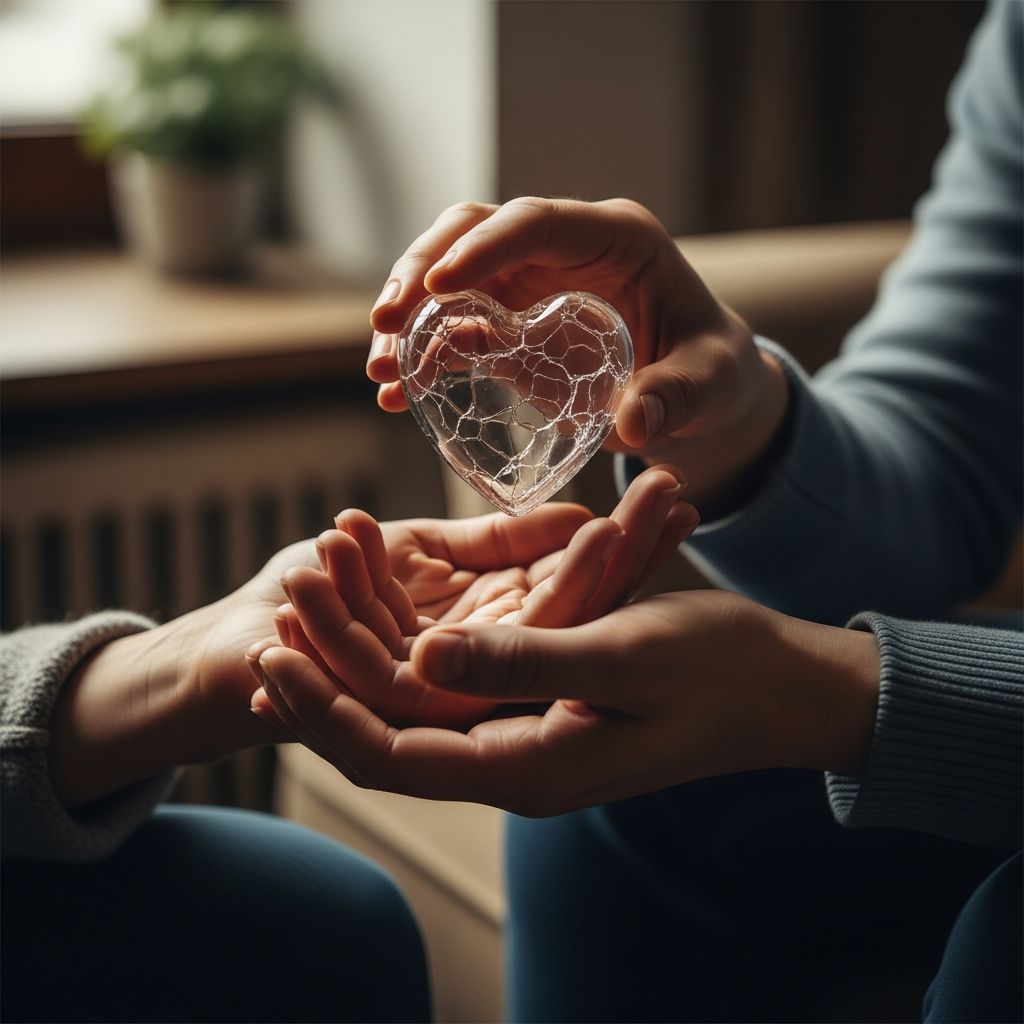
Understanding Parent-Child Dynamics
Parent-child dynamics in adult relationships occur when one partner consistently takes on a caretaking or authoritative role, while the other assumes a more passive or dependent position. This pattern, often mistaken for nurturing, can erode the foundation of equality and mutual respect that healthy partnerships require . Over time, these roles can become rigid, limiting both partners’ ability to grow and connect as equals.
Signs of Parent-Child Patterns
- One partner makes most decisions, sets boundaries, and oversees the other’s actions .
- The other partner frequently seeks approval, defers to the dominant partner, or rebels against their guidance .
- Feelings of resentment, frustration, or exhaustion are common for the “parent” partner, while the “child” partner may feel controlled or dependent .
- There is a lack of shared responsibilities and mutual decision-making, with one partner shouldering most of the relationship’s burdens .
Why These Dynamics Are Harmful
Parent-child dynamics can severely impact emotional intimacy and personal growth. When partners are stuck in these roles, they often miss opportunities to relate to each other as equals, which is essential for building trust and deep connection . The “parent” partner may feel overwhelmed by responsibility, while the “child” partner may struggle with feelings of inadequacy or rebellion. Over time, this imbalance can lead to resentment, distance, and a sense of stagnation in the relationship .
Root Causes and Triggers
These patterns often stem from early life experiences, attachment styles, or societal expectations. For example, individuals who grew up with overprotective or authoritarian parents may unconsciously replicate these dynamics in their adult relationships . Additionally, factors like ADHD, stress, or unresolved trauma can exacerbate these roles, making it harder for partners to break free .
Strategies for Change
- Self-awareness: Recognize your own role in the dynamic and reflect on how it affects your relationship .
- Open communication: Discuss your feelings and concerns with your partner, focusing on mutual respect and shared goals .
- Shared responsibilities: Work together to distribute tasks and decisions more evenly, ensuring both partners feel valued and involved .
- Professional support: Consider couples therapy or counseling to address underlying issues and develop healthier patterns .
- Empathy and understanding: Make an effort to see things from your partner’s perspective and validate their feelings .
Building Healthy Adult Relationships
Healthy adult relationships are characterized by equality, mutual respect, and emotional intimacy. Both partners should feel empowered to express their needs, make decisions, and support each other without falling into rigid roles . By fostering open communication, shared responsibilities, and empathy, couples can create a partnership that nurtures personal growth and deep connection.
Common Challenges and Solutions
| Challenge | Solution |
|---|---|
| One partner feels overwhelmed by responsibility | Distribute tasks and decisions more evenly; encourage open dialogue about workload |
| Other partner feels controlled or dependent | Validate their feelings; work together to build confidence and autonomy |
| Resentment or frustration builds over time | Address underlying issues through therapy or counseling; practice empathy and understanding |
FAQs
What are parent-child dynamics in adult relationships?
Parent-child dynamics occur when one partner takes on a caretaking or authoritative role, while the other assumes a more passive or dependent position, undermining equality and mutual respect .
How can I recognize these patterns in my relationship?
Look for signs such as one partner making most decisions, the other seeking approval or rebelling, and feelings of resentment or frustration .
What steps can I take to break free from these dynamics?
Practice self-awareness, communicate openly, share responsibilities, seek professional support, and foster empathy and understanding .
Can parent-child dynamics be fixed?
Yes, with effort, open communication, and sometimes professional help, couples can develop healthier, more balanced relationships .
Why is equality important in adult relationships?
Equality fosters mutual respect, emotional intimacy, and personal growth, allowing both partners to thrive as individuals and as a couple .