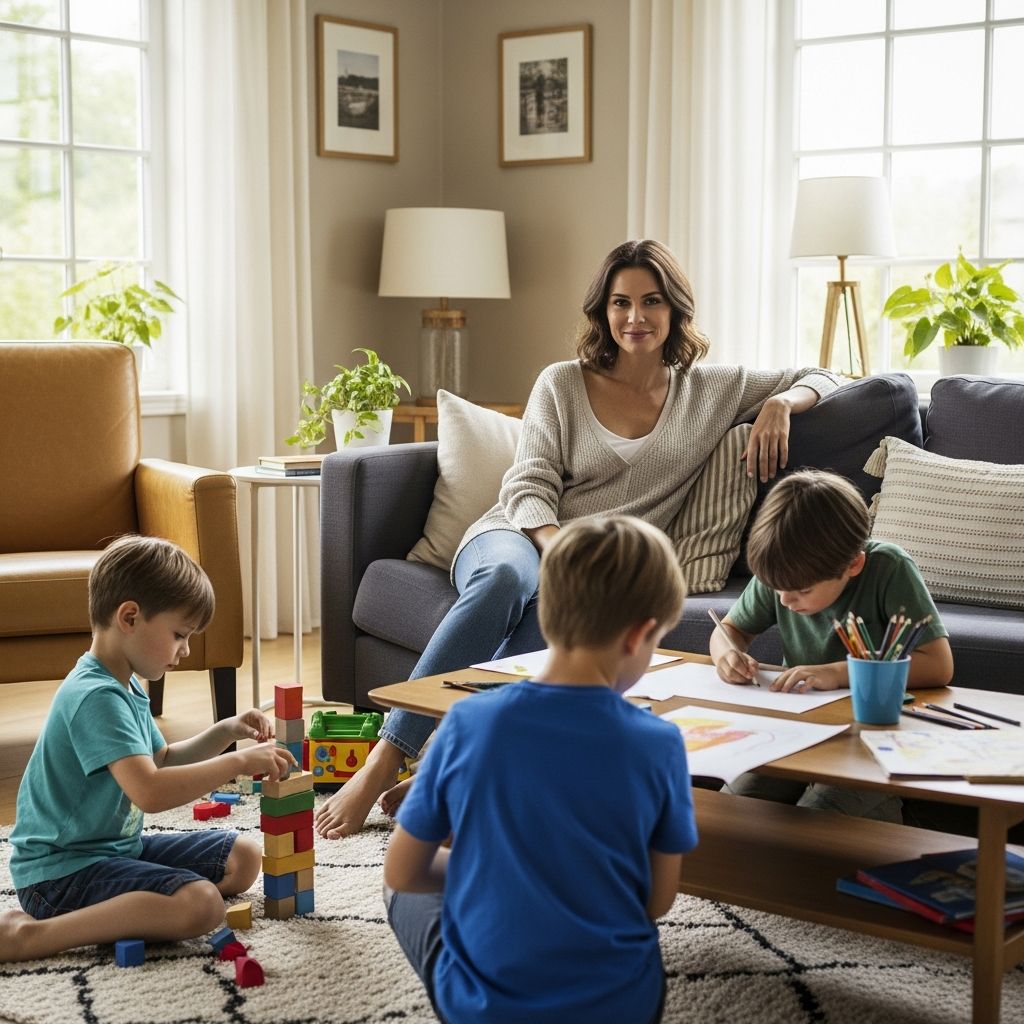
Many mothers eventually face a surprisingly thorny question: Is it okay to relax without a bra at home when there are sons in the house? The answer is not one-size-fits-all, but it can be guided by values of respect, comfort, and body positivity. This article explores how to make decisions that feel right for you and your family while nurturing healthy attitudes about bodies and boundaries.
Why This Question Feels So Complicated
The idea of going braless at home is rarely just about fabric and underwires. It quickly taps into deeper feelings about:
- Modesty and cultural expectations.
- Sexualization of women’s bodies in society.
- What it means to be a “good” parent or role model.
- Differences in comfort levels between partners and extended family.
For many women, home is the only place where their bodies can relax from social pressures. At the same time, they may worry about sending the “wrong message” to their kids or clashing with a partner’s beliefs. Understanding the layers behind this question helps you respond calmly instead of reacting from guilt or shame.
Home as a Place of Comfort
Most adults naturally dress more casually at home than they do outside. That might mean ditching uncomfortable clothes, including bras, in favor of softness and ease. When you have children, you may suddenly question whether this private comfort is still appropriate.
It can help to remember that home serves many purposes at once. It is:
- A place of rest and recovery from public expectations.
- A classroom where kids learn what “normal” looks like.
- A lab where they watch adults handle differences, conflict, and compromise.
Your goal is not to make your home match every outside standard, but to create an environment that is emotionally safe, respectful, and aligned with your values.
Understanding Children’s Perspectives by Age
How your sons experience your clothing (or lack of certain clothing) changes significantly with their age and development. A practical, age-aware approach can ease anxiety.
| Age Range | Typical Awareness | Helpful Parental Focus |
|---|---|---|
| Toddlers (1–3) | Notice bodies with curiosity, little sense of modesty. | Use correct body-part names and simple, calm explanations. |
| Preschool & Early School (4–7) | Begin to absorb social rules like “private parts.” | Introduce privacy rules and consent in gentle terms. |
| Later Childhood (8–11) | Growing awareness of gender and embarrassment. | Respect discomfort; model healthy boundaries and body talk. |
| Early Teens (12–14) | Stronger sexual curiosity, heightened self-consciousness. | Clarify household norms; keep communication open and non-shaming. |
| Older Teens (15+) | More adult understanding; sharper sense of privacy. | Honor their privacy as well; practice mutual respect and clear limits. |
This table is a guide, not a rigid rule. The most important signal to watch is comfort: yours, your children’s, and your partner’s. When discomfort shows up, it is a cue to talk, not a sign you have already failed.
Body Positivity Starts at Home
Whatever you decide about bras, your attitude toward your own body sends a loud message to your kids. Children learn not just from what you say, but from how you behave when you are tired, casual, or caught off guard.
Healthy, body-positive messages you can model include:
- “My body is not something to be ashamed of.”
- “Different people make different choices about clothes and comfort.”
- “There’s a difference between sexual behavior and simply existing in a body.”
When you treat your own body as ordinary and worthy of respect, your sons are more likely to view women’s bodies in general with the same grounded, respectful attitude.
Setting Clear and Respectful Boundaries
Whether you go fully braless, partially covered, or always wear support at home, boundaries give everyone a sense of safety and predictability. These boundaries are less about specific garments and more about mutual respect.
Consider clarifying household norms such as:
- Knocking before entering bedrooms or bathrooms.
- Not commenting on each other’s bodies or underwear.
- Using agreed-upon levels of dress when friends or guests are present.
- Respecting anyone’s “no” when they say they want privacy.
These habits protect everyone’s comfort, not just yours, and they lay the groundwork for your sons to understand consent and respect in their own future relationships.
Talking with Your Sons About Bodies and Privacy
Silence around bodies often creates more confusion than safety. Short, honest conversations tailored to your sons’ ages can normalize what they see at home without turning it into a big event.
Simple scripts for different ages
- Younger kids: “Everyone has a body. Some parts are private, which means we usually keep them covered outside and we don’t touch others there.”
- Older kids: “At home we dress more comfortably, but we still respect each other’s privacy and space. If you ever feel uncomfortable, you can tell me.”
- Teens: “You may notice things about my body; that’s normal. The important thing is that we respect each other and keep home a place where everyone can feel at ease.”
You do not need to over-explain or apologize for your body. The goal is to stay calm, clear, and open to questions.
When You and Your Partner Disagree
Sometimes the real tension is not between you and your sons, but between you and your partner. One parent may feel strongly that bralessness is harmless, while the other is anxious, embarrassed, or morally opposed to it. Treat this clash as a relationship issue, not proof that one person cares more about the kids.
Try approaching the discussion as a shared problem-solving exercise rather than a win-or-lose argument.
Questions for a calm couple conversation
- “What exactly worries you about me going braless at home?”
- “Is your concern about what the boys see, what they might think, or how others might judge us?”
- “What kind of home environment do we want our sons to remember growing up in?”
- “Are there compromises that respect my comfort and your concerns?”
In many cases, disagreement is rooted in how each partner was raised, personal insecurities, or fear of judgment from extended family. Naming those influences makes it easier to find a solution that protects both your autonomy and the shared goal of raising healthy, respectful kids.
Possible Compromises to Consider
If you and your partner are far apart in your comfort levels, you may want practical middle-ground options. A compromise does not have to mean giving up your needs; it can be a creative way to honor multiple perspectives.
- Choosing loose, opaque tops that feel relaxed but less revealing.
- Going braless only in certain areas (for example, your bedroom and bathroom).
- Using soft bralettes or shelf tanks instead of structured bras.
- Agreeing on different standards for family-only time versus when guests or friends are present.
Any compromise should still respect your basic right to comfort in your own home. If solutions always demand that you sacrifice and never your partner, that is not compromise—it is control, and that may signal a bigger relationship issue that deserves attention.
Challenging Shame and Oversexualization
One of the deeper worries that surfaces in these debates is the fear that sons will see their mother’s body in a sexualized way. This fear often reflects how society treats women’s bodies in general: as inherently sexual, no matter the context.
You can help your sons develop a more balanced view by:
- Distinguishing clearly between nudity and sexual behavior.
- Pointing out that bodies have everyday, practical functions (feeding babies, exercising, resting).
- Correcting jokes or comments that treat women as objects.
- Modeling respect when you talk about other people’s appearance.
When boys learn that a mother’s body can simply be a body—strong, ordinary, deserving of care—they carry that understanding beyond your front door, into classrooms, friendships, and future relationships.
Respecting Your Own Comfort Level
It is easy to get so focused on what children and partners need that you forget you are an individual with your own boundaries. You are allowed to decide what is comfortable for you, independent of other people’s expectations.
Ask yourself:
- “How do I feel in my own home clothes—relaxed or constantly self-conscious?”
- “Am I wearing certain things because I want to, or only because I’m afraid of being judged?”
- “Would I want my sons’ future partners to feel the way I feel right now?”
If your answer reveals resentment, anxiety, or a sense of being policed, that is valuable information. It may be time to renegotiate expectations with your partner or to reframe how you interpret external opinions (including from parents, in-laws, or friends).
Practical Tips for Day-to-Day Life
Once you have thought through the bigger questions of comfort, boundaries, and values, the daily choices often become easier. Consider these simple practices:
- Keep a few “house uniforms” you genuinely like: soft, non-sheer tops or bralettes that make you feel both relaxed and secure.
- Have a light cardigan or hoodie near shared spaces so you can quickly adjust if you suddenly feel exposed or if company arrives.
- Practice matter-of-fact responses if anyone comments on your body or clothing: a short, calm sentence, then a topic change.
- Regularly check in with yourself: if your body feels chronically policed, consider seeking support from a trusted friend, therapist, or community.
These small tools protect your sense of autonomy while maintaining the tone you want in your household.
Frequently Asked Questions
Is it wrong to go braless around my sons?
There is no universal rule that declares going braless at home morally wrong. Different families and cultures draw boundaries in different places. What matters most is that your choices align with your values, respect everyone’s comfort, and are not driven purely by shame or fear.
Will my sons be “scarred” if they notice I’m not wearing a bra?
It is normal for children, especially as they grow older, to become more aware of adult bodies and to feel occasional awkwardness. This awareness by itself does not harm them. It can become a learning opportunity about privacy, respect, and the difference between sexual content and ordinary bodies.
What if my partner insists I must always wear a bra at home?
A partner can have preferences and express concerns, but your body is still your own. If their insistence feels less like concern and more like control, it is important to address the pattern, possibly with the help of a counselor or neutral third party. Clothing rules that only flow one way may point to deeper issues of power and respect in the relationship.
How do I respond if extended family criticizes my home habits?
You are not obligated to adopt someone else’s standards for your own private space. A brief reply such as, “We’re comfortable with our routines at home,” is usually enough. If the person continues to push, you may need to set firmer boundaries about what topics are open for discussion.
Can being more relaxed about bodies actually help my sons?
Growing up in a home where bodies are treated as normal and not shameful can help children feel more comfortable in their own skin, ask questions more freely, and develop healthier attitudes toward other people’s bodies. Relaxed does not mean careless; you can be both body-positive and very clear about privacy, consent, and respect.
Finding a Path That Fits Your Family
In the end, the question of going braless at home with sons is less about a single choice and more about the kind of family culture you are creating. You are allowed to value both your own comfort and your children’s emotional safety. You are allowed to question the scripts you were given about modesty and decide which parts still serve you.
By approaching the issue thoughtfully—listening to your own needs, being honest with your partner, and keeping communication open with your sons—you can shape a home where bodies are not a source of dread or shame, but a normal part of everyday life. Whether you keep the bra, lose it, or choose something in between, your intentionality and care are what will stay with your children long after they grow up and leave your house.