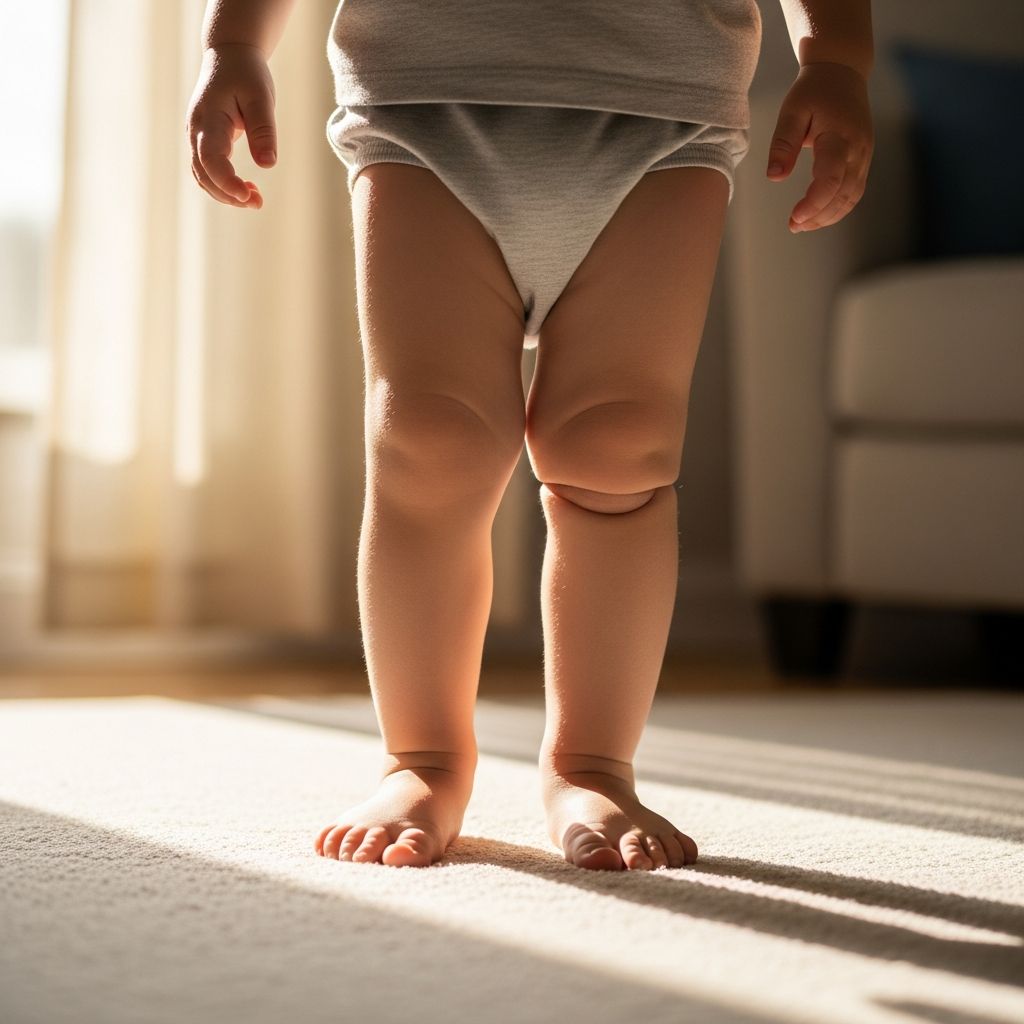
Bow legs, also called genu varum, describe a leg shape where the knees curve outward and do not touch even when the feet and ankles are together. Many babies and toddlers naturally pass through a bow-legged phase as they grow, but sometimes the curve may be more severe, last longer than expected, or be caused by an underlying problem that needs treatment.
This guide explains what is normal, what might signal a medical issue, how doctors evaluate bow legs, and what parents can do to support healthy leg and bone development.
What Does It Mean When a Child Has Bow Legs?
Having bow legs means that when a child stands with their feet and ankles together, there is a visible gap between the knees because the lower legs curve outward like a shallow arch. In many infants, this curved appearance is simply a normal stage of bone growth after spending months curled up in the womb.
The curve can be mild or more obvious. Some children also appear to walk with their toes pointing inward, or they may look a bit clumsy when they first start walking. In most healthy toddlers, the legs slowly straighten out on their own without any special treatment.
- Key point: Bow legs describe the shape of the legs, not a specific disease by itself.
- Both legs vs. one leg: In typical early childhood bowing, both legs usually curve to a similar degree.
- Movement: Most young children with bow legs can walk, run, and play normally.
Normal Leg Shape Changes as Children Grow
Leg alignment changes several times during childhood. Understanding this normal pattern can reassure parents who are worried about how their child’s legs look. The bones of the legs are still growing and reshaping for many years after birth, so the angle of the knees naturally shifts over time.
While every child is unique, there is a typical range of leg shapes that children go through as they grow from baby to school age.
| Age Range | Common Leg Appearance | What Parents Often Notice |
|---|---|---|
| Birth to ~18 months | Mild to moderate bow legs are common | Legs curve outward; knees apart when feet together |
| ~18 months to 3 years | Legs gradually straighten | Bowing less noticeable over time |
| 3 to 4 years | Often a slight knock-kneed appearance | Knees may touch while ankles stay slightly apart |
| 7 to 8 years | Adult-like alignment | Legs look straighter and more balanced |
During the toddler years, bow legs usually become less obvious as the child grows taller and stronger. Many children then briefly appear a bit knock-kneed before their legs settle into a straighter position by early school age.
Common Causes of Bow Legs
In most babies and toddlers, bow legs are simply part of normal development. The bones were gently curved before birth and are still straightening as the child learns to stand and walk. This type of bowing is sometimes called “physiologic” bow legs, meaning it occurs naturally and is not linked to a disease.
Less commonly, bow legs can be caused by underlying medical conditions that affect how bones grow or how strong they are. Understanding these possibilities helps parents know why follow-up with a doctor is sometimes important if the bowing does not improve.
Normal Developmental Bowing
Developmental bowing is the most frequent reason that young children have curved legs. The bones of the thighs and shins are soft and flexible in infancy, and spending many months in a curled-up position leads to a natural outward curve. Once the child starts bearing weight and walking, the bones respond to these new forces and gradually straighten.
- Both legs usually look similar in shape and degree of bowing.
- There is no pain, swelling, or stiffness in the joints.
- The curve slowly improves as the child grows, typically over the first few years of life.
Conditions That Can Cause Persistent or Severe Bow Legs
When bow legs are marked, affect only one side, or fail to improve with growth, doctors look for other explanations. A few of the better-known conditions include problems with bone strength, growth plates, or overall bone structure.
- Rickets: A disorder usually caused by a lack of vitamin D, calcium, or phosphorus, leading to soft, weak bones that bend more easily under the child’s weight.
- Growth plate disorders: Conditions such as Blount disease affect the growth areas near the knee, causing abnormal growth of the shinbone and more pronounced bowing.
- Inherited bone conditions: Some forms of dwarfism and other skeletal disorders change the usual shape and length of the leg bones and may include bowing.
- Poorly healed fractures or bone injury: If a leg fracture heals in a crooked position, it can leave one leg bowed or angled differently from the other.
- Metabolic or mineral problems: Rare conditions that interfere with normal bone building can also result in deformities such as bow legs or knock knees.
Signs Parents Can Watch For at Home
Parents are often the first to notice that a child’s legs look different. Watching how the legs change over time, and paying attention to how the child moves and feels, can give useful clues. Many families simply keep track through photos or short videos as their child grows.
While only a health professional can make a diagnosis, there are several practical signs parents can monitor between checkups.
- Symmetry: Do both legs curve the same way, or is one noticeably more bowed?
- Changes over time: Is the curve slowly improving, staying the same, or getting worse?
- Comfort: Does the child ever complain of pain in the legs, knees, hips, or ankles?
- Walking pattern: Is there a limp, frequent tripping, or a very unusual gait?
- Activity level: Is the child able to run, climb, and play like other children the same age?
When to Schedule a Medical Evaluation
Routine well-child visits are a good time to bring up questions about leg shape and walking. However, some situations deserve a specific appointment with a pediatrician or pediatric orthopedic specialist. Early evaluation can identify problems that respond best to treatment before the child’s bones are fully grown.
Contact a healthcare professional if you notice any of the following:
- Bow legs remain obvious or seem to worsen after the age when most toddlers’ legs begin to straighten.
- Only one leg is bowed, or one leg is clearly more curved than the other.
- The child complains of pain in the legs, knees, hips, or ankles, especially during walking or sports.
- There is a limp, uneven stride, or difficulty keeping up with peers during play.
- The child had a fracture or serious leg injury and now one leg looks bowed or crooked.
- There are other concerns, such as poor growth, frequent bone pain, or signs of nutritional deficiency.
How Doctors Assess Bow Legs
During an evaluation, the doctor will begin by talking with you about your child’s medical history and development. This includes questions about when the bowing was first noticed, whether it has changed, and whether there is any pain or difficulty walking. The doctor will also review your child’s diet, vitamin intake, and any family history of bone or growth disorders.
A careful physical examination follows. The doctor observes the child standing and walking, gently moves the hips and knees, and compares both legs to check for differences.
Measurements and Imaging
To better understand the degree of bowing, the doctor may measure the distance between the knees when the feet and ankles are together. In some cases, imaging tests are recommended to look at the bones in more detail.
- X-rays: Show the shape, length, and alignment of the leg bones and growth plates.
- Blood tests: May be used if there is concern about rickets, vitamin D levels, or other metabolic causes of weak bones.
- Growth tracking: Height, weight, and leg length are followed over time to see whether the child is developing as expected.
Treatment Options for Bow Legs
The right approach to treatment depends on the child’s age, the cause of the bowing, and how severe it is. Many children with mild, symmetrical bow legs do not need any active treatment; careful observation and regular checkups are enough. When a specific condition is diagnosed, targeted treatments can help straighten the legs and protect joint health.
Observation and Reassurance
For normal developmental bowing, the main “treatment” is simply time. Doctors often recommend regular follow-up visits every several months to ensure the legs are improving as expected. Parents can support the process by encouraging active play and a nutrient-rich diet without using special braces or shoes unless specifically advised.
Correcting Nutrition and Bone Health
When bow legs are linked to soft or weak bones, improving bone health is a critical part of care. This may include vitamin D or calcium supplements prescribed by a healthcare professional, along with guidance on diet and safe sunlight exposure. Treating the underlying nutritional problem allows the bones to become stronger and can reduce further bending.
Braces, Orthotics, and Guided Growth
Some children benefit from devices that guide growth in a straighter direction. Braces, specialized orthotic shoes, or external supports may be used for certain growth plate disorders or structural problems. These tools work gradually over many months and usually require close supervision by a specialist.
In carefully selected cases, a surgical technique called guided growth may be used. Small devices placed near the growth plate slow growth on one side of the bone so the other side can catch up, gradually straightening the leg as the child grows.
Surgery for Severe or Persistent Bowing
When bow legs are severe, affect function, or continue into older childhood or adolescence, surgery may be recommended. Surgical options vary but typically aim to correct alignment, balance the way weight passes through the joints, and prevent long-term problems such as early arthritis.
After surgery, children usually participate in physical therapy to regain strength, flexibility, and normal movement patterns.
Possible Long-Term Effects if Bow Legs Are Not Treated
Most young children with normal developmental bowing do very well, and their legs straighten without causing long-term issues. However, when significant bowing persists, especially if linked to a disease of the bones or growth plates, there can be consequences later in life if no treatment is provided.
Possible long-term effects of untreated, severe bow legs may include:
- Uneven wear and tear on the knees, hips, or ankles, raising the risk of early arthritis.
- Chronic joint pain, especially with sports or heavy physical work.
- Noticeable differences in leg shape or leg length, which can affect balance and posture.
- Reduced ability to participate in certain activities if pain or instability develops.
At-Home Tips to Support Healthy Legs
Parents cannot change the natural growth pattern of their child’s bones, but they can create an environment that supports strong, healthy legs. Simple daily habits contribute significantly to bone strength and overall development.
- Offer a balanced diet: Include foods rich in calcium and vitamin D such as dairy products, fortified alternatives, leafy greens, and appropriate fish.
- Encourage regular movement: Active play helps build strong muscles and bones; crawling, walking, climbing, and outdoor play are all beneficial.
- Avoid extreme or unsupported devices: Do not use homemade splints, tight wrapping, or unapproved braces in an attempt to straighten your child’s legs.
- Monitor growth: Keep up with regular pediatric checkups so any concerns with growth or alignment are noticed early.
- Follow medical advice: If supplements, braces, or follow-up imaging are recommended, follow the plan and ask questions whenever something is unclear.
Frequently Asked Questions About Bow Legs
1. Are bow legs in babies always a problem?
Not usually. Mild to moderate bowing in infants and new walkers is often a normal stage of development. As the child grows taller and spends more time on their feet, the legs usually become straighter on their own without any special treatment.
2. Can my child’s bow legs be caused by walking too early?
Early walking alone rarely causes bow legs, but in some children with underlying bone or growth plate issues, early or heavy weight-bearing can make the curve more noticeable. The best approach is to let your child reach walking milestones at their own pace and discuss any concerns with the pediatrician.
3. Will special shoes or inserts make bow legs go away faster?
For typical developmental bowing, special shoes or inserts do not speed up straightening and are not routinely needed. They may be used in certain specific conditions under the guidance of a specialist, but parents should avoid buying corrective devices without professional advice.
4. Can exercises straighten my child’s legs?
Stretching and strengthening exercises can support healthy movement and may be part of recovery after surgery or bracing. However, exercises alone do not usually change the underlying bone alignment in a young child with bow legs. Any exercise program should be designed or approved by a healthcare professional.
5. When is surgery considered for bow legs?
Surgery is considered when bowing is severe, clearly linked to a structural problem in the bones or growth plates, or when it causes pain, difficulty walking, or a significant risk of future joint damage. The exact timing and type of surgery depend on the child’s age, growth remaining, and overall health.
6. Will my child be able to play sports if they have or had bow legs?
Most children with mild bow legs who grow into normal alignment can participate fully in sports and physical activities. If a child has a more serious underlying condition or has undergone surgery, the healthcare team will provide guidance on which activities are safe and when to return to sports.
Key Takeaways for Parents
- Many babies and toddlers naturally pass through a bow-legged stage that improves on its own.
- Persistent, worsening, or one-sided bowing, especially with pain or difficulty walking, should be evaluated by a healthcare professional.
- Healthy nutrition, regular checkups, and active play support strong bones and normal development.
- Never use unapproved braces, wraps, or home remedies to try to straighten your child’s legs without medical advice.
- Early diagnosis and treatment of underlying causes help protect joint health and long-term mobility.