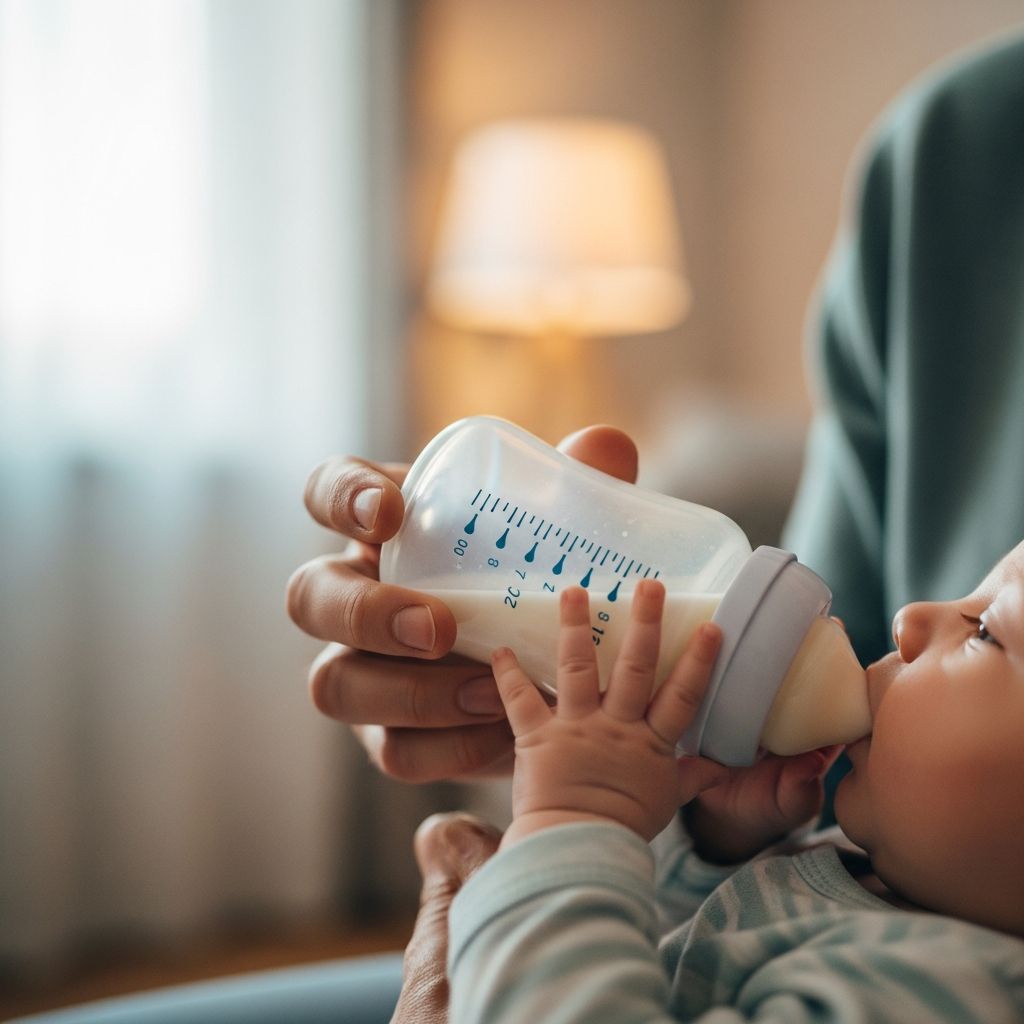
Bottle feeding offers a flexible and nurturing way to nourish infants using breast milk or formula, allowing parents to meet their baby’s needs effectively while sharing caregiving responsibilities.
Understanding Your Bottle Feeding Options
Parents today have diverse choices for infant nutrition, ranging from exclusive breastfeeding to combinations of breast milk and formula delivered via bottle. Bottle feeding with formula provides convenience, enabling any caregiver to participate in feedings, which fosters family bonding and gives mothers respite. According to health experts, formula can supplement breastfeeding when milk supply is low or serve as the primary source for those unable to nurse. The Centers for Disease Control and Prevention (CDC) emphasizes that bottles should contain only breast milk or infant formula, never solids like cereal, to avoid choking risks.
Key benefits include measurable intake, which reassures parents about their baby’s consumption, and the ability to track growth precisely. Unlike breastfeeding, bottle feeding lets partners engage fully, strengthening emotional connections during meals.
Selecting the Right Formula and Equipment
Choosing infant formula starts with first infant formula, recommended by the NHS for newborns through the first year. Options include cow’s milk-based, soy, or specialized types for sensitivities; consult pediatricians for the best match. Ready-to-feed formulas simplify preparation but cost more, while powdered versions require sterile water mixing for safety.
For bottles and nipples, trial various brands as preferences vary. Nipples should drip formula slowly when inverted, matching the baby’s age and suck strength. Slow-flow nipples prevent overwhelming fast eaters or breastfed babies transitioning to bottles.
| Formula Type | Best For | Preparation Notes |
|---|---|---|
| Ready-to-Feed | Convenience, travel | Pour directly; most expensive |
| Powdered | Cost-effective, bulk | Mix with boiled, cooled water |
| Concentrated Liquid | Balance of ease/cost | Dilute 1:1 with water |
Experiment with shapes and materials—glass for durability, plastic for lightness—to find what your baby accepts best.
Mastering Safe Bottle Feeding Techniques
Position your baby semi-upright, cradled securely, to mimic natural feeding angles and reduce reflux risks. Hold the bottle horizontally, slightly tilted, so the nipple fills with milk, minimizing air intake that causes gas. The paced feeding method promotes healthy sucking patterns: use slow-flow nipples, pause every few swallows by lowering the bottle, allowing baby-led pacing to prevent overfeeding.
- Sit comfortably with baby facing you, head supported.
- Point nipple toward the palate for proper latch.
- Feed in a quiet space to minimize distractions.
- Burp midway and at end by patting upright over shoulder.
Always supervise; never prop bottles, as this heightens choking, ear infections, and decay risks per CDC guidelines. Research shows nipple flow rates impact intake—slower rates encourage nutritive sucking akin to breastfeeding.
Daily Feeding Schedules and Amounts
Newborns typically take 1-2 ounces every 2-3 hours initially, progressing to 2-3 ounces by day 3, then 4 ounces every 4 hours by one month, and 6-8 ounces 4-5 times daily by 6 months. Follow hunger cues like rooting or hand-sucking rather than rigid clocks; babies self-regulate best.
Track wet diapers (6+ daily) and steady weight gain as success indicators. Offer small initial volumes when starting bottles, increasing based on demand.
Transitioning from Breast to Bottle Smoothly
Introduce bottles around 3-4 weeks to avoid nipple confusion and protect milk supply. Start during calm moments, like post-nap when sleepy, using a caregiver other than mom. Warm milk to body temperature and maintain skin contact for comfort.
- Try when baby is relaxed, not ravenous.
- Use breast milk first for familiarity.
- Vary positions to prevent preference issues.
- Persist patiently; acceptance may take days.
Studies indicate opaque, weighted bottles may enhance parental sensitivity to cues, potentially reducing overfeeding.
Overcoming Common Bottle Feeding Challenges
Refusal? Switch nipples, timings, or holders. Gas or spit-up calls for paced feeds and burping. Fast flow leads to gulping—opt for slower options. If concerns persist, consult lactation specialists for tailored advice.
For formula sensitivities, monitor stools and fussiness; pediatricians can guide switches. Sterilize equipment daily via boiling or dishwasher to prevent infections.
Safety Essentials Every Parent Must Know
Prepare formula with safe water, avoiding microwave heating to prevent hot spots—shake and test on wrist. Discard leftovers after feeds. Transition to cow’s milk only post-1 year. Position baby upright post-feed to aid digestion.
Long-Term Nutrition and Weaning
Bottle feeding supports growth until 12 months, then shift to cups. Monitor for readiness signs like self-holding bottles around 6-9 months, fully weaning by 18 months to promote oral development.
Frequently Asked Questions
How often should I feed my bottle-fed newborn?
Newborns need feeds every 2-3 hours, about 8-12 times daily, adjusting to cues.
Can I mix breast milk and formula in one bottle?
Yes, but use breast milk first and discard unused portions to preserve its quality.
What if my baby refuses the bottle?
Try different temperatures, positions, or caregivers; patience resolves most cases.
Is it okay to warm bottles in the microwave?
No—microwaves create hot spots; use warm water baths instead.
When do babies outgrow bottles?
Aim for cup transition by 12-18 months for dental health.
References
- About Feeding From a Bottle | Infant and Toddler Nutrition — CDC. 2023. https://www.cdc.gov/infant-toddler-nutrition/bottle-feeding/index.html
- Bottle Feeding 101: Essential Techniques and Tips — Taking Cara Babies. 2023. https://www.takingcarababies.com/blogs/feeding/bottle-feeding-101-essential-techniques-and-tips
- Bottle feeding advice – NHS — NHS. 2023-10-13. https://www.nhs.uk/baby/breastfeeding-and-bottle-feeding/bottle-feeding/advice/
- Breast to Bottle: 12 Tips for Transitioning to Bottle Feeding — Enfamil. 2023. https://www.enfamil.com/articles/breast-bottle-tips-smooth-transition/
- Bottle‐feeding an infant feeding modality: An integrative literature review — PMC (Wiley). 2020-02-19. https://pmc.ncbi.nlm.nih.gov/articles/PMC7083444/
- Bottle Feeding Basics — HealthyChildren.org (AAP). 2023. https://www.healthychildren.org/English/ages-stages/baby/feeding-nutrition/Pages/Bottle-Feeding-How-Its-Done.aspx
- Breastfeeding vs. Formula Feeding — KidsHealth (Nemours). 2023. https://kidshealth.org/en/parents/breast-bottle-feeding.html