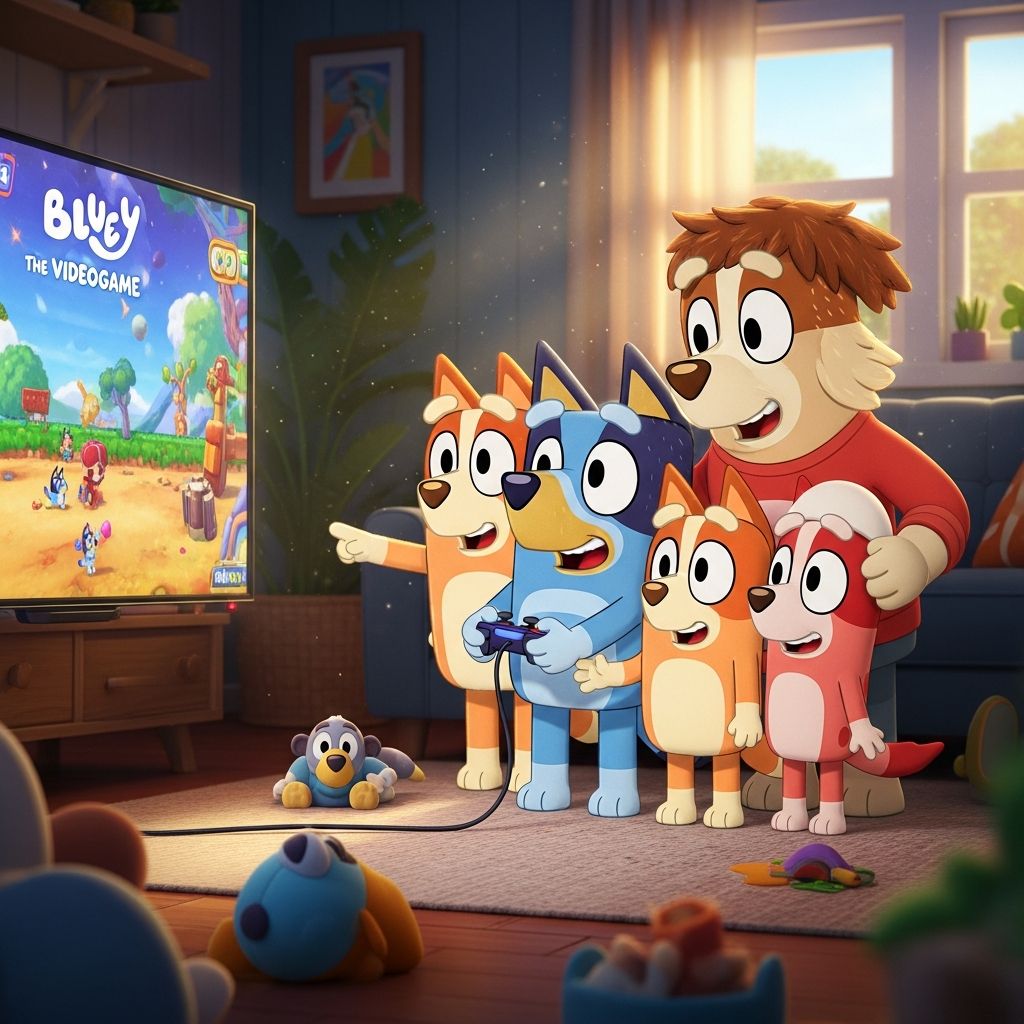
Bluey: The Videogame is designed for young players, but that does not mean every jump, chase, or collectible will be obvious to a 5-year-old. This guide shows parents and caregivers how to turn the game into a relaxed, playful experience instead of a confusing puzzle.
What Makes Bluey: The Videogame Different from Other Kids Games
Bluey’s game is built much more like an interactive episode than a traditional platformer. Instead of strict timers and fail states, kids explore familiar locations, complete simple tasks, and trigger short scenes that feel like the TV show come to life.
Because the game prioritizes exploration over punishment, the best strategy is to slow down, let kids wander, and gently guide them when they feel stuck, rather than rushing straight for the “finish line.”
Basic Controls Explained for Young Players
Every platform labels its buttons differently, but the core actions in Bluey: The Videogame stay consistent: moving, jumping, interacting, and pausing. Helping kids clearly understand these four ideas can prevent most early-game frustration.
Kid-Friendly Control Cheat Sheet
Use simple language when explaining controls. Instead of saying “press A to interact,” try “use the talk button when you see a white outline or sparkle.”
- Move: Use the left stick or directional pad to walk toward characters, doors, stairs, and shiny objects.
- Jump: Use the jump button to hop over puddles, climb playgrounds, and reach collectibles on shelves or ledges.
- Interact: Press the action button near glowing or outlined items to pick up toys, open doors, or start a mini-game.
- Pause/Menu: The pause button opens options and lets adults quietly adjust settings without disrupting the story too much.
Consider drawing a tiny controller diagram on paper and labeling the buttons as “Walk,” “Jump,” and “Do.” Many kids respond better to icons and simple words than to letter names.
Playing Co-Op: Keeping Siblings Happy
Up to four players can join in, and the game treats them more like equal family members than “Player 1 vs. sidekicks.” That makes co-op ideal for siblings who fight over turns on other games.
Simple Co-Op Rules to Avoid Arguments
- Agree before starting who will control story triggers (like talking to NPCs or opening doors).
- Rotate who chooses the character each episode: one child picks for Episode 1, another for Episode 2, and so on.
- Let the youngest child take the lead role when platforming or rock-hopping, with adults quietly steering from behind.
- Use co-op to “bodyguard” younger players—an adult can stand in tricky spots to show where to jump or walk next.
When kids get stuck, swap roles casually: “Want to be Dad and show Bluey where to go?” This keeps the game collaborative instead of competitive.
Understanding Episodes: How Progression Works
The game is divided into several episodes that mirror the vibe of the TV show, each centered around a simple story like holidays, rescue missions, noisy toys, or treasure hunts. Within each episode, progress is measured by scenes and discovered locations, not by a timer.
Think of each episode as a short adventure loop: explore a familiar space, talk to family members, play a mini-game, then unlock a new part of the map or a fresh activity.
| Stage | What Kids Do | Parent Tip |
|---|---|---|
| Intro scene | Watch a short cutscene that explains the day’s game. | Use this moment to repeat the goal in kid language: “We’re going to find all the animals.” |
| Free exploration | Walk around house, park, or beach testing controls. | Encourage them to press the action button on anything that looks shiny or suspicious. |
| Mini-game or challenge | Play something like keepy-uppy, floor-is-lava platforms, or chasing a character. | Stand close to tricky jumps and verbally count down: “Ready, jump… now!” |
| Story reward | Enjoy a short scene or playful dialogue. | Pause afterwards to celebrate: “You did it! That’s why the game changed.” |
| Collectible cleanup | Optionally go back to find hidden stickers or toys. | Make this optional for younger kids; perfection can wait for a replay. |
Helping Kids Through Tricky Moments
Most failure in Bluey does not look like a “Game Over” screen; it feels more like a child wandering in circles or missing a prompt. Your role is less “expert gamer” and more “gentle tour guide.”
When They Do Not Know What to Do Next
- Ask “Who have we not talked to yet?” and encourage them to approach parents, siblings, or side characters.
- Scan for icons, speech bubbles, or sparkles, and slowly walk the character toward them.
- Suggest a “house check” or “park lap” where you quietly guide them past the key trigger area.
When They Struggle with Jumps or Platforming
- Have them practice jumping in a wide, safe area before approaching the challenge again.
- Use phrases like “small hop” and “big jump” to describe how long to hold the button.
- If the game allows, join as a second character and demonstrate the route while they watch, then swap controllers.
Making Sense of Stickers, Toys, and Other Collectibles
Collectibles in Bluey usually show up as stickers, toys, or themed items hidden around the house, playgrounds, and beach. They unlock visual rewards, fill albums, or simply serve as fun little side objectives.
Young kids often enjoy the act of finding things more than the idea of “100% completion,” so turn collectibles into a treasure-hunting game instead of a checklist.
Collectible Hunting Tips for Families
- Always look up: shelves, high platforms, and top bunk beds are common hiding spots.
- Watch for subtle shines or outlines that hint at interactive items.
- Return to familiar locations after major story scenes; new paths or objects sometimes appear later.
- Assign roles: one child explores left side rooms, another focuses on garden or playground, and adults double-check with a quick sweep.
Episode Highlights: What Skills Each One Teaches
Each episode in the game quietly trains a different type of skill, from basic navigation to light puzzle solving. Understanding what each one emphasizes helps you anticipate where your child might get stuck.
Exploration and Memory
Early episodes lean heavily on walking through the house and nearby outdoor areas, encouraging kids to remember where bedrooms, kitchens, and backyards are located. This helps young players build a mental map without the pressure of enemies or tight timers.
Platforming and Timing
Later stories introduce playground structures, pretend lava floors, and rock-hopping segments that require slightly more accurate jumping and timing. Expect a few falls and misses, but the game’s forgiving design lets kids try again quickly.
Light Puzzles and Object Use
Certain scenes ask players to move furniture, place stools, or carry items from one location to another, gently teaching cause-and-effect thinking. These segments are great opportunities to ask guiding questions instead of giving direct answers.
Parent Strategy: Keeping Sessions Short and Sweet
Because the intended audience is young children, the game is best enjoyed in short bursts—one episode or major scene per session. Long marathons often lead to fatigue and frustration, especially during the more precise jumping sections.
Create a simple routine: watch the episode intro, play until the main story beat concludes, then take a break and use the pause menu to stop. This structure makes the game feel like watching an extra-long Bluey episode together.
Troubleshooting Common Problems
Even with a gentle design, a few recurring issues tend to appear for families. Most can be fixed with small adjustments in settings or playstyle rather than raw skill.
Camera Confusion
- If kids lose track of their character, ask them to jump repeatedly so the motion helps them spot themselves.
- Encourage them to stay closer together in co-op play, which keeps all family members on screen.
Button Overload
- Disable or ignore advanced options in the settings so the controller effectively becomes three buttons: move, jump, and interact.
- Verbally remind them: “Right stick is just for looking; left stick is for walking.”
Over-Excited Mashers
- Encourage a “one press, then wait” rule when interacting with items to prevent skipping prompts or scenes.
- Use humor: pretend the button is “sleepy” and only wakes up for gentle presses, not pounding.
Turning Bluey into a Learning Tool
Beyond just entertainment, the game offers chances to practice reading, listening, turn-taking, and emotional regulation. Many scenes are short enough for you to pause and talk about what just happened.
Ask questions like “How do you think Bingo feels right now?” or “What could we do next if this were real life?” This adds a reflective layer to play that mirrors the heart of the TV series.
Frequently Asked Questions About Bluey: The Videogame
Is Bluey: The Videogame hard for young kids?
The game is intentionally much easier than typical platformers and focuses on exploration, simple mini-games, and playful scenes. Some jumps and object-finding tasks can be tricky for the youngest players, but with a patient adult nearby, most children can complete episodes without major frustration.
How long does it take to finish the game?
The full game is fairly short compared to large adventure titles, making it ideal for families that prefer quick, complete experiences. With kids experimenting and giggling through scenes, expect a handful of relaxed play sessions rather than dozens of hours.
Do you need to collect everything to beat it?
No, collectibles like stickers and toys are mostly there for extra fun and replay value. Families interested in 100% completion can hunt for missing items after finishing the story once, turning it into a scavenger-hunt style replay.
Is the game better in single-player or co-op?
Both modes work well, but co-op tends to capture the spirit of the show more clearly by letting siblings and adults act out scenes together. Single-player can be helpful when teaching controls or when a child prefers a calmer, more focused experience.
What age is the game best for?
Many families find that ages 4 to 8 enjoy the game the most, particularly kids who already love the TV series. Younger children may still enjoy watching and pressing a few buttons, especially when an older sibling or parent leads navigation.
Final Thoughts: Make Fun the Main Goal
Bluey: The Videogame works best when adults treat it less like a test to pass and more like another way to inhabit the show’s world. Let children choose silly routes, repeat favorite mini-games, and spend extra time bouncing on beds or trampolines.
If someone gets stuck, turn the moment into a shared puzzle rather than a personal failure. The game is at its best when the whole family laughs, experiments, and celebrates small victories together—just like an episode of Bluey on the couch.