When the Australian animated series Bluey first appeared on local television, it looked like a simple show about a dog family. Within a few years, it had become one of the most influential preschool shows in the world, embraced not only by children but by exhausted parents who saw themselves on screen for the first time. This article traces how Bluey grew from a homegrown idea into a global cultural touchstone, and why its approach to play and parenting feels so different from everything that came before.
From Brisbane Idea to International Hit
Bluey was created by Australian animator Joe Brumm and produced by Ludo Studio in Brisbane, Queensland. The Australian Broadcasting Corporation (ABC) and the BBC backed the project early, giving it both a strong domestic platform and international potential. The show premiered on ABC Kids in October 2018 and was later distributed globally through BBC Studios, eventually landing on Disney platforms in major markets.
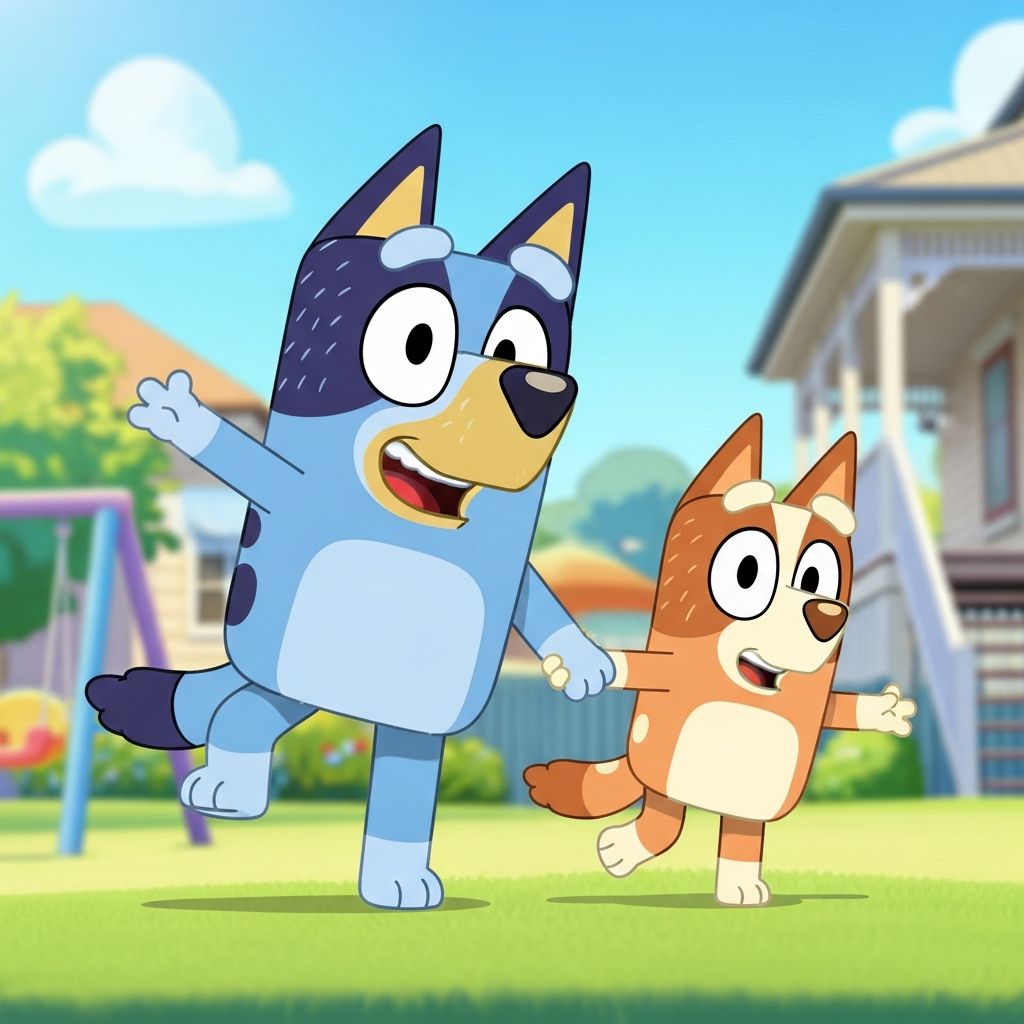
At its core, the show follows Bluey Heeler, a six-year-old Blue Heeler puppy, her younger sister Bingo, and their parents Bandit and Chilli. Most episodes center on the family’s everyday life: mornings before school, visits to playgrounds, family barbecues, or quiet evenings at home. The difference is that nearly every moment becomes a game.
| Key Element | How Bluey Handles It |
|---|---|
| Setting | Stylized version of Brisbane, showcasing parks, houses, and Australian nature. |
| Main Focus | Imaginative play, family relationships, and emotional growth. |
| Episode Length | Short, self-contained stories, each like a mini short film. |
| Intended Audience | Preschoolers, but written deliberately for parents to enjoy too. |
Why an Animated Blue Heeler Feels So Real
On paper, Bluey is firmly in the realm of fantasy: talking dogs, magical games, and slapstick gags. Yet the show has been widely praised for its social realism in depicting everyday family life. Parents juggle work and housework, kids squabble, and everyone struggles with time, tiredness, and feelings.
The realism comes from several deliberate choices:
- Grounded jobs and routines: Bandit is an archaeologist who often returns home covered in dust, while Chilli works part-time in airport security, echoing the traditional “sniffer dog” role. Their work affects their schedules and energy, just as in real families.
- Small but familiar conflicts: Instead of fantasy villains, the show focuses on ordinary challenges: bedtime resistance, sibling jealousy, social awkwardness, or parents being distracted.
- Messy emotions: Characters confront jealousy, regret, grief (such as the sadness over a dead bird), and fear of change. Episodes don’t rush to fix feelings; they show kids gradually working through them.
The result is a world that feels bright and playful on the surface but deeply recognisable to any family watching together.
The Power of Play: Bluey’s Core Philosophy
If there is a single idea that defines Bluey, it is the belief that unstructured, imaginative play is central to childhood. In nearly every episode, play drives the story, whether the characters are pretending to be shopkeepers, hospital staff, or explorers at the park.
This focus lines up closely with decades of research. The American Academy of Pediatrics emphasizes that play builds cognitive, physical, social, and emotional skills, describing it as a “crucial” part of healthy development. Similarly, UNICEF notes that play supports learning, creativity, and resilience, and is even recognized as a right of every child.
Bluey embodies these ideas on screen:
- Everyday settings become playgrounds: Waiting at the doctor’s office, riding in a car, or going to the supermarket all turn into elaborate games.
- Games teach life skills: Through their pretend scenarios, Bluey and Bingo learn about turn-taking, fairness, following rules, and dealing with frustration.
- Parents are fully involved: Bandit and Chilli rarely sit on the sidelines; they dress up, commit to strange roles, and let the kids lead the game, mirroring best-practice advice about responsive, child-led play.
Bandit and Chilli: Redefining On-Screen Parents
One reason Bluey resonates so strongly with adults is its honest portrayal of modern parenting. Bandit and Chilli are far from perfect superheroes; they’re attentive, funny, sometimes exhausted, and often learning alongside their children.
Several aspects stand out:
- Involved fatherhood: Bandit is frequently shown doing housework, taking care of the kids solo, and initiating imaginative games. Media researchers and parenting advocates have long called for more depictions of caring, present fathers, and Bandit is frequently cited as a positive example.
- Working mother, visible trade-offs: Chilli’s part-time job, emotional ups and downs, and flashbacks to early motherhood give depth to her character. She is neither a perfect stay-at-home parent nor a distant career figure; she is clearly juggling both roles.
- Emotion coaching: Both parents use calm guidance and validation when their children are upset. This mirrors approaches like “emotion coaching,” in which parents label feelings and help children manage them, a strategy supported by developmental psychology.
Instead of preaching about “good parenting,” the show quietly models it in the background of each game. Parents watching are invited to copy the spirit of those interactions, not the exact details of every elaborate setup.
Subverting Stereotypes, One Game at a Time
Bluey also challenges several long-standing stereotypes in children’s television:
- Adventurous girl lead: Bluey and Bingo are energetic, physical, sometimes chaotic, and rarely confined to “quiet” activities traditionally assigned to girls. They climb, shout, tackle, and negotiate like real puppies and real kids.
- No simple “bad guys”: There is no recurring villain. Conflict comes from internal feelings (jealousy, fear, stubbornness) or social situations, which aligns with how many real early-childhood difficulties arise.
- Complex friendships: Side characters—other dog-breed kids like Rusty, Indy, and Judo—add different family styles and personalities, highlighting that there is no single way to be a kid or a parent.
These choices make the show feel less like a moral lecture and more like a slice of family life, where kids and adults are both doing their best.
Australia on Screen: Local Flavour, Global Appeal
Despite its worldwide popularity, Bluey is unapologetically Australian. The architecture, city layout, wildlife, and slang all root the series in Queensland.
- Distinctive setting: The city is loosely inspired by Brisbane, with leafy streets, hills, and recognizable landmarks.
- Nature and wildlife: Episodes feature fruit bats, wallabies, kookaburras, ibises, and characteristic flora such as jacaranda and poinciana trees.
- Sport and culture: Even rugby league and the State of Origin rivalry make appearances, gently introducing children to aspects of local sports culture.
While strongly rooted in one place, the emotions, family dynamics, and games are universal. This combination—specific culture plus universal themes—is a classic recipe for international success, similar to how other regionally grounded shows have found global audiences.
Short Episodes, Big Emotional Arcs
Each Bluey episode runs for only a few minutes, but the storytelling is remarkably dense. Creator Joe Brumm has described writing each episode as an opportunity to make what feels like a short film. The tight runtime forces the writers to focus on a single emotional beat or idea.
Common emotional arcs include:
- Learning to wait or share during a game that keeps changing rules.
- Accepting disappointment when a desired outcome isn’t possible, like a canceled outing.
- Facing change such as moving house or seeing friendships shift over time.
These arcs map cleanly onto developmental milestones described in child psychology literature, where early childhood is marked by rapid emotional and social growth. In Bluey, those milestones appear not as checklists but as lived experiences embedded in play.
Co-Viewing: A Show Built for Parents and Kids Together
Unlike many preschool series that aim primarily to occupy children, Bluey is intentionally designed as a co-viewing experience. Parents get dry humor, subtle cultural references, and an often painfully accurate view of domestic life. Children get slapstick comedy, bright colors, music, and relatable kid concerns.
Benefits of this approach include:
- Shared reference points: Families can later re-enact games or refer back to specific episodes when discussing feelings or conflicts.
- Higher engagement: Research suggests that when adults watch and talk about media with children, kids learn more and apply lessons better than when they view alone.
- Reduced guilt around screen time: Many parents report that Bluey feels less like “parking” kids in front of a screen and more like participating in a joint activity, especially if they copy the games afterward.
Beyond the Screen: Shows, Merchandise, and Theme-Park Play
As Bluey spread internationally, it expanded well beyond television. Official websites offer games and activities, and licensed live shows and interactive experiences bring the characters into physical spaces. A major example is the upcoming Bluey-themed live show planned for Disneyland’s Fantasyland Theatre, which will transform the venue into the grounds of Bluey’s school and invite children to participate in familiar games like “Keepy Uppy.”
These real-world experiences extend the show’s core philosophy:
- Immersive play: Stages and themed areas are designed as giant play spaces rather than passive viewing environments.
- Family participation: Parents are encouraged to join games, mirroring what they see in the series.
- Cultural continuity: Music and characters from the show help children transition seamlessly from screen to real-world play.
Bluey’s Legacy: Changing the Standard for Kids’ TV
The success of Bluey has already influenced how broadcasters and creators think about preschool programming. Instead of relying primarily on didactic moral lessons or overt academic content, the show demonstrates that gentle, story-driven explorations of feelings and relationships can be just as educational, if not more so.
Its impact can be seen in:
- More nuanced parents on screen in newer shows, often balancing work and caregiving rather than disappearing into the background.
- Greater emphasis on imaginative play as a legitimate subject of storytelling, not just filler between songs or lessons.
- Higher production expectations for preschool series, including well-developed music, sound design, and visual world-building.
Frequently Asked Questions About Bluey
What age group is Bluey intended for?
Bluey is primarily aimed at preschool children, roughly ages 3–6, but it is designed so that older siblings and parents can enjoy it too.
Is Bluey educational?
Yes, though not in a flashcard or quiz style. The show supports social and emotional learning, problem-solving, creativity, and language development through stories centered on play and relationships, in line with research on the value of play in early childhood.
Why do so many parents relate to Bandit and Chilli?
Bandit and Chilli juggle jobs, housework, exhaustion, and parenting challenges in a way that mirrors many modern families. They are affectionate and playful but also make mistakes, which makes them feel believable rather than idealized.
Where can I watch Bluey?
In Australia, Bluey airs on ABC Kids. Internationally, the series is available through Disney-branded channels and the Disney+ streaming service in many regions.
Is Bluey suitable for co-viewing with adults?
Yes. The show is purposely written with humor, themes, and emotional depth that adults can appreciate, encouraging families to watch and talk about episodes together.
References
- Bluey (TV series) — Wikipedia/various contributors (summary of production, themes, and premise; used as a gateway to primary information). 2025-10-10. https://en.wikipedia.org/wiki/Bluey_(TV_series)
- Bluey Official Website — BBC Studios & Ludo Studio. 2025-01-01 (last updated, approximate). https://www.bluey.tv
- Watch Bluey | Full Episodes — Disney+. 2024-06-01. https://www.disneyplus.com/browse/entity-fa6973b9-e7cf-49fb-81a2-d4908e4bf694
- Bluey Review — Plugged In / Focus on the Family. 2024-04-15. https://www.pluggedin.com/tv-reviews/bluey/
- Bluey Coming to Disneyland Park in New Show Debuting March 2026 — BlogMickey.com. 2025-12-01. https://blogmickey.com/2025/12/bluey-disneyland-new-show-2026/
- The Power of Play: A Pediatric Role in Enhancing Development in Young Children — American Academy of Pediatrics (Milteer RM, Ginsburg KR, et al.). 2012-01-01 (classic policy statement still widely cited for foundational principles). https://publications.aap.org/pediatrics/article/129/1/e204/30934/The-Power-of-Play-A-Pediatric-Role-in-Enhancing
- Learning through play — UNICEF. 2018-01-01. https://www.unicef.org/parenting/child-development/learning-through-play