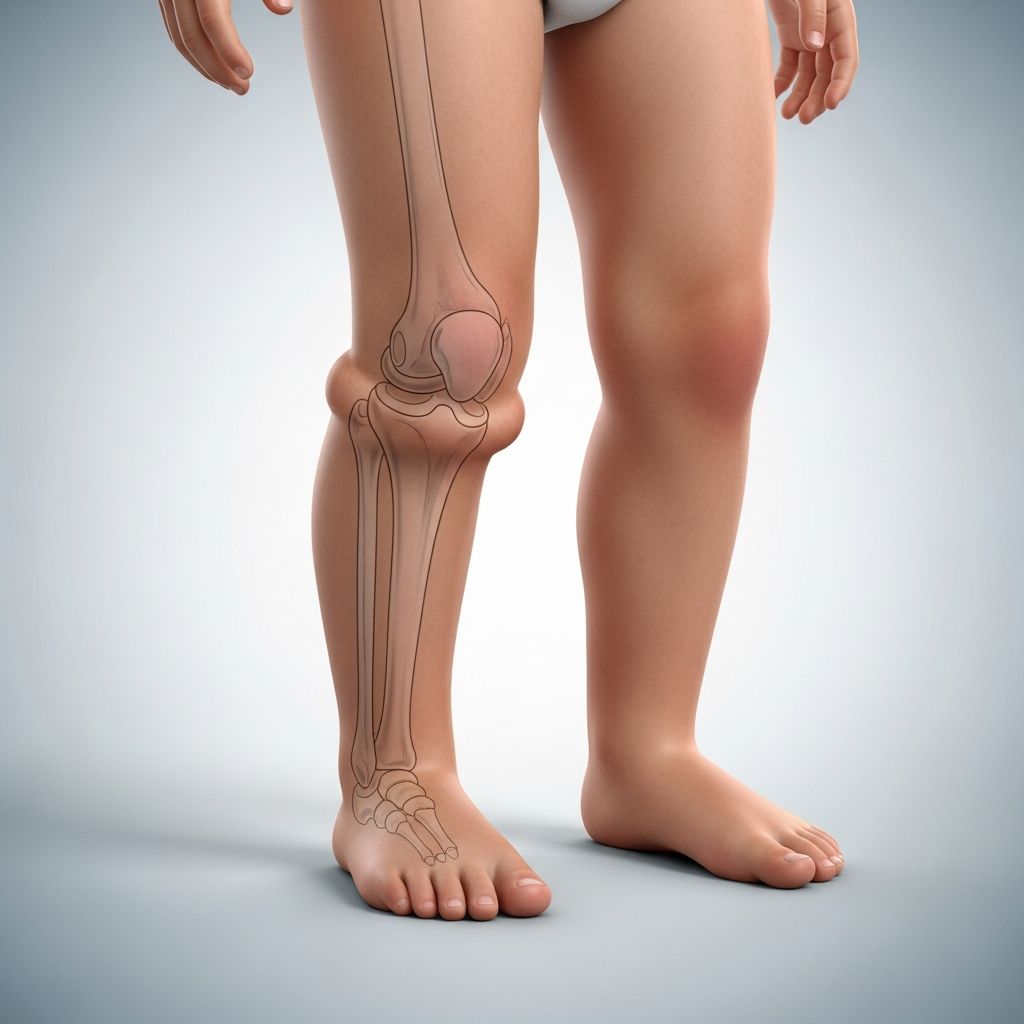
Blount disease, clinically termed tibia vara, represents a developmental disorder where excessive pressure on the inner upper tibia disrupts normal bone growth, resulting in progressive bowing of the legs below the knee. This condition demands early recognition to prevent long-term complications like arthritis and mobility issues.
Recognizing the Core Problem: What Happens in Blount Disease
The shin bone, or tibia, features a growth plate at its upper end responsible for lengthening during childhood. In Blount disease, compressive forces—often amplified by body weight—damage the medial (inner) portion of this plate, halting growth there while the outer side continues, creating a bowlegged appearance known as genu varum. Unlike physiologic bowing, which resolves by age 2-3, Blount’s deformity worsens over time.
This growth arrest leads to a three-dimensional distortion: varus angulation, posterior sloping of the tibial plateau (procurvatum), and internal rotation of the tibia. In advanced cases, the medial tibial plateau depresses, allowing lateral knee instability and a thrusting gait.
Forms of the Condition: Early vs. Late Development
- Infantile (Early-Onset) Blount Disease: Emerges between ages 1-3, often bilateral, linked to early walking and obesity but also seen in normal-weight kids, hinting at genetic roles.
- Adolescent (Late-Onset) Blount Disease: Appears after age 10, typically unilateral, strongly tied to obesity and rapid weight gain.
Distinguishing these is vital, as infantile forms respond better to bracing if caught early.
Risk Factors and Underlying Contributors
While the precise trigger remains elusive, multiple elements converge. Mechanical overload from excess weight compresses the growth plate, especially in early walkers (before 12 months). Genetic predisposition is evident in higher rates among African American children and familial clusters. Other associations include rickets, renal issues, skeletal dysplasias, and achondroplasia. Obesity accelerates progression in both forms.
| Risk Factor | Associated Form | Impact |
|---|---|---|
| Obesity/Early Walking | Both | Increases compressive force on medial tibia |
| Genetic Susceptibility | Infantile | Higher prevalence in certain ethnic groups |
| Rickets/Metabolic Disorders | Both | Weakens bone growth plate |
Visible Signs and When to Worry
Parents often first notice uneven leg alignment persisting beyond toddlerhood. Key indicators include:
- Marked inward bowing below the knee, worsening with age.
- In-toeing (pigeon-toed gait) from tibial rotation.
- No pain in young children, but knee discomfort and activity-related ache in older kids.
- Limb shortening, waddling walk, or knee instability in severe cases.
Physiologic varus peaks at 6-12 months and corrects by age 2; beyond this, or if asymmetric/unilateral, suspect Blount. Progressive deformity risks knee arthritis and walking difficulties if ignored.
Diagnostic Approaches: Confirming the Deformity
Diagnosis starts with history—weight gain patterns, walking milestones—and physical exam measuring intercondylar distance and rotation. Full-leg standing X-rays are essential, revealing medial tibial beaking, physeal widening, and deformity location via mechanical axis deviation.
The Langenskiöld system stages infantile Blount from I (metaphyseal irregularity) to VI (physeal bar formation), guiding treatment. MRI assesses cartilage damage in complex cases; bone scans differentiate from physiologic bowing.
Management Strategies: From Braces to Surgery
Treatment hinges on age, severity, and form. Early intervention is key.
Non-Surgical Options
- Observation: For mild physiologic-like cases under age 3.
- Bracing: Effective in infantile stage I-II before age 3; KAFO (knee-ankle-foot orthosis) applies valgus force 23 hours/day. Success drops after age 4.
- Weight Control: Critical for all, via diet/exercise to lessen physeal stress.
Surgical Interventions
For advanced disease or bracing failures:
- Osteotomy: Cuts and realigns tibia/femur; temporary hemiepiphysiodesis with staples/plates for gradual correction in juveniles.
- Epiphysiodesis: Stops overgrowth on lateral side.
- Plateau Elevation: For stage V-VI with depression, elevates medial tibia to restore joint surface.
Guided growth techniques using eight-plate are popular for adolescents, allowing correction as child grows.
Outlook and Long-Term Prognosis
With timely treatment, most achieve straight legs and normal function. Untreated, it leads to irreversible deformity, early osteoarthritis, and disability. Bracing succeeds in 80-90% of early infantile cases; surgery boasts high success in correcting alignment. Follow-up monitors growth until skeletal maturity.
Multidisciplinary care—involving orthopedists, nutritionists, physical therapists—optimizes outcomes. Weight management prevents recurrence.
Prevention Tips for Parents
- Monitor leg alignment after age 2; seek ortho consult for persistent bowing.
- Promote healthy weight from infancy; delay early walking if overweight.
- Ensure balanced nutrition with vitamin D/calcium to avoid rickets.
- Regular pediatric check-ups catch issues early.
Frequently Asked Questions (FAQs)
Is Blount disease the same as normal bowlegs?
No. Normal bowlegs correct by age 2-3; Blount worsens and affects the tibia specifically.
Can Blount disease be cured without surgery?
Yes, bracing works well in very young children with mild infantile forms, combined with weight loss.
Does Blount disease cause pain?
Not in toddlers, but adolescents often report knee pain worsening with activity.
Is Blount disease hereditary?
Genetic factors contribute, especially in infantile cases, with higher risks in certain populations.
How is Blount disease different in teens?
Adolescent form links more to obesity, is often unilateral, and usually requires surgery.
References
- Blount Disease – StatPearls — NCBI Bookshelf, NIH. 2023-07-17. https://www.ncbi.nlm.nih.gov/books/NBK560923/
- Blount’s Disease Symptoms, Causes & Treatment — Cleveland Clinic. 2023-08-15. https://my.clevelandclinic.org/health/diseases/22424-blounts-disease
- Blount’s Disease — Paley Orthopedic & Spine Institute. 2022-11-01. https://paleyinstitute.org/blounts-disease/
- Blount’s Disease Bowleg Treatment — Hospital for Special Surgery (HSS). 2024-02-20. https://www.hss.edu/health-library/conditions-and-treatments/blounts-disease
- Blount disease — National Organization for Rare Disorders (NORD). 2023-05-10. https://rarediseases.org/mondo-disease/blount-disease/