Keeping track of blood sugar levels is a cornerstone of diabetes management for children. This process helps parents, caregivers, and healthcare providers make informed decisions about insulin, diet, and activity to maintain stable glucose. With advancements in technology and proven traditional methods, families have more tools than ever to ensure child safety and well-being.
Understanding Blood Glucose and Its Importance in Kids
Blood glucose, or blood sugar, is the main sugar found in the bloodstream that provides energy to the body’s cells. In children with diabetes, the body struggles to regulate this sugar due to insufficient insulin production or ineffective use of it. Regular monitoring reveals patterns in glucose fluctuations influenced by meals, exercise, stress, illness, or sleep, allowing timely interventions to prevent highs (hyperglycemia) or lows (hypoglycemia).
For young patients, consistent tracking reduces risks like diabetic ketoacidosis or seizures from severe lows. It also empowers kids to understand their condition, fostering independence as they grow. Parents should aim for target ranges set by their pediatric endocrinologist, typically 70-180 mg/dL, adjusted for age and activity.
Traditional Fingerstick Testing: Step-by-Step Process
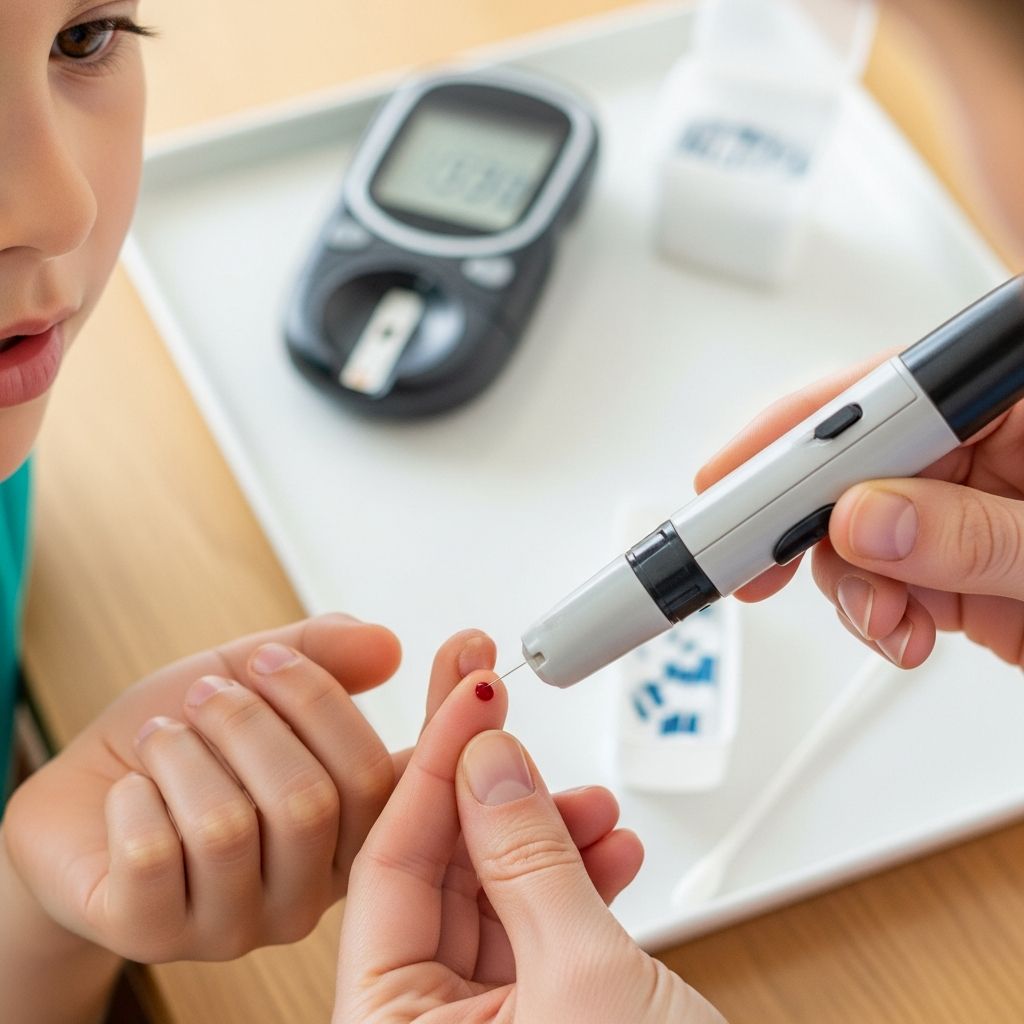
Fingerstick blood glucose meters remain a reliable, accessible option for many families. These portable devices use a small lancet to prick the finger, drawing a drop of blood onto a test strip inserted into the meter for a reading within seconds.
To ensure accuracy:
- Wash hands with soap and warm water, then dry thoroughly to avoid contamination.
- Select sites on the sides of fingertips, rotating to prevent soreness.
- Warm hands by rubbing or holding under warm water for better circulation.
- Insert the test strip first, then prick to apply fresh blood immediately.
- Record results with time, meal details, insulin dose, and activity for pattern analysis.
Testing frequency often includes before meals, bedtime, and mid-night if needed, plus anytime symptoms like shakiness, confusion, or excessive thirst appear. Schools require a dedicated meter and supplies in the child’s kit.
| Best Times to Test | Reason |
|---|---|
| Before meals | Determine insulin needs |
| Bedtime | Prevent overnight lows |
| After exercise | Monitor drops from activity |
| Symptoms present | Confirm highs or lows |
Proper disposal of lancets in a puncture-proof container is crucial for safety.
Revolutionizing Care: Continuous Glucose Monitors (CGMs)
CGMs represent a leap forward, providing real-time data every 1-5 minutes without constant finger pricks. A small sensor inserted under the skin measures glucose in interstitial fluid, transmitting readings via Bluetooth to a smartphone, receiver, or smartwatch.
Key benefits include trend arrows showing direction and speed of change, customizable alerts for highs/lows, and historical graphs for insight into daily patterns. This is invaluable for active kids or during sleep, catching issues early.
Popular CGM systems for children:
- Dexcom G6/G7: Compact sensors for ages 2+, all-day wear on abdomen or arm, precise alerts.
- Medtronic Guardian Connect: Arm-worn, integrates with pumps for dosing help.
- FreeStyle Libre 2/3: Affordable, scan or app-connected, upper arm placement.
- Senseonics Eversense: Implantable up to 90 days, ideal for adhesive-sensitive kids.
Calibration with occasional fingersticks may be needed, especially if readings mismatch symptoms. Always verify with a blood test during discrepancies.
Integrating CGMs and Pumps for Automated Management
Many CGMs pair with insulin pumps in hybrid closed-loop systems, where the pump adjusts basal insulin based on glucose trends. This automation eases burden on parents, particularly for toddlers who can’t self-report.
For school use, ensure the Diabetes Medical Management Plan (DMMP) outlines CGM protocols, including staff response to alarms and remote monitoring options.
Daily Routines: Building a Monitoring Schedule
A structured routine normalizes testing. Mornings start with fasting checks, followed by pre-meal tests. Post-meal monitoring 1-2 hours later tracks carb impacts. Nighttime routines include dinner, snack, bedtime, and possibly 2-3 AM checks initially.
Adapt for school: Pack backup supplies, train staff via DMMP. Apps like Gluroo enable sharing data with multiple caregivers for comprehensive oversight.
Track alongside ketones during illness or highs to prevent complications. Meters with memory or apps download data for doctor reviews, revealing trends like dawn phenomenon or exercise effects.
Navigating Challenges in Children’s Blood Sugar Tracking
Young children may resist pricks; use comfort lancets, distractions, or site rotation. Skin irritation from sensors calls for barriers or rotation. Cost and insurance vary—consult providers for coverage.
Accuracy factors: Expired strips, extreme temperatures, or improper storage affect results. Train on troubleshooting, like error codes.
School and Shared Care: Collaborative Strategies
Effective school partnerships are vital. Provide two meters (home/school), CGM access for staff, and clear DMMPs specifying alarm responses and communication.
Remote CGM viewing allows parental oversight. Educate teachers on non-discrimination under laws like Section 504.
Empowering Kids: From Dependence to Independence
Age-appropriate involvement builds skills. Toddlers watch demos; school-agers prick with supervision; teens manage fully. Reward charts encourage participation without pressure.
Discuss feelings to reduce stigma, emphasizing monitoring as health protection.
Frequently Asked Questions (FAQs)
What if CGM and fingerstick readings differ?
Trust fingerstick and recheck; symptoms override devices. Calibrate as directed.
How often should I replace CGM sensors?
Typically 7-14 days, per device instructions. Eversense lasts 90 days.
Can CGMs replace all fingersticks?
No, use for symptoms, meals if required by doctor.
Are CGMs safe for very young children?
Yes, approved from age 2 for many systems.
What supplies are essential for school?
Meter, strips, lancets, glucagon, snacks, DMMP.
References
- Continuous Glucose Monitors For Children: All You Need to Know — Gluroo. 2024. https://gluroo.com/blog/diabetes-101/all-about-continuous-glucose-monitors/
- Safe at School®: Guidance for the Use of Continuous Glucose Monitors — American Diabetes Association. 2024-04-24. https://diabetes.org/sites/default/files/2024-04/CGM-guidance-4-24.pdf
- Checking Blood Glucose in Kids — Children’s Healthcare of Atlanta. Accessed 2026. https://www.choa.org/parent-resources/diabetes/checking-blood-glucose-in-kids
- Type 1 diabetes in children – Diagnosis and treatment — Mayo Clinic. Accessed 2026. https://www.mayoclinic.org/diseases-conditions/type-1-diabetes-in-children/diagnosis-treatment/drc-20355312
- Monitoring Blood Glucose and Ketones — Dartmouth Health Children’s. Accessed 2026. https://childrens.dartmouth-health.org/diabetes-education/monitoring-blood-glucose-and-ketones
- Tips for Checking Blood Sugar — UCSF Benioff Children’s Hospitals. Accessed 2026. https://www.ucsfbenioffchildrens.org/education/tips-for-checking-blood-sugar