Seeing blood at any stage of pregnancy can be frightening, but it is also relatively common and does not always signal a loss or serious complication. Some women experience light spotting or brief episodes of bleeding and go on to have completely healthy pregnancies and babies. At the same time, bleeding can occasionally be a sign that something is wrong and needs prompt medical attention.
This article explains the many possible reasons for spotting or bleeding during pregnancy, how causes can differ by trimester, what symptoms to watch for, and when to contact a healthcare provider or seek emergency care. It also offers practical tips for tracking your symptoms, preparing for medical visits, and caring for yourself physically and emotionally.
Normal vs. Concerning Bleeding
Not all bleeding in pregnancy is dangerous. The amount of blood, the color, how long it lasts, and whether it is accompanied by pain or other symptoms all play a role in determining how serious it may be. In early pregnancy, small amounts of light spotting are especially common, while heavy bleeding that soaks pads is more concerning at any stage.
- Light spotting (a few drops or streaks on toilet paper or a panty liner) may be harmless and related to implantation, cervical irritation, or recent intercourse.
- Heavier bleeding, especially if bright red, with clots, tissue, strong cramps, or dizziness, can signal miscarriage, ectopic pregnancy, or other complications and should be assessed urgently.
Even if bleeding appears mild, pregnancy is a time to err on the side of caution. Contacting a healthcare provider helps rule out serious causes and offers reassurance when bleeding turns out to be benign.
Common Causes of Bleeding in the First Trimester
The first trimester (conception through 12 weeks) is when bleeding is most often reported. Many pregnancies with some early bleeding still continue normally, but this is also the time when miscarriages and ectopic pregnancies typically occur.
Implantation Bleeding
Implantation bleeding can happen very early in pregnancy when the fertilized egg attaches to the lining of the uterus. This process can mildly disrupt small blood vessels in the uterine lining and lead to light spotting around the time a period would normally be expected.
- Usually light, pink or brown in color.
- Often shorter than a usual period, lasting a few hours to a couple of days.
- Rarely accompanied by strong cramps or large clots.
Because it can mimic a light period, some people do not realize they are pregnant until later, especially if they have irregular cycles.
Cervical Changes and Irritation
During pregnancy, increased blood flow and hormonal changes make the cervix softer and more sensitive. The tiny blood vessels in the area can break more easily, leading to light spotting after sexual intercourse, a pelvic exam, or even constipation and straining.
- Bleeding is often light and brief, usually without cramps.
- May appear after sex or after a vaginal examination.
- Color can be pink, red, or brown as it dries.
This type of spotting is quite common and often harmless, but persistent or heavy bleeding still should be evaluated to exclude infection or other problems.
Threatened Miscarriage and Miscarriage
A threatened miscarriage is the term used when there is vaginal bleeding in early pregnancy but the cervix remains closed and the fetus still has a heartbeat. Not all threatened miscarriages end in pregnancy loss; some resolve, and the pregnancy continues normally.
- Bleeding can range from light spotting to a flow similar to a period.
- There may be mild to moderate pelvic cramping or lower back pain.
- An ultrasound is usually needed to check the status of the pregnancy.
A miscarriage (early pregnancy loss) is diagnosed when there is clear evidence that the pregnancy has ended. This may be confirmed by ultrasound, falling pregnancy hormone levels, or the passage of tissue from the uterus.
- Bleeding may become heavier, sometimes with clots or grayish tissue.
- Cramping may resemble or exceed menstrual cramps.
- Symptoms of pregnancy, such as breast tenderness or nausea, may lessen.
Many women worry that something they did caused a miscarriage, such as mild exercise or lifting an object, but most miscarriages result from chromosomal or developmental problems that cannot be prevented.
Ectopic Pregnancy
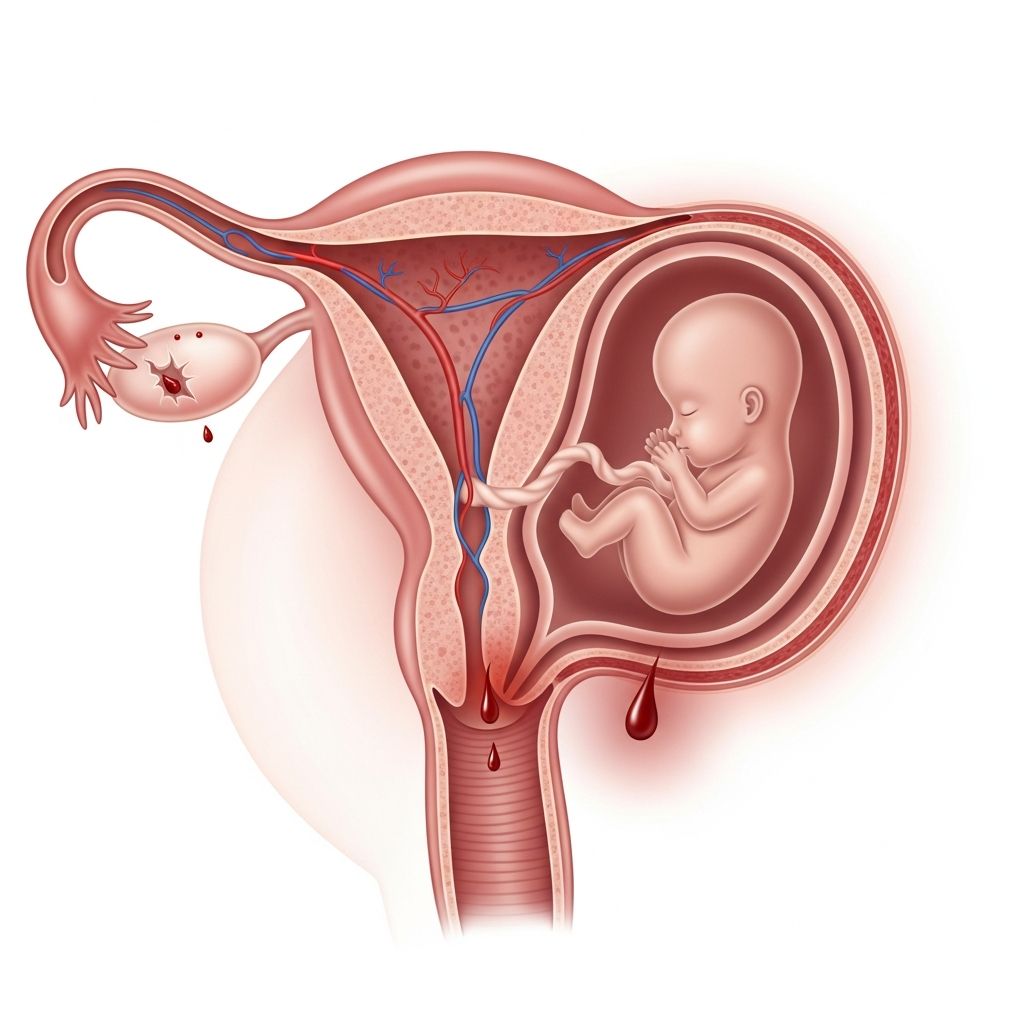
An ectopic pregnancy occurs when a fertilized egg implants outside the uterus, most commonly in a fallopian tube. Because the tube cannot stretch to accommodate a growing pregnancy, this condition can become a medical emergency and must be treated promptly.
- Symptoms may include light or moderate vaginal bleeding, sharp one-sided pelvic pain, and shoulder pain (from internal bleeding irritating the diaphragm).
- There may be dizziness, fainting, or a feeling of extreme weakness.
- Risk factors can include a history of pelvic infections, prior ectopic pregnancy, or tubal surgery, but it can happen without any known risks.
Anyone who is pregnant and experiences sudden, severe pain with bleeding or feels faint should seek emergency care immediately because a ruptured ectopic pregnancy can be life threatening.
Other Early Pregnancy Causes
In the first trimester, bleeding can occasionally be linked to less common conditions. One example is a subchorionic hematoma, where blood collects between the uterine wall and the developing pregnancy. Another is a molar pregnancy, in which abnormal tissue grows in the uterus instead of a healthy embryo.
- Subchorionic hematomas can cause light or heavy bleeding but sometimes resolve on their own with monitoring.
- Molar pregnancies usually require medical treatment and follow-up because of the risk of complications.
These conditions are typically diagnosed through ultrasound and blood tests. Management may involve closer monitoring, restrictions on activity, or procedures to remove abnormal tissue.
Bleeding in the Second and Third Trimesters
Bleeding after the first trimester is less common but more likely to signal a serious issue, especially if it is heavy, recurrent, or accompanied by pain or contractions. However, some harmless causes such as cervical irritation and normal “bloody show” near labor can still occur.
Placenta Previa
Placenta previa happens when the placenta implants low in the uterus and partially or completely covers the cervix. As the uterus stretches, the placenta can bleed, often without much cramping or pain. This condition is usually detected by routine ultrasound.
- Bleeding is typically bright red and may be recurrent.
- It often occurs in the second half of pregnancy.
- Pelvic rest (no intercourse or vaginal exams) and activity modification are frequently recommended.
In some cases, the placenta moves upward as the uterus grows, resolving the problem. If the placenta still covers the cervix close to term, a cesarean birth is usually necessary to avoid dangerous bleeding during labor.
Placental Abruption
Placental abruption is a more urgent condition in which the placenta partially or completely separates from the uterine wall before birth. This separation reduces or cuts off oxygen and nutrients to the baby and can cause heavy bleeding in the mother.
- Symptoms often include vaginal bleeding, sudden abdominal or back pain, and a hard or tender uterus.
- Bleeding may be visible or concealed inside the uterus, so severe pain with minimal external blood can still be serious.
- Risk factors include high blood pressure, abdominal trauma, smoking, and previous abruption, but it can occur without any known risk.
Placental abruption usually requires hospital care and close monitoring. In severe cases, an urgent delivery—often by cesarean—may be needed to protect both mother and baby.
Preterm Labor and Bloody Show
As the cervix begins to soften and open, particularly late in pregnancy, you may notice a thick mucus discharge with streaks of blood called “bloody show.” This is a normal sign that labor is approaching, especially when it occurs near the due date and is accompanied by regular contractions.
- Bloody show is usually mixed with mucus and not heavy like a menstrual period.
- Contractions may become stronger, longer, and closer together over time.
- Water breaking or increasing pelvic pressure may also be present.
When similar symptoms appear before 37 weeks, they may indicate preterm labor. In that situation, it is important to contact a healthcare provider right away for assessment and possible treatments to slow or manage early labor.
Other Late Pregnancy Causes
In the second and third trimesters, bleeding can also arise from less common problems such as vasa previa (where fetal blood vessels cross the cervical opening), uterine rupture along a previous cesarean scar, or cervical growths or infections. These conditions are less frequent but can be serious.
- Vasa previa often presents as painless bleeding when membranes rupture, and it is an obstetric emergency.
- Uterine rupture can cause intense pain, abnormal fetal heart rate patterns, and internal bleeding, particularly in women with uterine scars.
Prompt medical attention for any unexplained late-pregnancy bleeding is essential, regardless of whether pain is present.
Assessing Bleeding: What to Notice
When calling a healthcare provider about bleeding, the details you provide can help them quickly gauge how serious the situation might be. Keeping track of specific characteristics also gives you a clearer picture of what is happening.
- Amount: Is it just a few spots, or enough to soak a pad? How many pads in an hour?
- Color: Pink, bright red, or brown (old blood)? Any clots or tissue?
- Timing: When did it start, and is it getting better, worse, or staying the same?
- Triggers: Did it happen after sex, a pelvic exam, vigorous activity, or a bowel movement?
- Symptoms: Any cramps, back pain, shoulder pain, dizziness, fainting, fever, or contractions?
Writing this information down or taking a photo of pads or tissue (if comfortable doing so) can help your provider understand the pattern and choose the right next steps.
Diagnostic Tests and Medical Evaluation
A medical evaluation for bleeding in pregnancy usually starts with a thorough description of your symptoms, followed by a physical exam and specific tests. The exact approach depends on how far along you are and how severe the bleeding is.
| Test | What It Involves | What It Can Show |
|---|---|---|
| Pelvic or speculum exam | The provider gently examines the cervix and vagina. | Source of bleeding, cervical dilation, visible lesions or infections. |
| Transvaginal or abdominal ultrasound | A probe uses sound waves to create images of the uterus and pregnancy. | Location and viability of pregnancy, placental position, presence of clots or fluid. |
| Blood tests | Samples taken from a vein for lab analysis. | hCG levels, blood count, blood type, and Rh factor. |
| Urine tests | A urine sample is checked in the office or lab. | Signs of infection or other conditions that may affect pregnancy. |
| Cervical or vaginal swabs | Soft swabs collect cells or discharge. | Evidence of sexually transmitted infections or other vaginal infections. |
These tests help distinguish between benign causes and urgent conditions such as ectopic pregnancy, miscarriage, and placental problems. In some cases, the cause of bleeding cannot be clearly identified, even after careful evaluation, but continued monitoring still offers important reassurance.
Treatment Options and Management
Treatment for bleeding during pregnancy depends entirely on the underlying cause and the stage of pregnancy. Some situations require only observation and rest, while others may call for medications, procedures, or early delivery.
- Watchful waiting and rest: Mild bleeding from cervical irritation or small subchorionic hematomas may simply be monitored, with advice to rest and avoid strenuous activity.
- Pelvic rest: Avoiding intercourse, tampons, and douching is commonly recommended for placenta previa, cervical issues, or unexplained bleeding.
- Medications: In certain cases, medications may be used to support early pregnancy, address infections, control contractions, or protect future pregnancies if blood type incompatibility is an issue.
- Procedures or surgery: Miscarriages that do not resolve on their own, ectopic pregnancies, severe placental abruptions, or heavy ongoing bleeding may require surgical management or cesarean delivery.
Your provider will explain the benefits and risks of each option, considering your medical history, how far along you are, and the health of both you and your baby.
Self-Care and Coping Strategies
Bleeding during pregnancy is not just a physical event; it can also be emotionally overwhelming. Worry, fear, guilt, and sadness are all common responses. It is important to focus on both your emotional and physical well-being while following medical advice.
- Follow instructions on rest and activity, even if you feel physically capable of doing more.
- Use pads to track the amount of bleeding rather than tampons or menstrual cups.
- Stay hydrated and eat small, nutrient-dense meals to support your body.
- Lean on supportive friends, family members, or partners to help with daily tasks.
- Consider counseling, support groups, or pregnancy loss organizations if you experience a miscarriage or ongoing anxiety.
Remember that most causes of bleeding are not the result of anything you did or did not do. Practicing self-compassion and seeking emotional support can make a significant difference in how you navigate this experience.
When to Call a Doctor vs. Go to the ER
While it is always appropriate to reach out to a provider about bleeding in pregnancy, some symptoms are especially urgent. Distinguishing between situations that can wait for an office call and those that require emergency care helps you act quickly when needed.
Contact Your Provider Promptly If:
- You notice light spotting that lasts more than a day or two.
- You have any bleeding after intercourse or a pelvic exam that worries you.
- You experience mild cramps or back pain with light bleeding.
- You have a history of pregnancy complications and see any new blood.
Seek Emergency Care Immediately If:
- Bleeding is heavy enough to soak a pad in an hour or less, or you pass large clots or tissue.
- You have severe abdominal, pelvic, or shoulder pain, or pain on one side of the abdomen.
- You feel dizzy, faint, short of breath, or have a rapid heartbeat.
- You have bleeding with contractions before 37 weeks, or suspect preterm labor.
- You know you have placenta previa and experience any vaginal bleeding.
If you are ever unsure whether to go to the emergency room, it is safer to seek urgent care than to wait. Medical professionals can stabilize serious conditions and help protect both your health and your baby’s health.
Frequently Asked Questions (FAQs)
1. Is any bleeding during pregnancy normal?
Light spotting—especially in early pregnancy or after intercourse—can be relatively common and may not indicate a problem. However, there is no way to be completely certain without professional evaluation, so any bleeding during pregnancy should be discussed with a healthcare provider.
2. Can I prevent bleeding during pregnancy?
Many causes of bleeding, such as implantation or chromosomal issues leading to miscarriage, cannot be prevented. Maintaining prenatal care, avoiding smoking and illicit drugs, managing chronic conditions like high blood pressure, and following your provider’s advice about activity and pelvic rest can help reduce some risks.
3. Does bleeding always mean I am miscarrying?
No. Although bleeding is a common symptom of miscarriage, many pregnancies with early bleeding continue without further problems. Only an exam, ultrasound, and appropriate testing can confirm whether a pregnancy is ongoing or has been lost.
4. What should I do at home while I wait to be seen?
Use a pad to monitor the amount of bleeding, rest as much as possible, and avoid intercourse or inserting anything into the vagina unless your provider gives different instructions. If your symptoms worsen—especially if pain or heavy bleeding increases—seek more urgent care right away.
5. Will bleeding harm my baby if everything looks fine on ultrasound?
When evaluation shows that the pregnancy is stable and there are no serious complications, mild bleeding by itself often does not harm the baby. Your provider may still recommend extra monitoring, follow-up ultrasounds, or adjustments in your activity level as a precaution.
6. Is it safe to have sex while pregnant if I have had spotting?
This depends on the cause of the bleeding and your provider’s recommendations. In some cases, such as placenta previa or repeated unexplained bleeding, pelvic rest is advised and intercourse should be avoided. Always ask your provider what is safe for your specific situation.
Key Takeaways
- Bleeding during pregnancy is relatively common, especially in the first trimester, and does not always mean a pregnancy will be lost.
- Causes range from benign issues like implantation bleeding or cervical changes to serious conditions such as ectopic pregnancy, miscarriage, placenta previa, and placental abruption.
- The amount of blood, its color, timing, and associated symptoms like pain or dizziness all help determine how urgent the situation is.
- Evaluation typically includes history, physical or pelvic exams, ultrasound, and blood or urine tests to identify the cause and guide treatment.
- Listening to your body, seeking medical advice promptly, and caring for your emotional well-being are all vital parts of managing bleeding during pregnancy.