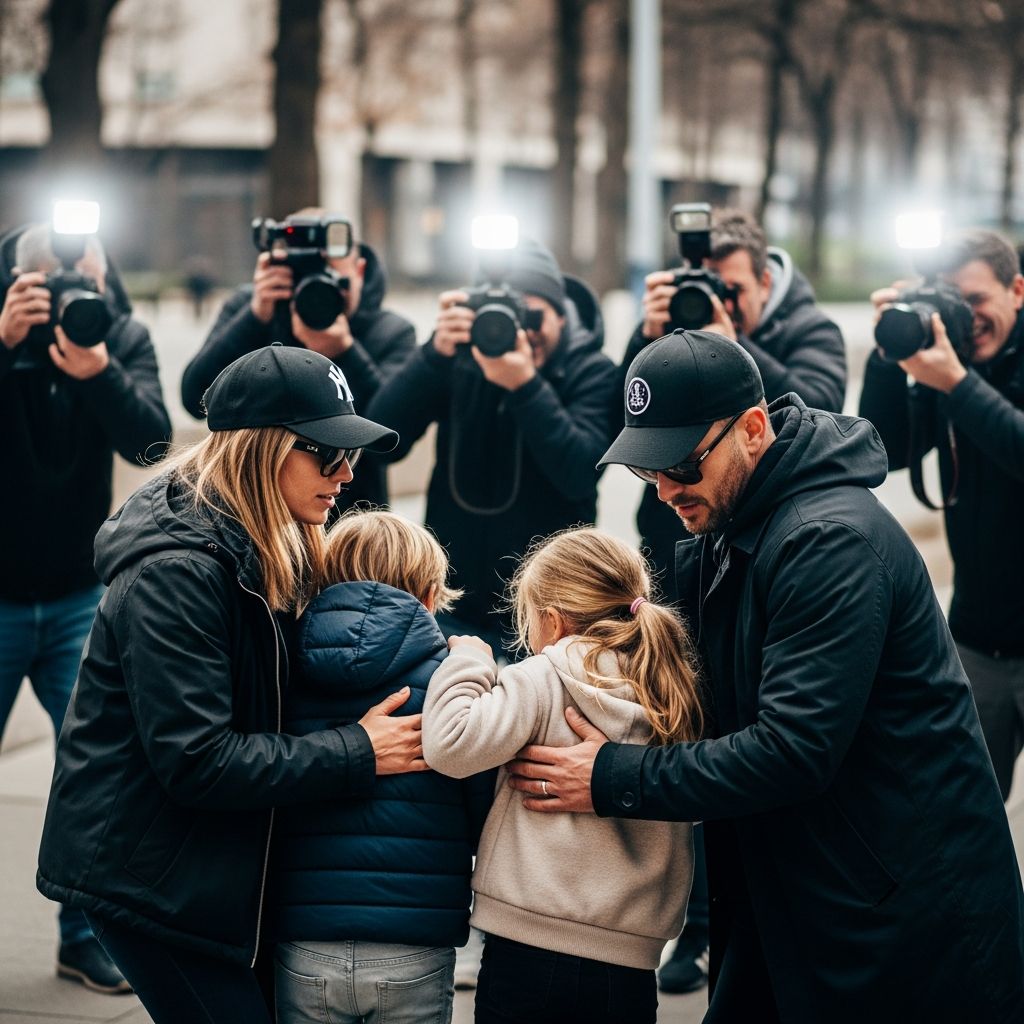
High-profile families face unique challenges in safeguarding their children’s privacy amid relentless media scrutiny. Actresses like Blake Lively have taken bold public stands against paparazzi and social media accounts that share unauthorized images of their young kids, highlighting a growing tension between public fascination and personal boundaries.
The Rising Tide of Intrusion in Celebrity Family Life
In the age of social media and 24/7 news cycles, celebrity children often become unintended targets of aggressive photography. Parents who choose fame for themselves struggle to shield their offspring from cameras that lurk around playgrounds, parks, and everyday outings. This phenomenon raises profound questions about consent, safety, and the ethics of exploiting minors for clicks and views.
Blake Lively, known for her roles in films like The Shallows and her marriage to Ryan Reynolds, has been vocal about these issues. She and Reynolds share three daughters whose names—James, Inez, and Betty—have occasionally surfaced in public despite their parents’ efforts to keep them private. Lively’s recent confrontations underscore a broader pattern among Hollywood parents determined to redraw the lines of acceptable intrusion.
Blake Lively’s Direct Confrontation with Social Media Exploiters
One pivotal incident involved Lively calling out an Instagram account dedicated to celebrity offspring. The account, which has since removed the offending post, shared paparazzi-snapped images of Lively’s family. In a candid comment, Lively labeled the post “so disturbing,” revealing prior private communications where the account owners promised not to feature her children.
“I’ve personally shared with you that these men stalk and harass my children. And you are still posting. You said you would stop. You personally promised me,” she wrote, emphasizing the betrayal and the real-world dangers involved. Lively urged deletion, stating, “This is not casual appreciation. This is YOU also exploiting very young children. Please. Delete. Please. Some parents are ok with this. We. Are. NOT.” Her words resonated widely, prompting fans to unfollow the account en masse.
Following the backlash, Lively thanked supporters on her Instagram Story: “Thank you to everyone UNFOLLOWING accounts who exploit children. YOU make ALL the difference.” This grassroots response demonstrates how individual voices can amplify calls for change in online spaces.
Paparazzi Tactics: From Shadows to Stalking Allegations
Lively’s activism stems from personal encounters with aggressive photographers. Earlier in the year, she described a harrowing experience where a man repeatedly photographed her children despite her requests to stop. “I would calmly approach the photographer,” she recounted, only to face persistence that she deemed “frightening” and akin to stalking.
These incidents aren’t isolated. Paparazzi often position themselves in public spaces, using long lenses to capture images without direct interaction. However, when children are involved, parents argue this crosses into harassment territory. Lively demanded that media outlets cease paying for such photos obtained through intimidation, even suggesting background checks on freelancers to ensure child safety.
- Common paparazzi strategies: Hiding in bushes or vehicles near family hotspots like schools and parks.
- Parent responses: Verbal confrontations, legal warnings, and public shaming via social media.
- Escalation risks: Repeated approaches can lead to unsafe situations for both parties.
Industry-Wide Efforts: The No Kids Policy and Beyond
Efforts to curb this practice date back over a decade. In 2014, Kristen Bell and Dax Shepard launched the “No Kids Policy,” convincing several media outlets to pledge against buying or publishing photos of celebrity children. While some adhered, enforcement has been inconsistent, leading to ongoing violations.
Recent years have seen renewed advocacy. Supermodel Gigi Hadid has pleaded with photographers to spare her daughter, while Game of Thrones star Sophie Turner posted a raw video decrying the “disgusting” act of grown men photographing her baby without permission. “She is my daughter. She did not ask for this life, to be photographed,” Turner stated, calling it “fucking creepy” and urging an end to the pursuit.
| Parent | Action Taken | Year |
|---|---|---|
| Blake Lively | Instagram call-out and media demands | 2023 |
| Sophie Turner | Public video plea | 2023 |
| Gigi Hadid | Direct pleas to photographers | 2023 |
| Kristen Bell & Dax Shepard | Launched No Kids Policy | 2014 |
This table illustrates a timeline of resistance, showing persistence despite partial successes.
Psychological Impact on Children: Expert Perspectives
Beyond immediate safety, constant exposure erodes a child’s sense of normalcy. Child psychologists note that growing up under surveillance can foster anxiety, self-consciousness, and distorted views of privacy. “Children in the public eye may internalize the idea that their every move is for consumption, impacting emotional development,” explains one family therapist specializing in high-profile cases.
Studies from child welfare organizations highlight risks like online grooming when images circulate widely. Parents like Lively prioritize mental health, arguing that fame’s perks don’t extend to unwilling minors. By keeping faces blurred or absent from media, they aim to grant their kids agency over their image.
Legal Landscape: Rights vs. Public Interest
In the U.S., paparazzi operate under First Amendment protections for photography in public spaces. However, harassment laws provide recourse if behavior escalates to threats or stalking. Celebrities have pursued lawsuits, with mixed results—some settlements include no-publish clauses.
Internationally, regulations vary. The UK’s Editors’ Code of Practice discourages intrusive photos of children, while EU privacy laws offer stronger shields. Advocates push for global standards, including age-based restrictions on image sharing.
- Strengthen no-kids pledges: More outlets committing formally.
- Platform policies: Social media algorithms flagging exploitative kid content.
- Legislative pushes: Bills protecting minors’ likeness rights.
Fan Power: Driving Change Through Unfollows and Boycotts
Lively’s success with the Instagram account proves audience influence. When fans unfollow and report, algorithms deprioritize harmful content, starving creators of revenue. This consumer-led approach empowers everyday people to support celebrity parents’ fights.
Hashtags like #ProtectKidsFromPaps have trended, fostering communities that amplify messages. Publications report dips in kid-photo traffic when boycotted, incentivizing ethical shifts.
Balancing Fame and Family: Strategies for Celebrity Parents
Not all stars shun the spotlight equally—some share curated glimpses to control narratives. Others, like Lively, adopt strict no-kid policies. Common tactics include:
- Decoy outings with nannies or body doubles.
- Private schooling and gated communities.
- Legal teams issuing cease-and-desist letters preemptively.
- Social media blocks on fan accounts posting kids.
Ryan Reynolds has echoed his wife’s stance, occasionally posting family moments on his terms while decrying invasions. Their united front models healthy boundary-setting.
Frequently Asked Questions (FAQs)
Why do paparazzi target celebrity kids?
Photos fetch high prices from tabloids hungry for exclusive family content, capitalizing on public curiosity about stars’ personal lives.
Has the No Kids Policy worked?
Partially—some outlets honor it, but rogue freelancers and social media bypass agreements, necessitating ongoing advocacy.
Can parents legally stop paparazzi?
In public, no outright ban, but harassment claims or private property rules offer leverage; lawsuits deter repeat offenders.
What can fans do to help?
Unfollow accounts posting unauthorized kid photos, report violations, and support ethical media through subscriptions.
Are all celebrities against kid photos?
No—preferences vary; some embrace sharing, while others like Lively fiercely protect privacy.
The Path Forward: Toward Ethical Celebrity Coverage
As digital tools make evasion harder, collaboration is key. Media self-regulation, tech innovations like facial blurring AI, and cultural shifts away from kid exploitation offer hope. Lively’s story inspires not just celebs but all parents navigating online overexposure.
Ultimately, this fight reaffirms a universal truth: children deserve protection from adult agendas, fame or not. By listening to parents’ pleas, society can foster a media landscape valuing dignity over dollars.
References
- Blake Lively Slams A “Disturbing” Instagram Photo Of Her Children — Grazia Magazine. 2023-10-01. https://graziamagazine.com/articles/blake-lively-speaks-out-paparazzi-children-photos/
- Blake Lively shames those who post paparazzi photos of her children — ABC News. 2023-10-01. https://abcnews.com/GMA/Culture/blake-lively-shames-post-paparazzi-photos-children-disturbing/story?id=80705203
- Blake Lively SLAMS Paparazzi for “Disturbing” Post of Her Kids — E! News (YouTube). 2023-10-01. https://www.youtube.com/watch?v=5-2g6Oezmzk
- Blake Lively Slams Instagram Account For ‘Disturbing’ Photo Of Her Kids — Mother.ly. 2023-10-01. https://www.mother.ly/life/blake-lively-kids-paparazzi/