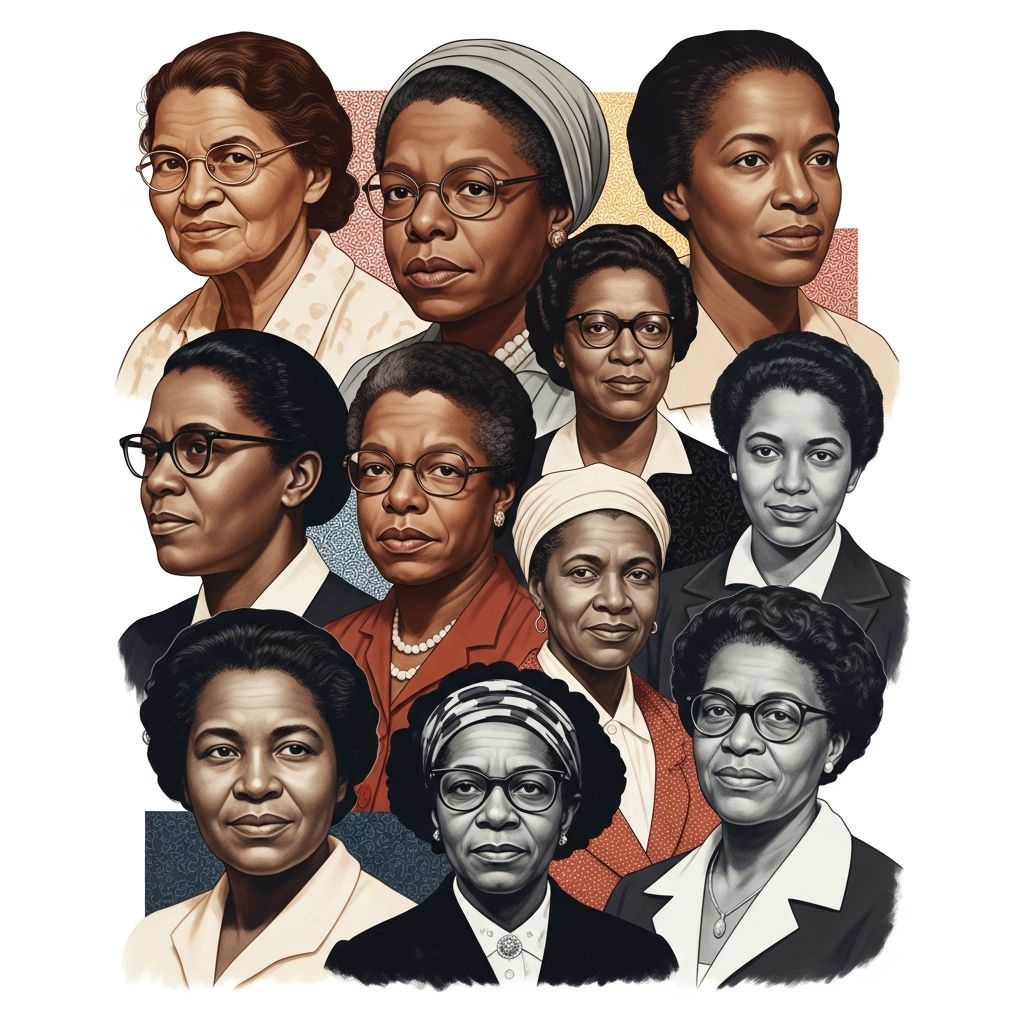
Black women have long been at the forefront of transformative change in America, battling intersecting barriers of race and gender with unmatched resilience. Their stories of courage, innovation, and leadership offer invaluable lessons for children, fostering empathy, determination, and a sense of justice from an early age. By introducing young minds to these icons through interactive family activities, parents can build a foundation of historical awareness and pride.
Pioneers in Justice and Advocacy
From exposing brutal injustices to organizing national movements, Black women activists laid the groundwork for civil rights advancements. Their determination not only challenged systemic oppression but also inspired generations to demand equality.
Ida B. Wells-Barnett stands as a towering figure in investigative journalism. Born into slavery in 1862, she used her pen to document the horrors of lynching in the post-Civil War South, risking her life to reveal these atrocities through pamphlets and newspaper campaigns. Facing death threats, she relocated to Chicago, where she co-founded the National Association of Colored Women’s Clubs, amplifying voices for both racial and gender equity.
Mary Church Terrell channeled personal tragedy into lifelong activism. After the lynching of a close friend, she dedicated herself to education and civil rights, serving as the first president of the National Association of Colored Women and contributing to the founding of the NAACP in 1909. Her efforts extended to desegregating public spaces, arguing landmark cases before the Supreme Court.
- Key Impacts: Founded organizations that united Black women nationwide.
- Legacy for Kids: Teach children about standing against bullying through Wells-Barnett’s brave reporting.
Educators Who Built Futures
Education served as a powerful weapon against ignorance and inequality, and Black women educators wielded it masterfully to uplift communities. Mary McLeod Bethune exemplifies this, rising from humble beginnings as the daughter of former slaves to establish a college that empowered countless Black students.
Born in 1875, Bethune founded the Daytona Normal and Industrial Institute for Negro Girls in 1904 with just six students and minimal resources. Her institution evolved into Bethune-Cookman University, and she advised presidents on racial matters, proving education’s role in breaking cycles of poverty.
Fannie Barrier Williams complemented this mission by advocating for professional training. A college graduate and social reformer, she helped establish Provident Hospital in Chicago, the first Black-owned and interracial hospital, training nurses and providing care amid segregation. Her speeches at international congresses elevated Black women’s voices globally.
| Figure | Contribution | Modern Lesson for Children |
|---|---|---|
| Mary McLeod Bethune | Founded Bethune-Cookman College | Perseverance turns dreams into reality |
| Fannie Barrier Williams | Established Provident Hospital | Healthcare access fights inequality |
Trailblazers in Civil Rights Marches
The visceral fight for voting rights and desegregation saw Black women on the front lines, enduring violence to secure freedoms we now cherish. Amelia Boynton Robinson’s story captures this unyielding spirit. In 1964, she became the first Black woman to run for Alabama’s legislature, defying voter suppression laws.
During the 1965 Selma marches, she was brutally beaten on Bloody Sunday, her image symbolizing the movement’s sacrifices. Yet Robinson persisted, earning the Martin Luther King Jr. Medal of Freedom and living to 104, witnessing the fruits of her labor.
Sojourner Truth’s iconic “Ain’t I a Woman?” speech in 1851 challenged gender and racial stereotypes at a women’s rights convention, advocating for abolition and suffrage with raw eloquence. Her journey from enslavement to orator influenced early feminist discourse profoundly.
Champions of Health and Innovation
Beyond activism, Black women revolutionized health and science, often in the face of exclusion. Rebecca Lee Crumpler broke barriers as the first Black female physician in the U.S., graduating from New England Female Medical College in 1864. She treated freed slaves post-Civil War and authored one of the first medical texts by a Black author.
Modjeska Monteith Simkins advanced public health in South Carolina, leading NAACP efforts and fighting tuberculosis in Black communities. As a civil rights matriarch, she bridged health equity with broader justice campaigns.
Althea Gibson shattered athletic color lines, becoming the first Black player to win a Grand Slam tennis title in 1956. Overcoming bias, she claimed multiple majors, paving the way for stars like Serena Williams.
- Innovations in medicine and sports highlight diverse talents.
- Encourage kids to pursue passions despite obstacles.
Family Activities to Honor Their Legacies
Bringing these stories to life at home creates lasting memories and deepens understanding. Parents can transform history into hands-on learning.
Storytelling Circles
Gather the family for evening sessions reading biographies. Use free online resources from the National Park Service to print portraits and facts. Discuss: “What would you do in her shoes?”
Creative Crafts Inspired by Heroes
Ida B. Wells Newspaper: Kids craft mini newspapers with headlines about injustices, drawing parallels to today’s news.
Bethune’s School Model: Build a school from cardboard, labeling classes she championed.
- Select a figure like Amelia Boynton.
- Draw march scenes with safe protest signs.
- Act out speeches for dramatic flair.
Community Impact Projects
Organize neighborhood clean-ups echoing Fannie Williams’ hospital vision or bake sales for local charities, tying funds to education causes. Track progress on a family chart.
Integrating Lessons into Daily Routines
Make history habitual: Morning calendars feature a “Hero of the Day.” Bedtime prayers thank pioneers. School projects? Collaborate on timelines spanning eras.
For Black History Month or anytime, host viewing parties of documentaries on PBS or YouTube, followed by Q&A. This builds critical thinking alongside facts.
Frequently Asked Questions
How do I start teaching young kids (ages 4-7) about Black women in history?
Begin with picture books and simple videos. Focus on one achievement per hero, like Bethune’s school, using puppets for engagement.
What crafts work best for school-age children (8-12)?
Timeline posters or role-play skits. Have them research via kid-friendly sites and present findings.
Are there free resources for families?
Yes, National Women’s History Alliance and NPS offer downloads. Libraries host story hours too.
How can teens connect these stories to today?
Discuss modern activists like those in Black Lives Matter, drawing parallels to Wells-Barnett’s journalism.
What’s the best time to focus on this topic?
Year-round, but amplify during Black History and Women’s History Months for school tie-ins.
Why These Stories Matter for Tomorrow’s Leaders
Exposing children to Black women’s histories instills resilience and allyship. In a diverse world, understanding intersectional struggles equips kids to dismantle biases. Families honoring these legacies cultivate compassionate global citizens.
Through play, dialogue, and reflection, parents bridge past triumphs to future possibilities. These women didn’t just make history—they forged paths for every child to dream boldly.
References
- 20 Black Women Who Made History — Studies Weekly. 2023. https://www.studiesweekly.com/black-women-history/
- 36 Black Women Who Changed American History — Chicago Coalition for the Homeless. 2022-02. https://coalchicago.com/Images/2022/02/36-Black-women-who-changed-American-history.pdf
- African-American Women Change The World — Google Arts & Culture / National Women’s Hall of Fame. 2023. https://artsandculture.google.com/story/african-american-women-change-the-world-national-women-s-hall-of-fame/zAVhKkr4Mjm-IQ?hl=en
- Black Women and the Struggle for Equality — National Park Service (nps.gov). 2024. https://www.nps.gov/subjects/womenshistory/black-women-and-the-struggle-for-equality.htm
- 11 Black Women Who Made History — Rebel Girls. 2023. https://www.rebelgirls.com/blog/10-black-women-who-made-history
- Black History Month — National Women’s History Alliance. 2024. https://nationalwomenshistoryalliance.org/resources/commemorations/black-history-month/