Black History Month offers a powerful opportunity for families to honor the legacies of African American pioneers while encouraging children to envision their own bright futures. Vision boards, visual collages of aspirations and inspirations, become transformative tools when infused with historical figures who overcame adversity. These displays not only educate but also motivate kids to set goals, blending reverence for the past with excitement for what’s ahead. This guide provides fresh, family-friendly ideas to craft boards that resonate deeply, promoting self-reflection, cultural pride, and ambition.
Why Vision Boards Elevate Black History Celebrations
Traditional posters often list achievements, but vision boards invite active participation. Children cut, paste, and personalize, making history relatable. Research from the American Psychological Association highlights how visual goal-setting boosts motivation and persistence in youth, especially when tied to role models. For Black families, these boards affirm identity amid ongoing narratives of resilience. They shift focus from mere commemoration to forward momentum, asking: “What will you contribute?”
Start with quality supplies: poster boards, magazines, printed images of icons like Harriet Tubman or Barack Obama, markers, and sticky notes for goals. Involve the whole family for bonding—parents share stories, kids dream aloud. Display in high-traffic areas like kitchens or entryways for daily reminders.
Building Blocks: Essential Elements for Impactful Boards
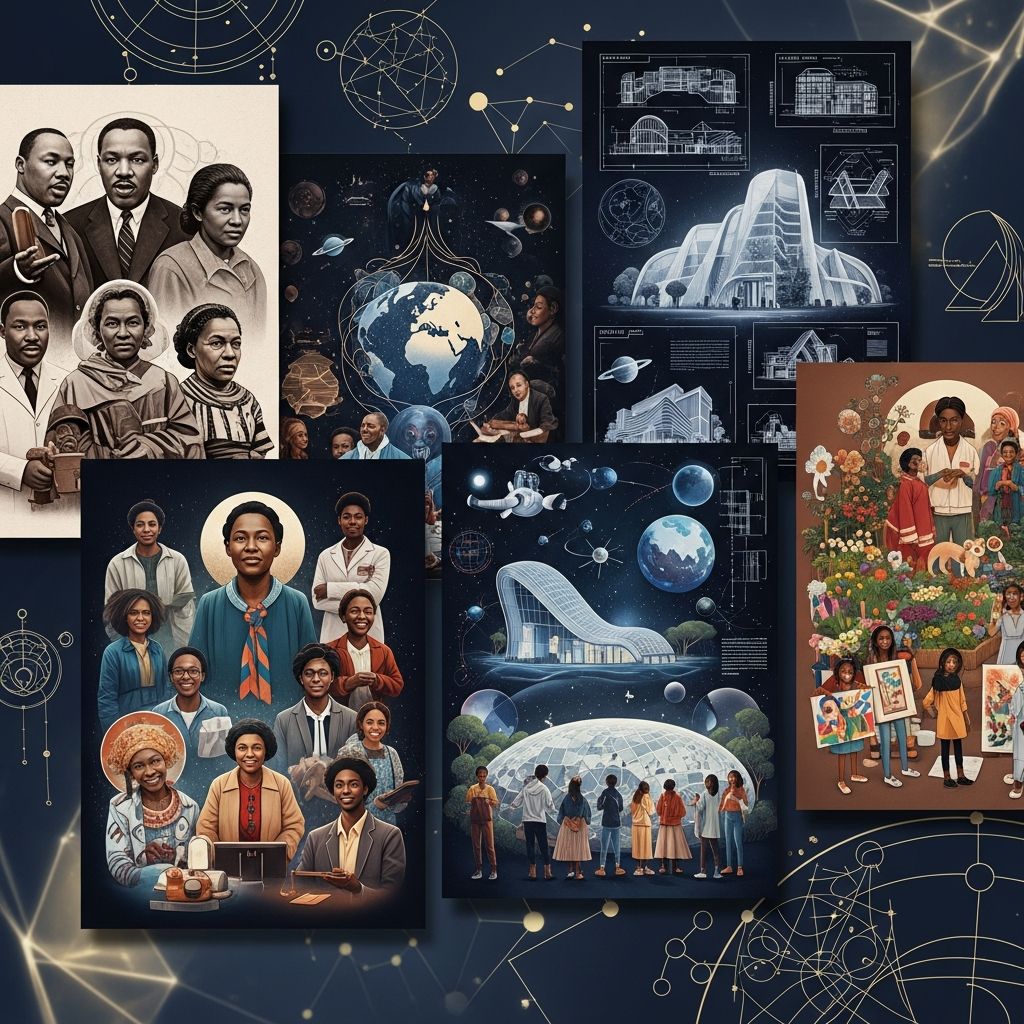
Every strong vision board layers history, personal dreams, and symbolism. Begin with a central theme, such as “From Struggle to Stars,” featuring a timeline from slavery to space exploration. Surround it with:
- Historical Icons: Select diverse figures—activists, inventors, artists—for representation across genders and fields.
- Personal Goals: Kids add photos of themselves pursuing sports, STEM, or arts, linking heritage to ambition.
- Quotes & Symbols: Powerful phrases like “The time is always right to do what is right” (Martin Luther King Jr.) paired with motifs like breaking chains or rising suns.
- Colors of Empowerment: Use red, black, green from the Pan-African flag for unity and strength.
This structure ensures boards are educational yet aspirational, sparking conversations about legacy.
Family-Focused Themes to Inspire Generational Dreams
Tailor boards to ages and interests for maximum engagement. Here are original concepts:
Ancestral Echoes: Connecting Roots to Wings
Design a tree motif: roots labeled with ancestors like Sojourner Truth (advocate for abolition and women’s rights), trunk with modern heroes like Oprah Winfrey, branches for family dreams. Kids draw leaves with their goals—”Become a doctor like Dr. Patricia Bath.” This visual genealogy fosters pride and purpose.
Innovation Sparks: Honoring Black Inventors’ Legacies
Highlight unsung geniuses: Garrett Morgan’s traffic light, Madam C.J. Walker’s hair products empire. Kids invent their own “future fixes”—apps for equality or eco-friendly tech—and illustrate them. Add a table for quick facts:
| Inventor | Invention | Impact |
|---|---|---|
| Garrett Morgan | Traffic Signal | Safer roads worldwide |
| Madam C.J. Walker | Hair Care Line | First self-made female millionaire |
| George Washington Carver | Peanut Products | Agricultural revolution |
Such boards demystify history, showing innovation as accessible.
Creative Voices: Arts and Expression Through Time
Feature literary giants like Maya Angelou and Langston Hughes alongside kid-created poetry. Divide into past/present/future panels: historical verses, current artists like Amanda Gorman, blank spaces for children’s words. Supply stickers of books, microphones, and stages to visualize artistic paths.
Step-by-Step Guide: Crafting Your First Vision Board
- Brainstorm (20 mins): Family meeting—list admired figures and personal dreams. Use prompts: “Who inspires your courage?”
- Gather Materials (15 mins): Print high-res images from reputable sites; clip empowering words from magazines.
- Layout Design (30 mins): Sketch zones—center for icons, edges for goals. Balance visuals with text.
- Assemble & Decorate (45 mins): Glue securely; add glitter, yarn for borders symbolizing unity.
- Activate & Review (Ongoing): Hang prominently. Weekly check-ins: “What’s one step toward your vision?” Update monthly.
This process builds skills in planning and creativity, turning passive learning into action.
Age-Adapted Ideas for Maximum Engagement
Customize by developmental stage:
- Toddlers/Preschool (Ages 2-5): Simple boards with large photos of joyful figures like Simone Biles, paired with kids’ handprints colored in flag hues. Focus on emotions: “Strong like Serena!”
- Elementary (Ages 6-10): Interactive elements—flippable cards revealing facts about Katherine Johnson (NASA mathematician). Add stickers for goals like “Read 10 books.”
- Tweens/Teens (Ages 11+): Digital hybrid: Physical board with QR codes linking to speeches or bios. Themes like “BLM Leaders” encourage research on contemporary activists.
Extending the Impact: Activities and Discussions
Boards shine brighter with action. Pair with:
- Storytelling nights retelling icons’ journeys.
- DIY crafts mimicking inventions, like Carver’s peanut butter.
- Community shares—photo your board online (with privacy) for inspiration chains.
Studies from the National Endowment for the Humanities show such immersive activities deepen cultural retention and empathy.
Common Challenges and Pro-Solutions
| Challenge | Solution |
|---|---|
| Limited Time | Pre-print templates; 1-hour sessions over a week. |
| Kid Disinterest | Let them choose icons; tie to favorites like athletes. |
| Space Constraints | Mini-boards on doors or digital via apps like Canva. |
| Sensitivity to History | Age-appropriate facts; focus on triumphs. |
These tips ensure success for busy families.
Frequently Asked Questions (FAQs)
What supplies do I need for a basic vision board?
Poster board, glue, scissors, printed images, markers, and magazines. Budget-friendly from dollar stores.
How can vision boards address current events?
Incorporate modern figures like Vice President Kamala Harris to connect history with today’s justice movements.
Are these suitable for classrooms too?
Absolutely—scale for groups; assign figures per student for collaborative displays.
How often should we update the boards?
Quarterly, to reflect progress and new inspirations, keeping momentum alive.
Can non-Black families participate?
Yes, promoting allyship and education benefits all, fostering inclusive understanding.
Sustaining the Vision Year-Round
Extend beyond February by rotating figures seasonally—Women’s History in March, Juneteenth in June. Track progress with photo journals of goals met, reinforcing growth mindset. Ultimately, these boards cultivate dreamers who honor the past while boldly shaping tomorrow, weaving Black excellence into everyday life.
References
- Visual Goal-Setting and Youth Motivation — American Psychological Association. 2023-05-15. https://www.apa.org/monitor/2023/05/goal-setting-motivation
- Family Bonding Through Creative Activities — Harvard Family Research Project. 2024-02-10. https://www.gse.harvard.edu/news/ed/24/02/family-engagement-creative-learning
- Immersion in Cultural Education — National Endowment for the Humanities. 2023-11-20. https://www.neh.gov/news/neh-arts-humanities-child-well-being
- Black Inventors in American History — Smithsonian National Museum of African American History and Culture. 2024-01-08. https://nmaahc.si.edu/explore/stories/black-inventors-american-history
- Pan-African Symbolism and Education — UNESCO Intangible Cultural Heritage. 2022-09-12. https://ich.unesco.org/en/RL/african-pan-african-festivals-01345