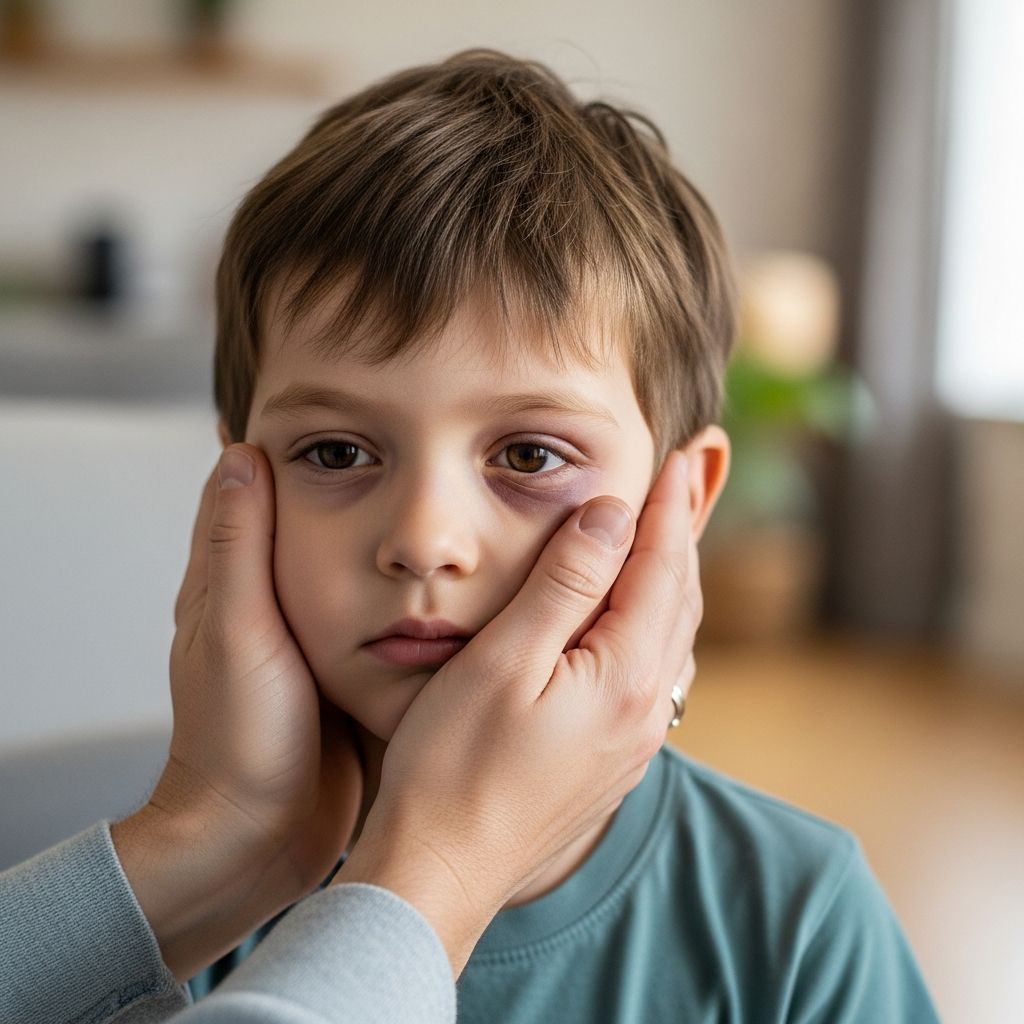
A black eye on a child can look frightening, but most of the time it is a simple bruise around the eye that heals well with basic first aid. For parents, the real challenge is knowing when it is safe to treat at home and when the bruise might signal a more serious head or eye injury that needs urgent care.
This guide explains what a black eye is, common causes in children, step-by-step home treatment, warning signs of emergency, and how to reduce the risk of future injuries.
Understanding What a Black Eye Really Is
A black eye is not usually an injury to the eyeball itself. Instead, it is a bruise in the soft tissues around the eye.
- Medical term: periorbital hematoma or periorbital bruising.
- What happens: a blow to the face damages tiny blood vessels (capillaries) around the eye, causing blood to leak under the skin and create discoloration and swelling.
- Typical look: puffy skin with color that changes from red or purple to blue, then yellow-green as it heals.
Most black eyes are minor and heal within about 2–3 weeks without lasting problems. The main job for parents is to watch for symptoms that might mean a deeper injury to the eye, the bones around it, or the brain.
What Causes a Black Eye in Kids?
Children are active, curious, and not always steady on their feet, so bumps to the face are common. A black eye generally develops after an impact that sends force into the area around the eye.
Everyday injuries
- Falls from beds, couches, playground equipment, or bikes.
- Accidental collisions with furniture, doors, or other children.
- Sports injuries from balls, elbows, or equipment (basketball, soccer, baseball, hockey, etc.).
Less common but important causes
- Facial or nasal surgery: operations on the nose or other facial structures can cause temporary bruising under or around one or both eyes.
- Dental procedures: some dental work, especially on upper teeth, can rarely lead to bruising near the eye because the bones and tissues are connected.
- Serious head injury: a fracture at the base of the skull can cause bruising around both eyes, often called “raccoon eyes,” and is a medical emergency.
When a “black eye” is not a bruise
Sometimes the area under a child’s eyes looks dark even without an injury. Possible reasons include:
- Allergic “shiners”: dark, puffy circles caused by nasal congestion rather than trauma.
- Normal pigmentation: some children naturally have darker skin under their eyes.
- Chronic rubbing: irritation from rubbing due to allergies or tiredness.
These conditions are different from a true black eye caused by broken blood vessels under the skin after a blow.
How a Black Eye Heals Over Time
The healing process follows a fairly typical timeline, though every child is different.
| Time after injury | What you might see | What parents can do |
|---|---|---|
| First 24–48 hours | Fresh swelling; red, purple, or blue discoloration; tenderness. | Use cold compresses regularly; keep head elevated; offer pain relief if needed. |
| Days 3–5 | Swelling usually starts to go down; bruise may spread or look darker as blood moves under the skin. | Switch to warm compresses once swelling improves; continue observing for any worrying signs. |
| Days 6–14 | Bruise color changes to green, yellow, or brown; tenderness lessens; child usually feels better. | Allow normal activity with protection from further blows; follow up with a clinician if healing seems slow. |
| Up to 3 weeks | Color fades back toward normal; mild discoloration may linger. | Seek medical advice if bruising or swelling has not clearly improved by 2–3 weeks. |
First Aid: What Parents Should Do Right Away
If your child bumps the area around the eye, stay calm and take these basic first-aid steps. These measures are based on widely accepted guidance for black eye care.
Step 1: Check for serious injury
Before focusing on the bruise, quickly look for red-flag symptoms (listed in detail later). If your child has trouble seeing, is unusually sleepy or confused, is vomiting, or if both eyes are bruised for no clear reason, treat it as an emergency and seek medical help right away.
Step 2: Apply cold compresses
- Use a cold pack, bag of frozen vegetables, or ice wrapped in a clean cloth—never ice directly on skin.
- Place the compress gently on the skin around the eye, not pressing on the eyeball.
- Keep in place for about 10–20 minutes at a time, then remove for a similar break.
- Repeat regularly during the first 24–48 hours to reduce swelling and discomfort.
Step 3: Elevate the head
- While awake, have your child sit up or rest with the head higher than the heart—this helps limit swelling.
- For naps or nighttime, older children can sleep with an extra pillow if it does not affect safety; for infants, follow safe sleep guidelines and do not add loose pillows to a crib.
Step 4: Offer safe pain relief
- Over-the-counter medicine such as acetaminophen (paracetamol) or ibuprofen can help with pain, if approved by your child’s healthcare provider.
- Aspirin is generally avoided in children and can increase bleeding, which may worsen bruising.
- Always follow dosing instructions based on age and weight, and consult your clinician if you are unsure.
Step 5: Protect the area
- Discourage rubbing, pressing, or playing with the injured area.
- Temporarily avoid contact sports or rough play until swelling and tenderness improve.
Ongoing Home Care After the First Two Days
Once the initial swelling has gone down, home care shifts from limiting bleeding and swelling to supporting healing and keeping your child comfortable.
Warm compresses
- After 48 hours or once swelling is clearly improving, switch to a warm (not hot) compress.
- Use a clean cloth soaked in warm water, wrung out so it is damp, not dripping.
- Apply gently to the skin around the eye for 10–20 minutes several times a day.
Activity and rest
- Light indoor play is usually fine if your child feels well and is acting normally.
- Avoid sports with risk of collisions or flying objects until the bruise is mostly healed.
- Encourage good sleep, which helps the body repair itself.
What about creams or natural remedies?
Some products, such as arnica gels or creams, are marketed for bruises, but evidence for their benefit is limited and mixed. Talk with your child’s healthcare provider before using any topical treatments, especially near the eyes, to avoid irritation or allergic reactions.
When a Black Eye Needs Urgent Medical Care
Most black eyes are minor, but parents should be alert for signs that something more serious is going on. The following symptoms warrant immediate medical evaluation, usually in an emergency department or urgent care setting:
Call emergency services or go to the ER immediately if:
- Your child loses consciousness at any point after the injury.
- There is confusion, extreme drowsiness, or difficulty waking your child.
- Your child has repeated vomiting or a severe, worsening headache.
- There is double vision, sudden vision loss, or your child says vision is blurred or “not right.”
- One pupil is larger than the other or does not react properly to light.
- You see blood inside the eye or on the white of the eye that looks like a pool rather than a thin streak.
- There is clear fluid or blood draining from the nose or ears after a head injury, which can signal a skull fracture.
- Both eyes develop bruising (“raccoon eyes”) without a clear cause like facial surgery.
See a doctor promptly (same day, if possible) if:
- Your child is younger than one year and has any significant facial injury.
- The eye itself is red, painful, or your child refuses to open it.
- There is a cut on the eyelid or around the eye that may need stitches.
- The bone around the eye feels “crunchy” to the touch, looks sunken, or appears pushed out of place (possible fracture).
- The bruise is not improving at all after 3–5 days, or is still very prominent after 2–3 weeks.
What to Expect from a Medical Evaluation
If your child is seen by a clinician for a black eye, the visit typically includes:
- History: questions about how the injury happened, how your child has behaved since, and any other symptoms like headache or nausea.
- Eye exam: checking vision, eye movements, pupils, and the surface of the eye.
- Facial exam: gently feeling the bones around the eye, nose, and cheek, and looking for cuts or deformities.
- Neurologic check: assessing alertness, balance, and basic nerve function if there is concern about head injury.
Depending on findings, the clinician may:
- Reassure you and recommend home care only.
- Prescribe eye drops or ointment if the eye’s surface is irritated or scratched.
- Order imaging (such as X-ray or CT scan) if a fracture or internal bleeding is suspected.
- Refer your child to an eye specialist (ophthalmologist) or other specialist if needed.
Preventing Black Eyes and Eye Injuries in Children
Not every bump or bruise can be avoided, but parents can significantly lower the risk of eye injuries with a few practical strategies.
Use protective gear for sports and recreation
- Encourage sport-specific protective eyewear with polycarbonate lenses for activities like baseball, basketball, racquet sports, and hockey.
- Ensure helmets fit properly for biking, skateboarding, skating, and contact sports; some helmets have built-in face guards that offer extra protection.
Make home and play spaces safer
- Keep floors and stairs free of clutter to reduce tripping risks.
- Use corner guards on sharp furniture edges in homes with toddlers.
- Provide good lighting in hallways, stairways, and play areas to prevent collisions and falls.
- Teach children not to run with objects in their hands or play with sharp or pointed toys near the face.
Model safe habits
- Wear your own protective eyewear when doing yard work, home repairs, or sports.
- Talk with older kids and teens about the importance of protecting their vision; involve them in choosing comfortable, stylish safety gear.
Frequently Asked Questions About Black Eyes in Kids
How long will my child’s black eye last?
Most black eyes from minor injuries improve noticeably within a few days and are largely healed within about 2–3 weeks. If bruising is not getting better after that time, check with your child’s healthcare provider.
Can a black eye damage my child’s vision?
A simple bruise around the eye usually does not affect vision. However, if the injury also damages the eyeball, optic nerve, or bones around the eye, vision can be at risk. Seek urgent care if your child has double vision, blurry vision, eye pain, or can’t move the eye normally.
Should I put raw meat or other home remedies on a black eye?
No. Raw meat and similar home remedies are not recommended and may introduce bacteria or irritate the skin. Evidence-based care includes cold compresses, warm compresses later in healing, rest, and appropriate pain medicine under medical guidance.
When is it safe for my child to go back to sports?
Children can usually return to sports once pain and swelling are minimal, vision is completely normal, and your healthcare provider agrees. For contact or high-speed sports, proper protective eye and head gear should always be used to help prevent another injury.
My child woke up with a black eye but no injury. What should I do?
Bruising around one or both eyes without any known injury or recent surgery can occasionally signal a serious underlying problem, such as a fracture or a bleeding disorder. Contact your child’s healthcare provider promptly for evaluation.
References
- Black Eye Causes & Treatment — Cleveland Clinic. 2023-02-09. https://my.clevelandclinic.org/health/diseases/black-eye
- Doctor explains BLACK EYE | Treatment at home and when to seek medical help — Dr. O’Donovan, YouTube (video). 2021-03-16. https://www.youtube.com/watch?v=YVVGSXRJbdg
- Black eye (periorbital haematoma) – treatment and causes — Healthdirect Australia. 2022-05-18. https://www.healthdirect.gov.au/black-eye
- Black eye: Causes, effects, treatment, and prevention — Medical News Today. 2023-06-30. https://www.medicalnewstoday.com/articles/249231
- Black eye — NHS. 2021-11-01. https://www.nhs.uk/conditions/black-eye/
- Black eye: First aid — Mayo Clinic. 2023-01-21. https://www.mayoclinic.org/first-aid/first-aid-black-eye/basics/art-20056675
- Home remedies for black eyes, plus how long they take to heal — Healthline. 2020-09-28. https://www.healthline.com/health/home-remedies-for-black-eye