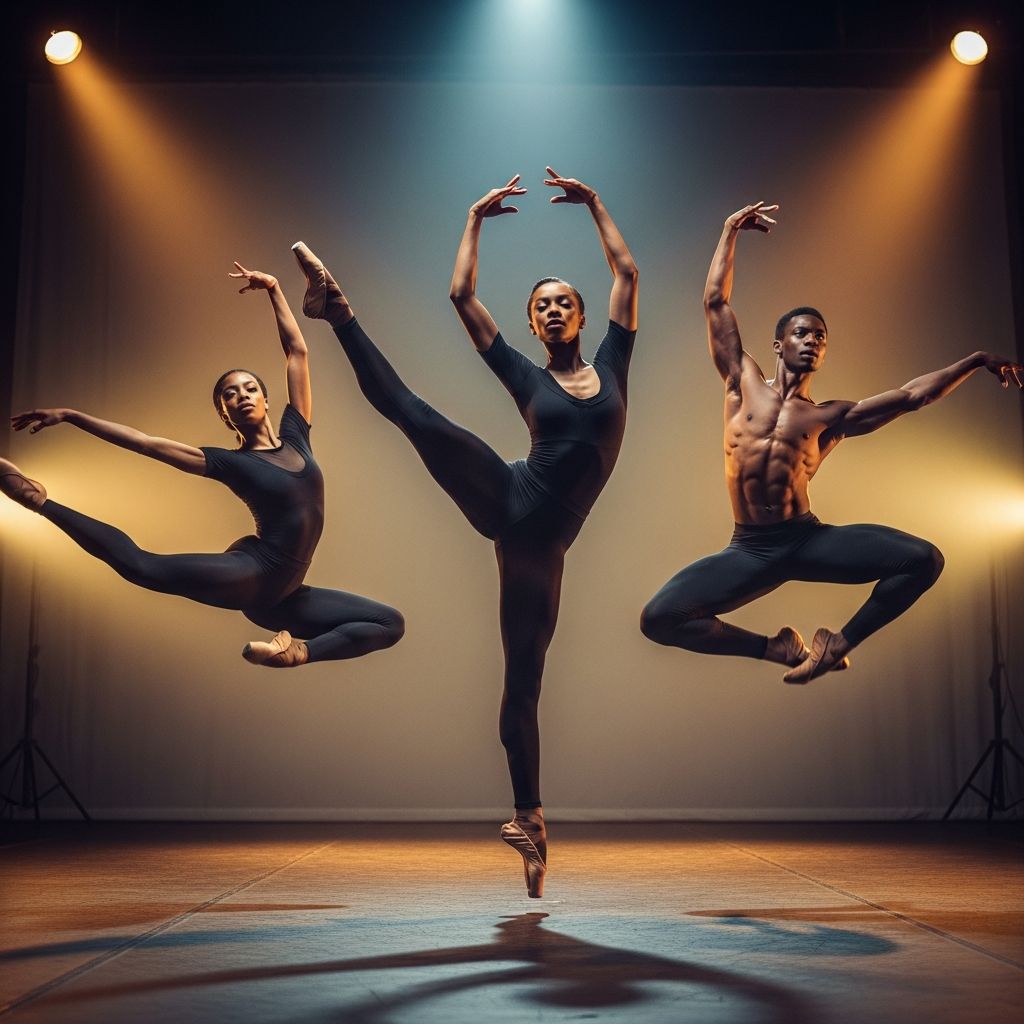
Black dancers have long navigated a ballet landscape marked by exclusion, yet their perseverance is fueling a vital shift toward greater inclusivity. Data reveals a stark gap, with Black representation hovering far below U.S. demographic norms, but dedicated artists and organizations are closing it through talent, advocacy, and systemic reform.
The Harsh Numbers: Quantifying Underrepresentation
Comprehensive analyses of major U.S. ballet companies expose a troubling disparity. In the top 26 companies by budget for the 2019–2020 season, only 67 Black dancers were identified among 1,000 main company positions, equating to 6.7%—well short of the 12% Black population in the U.S. per census data. This creates the ‘Missing 53,’ the number needed to align with national demographics.
Breaking it down further, Black male dancers fare slightly better at 7.96% in top companies, compared to 5.51% for females, highlighting gendered nuances in opportunity. Excluding Dance Theatre of Harlem, a key Black-led ensemble, drops the figure to 5.5% across the top 25 companies, underscoring reliance on singular institutions for visibility.
| Category | Black Representation (%) | Comparison to U.S. Population (12%) |
|---|---|---|
| Top 7 Companies (2019-2020) | 6.63% | -5.37% |
| Top 25 + DTH | 6.70% | -5.30% |
| Top 25 (excl. DTH) | 5.50% | -6.50% |
These metrics, drawn from rosters and cross-referenced with initiatives like Memoirs of Blacks in Ballet’s Roll Call, reveal not just low numbers but uneven distribution: some companies employ zero Black dancers, limiting broad exposure. Longitudinal monitoring, as urged by researchers, is essential for tracking progress.
Historical Barriers and Modern Echoes
Ballet’s European roots have entrenched Eurocentric standards, from body ideals to technique, marginalizing dancers of color. Black women, in particular, report instructors dismissing their natural musculature as incompatible with aesthetics, perpetuating dropout rates.
Professional stats amplify this: only 2.27% of ballerinas are African American women versus 4.45% men, within a field dominated by white females at 65.9%. Such imbalances trace to training pipelines where students of color face ‘vocational tracks’ pushing them toward alternatives rather than elite ballet paths, rooted in segregation-era myths about suitability.
- Body Bias: Muscular builds in Black dancers challenged as ‘non-classical.’
- Gender Dynamics: Toxic masculinity deters male participation; few boys in programs like ETHS Dance Company.
- Tracking Systems: Black/Latinx youth funneled differently from white/Asian peers.
Pioneers Paving the Way
Despite odds, icons like Misty Copeland shattered ceilings as the first African American principal at American Ballet Theatre in 2015, inspiring a generation. Companies like Alvin Ailey American Dance Theater globalize Black excellence, blending modern forms with ballet influences.
Emerging voices, such as Lauryn Simmons from Power Dance Company, emphasize targeted training: ‘Big companies offering intensives to local Black communities signals equity commitment’. These efforts counter the ‘D1 or bust’ pressure, prioritizing mental health and access.
Practical Hurdles in the Studio and Onstage
Beyond auditions, Black dancers shoulder extra burdens. Costuming remains a flashpoint: matching pointe shoes and tights demands dyeing, painting, or custom sourcing—tasks white peers skip.
Leadership gaps persist; dance faculty whiten over time (80% in 2007 from 76% in 2003), with African American undergrad participation at just 10%. The International Association of Blacks in Dance (IABD) counters via reports like The Black Report, dissecting 30 Black-led companies’ economics and contributions[10].
Initiatives Igniting Change
Organizations drive reform. Data Pointes quantifies rosters across 150 largest companies for 2022–2026 seasons, pushing transparency. IABD amplifies African ancestry artists, fostering opportunities[10]. National Black Arts Festival’s 2024–2026 plan integrates dance in exposing African descent art.
Dance Data Project and similar efforts track demographics, revealing slow gains: Black awardees at 2.56% in 2017, prompting equity pushes. San Francisco’s Black dance economics studies highlight funding disparities over 20 years.
“Longitudinal data improves transparency, assessing Black artist retention through ballet’s pipeline.”
Training Tomorrow’s Talent
Youth programs must nurture without conformity pressure. Role models like Copeland retain diverse cohorts: ‘If students of color enjoy ballet technically and artistically, without molding, we’ll see more advance’.
Universities lag, but calls grow to dismantle biases, ensuring ballet’s ‘white myth’ fades. Black-led intensives build skills sans extra loads.
Future Horizons: Equity in Action
Progress demands multi-pronged action: diverse hiring, inclusive costuming (e.g., broader shoe shades), and pipeline investment. Variability persists—Dance Theatre of Harlem boosts averages—but industry-wide commitment is key.
With ‘Missing 53′ as benchmark, tracking via MOBBallet and Dance Data Project will measure gains. Black dancers’ resilience promises a vibrant, representative ballet era.
Frequently Asked Questions
What percentage of Black dancers are in major U.S. ballet companies?
Around 6.7% in top 26 companies (2019–2020), far below the 12% U.S. Black population.
Why do Black male dancers have higher representation than females?
Males at ~8%, females ~5.5%; factors include gendered recruitment and biases.
How does costuming affect Black dancers?
They dye shoes/tights for matches, adding unseen labor.
What role do organizations like IABD play?
They promote Black dance, release data reports, and expand opportunities[10].
Is representation improving?
Slowly, via pioneers like Misty Copeland and tracking projects, but gaps remain.
References
- Representation – Data Pointes — Data Pointes. 2020. https://datapointesguide.com/representationcompany
- Lack of POC dancers prompts call for change — The Evanstonian. 2019-11-08. https://www.evanstonian.net/feature/2019/11/08/lack-of-poc-dancers-prompts-call-for-change/
- All the creativity, none of the recognition: How the industry overlooks Black dancers — Planet Detroit. 2025-08. https://planetdetroit.org/2025/08/the-d1-or-bust-mindset-and-how-it-impacts-young-athletes-mental-health/
- Diversifying Dance Education and Dismantling Existing Biases — Elon University. N/A. https://www.elon.edu/u/academics/first-year-writing/writing-contest/journal/maya-simmons/
- The Black Report — International Association of Blacks in Dance. N/A. https://www.iabdassociation.org/page/theblackreport
- A 20 year Critical Examination of Arts Management and Black San Francisco — Dancers Group. 2025-04. https://dancersgroup.org/2025/04/finance-your-freedom-a-20-year-critical-examination-of-arts-management-and-black-san-francisco/
- Research – Dance Data Project — Dance Data Project. N/A. https://dancedataproject.com/research/