Parents have long wondered whether the order in which children are born influences who they become. Does being the oldest predispose a child toward leadership? Are youngest children naturally more outgoing? While popular culture perpetuates stereotypes about birth order, the scientific evidence tells a more nuanced story about how family position affects development.
The Scientific Foundation of Birth Order Research
The study of birth order and personality has deep historical roots in psychology. Early theorists proposed that a child’s position among siblings creates distinct environmental experiences that shape personality traits. The assumption was straightforward: because firstborns occupy a unique position in the family, they would develop differently than their younger siblings who encounter a fundamentally different family dynamic.
Contemporary research has examined this proposition rigorously using large-scale datasets and multiple analytical approaches. Researchers have compared siblings within the same family to eliminate variables like socioeconomic status and parenting philosophy, while also analyzing patterns across different families to identify broader trends.
Intelligence and Cognitive Abilities: Where Birth Order Matters
One area where birth order shows consistent effects is cognitive performance. Research examining multiple national datasets has documented that firstborn children tend to score higher on intelligence tests compared to their later-born siblings. This effect is modest but measurable, with performance declining gradually as birth order position increases.
Importantly, this cognitive advantage persists even when researchers control for socioeconomic factors and family size. The pattern appears robust across different populations and assessment methods. However, the effect size remains relatively small—not large enough to overshadow individual differences in ability or potential.
The mechanisms underlying this cognitive difference likely involve several factors working together:
- Resource allocation within families, where firstborns may receive focused parental attention during critical developmental periods
- Tutoring effects, where younger siblings benefit from interactions with older siblings who have already mastered skills
- Age spacing and family composition, which affect the intensity of parental involvement with each child
- Developmental timing, as firstborns experience certain cognitive milestones without sibling-related competition for resources
Personality Traits: The Complex Picture
When examining broader personality characteristics, the story becomes considerably more complicated. Personality is typically understood through the Big Five framework, which includes extraversion, emotional stability, agreeableness, conscientiousness, and openness to experience. These five dimensions represent fundamental ways in which people differ across situations and throughout their lives.
Contrary to widespread assumptions, large-scale studies have found no consistent birth order effects on most personality dimensions. Firstborns do not demonstrate greater emotional stability than younger siblings. Later-born children do not show reliably higher levels of extraversion or social openness. The expected personality differences simply do not emerge when researchers examine large representative samples.
Conscientiousness: A Partial Exception
Among the Big Five traits, conscientiousness shows some evidence of birth order associations, though findings remain somewhat inconsistent across studies. Some research indicates that firstborns may score slightly higher on measures of dutifulness and responsibility, traits that fall under the conscientiousness domain. This makes intuitive sense, as firstborns might internalize greater responsibility for family functioning and younger siblings’ welfare.
However, this effect appears limited to specific facets of conscientiousness rather than affecting the trait broadly. Furthermore, not all studies confirm even this modest association, suggesting that other family factors may be more influential in determining whether children develop these responsible behaviors.
Non-Cognitive Skills and Behavioral Differences
Beyond personality traits measured through traditional psychological inventories, research has identified some differences in non-cognitive skills and behavioral tendencies related to birth order. These skills—including emotional regulation, social persistence, and initiative-taking—appear somewhat more developed in firstborn children compared to later-borns.
Interestingly, the gender composition of the sibling group matters. Boys with older brothers experience larger gaps in non-cognitive abilities compared to boys with older sisters, suggesting that same-gender sibling dynamics may amplify birth order effects in certain domains.
Occupational Outcomes and Career Trajectories
While personality differences remain unclear, birth order shows more substantial associations with career choices and occupational outcomes in adulthood. Firstborn individuals are significantly more likely to pursue employment in traditional corporate hierarchies and to advance into management positions. These children more frequently select occupations that emphasize leadership, sociability, and conscientiousness.
In contrast, later-born children demonstrate a higher propensity toward entrepreneurship and self-employment. This difference may reflect either genuine personality predispositions shaped by family dynamics or rational adaptation to the reality that leadership positions are already occupied by older siblings. Alternatively, different family niches may encourage younger siblings to develop distinct skill sets and risk tolerance.
The Role of Family Dynamics and Parental Expectations
Beyond the simple mechanics of birth order, the broader family environment profoundly influences child development. Parental expectations shift as families grow. Firstborns often carry the weight of parents’ initial hopes and concerns, while later-borns benefit from parents’ accumulated experience and sometimes lower anxiety levels.
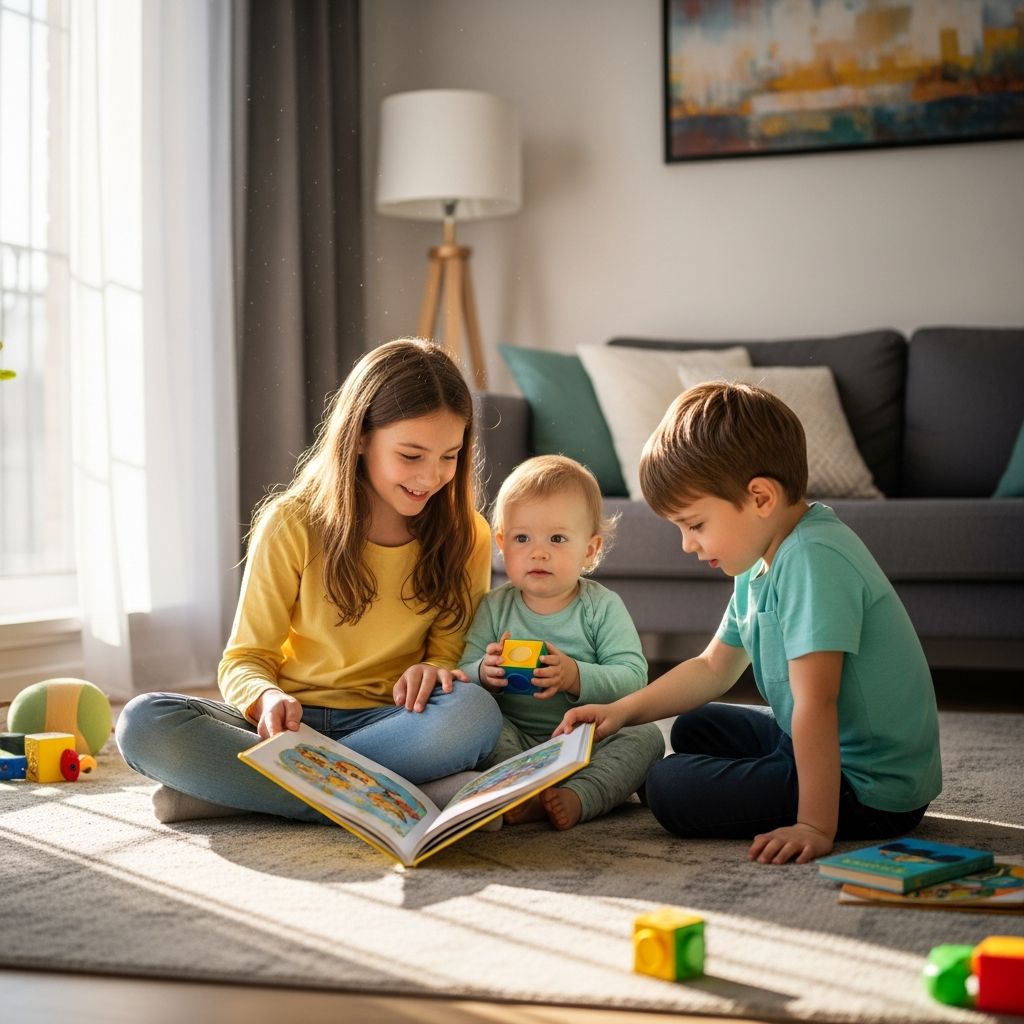
Sibling relationships themselves create powerful developmental influences. Firstborns may develop certain skills through teaching younger siblings. Later-borns learn from observing older siblings’ successes and mistakes. The spacing between children, the number of siblings, and the gender composition all modify the basic birth order dynamic.
Academic Competition and Sibling Rivalry
Birth order influences how siblings experience competition within academic and achievement domains. Research indicates that lastborn children experience higher levels of academic sibling rivalry compared to firstborns. This heightened competitive dynamic may stem from constantly comparing their performance to established older siblings’ achievements.
The emotional weight of this rivalry varies depending on family culture. In families that emphasize achievement and comparison, later-borns may feel persistent pressure to match or exceed older siblings’ accomplishments. In families with less achievement focus, this rivalry remains minimal.
Critical Factors That Override Birth Order Effects
When examining the research comprehensively, several conclusions emerge about what matters and what does not:
| Domain | Birth Order Effect Size | Strength of Evidence |
|---|---|---|
| Cognitive/Intelligence | Small but consistent | Strong |
| Extraversion | Not significant | Strong |
| Emotional Stability | Not significant | Strong |
| Conscientiousness | Weak to inconsistent | Moderate |
| Agreeableness | Not significant | Strong |
| Openness to Experience | Not significant | Strong |
Individual differences within birth order groups far exceed differences between them. A firstborn child and a later-born child from the same family may differ dramatically in personality, while two firstborns from different families may have almost nothing in common. Family culture, parenting style, life experiences, genetic predisposition, and random chance all play substantial roles in shaping who children become.
Implications for Parents and Educators
Understanding the actual evidence about birth order has practical implications for those raising or educating children. Rather than assuming that a child will develop certain personality traits based on birth position, it makes more sense to observe the individual child and respond to their unique needs and characteristics.
Parents can support healthy development across all birth positions by:
- Recognizing each child’s unique strengths rather than fitting them into birth order stereotypes
- Providing focused attention and learning opportunities for each sibling
- Managing comparison and competition thoughtfully within the family
- Encouraging firstborns to maintain connection with childhood while developing responsibility
- Supporting later-borns in carving their own identities rather than constantly following older siblings’ paths
- Creating family environments where different strengths are equally valued
The Complexity of Human Development
The research on birth order and personality ultimately demonstrates that human development is beautifully complex. While birth position creates some measurable differences in cognitive outcomes and non-cognitive skills, it does not determine personality traits in the ways earlier theorists imagined. The family environment extends far beyond simple birth order mechanics.
Every family represents a unique ecosystem with its own dynamics, values, and patterns. Within this ecosystem, children develop in response to countless factors—their temperament, their relationships, their experiences, and their individual choices. Birth order is one variable among many, influential in some domains but far less determinative than popular culture suggests.
Frequently Asked Questions
Q: Does birth order determine personality?
A: No, birth order does not determine personality traits like extraversion, emotional stability, or agreeableness. While research confirms that birth order affects cognitive abilities and influences career outcomes, personality traits are shaped by many factors including genetics, individual experiences, and family culture.
Q: Are firstborns really more intelligent than younger siblings?
A: Research consistently shows that firstborns score slightly higher on intelligence tests compared to later-borns. However, the effect is modest, and individual variation far exceeds differences between birth order groups. Many factors beyond birth order influence intellectual development.
Q: Do later-borns experience more sibling rivalry?
A: Yes, research indicates that later-born children experience higher levels of academic sibling rivalry. They may feel greater pressure competing with established older siblings’ achievements, though this varies based on family culture and emphasis on comparison.
Q: How does birth order affect career choices?
A: Firstborns are more likely to pursue traditional employment and management positions, while later-borns show higher rates of entrepreneurship and self-employment. This pattern may reflect personality differences or adaptation to available family roles.
Q: Should parents treat children differently based on birth order?
A: While acknowledging birth order effects, parents should focus primarily on responding to each child’s individual characteristics, needs, and strengths rather than applying birth order stereotypes. Generic birth order expectations often miss what makes each child unique.
Q: Does gender of siblings affect birth order effects?
A: Yes, research shows that boys with older brothers experience larger differences in non-cognitive abilities than boys with older sisters, suggesting that same-gender sibling dynamics may amplify certain birth order effects.
References
- Examining the effects of birth order on personality — Proceedings of the National Academy of Sciences. 2015-04-28. https://www.pnas.org/doi/10.1073/pnas.1506451112
- New Evidence on the Impacts of Birth Order — National Bureau of Economic Research. 2017. https://www.nber.org/reporter/2017number4/new-evidence-impacts-birth-order
- The Effects of Birth Order on Personality Traits and Feelings of Academic Sibling Rivalry — ERIC Educational Resources Information Center. 2010. https://files.eric.ed.gov/fulltext/EJ860620.pdf