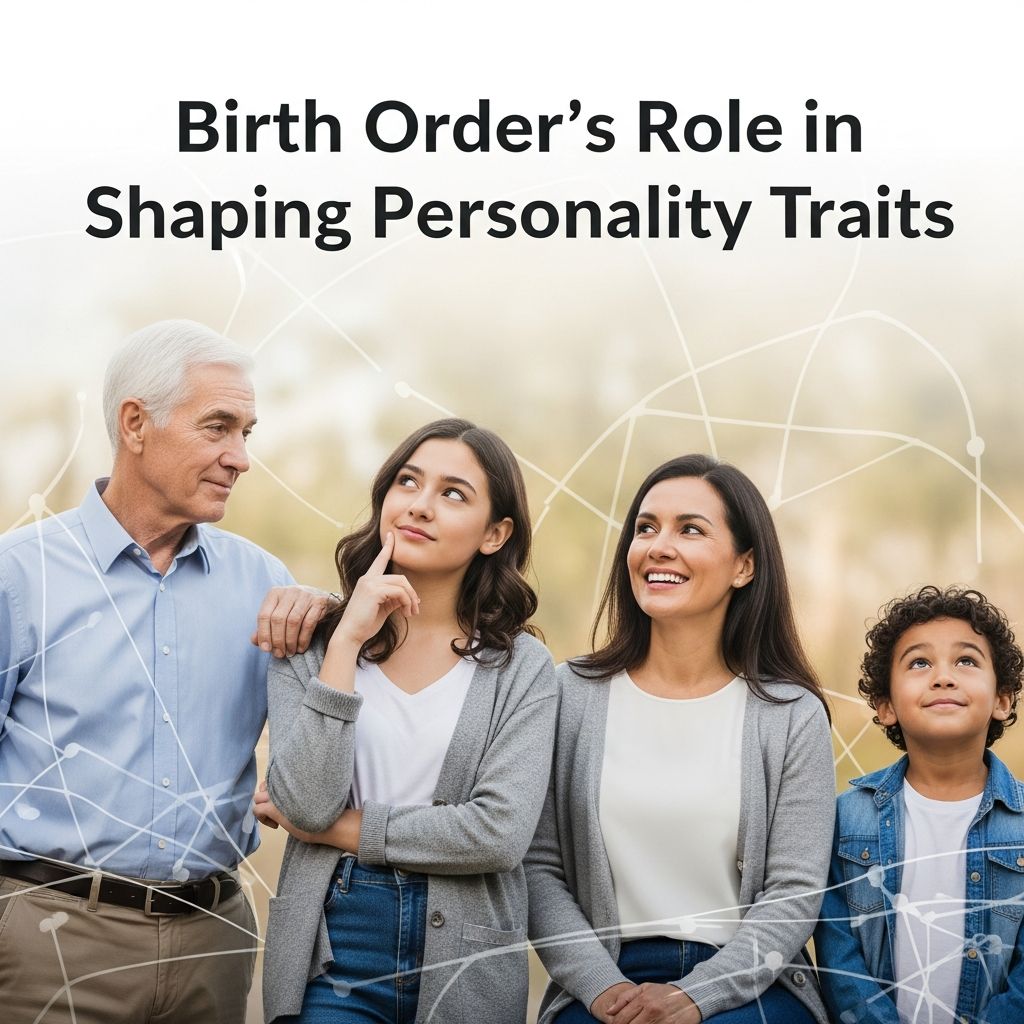
Birth order, the sequence in which children are born into a family, has long fascinated psychologists, parents, and researchers alike. Popular theories suggest it molds core personality traits, from leadership in firstborns to creativity in youngest siblings. Yet, rigorous scientific scrutiny reveals a more complex picture, with effects primarily limited to intellect rather than broad personality dimensions.
Historical Foundations of Birth Order Theory
The idea that sibling position influences character traces back to early 20th-century thinkers. Alfred Adler, a pioneering psychologist, proposed that firstborns develop responsibility and conservatism due to parental expectations, while later-borns become more rebellious and sociable to carve out unique roles. This ‘niche differentiation’ theory posits siblings adapt to family hierarchies based on age and power disparities, fostering distinct traits.
Frank Sulloway later expanded this, predicting firstborns as dominant and less agreeable, later-borns as extraverted and open to new ideas. These notions permeated pop psychology, influencing books and advice columns. However, modern large-scale studies challenge these sweeping claims, emphasizing environmental and genetic factors over strict birth order determinism.
Scientific Evidence: What Large Studies Reveal
A landmark 2015 study in Proceedings of the National Academy of Sciences (PNAS) analyzed data from over 20,000 participants across three national panels, using both within-family (comparing siblings) and between-family designs. Results confirmed a modest decline in intelligence test scores from firstborns to later-borns, about one-tenth of a standard deviation in self-reported intellect even after controlling for objective IQ.
Crucially, no significant birth order effects emerged on Big Five personality traits: extraversion, emotional stability, agreeableness, conscientiousness, or openness (imagination). This held across samples, ages, and sibship sizes, with high statistical power ruling out small effects. Firstborns and later-borns showed identical profiles in these domains.
Smaller studies offer nuanced support. One analysis of firstborns (N=22) and lastborns (N=24) found firstborns higher in conscientiousness (M=54.45, SD=7.10), aligning with predictions of greater responsibility, though differences in openness and agreeableness were not significant.
| Personality Trait | Firstborn Effect | Evidence Strength | Source |
|---|---|---|---|
| Intellect/Intelligence | Higher in firstborns (~0.1-0.2 SD) | Strong, consistent | |
| Conscientiousness | Slightly higher in firstborns | Moderate, sample-specific | |
| Extraversion | No difference | Strong, null effect | |
| Agreeableness | No difference | Strong, null effect | |
| Openness/Imagination | No difference | Strong, null effect | |
| Emotional Stability | No difference | Strong, null effect |
Why Firstborns Excel in Intellect
Firstborns often receive undivided parental attention early on, leading to more cognitive stimulation like reading and educational play. This ‘resource dilution’ in larger families means later-borns get less investment, correlating with slight IQ gaps. Studies from the Early Childhood Longitudinal Study show firstborns ahead in early cognition, though later-borns can catch up with targeted support.
Self-reported intellect follows suit, persisting post-IQ controls, suggesting genuine perceptual or skill differences. Age confounds are ruled out via standardized scores, affirming birth order’s narrow intellectual footprint.
Personality Nuances Across Sibling Positions
Firstborn Characteristics
- Leadership and Duty: Accustomed to parental focus, they internalize achievement-oriented values, potentially heightening conscientiousness.
- Conservatism: As family ‘guinea pigs,’ they adhere to rules, fostering reliability but sometimes rigidity.
- Anxiety Risks: Fear of dethronement may spur perfectionism, though broad neuroticism remains unaffected.
Middle Child Traits
- Diplomacy: Sandwiched between siblings, middles hone negotiation and empathy, building social savvy.
- Independence: Less parental scrutiny encourages self-reliance and adaptability.
- Overlooked Potential: Resource splits may foster resilience, countering rivalry feelings.
Youngest Sibling Dynamics
- Sociability and Charm: To compete, youngests leverage humor and alliances, boosting extraversion-like behaviors despite null Big Five effects.
- Creativity Boost: Relaxed parenting allows risk-taking, enhancing divergent thinking and innovation per creativity studies.
- Attention Strategies: In large families, they develop negotiation for visibility, aiding interpersonal skills.
Only children mirror firstborns, enjoying full resources for intellect and conscientiousness without rivalry pressures.
Family Environment and External Moderators
Birth order effects are amplified or muted by parenting style, family size, and socioeconomic status. Authoritative homes maximize firstborn advantages; permissive ones equalize outcomes. Genetics interact too: temperaments express differently by position, with parental investment varying outcomes.
Sibling rivalry, especially academic, hits lastborns harder, motivating compensatory traits like persistence. Cultural norms influence: collectivist societies emphasize firstborn duty more.
Practical Insights for Parents
Understanding these dynamics empowers equitable child-rearing:
- Balance Attention: Schedule one-on-one time for later-borns to mitigate resource dilution.
- Foster Uniqueness: Encourage middles’ diplomacy via family meetings; nurture youngests’ creativity with open-ended play.
- Monitor Rivalry: Address academic competition early, praising effort over comparison.
- Leverage Strengths: Guide firstborns toward leadership roles while teaching flexibility.
Interventions like shared family projects build cooperation across positions.
Critiques and Ongoing Debates
While PNAS findings are robust, critics note self-reports’ limits and cultural biases in U.S./European samples. Smaller studies hint at conscientiousness edges, and niche theories persist for specific traits. Longitudinal data could clarify if effects fade with age or independence.
Adlerian theory overstates impacts; recent reviews affirm modest, intellect-focused influences. Future research may integrate genomics for personalized insights.
Frequently Asked Questions
Does birth order really determine personality?
No, large studies show no lasting effects on Big Five traits beyond intellect. Family dynamics play a larger role.
Why are firstborns smarter?
They get more early cognitive stimulation; gaps are small (~1-2 IQ points) and environmental.
Can middle children feel neglected?
Yes, resource splits may foster independence but require parental validation to prevent rivalry.
How to support youngest siblings?
Provide creative outlets and fair attention to channel their sociability positively.
Do only children differ?
They often resemble firstborns: high intellect, conscientious, without sibling competition.
References
- Examining the effects of birth order on personality — Damian, R. I., & Roberts, B. W. PNAS. 2015-09-22. https://www.pnas.org/doi/10.1073/pnas.1506451112
- The Effects of Birth Order on Personality Traits and Feelings of Academic Sibling Rivalry — Badger, J., & Reddy, P. ERIC. 2009. https://files.eric.ed.gov/fulltext/EJ860620.pdf
- The Science Behind the Birth Order Theory: How External Influences Contribute to Personality Expression — Biolife Health Center. 2023. https://www.biolifehealthcenter.com/post/the-science-behind-the-birth-order-theory-how-external-influences-contribute-to-personality-express
- Does Birth Order Impact Personality? — Psych Central. 2023. https://psychcentral.com/blog/birth-order-and-personality
- How Birth Order Impacts Your Personality — Johnson & Wales University. 2023. https://online.jwu.edu/blog/how-birth-order-impacts-your-personality/