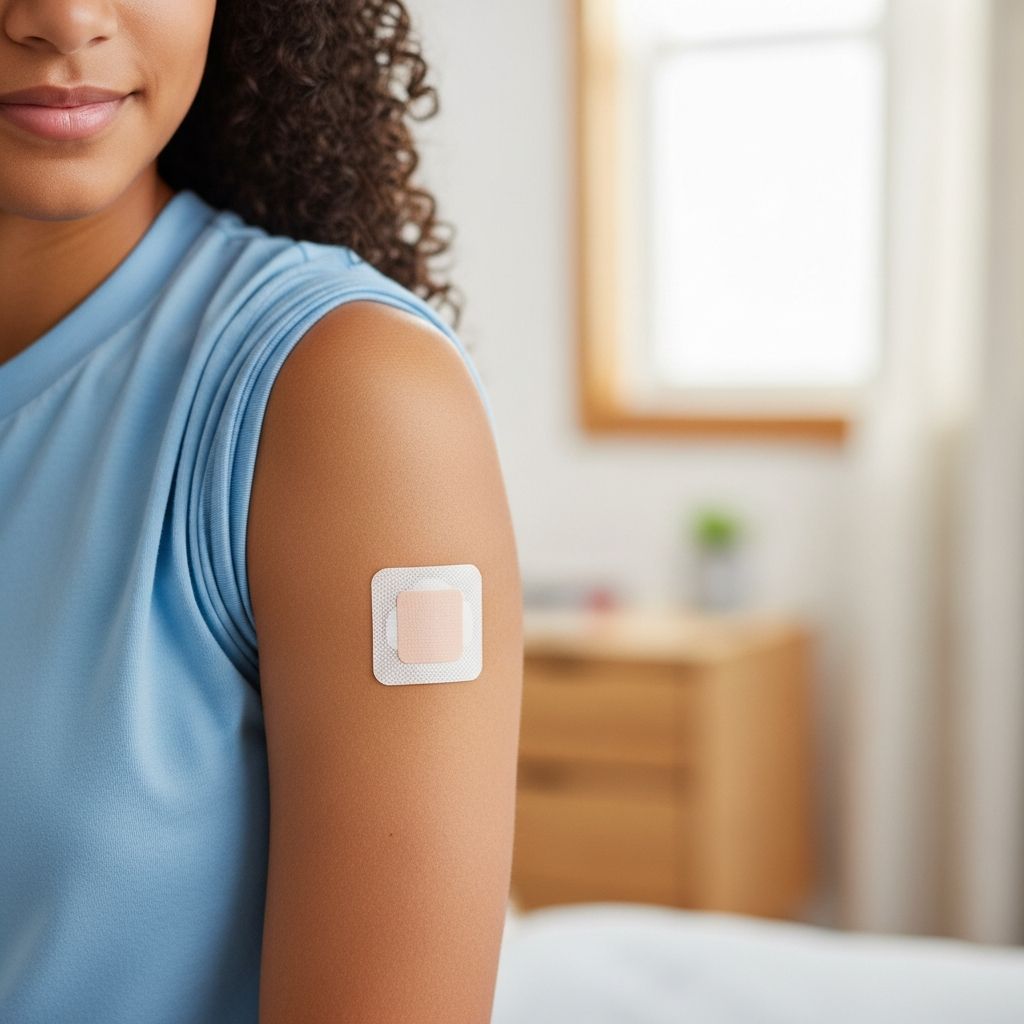
The birth control patch is a small, thin sticker worn on the skin that releases hormones to help prevent pregnancy. It can be a good choice for teens and young adults who want reliable birth control but do not want to remember a pill every day.
What Is the Birth Control Patch?
The birth control patch is a square, skin-colored adhesive patch that you stick on certain areas of your body. It releases hormones through the skin into your bloodstream to help stop pregnancy from happening.
The hormones in the patch are synthetic versions of estrogen and progestin. These are similar to the hormones your body already makes during your menstrual cycle, just in controlled amounts.
How the Patch Prevents Pregnancy
The patch works mainly by stopping the ovaries from releasing an egg each month. Without an egg, sperm have nothing to fertilize, so pregnancy cannot begin.
The hormones from the patch also thicken the mucus in the cervix, which makes it harder for sperm to swim through. In addition, they change the lining of the uterus so that it is less likely for a fertilized egg to attach and grow.
Key Effects of the Hormones
- Blocks ovulation so that no egg is released.
- Thickens cervical mucus to slow or block sperm.
- Alters the uterine lining, making it less welcoming for a fertilized egg.
Who Might Consider the Patch?
The patch may be useful for sexually active teens and young adults who want a method that is effective and easy to remember. It can also be an option for people who prefer not to take a pill every day or who have trouble swallowing pills.
A health care professional will review your medical history to see if the patch is a safe choice for you. Some medical conditions or certain medications may mean another method is better.
Reasons Some People Like the Patch
- Only needs attention once a week instead of every day.
- Stays on during normal activities, including showers and most sports.
- Can be removed at any time if you decide to stop using it.
- Often makes periods more regular and less painful.
Where on the Body Can the Patch Go?
The patch is designed for use on clean, dry, healthy skin in certain areas of the body. Common placement sites usually include flat, less “bendy” areas so the patch can stick well.
- Lower abdomen (stomach area, below the belly button).
- Buttocks (upper outer area).
- Upper outer arm.
- Upper body, such as the upper back or side, but not on the breasts.
Avoid placing the patch on skin that is very oily, irritated, cut, or where it will rub constantly against tight clothing. Try not to place a new patch in exactly the same spot every time to give your skin a break.
How to Start Using the Patch
Starting the patch typically begins with a visit or telehealth appointment with a health care professional, who can write a prescription. After getting the prescription filled, you will receive a box with several patches and instructions for use.
Typical Starting Options
- Starting with your period: Some people apply the first patch on the first day of bleeding or within the first few days of their period. In many cases, this timing means you are protected from pregnancy sooner, but your provider will specify what backup methods you may need at first.
- Quick start: Others begin the patch on the day of their appointment or prescription pickup, as long as pregnancy is unlikely. With this option, using condoms or another backup method for a short period is usually recommended while the patch builds up its effect.
Your health care provider will explain exactly when you are protected and for how long you should use backup contraception when first starting. If instructions are confusing, ask them to write down a simple step-by-step plan that you can keep in your phone or wallet.
Weekly Patch Routine: The 4-Week Cycle
The patch follows a repeating four-week pattern. Learning this cycle makes it much easier to stay on track and avoid gaps that could increase the chance of pregnancy.
| Week | What You Do | What Usually Happens |
|---|---|---|
| Week 1 | Put on a new patch and leave it on for 7 days. | Hormones start working; backup method may be needed at first. |
| Week 2 | Remove the old patch and put on a new one on the same weekday as Week 1. | Hormones stay at a steady level; you remain protected if used correctly. |
| Week 3 | Again, switch to a new patch on the same weekday. | Continued protection; some people notice lighter bleeding or spotting. |
| Week 4 | Remove the patch and do not wear a patch for 7 days. | Most people have a period-like bleed during this week. |
After the fourth week, you start the cycle over with a new patch on your regular “patch change day.” Many people set reminders on their phone or use apps to help remember weekly changes.
Step-by-Step: Putting On and Taking Off the Patch
How to Apply a New Patch
- Wash and dry your hands.
- Choose a recommended body area where the skin is clean, dry, and not irritated.
- Avoid using lotions, oils, or creams on the area right before applying the patch.
- Open the patch package carefully so you do not damage the patch.
- Peel off the protective backing, exposing the sticky side.
- Press the patch firmly onto your skin with the palm of your hand, making sure the edges are smooth and secure.
- Check that it is fully stuck, and then wash your hands again.
How to Remove the Patch
- Gently peel it off your skin, starting from one corner.
- Fold the used patch in half so the sticky sides stick together.
- Throw it away in the trash (not the toilet).
- Check the skin underneath; if it is a little red, let it rest before placing another patch in the same area.
What if the Patch Falls Off or Is Late?
Sometimes a patch can loosen or fall off early, especially if it was not pressed firmly enough or if it was placed where clothing rubs. It is important to act quickly to stay protected from pregnancy.
General Tips if There Is a Problem
- If the patch is partly loose but still mostly stuck, press it down for several seconds and check the edges.
- If it will not stick or has fallen off completely, put on a new patch right away.
- If you are unsure how many hours it has been off, use condoms or another backup method and call your health care provider for guidance.
- Never try to “make up for lost time” by wearing two patches at once unless specifically told to do so by a professional.
How Well Does the Patch Work?
When used exactly as directed, the patch is highly effective at preventing pregnancy. Forgetting to change a patch on time or going patch-free for extra days can lower its effectiveness.
No birth control method (except complete abstinence) is 100% perfect in real life. Combining the patch with condoms adds protection and also helps reduce the risk of sexually transmitted infections.
Benefits Beyond Pregnancy Prevention
Many people notice changes in their periods after several months on the patch. For some, these changes are positive and can make daily life more comfortable.
Possible Non-Contrac eptive Benefits
- More predictable periods that follow a regular four-week pattern.
- Lighter bleeding that may reduce cramps and fatigue.
- Less intense premenstrual symptoms such as mood swings or bloating for some users.
- Fewer days of heavy bleeding, which can sometimes help with low iron levels.
Not everyone will experience all of these benefits, and some might not notice much change at all. Talking with a health care professional can help you track patterns and decide what is normal for you.
Possible Side Effects and Risks
Like all hormonal birth control methods, the patch can cause side effects, especially in the first few months as your body adjusts. Many of these are mild and tend to fade over time.
Common Mild Side Effects
- Breast tenderness or mild swelling.
- Light nausea or upset stomach.
- Headaches.
- Spotting (light bleeding) between periods.
- Mild skin irritation where the patch is placed.
Serious side effects are rare but possible, especially for people with certain health conditions or who smoke and are older. Warning signs such as severe chest pain, trouble breathing, sudden leg pain, or vision changes require immediate medical attention.
Who Should Avoid the Patch?
The patch is not the best option for everyone, and a health care professional will screen for risk factors. People with a history of certain blood clotting problems, some types of migraine headaches, uncontrolled high blood pressure, or certain cancers may be advised to use another method.
People who smoke heavily and are older are also at higher risk of serious complications from estrogen-containing birth control. Being open and honest about your health history, medications, and habits helps your provider guide you safely.
The Patch and Sexually Transmitted Infections (STIs)
The birth control patch does not protect against sexually transmitted infections. This means that even if you are using the patch, condoms are still important for safer sex.
Using both the patch and condoms together gives you two types of protection: one against pregnancy and one against many infections. Regular testing and honest communication with partners are also key parts of staying sexually healthy.
Tips for Staying on Track
Building a routine around patch changes can make it easier to use the method correctly every week. Missing or delaying patch changes can decrease its effectiveness, so reminders really matter.
- Pick a “patch change day” that fits your life, like Sunday night or Monday morning.
- Set recurring alarms or calendar reminders on your phone.
- Keep an extra patch in your backpack or purse in case plans change.
- Link patch changes with something you already do weekly, like a favorite show or weekend activity.
- Talk with a trusted adult or friend you feel comfortable with if you want extra accountability.
Talking With Parents, Guardians, or Partners
Deciding to use birth control can feel emotional or intimidating, especially if you are worried about what others may think. Remember that taking steps to protect your health is responsible, not shameful.
If you feel safe doing so, consider talking with a parent, guardian, or another trusted adult about your questions and choices. Open communication with partners about birth control, condom use, and STI testing is also important for healthy relationships.
Frequently Asked Questions (FAQs)
1. Will people notice I am wearing the patch?
The patch is usually skin-colored and fairly small, so it often goes unnoticed under clothing. If you are worried about privacy, you can choose a spot that is normally covered, such as the upper buttocks or lower abdomen.
2. Can I shower, swim, or exercise with the patch on?
The patch is designed to stay on during normal daily activities, including showers, baths, and most sports. If you regularly spend long periods in hot tubs or very hot baths, ask your health care provider how best to monitor the patch.
3. What if I forget to change my patch on the right day?
If you remember within a short time, put on a new patch as soon as you can and keep your usual change day or follow your provider’s instructions.
If more time has passed or you are unsure what to do, use condoms or another backup method and contact your health care provider for specific guidance.
4. Will the patch make me gain weight?
Some people notice small changes in weight or water retention, especially when they first start hormonal birth control. These changes are usually mild, and many people do not see any major weight difference linked directly to the patch.
5. How soon can I get pregnant if I stop using the patch?
Fertility often returns fairly quickly after stopping the patch, sometimes within the next one or two cycles. If you stop using the patch but still want to avoid pregnancy, switch to another method right away and talk with a health care professional about your options.
6. Do I need a pelvic exam to get the patch?
Requirements vary depending on where you live and the clinic you visit. Many providers can prescribe the patch based on your health history and a basic checkup, especially for teens, but they will explain what to expect during your visit.
Taking Charge of Your Reproductive Health
Choosing whether to use the birth control patch is a personal decision that should be guided by accurate information and support. Learning how it works, how to use it correctly, and what to expect helps you feel more confident and prepared.
If you are curious about the patch or unsure which method fits your life best, reach out to a health care provider, school clinic, or trusted adult. Your body and your health deserve thoughtful, informed choices.