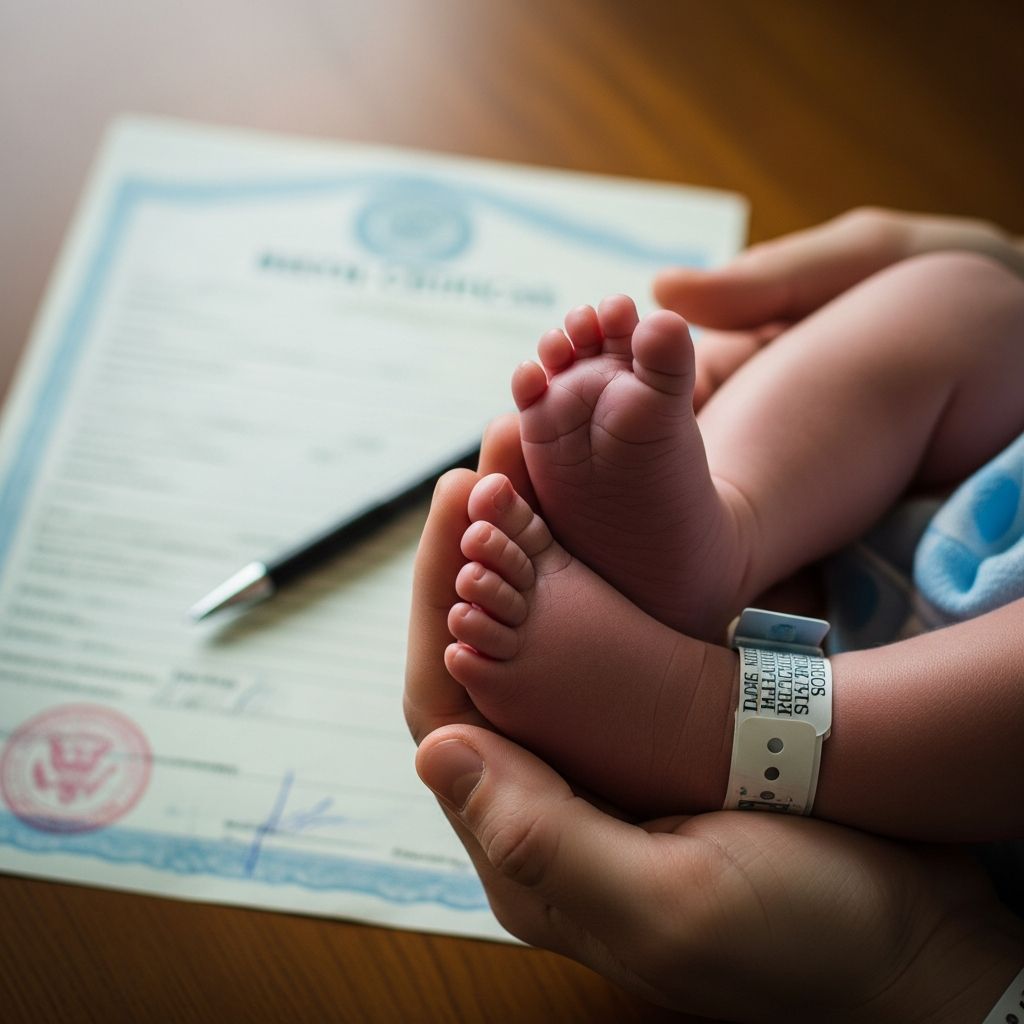
Amid feedings, diapers, and sleepless nights, there is one piece of paperwork that quietly shapes your child’s legal identity for life: the birth certificate. This document unlocks everything from health insurance and school enrollment to passports and government benefits. Understanding how it works before and just after birth can save you stress, delays, and expensive corrections later on.
Why Your Baby’s Birth Certificate Matters So Much
A birth certificate is more than a keepsake. It is the primary government record proving a child’s identity, age, place of birth, and often parentage.
In the United States, a certified birth certificate is widely used to:
- Obtain a Social Security number and card for your child.
- Enroll your child in health insurance or government benefit programs.
- Register for daycare and school, including kindergarten and beyond.
- Apply for a passport and prove U.S. citizenship when eligible.
- Get a driver’s license or REAL ID later in life.
Because so many systems rely on this record, even small errors — such as a misspelled name or wrong birthdate — can create long-term headaches. Knowing what information is collected and how it is used helps you get it right the first time.
How Birth Registration Works in the U.S.
In the U.S., birth registration is handled at the state or territorial level through vital records offices. Hospitals, midwives, and local health departments act as the front line for gathering information from families and sending it to those offices.
Typical steps right after birth
- Information collected at the hospital or by the midwife
Staff ask parents for details such as the baby’s full name, date and time of birth, place of birth, and parents’ names and demographic information. - Record sent to state or local vital records
The hospital or birth attendant transmits the birth record to the state or local health department for official registration, often within a few days. - Official registration
Once accepted, the record becomes part of the state’s vital records system. Parents do not automatically receive a certified copy; they must order one from the appropriate office.
Parents of babies born outside a hospital — such as at home with a midwife — typically register the birth through a county or city vital records or health department office, often with supporting documentation from the birth attendant.
Birth certificate vs. hospital “keepsake”
Many hospitals provide a decorative “souvenir” birth certificate with the baby’s footprints or photos. This is not a legal document and cannot be used to prove identity or citizenship. A certified birth certificate comes from a government vital records office and includes official seals and signatures.
| Souvenir hospital certificate | Certified birth certificate |
|---|---|
| Decorative, often with footprints or photos | Plain government form with official seal and signatures |
| Given by the hospital | Issued only by state or local vital records offices |
| Has no legal value | Used to prove identity, citizenship, age, and parentage |
| Cannot be used for passports or driver’s licenses | Required for passports, REAL ID, school, and benefits |
What Information Is Usually on a Birth Certificate
While exact formats vary by state, most U.S. birth certificates include:
- Baby’s details
- Full legal name
- Date and exact time of birth
- Place of birth (city, county, state, facility)
- Sex assigned at birth
- Parent information
- Full names of parent(s)
- Birthplaces, ages, and sometimes occupations
- Legal relationship to the child (for example, mother, father, parent)
- Registration details
- File number and registrar’s signature
- Date the birth was officially registered
States collect some additional information for health statistics, such as prenatal care and pregnancy history, but those data are often kept confidential and may not all appear on the certificate itself.
Naming Your Baby: What the Form Really Locks In
The birth certificate form is usually the first time your child’s full legal name is recorded. Once it is filed, changing that name can be a separate legal process with court involvement and fees in many states. Planning ahead can help you avoid later changes.
Things to consider before signing
- Spelling and order — Triple-check first, middle, and last names for typos or unintended variations. Even small spelling errors can cause mismatches with passports, Social Security records, and school documents later.
- Hyphenated or double surnames — If you plan to use both parents’ last names, confirm your state’s rules on hyphenation or space-separated surnames. Not all systems handle multiple surnames the same way, which can affect future ID documents.
- Diacritics and special characters — Many state systems do not support accent marks or certain symbols. Ask the hospital clerk or vital records office which characters are accepted so that your child’s name is recorded accurately in official databases.
If you are not ready to finalize the name before discharge, some states allow a short window to submit a name or file a supplemental form without a fee. After that period, a formal amendment process and fee may apply.
Listing Parents: Marriage, Unmarried Parents, and Legal Parentage
How parents are listed on the birth certificate depends on state law, marital status, and whether a parentage (or paternity) acknowledgment is signed.
When parents are married
In many states, if two parents are married to each other when the baby is born, both may be listed automatically based on the marital presumption of parentage. The hospital usually records both names when parents provide their information, though requirements vary.
When parents are not married
If parents are not married, additional steps may be needed for both names to appear on the certificate. Many states use a form commonly called a Voluntary Acknowledgment of Paternity or Voluntary Declaration of Parentage. Signing this form:
- Legally establishes the other parent’s relationship to the child without going to court.
- Allows that parent’s name to be added to the birth certificate.
- Can affect future rights and responsibilities such as custody, visitation, and child support.
Hospitals often provide this form and encourage signing it before discharge for parents who are certain about parentage. If it is not signed at the hospital, it can usually be completed later through a local vital records or child support office, but adding or changing a parent on the certificate may become more complex over time.
Getting a Certified Copy: When, Where, and How
After registration, you must request a certified copy of the birth certificate from a government office. Requirements and fees vary by state, but the broad steps are similar across the U.S..
Where to request a birth certificate
- State vital records office — The main statewide agency that keeps birth records; often part of the department of health.
- County or city clerk / recorder — Some local offices also issue copies, especially in the county where the birth occurred.
- Authorized online vendors — Many states work with a secure third-party service that accepts online orders and forwards them to the correct government office for printing and mailing.
Information you usually need to provide
- Child’s full name as it appears (or appeared) on the record.
- Date and place (city, county, state) of birth.
- Full names of parent(s), including the birth name of the birth parent.
- Your relationship to the child and a copy of your government-issued ID in many states.
- Payment of the required fee, which is set by each state or county.
Authorized vs. informational copies
Some states issue two main types of certified birth certificates:
- Authorized certified copy
Used for legal identification and official purposes such as passports, driver’s licenses, Social Security, and REAL ID. Only certain people (such as the person named on the record, parents, or legal guardians) can obtain this type. - Informational certified copy
Marked clearly with language such as “NOT A VALID DOCUMENT TO ESTABLISH IDENTITY.” It is typically used for genealogy or personal records and cannot be used as legal proof of identity.
How Many Copies Should You Order?
The right number depends on your situation, but many families find it helpful to order more than one certified copy, especially in the first few years. Consider:
- At least one authorized copy to keep in a safe place for future use (passport, REAL ID, college applications).
- An additional copy if parents live in separate households, so each can access it for school, activities, or travel.
- Checking whether daycares, schools, or sports leagues require an original or will accept a photocopy; this can influence how many certified copies you need.
If cost is a concern, you can start with one or two copies and order more later. Most states allow you to request additional certified copies at any time as long as you meet eligibility requirements.
Correcting Errors and Making Changes Later
Despite everyone’s best efforts, mistakes can happen. The earlier you spot an error, the easier and cheaper it usually is to fix.
Common issues that may need correction
- Misspelled first or last name.
- Wrong date or time of birth.
- Incorrect place of birth.
- Missing or incorrect parent information.
States have specific procedures for amending birth records, and these may involve:
- Submitting an amendment form with supporting documents such as medical records or hospital worksheets.
- Paying a processing fee, which can increase after a certain amount of time has passed since the birth.
- Obtaining a court order for substantial changes such as a legal name change or contested parentage.
Because amendment rules differ widely, it is best to contact your state’s vital records office or check its official website for exact instructions.
Social Security Numbers and Other Linked Documents
Applying for a Social Security number for your baby is optional but strongly recommended. It is often easiest to request it at the same time you provide information for the birth certificate while you are still in the hospital.
- If you choose this option, the hospital forwards the request along with the birth record, and your child’s Social Security card is mailed to you, typically within several weeks.
- If you wait, you can apply later at a Social Security office, but you may need more documents and experience longer processing times.
- Having a Social Security number simplifies claiming your child as a dependent on tax returns and enrolling in public benefits or certain financial accounts.
Special Situations: Adoption, Surrogacy, and Birth Abroad
Some families have additional steps to navigate around birth records. These are governed by state and federal laws and can be complex, so specialized legal advice is often helpful.
Adoption and amended birth certificates
After a domestic adoption is finalized, states usually create an amended birth certificate that lists the adoptive parent or parents, while the original record is sealed according to state law. Procedures and access to the original records vary widely and may depend on adoptee age and state policy.
Surrogacy and assisted reproduction
In cases involving surrogacy or assisted reproduction, courts in many states issue pre-birth or post-birth parentage orders that direct how parents should be listed on the birth certificate. Because state rules differ significantly, families often work with attorneys who specialize in reproductive law to ensure the correct names appear on the record.
U.S. citizens born abroad
For children born abroad to U.S. citizen parents, the key document is often a Consular Report of Birth Abroad (CRBA) issued by a U.S. embassy or consulate. This document generally serves the same purpose as a U.S. birth certificate for most federal uses, and parents can request replacement copies from the Department of State if needed.
Practical Tips for New Parents
To keep birth certificate paperwork from becoming overwhelming during an already intense time, a bit of preparation helps.
- Discuss the name early — Agree on spelling and order of names before labor, and write it down clearly.
- Bring key information to the hospital — Pack a note with both parents’ full legal names, birthdates, and birthplaces to give to the clerk.
- Ask questions before signing — If anything on the form is unclear, request an explanation from the hospital’s birth registrar or clerk.
- Review the form carefully — Read every line before you sign; treat it like a legal contract, because it effectively is.
- Order a certified copy early — As soon as your state makes the record available, request at least one certified copy to avoid rush fees or delays later.
- Store it safely — Keep certified copies in a secure, dry place such as a fireproof document box, and consider scanning a copy for your personal records (while remembering that scans are not legal substitutes for certified copies).
Frequently Asked Questions About Birth Certificates
How soon after birth is a birth certificate available?
Hospitals typically submit birth information within a few days, but it can take several weeks before a certified copy is available from the state or local vital records office. Some local agencies can issue copies sooner than the state, while others may take one to two months after birth.
Who is allowed to order my child’s birth certificate?
States limit who can obtain an authorized certified copy. Usually, this includes the person named on the record (once an adult), parents, legal guardians, and in some cases certain close relatives or legal representatives. Others may only receive an informational copy that cannot be used for identification.
What if I lose all my IDs and need my own birth certificate?
If you lose your IDs, many states will still work with you to issue a birth certificate using alternative identity checks, such as a notarized statement or documentation from a parent listed on the record, though processes differ by state.
Can I change my baby’s first name after the certificate is filed?
Some states allow limited corrections or name changes within a short time after birth through an amendment process. After that, you may need a formal legal name change order from a court, followed by an amendment to the birth record. Check your state vital records office for specific requirements.
Do I need a birth certificate to apply for my baby’s passport?
Yes. For U.S.-born children, a certified birth certificate that meets federal requirements is typically required when applying for a U.S. passport, because it proves both identity and U.S. citizenship.
References
- Your Baby’s Birth Certificate and Social Security Number — Sutter Health. 2025-09-23. https://www.sutterhealth.org/health/birth-certificate-ssn
- Order Birth Certificates Online – VitalChek — VitalChek / LexisNexis. 2024-01-01 (accessed). https://www.vitalchek.com/v/birth-certificates
- After Baby Arrives: Important Paperwork — UCLA Health. 2023-06-01 (last updated). https://www.uclahealth.org/medical-services/birthplace/planning-your-childs-birth/after-baby-arrives
- Who Can Obtain a Copy of a Birth Record — Los Angeles County Registrar-Recorder/County Clerk. 2024-04-01. https://www.lavote.gov/home/records/birth-records/birth-records-request/who-can-obtain-a-copy-of-a-birth-record
- Apply for Birth Certificate — California Department of Public Health, CA.gov. 2024-02-15. https://www.ca.gov/departments/176/services/52/
- How to Get a Certified Copy of a U.S. Birth Certificate — USAGov. 2025-11-17. https://www.usa.gov/birth-certificate
- Birth Records FAQs — Los Angeles County Registrar-Recorder/County Clerk. 2024-03-01. https://www.lavote.gov/home/recorder/birth-records/faqs/faqs
- Birth Certificates — County of Orange, California. 2024-05-01. https://www.ocgov.com/services/certificates-registration-licenses/birth-certificates