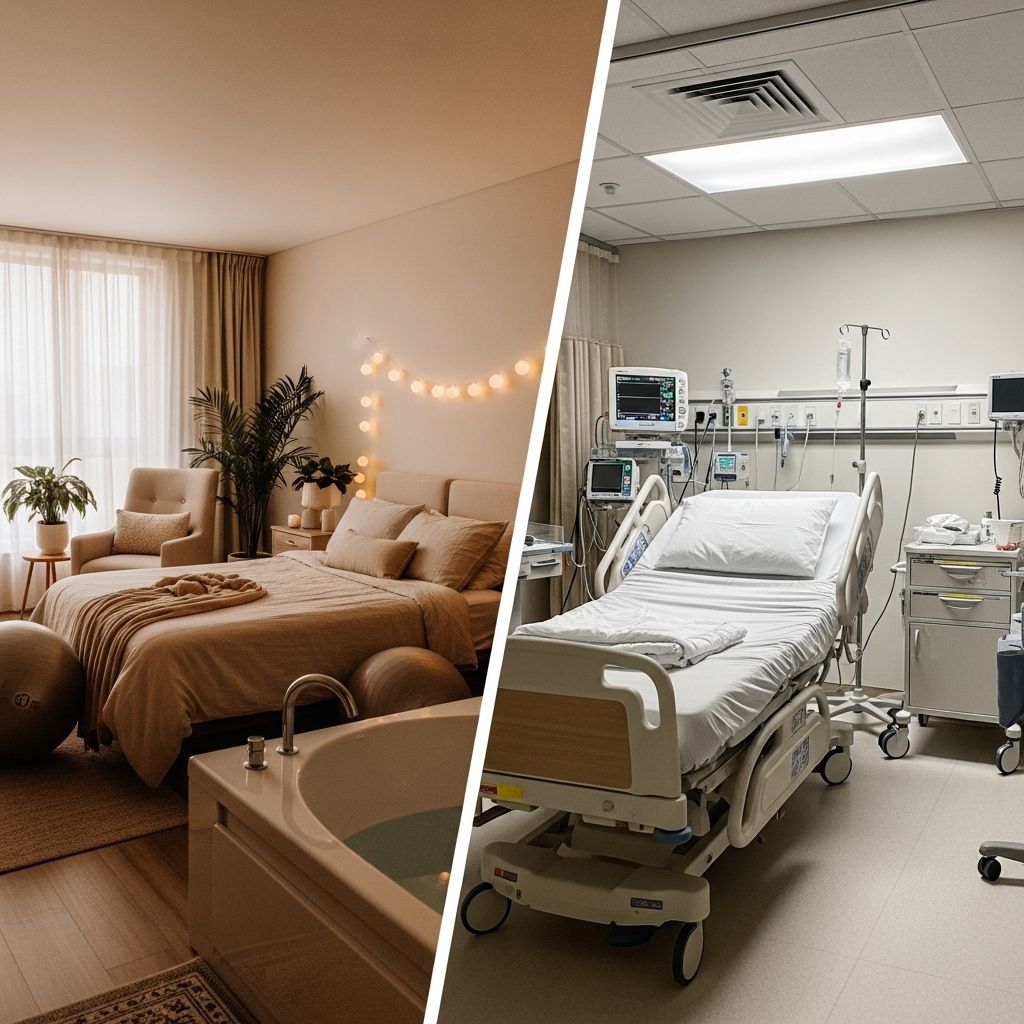
Expecting parents face a pivotal choice when planning childbirth: a cozy birth center emphasizing natural processes or a hospital equipped for any scenario. Birth centers cater to low-risk pregnancies in home-like settings with midwife-led care, while hospitals provide comprehensive medical support for diverse needs. This guide breaks down environments, staff, procedures, costs, and eligibility to empower your decision.
Understanding Birth Centers
Birth centers offer a serene, non-clinical atmosphere designed to mimic home comforts, promoting the body’s innate birthing abilities. These facilities prioritize low-risk pregnancies, focusing on holistic support rather than routine medical interventions. Private suites feature soft lighting, comfortable furnishings, and amenities like birthing tubs, allowing freedom of movement during labor.
Midwives, trained experts in normal pregnancies, guide the process, consulting obstetricians only if needed. Stays are short—often just hours post-birth—enabling quick home returns. This model fosters family involvement, with flexible visitor policies enhancing emotional support.
- Cozy rooms with personalized decor and relaxation tools.
- Emphasis on physiological birth, letting labor unfold naturally.
- Options for water immersion, movement, and position choices during delivery.
Exploring Hospital Birthing
Hospitals serve as versatile hubs for all pregnancy types, from routine to complex. They boast labor rooms, delivery suites, operating theaters, and neonatal intensive care units (NICUs), ensuring immediate access to specialists like obstetricians and neonatologists.
Care is physician-led, with continuous fetal monitoring and readiness for interventions. While some hospitals incorporate birth centers for a hybrid experience, the core setup prioritizes medical efficiency. Family presence is typically limited to one or two support people, and policies may restrict eating or mobility to prepare for potential surgeries.
- Advanced equipment for monitoring and emergencies.
- On-site surgical capabilities for cesareans.
- Specialized newborn care teams available 24/7.
Comparing Care Providers and Philosophies
The midwifery model in birth centers views birth as a healthy event, minimizing disruptions with personalized plans. Hospitals follow a medical model, excelling in high-risk cases through technology and protocols.
| Aspect | Birth Centers | Hospitals |
|---|---|---|
| Care Lead | Midwives (low-intervention focus) | Obstetricians (medical oversight) |
| Philosophy | Natural, holistic | Comprehensive, intervention-ready |
| Visitor Policy | Flexible, family-inclusive | Limited to 1-2 people |
| Monitoring | Intermittent, mobility-friendly | Continuous electronic fetal monitoring |
Pain Relief and Intervention Strategies
Birth centers champion non-pharmacological methods: hydrotherapy, massage, breathing techniques, birth balls, and sometimes nitrous oxide. Epidurals are unavailable, aligning with their low-intervention ethos.
Hospitals offer a spectrum, from natural options to epidurals, IV pain meds, and Pitocin inductions. This flexibility suits those desiring scheduled deliveries or robust relief, though it may lead to higher intervention rates like forceps or cesareans—around 32% nationally.
- Birth Centers: Natural tools promote autonomy; no surgical options on-site.
- Hospitals: Epidurals on demand; quick transitions to C-sections if needed.
Studies indicate birth centers yield lower C-section rates and similar or better maternal outcomes for eligible cases.
Safety Protocols and Transfer Processes
Safety anchors both settings. Birth centers equip for emergencies with transfer plans to nearby hospitals, ensuring seamless handoffs for complications. They suit healthy pregnancies with vertex-positioned, single babies under 41 weeks.
Hospitals mitigate risks instantly via NICUs and neonatologists, ideal for multiples, preterm labor, or maternal conditions like hypertension. No transfers required, providing reassurance.
Eligibility excludes birth centers for prior C-sections, breech presentations, or gestational diabetes, directing those to hospitals.
Financial and Insurance Considerations
Costs vary widely. Birth centers often prove more affordable due to fewer interventions, but insurance coverage lags—check policies early. Hospitals, while pricier with add-ons like epidurals, typically enjoy broader insurer support.
| Factor | Birth Centers | Hospitals |
|---|---|---|
| Average Cost | Lower base; varies by coverage | Higher, escalates with interventions |
| Insurance | Limited options | Comprehensive maternity plans |
| Out-of-Pocket | Potentially higher if uncovered | Controlled by plans, but bills mount |
Postpartum Experience and Recovery
In birth centers, bonding thrives in tranquil suites with guidance on breastfeeding and newborn care before discharge. Hospitals provide extended monitoring, especially for vulnerable infants, with lactation consultants and pediatric checks.
Both promote skin-to-skin contact, but hospitals excel in extended support for complications.
Choosing the Right Path for Your Family
Align your choice with health status, birth vision, and risk factors. Low-risk parents seeking intimacy may prefer birth centers; those wanting epidurals or facing complexities should opt for hospitals. Tour facilities, consult providers, and review transfer agreements.
Hybrid hospital birth centers blend comforts with medical access, offering the best of both worlds.
Frequently Asked Questions
What qualifies as a low-risk pregnancy for birth centers?
Typically, single baby in head-down position, no prior C-sections, under 35-41 weeks, and no chronic conditions like diabetes.
Can I eat during labor at a birth center?
Yes, light meals are encouraged to sustain energy, unlike many hospitals restricting intake for surgery prep.
How quick are transfers from birth centers?
Protocols ensure rapid transport, often within 30 minutes, with ambulances or private vehicles based on stability.
Are hospital births always more intervention-heavy?
Not necessarily; many support natural methods, but readiness for interventions increases their use.
Do birth centers have newborn resuscitation equipment?
Yes, basic tools for healthy transitions; complex cases transfer promptly.
Final Thoughts on Personalized Birthing
Whether embracing nature’s rhythm in a birth center or medical security in a hospital, informed choices yield positive outcomes. Discuss with your care team to craft a plan reflecting your values and needs. Evidence supports both for appropriate candidates, prioritizing safety and satisfaction.
References
- The Difference Between Giving Birth in a Birthing Center vs. a Hospital — WebMD. 2023. https://www.webmd.com/baby/difference-giving-birth-hospital-birthing-center
- Birth Center vs. Hospital Birth: What’s the Real Difference? — Colorado Birth and Wellness. 2024. https://www.coloradobirthandwellness.com/blog/birth-center-vs-hospital-birth-whats-the-real-difference
- Birthing Center vs Hospital — Haven Health and Birth. 2023. https://www.havenhealthandbirth.com/post/birthing-center-vs-hospital
- Birth center vs. hospital: How to choose? — HealthPartners Blog. 2024. https://www.healthpartners.com/blog/birth-center-vs-hospital/
- Freestanding Birth Centers: An Evidence-Based Option for Birth — PMC (NCBI). 2022-02-15. https://pmc.ncbi.nlm.nih.gov/articles/PMC8827343/
- Birth Center vs Hospital — A Family Affair Birth Center. 2024. https://www.afamilyaffairbirthcenter.com/blog/birth-center-vs-hospital
- Birthing Center vs Hospital: What Are the Differences — Nursing CE Central. 2023. https://nursingcecentral.com/birthing-center-vs-hospital-what-are-the-differences/