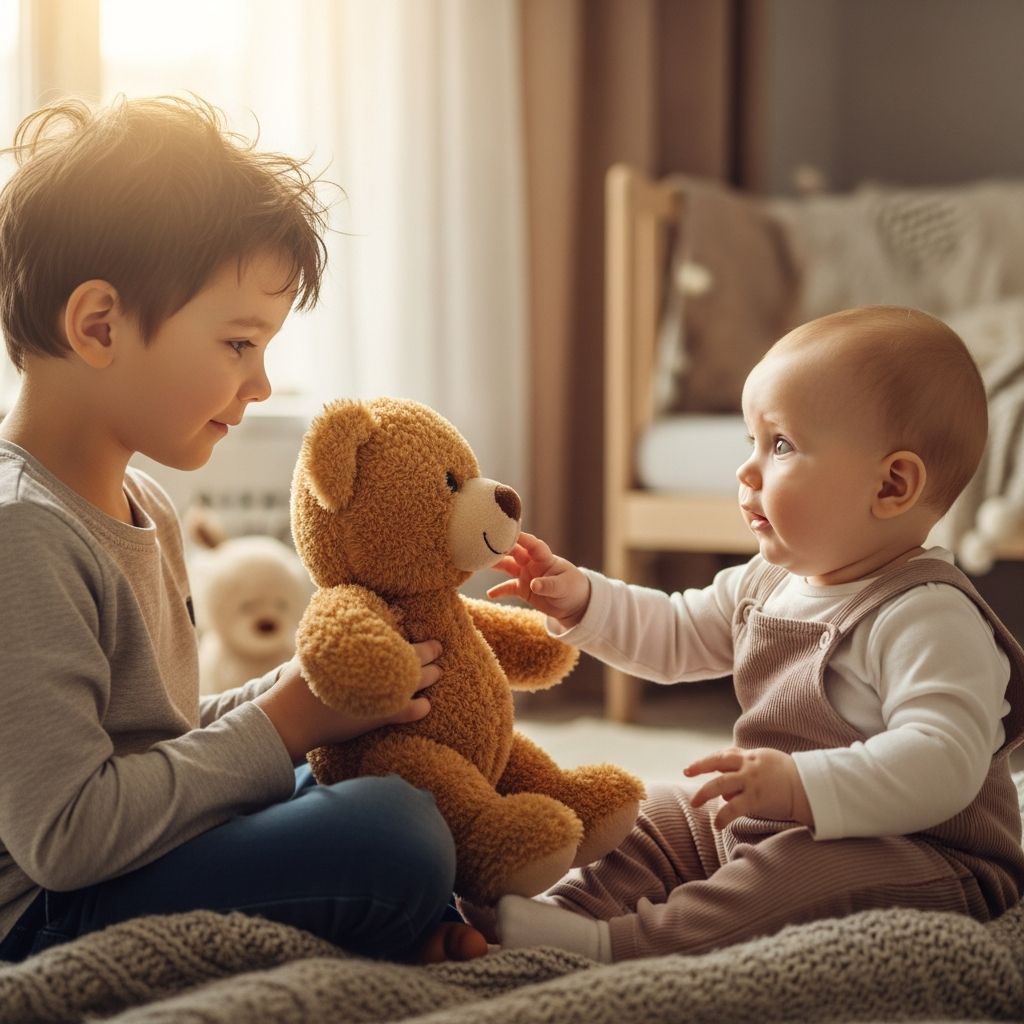
Sometimes the smallest moments between siblings carry the biggest emotional weight. A simple video of a little boy handing his beloved teddy bear to his baby sister has captured parents’ hearts because it shows exactly how powerful a child’s choice to share a treasured object can be.
A Small Gesture With Big Feelings
When a big brother decides to give his favorite teddy bear to his toddler sister, it is more than just sharing a toy. It is a visible sign of emotional growth, empathy, and connection between siblings.
Parents watching such a moment often recognize that a child is offering something deeply personal, not because they have to, but because they want to make a younger sibling feel loved and included.
- He is giving up comfort to offer comfort.
- He is choosing generosity over attachment.
- He is showing his sister that she belongs in his world.
The Story Behind the “Brother Bear” Gift
In the viral scenario that inspired this article, the big brother isn’t just picking a random stuffed animal off the shelf. He chooses the one that clearly means the most to him, the bear he sleeps with and carries around, and places it in his sister’s arms.
The baby sister’s reaction—holding, hugging, or smiling at the bear—reinforces for him that his sacrifice mattered. It turns an ordinary toy exchange into a powerful emotional memory for the entire family.
- The teddy bear stands in for comfort, security, and routine.
- The transfer of the bear symbolizes sharing those feelings with someone new.
- The moment often becomes a favorite family story or video clip.
Why Favorite Toys Matter So Much
To adults, a teddy bear can look like just another plush toy. To a young child, it can be a constant companion, a bedtime ritual, or a source of reassurance during transitions and stress.
Psychologists often describe these beloved objects as “comfort items” or “transitional objects,” because they help children manage big emotions and feel safe when parents or caregivers are not physically present.
- A favorite bear or blanket is usually connected to routine (bedtime, car rides, naps).
- Children project feelings of safety and affection onto these objects.
- Sharing or giving away such an item can signal emotional maturity, not just generosity.
What the Gift Says About Sibling Bonding
The teddy bear gift is also a window into how sibling relationships are forming. Big brothers and big sisters often struggle with mixed feelings when a new baby arrives. There can be excitement, jealousy, curiosity, and confusion all at once.
When an older child chooses to include the baby by offering a beloved toy, it may show that they are starting to see the baby as a real person, not just a disruption of their routine.
- They begin to take on a “protector” or “helper” role.
- They experiment with empathy by imagining what makes the baby feel better.
- They test out sharing as a way to build closeness and connection.
Emotional Milestones for the Big Brother
For the big brother, giving away his favorite teddy bear can mark several emotional milestones at once. It signals that he is moving from a more self-focused stage toward a more relational stage, where he understands how his actions affect others.
This type of moment often reflects key developmental skills such as empathy, emotional regulation, and the ability to tolerate small losses in exchange for social rewards, like making his sister happy or receiving praise from parents.
- Empathy: Understanding that his sister might feel happier or safer with the bear.
- Perspective-taking: Imagining how someone else experiences comfort.
- Emotional resilience: Coping with the idea of not having his usual comfort item.
How Parents Typically React
Parents who witness this kind of gesture often feel a mix of pride and tenderness. It is common for caregivers to tear up or narrate the scene out loud because the moment confirms that their child is internalizing family values like kindness and generosity.
At the same time, parents may also experience a hint of sadness, knowing that these early, purely innocent expressions of love are fleeting. They may grab their phones, quickly record the interaction, and share it with relatives or on social media because it feels too beautiful to keep to themselves.
- They praise the older child for kindness and thoughtfulness.
- They reassure the child that feelings of loss are okay if he misses the bear later.
- They may help create a new comfort routine if the child needs another item.
Teaching Kindness Through Everyday Moments
A touching teddy bear exchange doesn’t happen in a vacuum. It usually reflects many smaller moments where parents have modeled gentle behavior, encouraged sharing, and talked openly about feelings. Children absorb how adults treat them and each other.
When caregivers consistently show warmth, use kind words, and validate emotions, children are more likely to imitate those behaviors with siblings, friends, and even their stuffed animals.
- Reading books that highlight sharing and empathy supports these lessons.
- Praising specific actions (“You were so gentle with your sister”) helps them understand what to repeat.
- Keeping expectations realistic prevents resentment about always having to share everything.
Supporting an Older Child’s Feelings
Even when an older child acts lovingly, complicated emotions can surface afterward. He may miss his teddy bear at bedtime or feel unexpectedly upset that he gave it away. These mixed feelings are normal and deserve gentle attention.
Parents can acknowledge this by letting the child talk about missing the toy, offering extra snuggles, or suggesting a compromise, such as sharing the bear sometimes rather than permanently giving it up.
- Validate both pride and sadness rather than focusing only on the “sweet” side.
- Offer choices, like selecting a new comfort item or rotating favorites.
- Reassure the child that generosity does not mean ignoring their own needs.
Practical Tips for Encouraging Positive Sibling Gifts
Parents can gently set the stage for healthy, voluntary gift-giving between siblings. The key is to invite, not pressure, older children to share meaningful items. Forced giving can create resentment, while genuine choice builds real connection.
Instead of insisting that an older child hand over a favorite toy, caregivers can ask which items they feel comfortable sharing and explain that special treasures can be treated differently from everyday toys.
- Designate a few “always share” toys and a few “special” toys that are private.
- Invite the older child to choose a gift for the baby for holidays or milestones.
- Celebrate the thought behind the gesture more than the object itself.
Table: What the Teddy Bear Gift Represents
The table below offers a quick way to see how one simple act of giving a teddy bear touches many layers of development and family life.
| Aspect | What It Looks Like | What It Represents |
|---|---|---|
| Emotional Development | Big brother hands over his favorite bear and watches his sister’s reaction. | Growing empathy, perspective-taking, and willingness to sacrifice for others. |
| Sibling Bonding | Baby sister hugs or holds the bear while big brother stays nearby. | Emerging sense of partnership, protection, and shared family identity. |
| Parent Experience | Parents feel emotional, record the moment, and praise both children. | Validation that family values like kindness and sharing are taking root. |
| Family Storytelling | The moment becomes a favorite video or anecdote retold over the years. | A shared memory that reinforces family culture and connection. |
| Ritual and Routine | The bear may start appearing in bedtime routines for the baby. | Passing along a symbol of comfort to the next child in the family. |
Turning Viral Moments Into Teachable Moments
Heartwarming sibling videos travel quickly online because they give viewers a glimpse of pure, unfiltered kindness. However, beyond the emotional response, they can spark helpful conversations at home with children about sharing and empathy.
Parents can watch similar clips with kids and then ask open-ended questions such as, “How do you think he felt giving away his teddy?” or “What could you do to make your brother or sister feel loved like that?”
- Use real-life examples to make abstract values concrete.
- Avoid shaming children by comparing them negatively to kids in videos.
- Focus on inspiring, not pressuring, your own child to show kindness in their own way.
Creating Your Own “Brother Bear” Traditions
Families who love the idea of symbolic gifts between siblings can create simple traditions around them. These do not have to involve losing a favorite toy; the goal is to highlight connection, not sacrifice.
Some parents introduce a “sibling gift box,” where an older child selects a small item—like a stuffed animal, board book, or handmade drawing—to officially welcome a new baby into the family.
- Let the older child help wrap or present the gift to the baby.
- Consider marking big milestones (first birthday, holidays) with sibling-to-sibling gifts.
- Take photos or short videos to build your own collection of meaningful moments.
SEO-Friendly FAQ About Sibling Gifts and Teddy Bears
Why is a big brother giving his teddy bear to his baby sister such a big deal?
It is a big deal because the teddy bear is usually a powerful comfort item, not just another toy. When a child chooses to give it away willingly, it shows empathy, emotional maturity, and a desire to make a younger sibling feel loved and included.
Should parents encourage children to give away their favorite toys?
Parents can gently invite children to share, but they should avoid forcing them to give away their most cherished possessions. True generosity grows best when children feel they have a choice and know that their own feelings and attachments are respected.
What does a teddy bear symbolize for young children?
For many young children, a teddy bear represents safety, routine, and emotional comfort. It often travels with them through naps, bedtime, and stressful situations, acting as a reliable source of reassurance.
How can I help my older child adjust to a new baby?
You can involve the older child in small caregiving tasks, give them special one-on-one time, and encourage them to share in ways that feel safe and manageable. Asking them to choose a simple gift for the baby can also help them feel proud and included.
What if my child regrets giving away a favorite toy?
If a child regrets giving away a beloved toy, it is important to validate their feelings rather than dismiss them. Parents can talk through the feelings, explore compromises like sharing the toy instead of permanently giving it away, and remind the child that their kindness is still appreciated and remembered.
Final Thoughts on the Power of a Plush Bear
A single teddy bear passed from big brother to baby sister may look simple, but it carries layers of meaning about love, growth, and family connection. When children voluntarily offer something that comforts them to someone else, they reveal an emerging capacity for deep empathy that will serve them throughout life.
Parents can honor these moments by noticing them, talking about them, and building family traditions that celebrate kindness in all its forms, whether it appears in a viral video or in the quiet routines of everyday home life.