President Joe Biden’s encounter with the family of George Floyd marked a poignant moment in the ongoing quest for police reform and racial justice in the United States. Held on the first anniversary of Floyd’s tragic death, the meeting underscored the persistent challenges in achieving meaningful legislative change while highlighting the personal grief and determination of those left behind.
The Context of a Historic Tragedy
George Floyd’s death on May 25, 2020, ignited nationwide protests against police brutality and systemic racism. A Black man killed by a Minneapolis police officer during an arrest, Floyd’s final words, “I can’t breathe,” became a rallying cry for the Black Lives Matter movement. This event not only exposed deep-seated issues in law enforcement practices but also catalyzed a national conversation on reform.
The first anniversary arrived amid heightened expectations for federal action. Families across America watched as leaders gathered to honor Floyd’s memory, yet the political landscape remained fraught with division. President Biden, who had campaigned on promises of racial equity, faced mounting pressure to deliver on policing legislation.
Details of the Oval Office Gathering
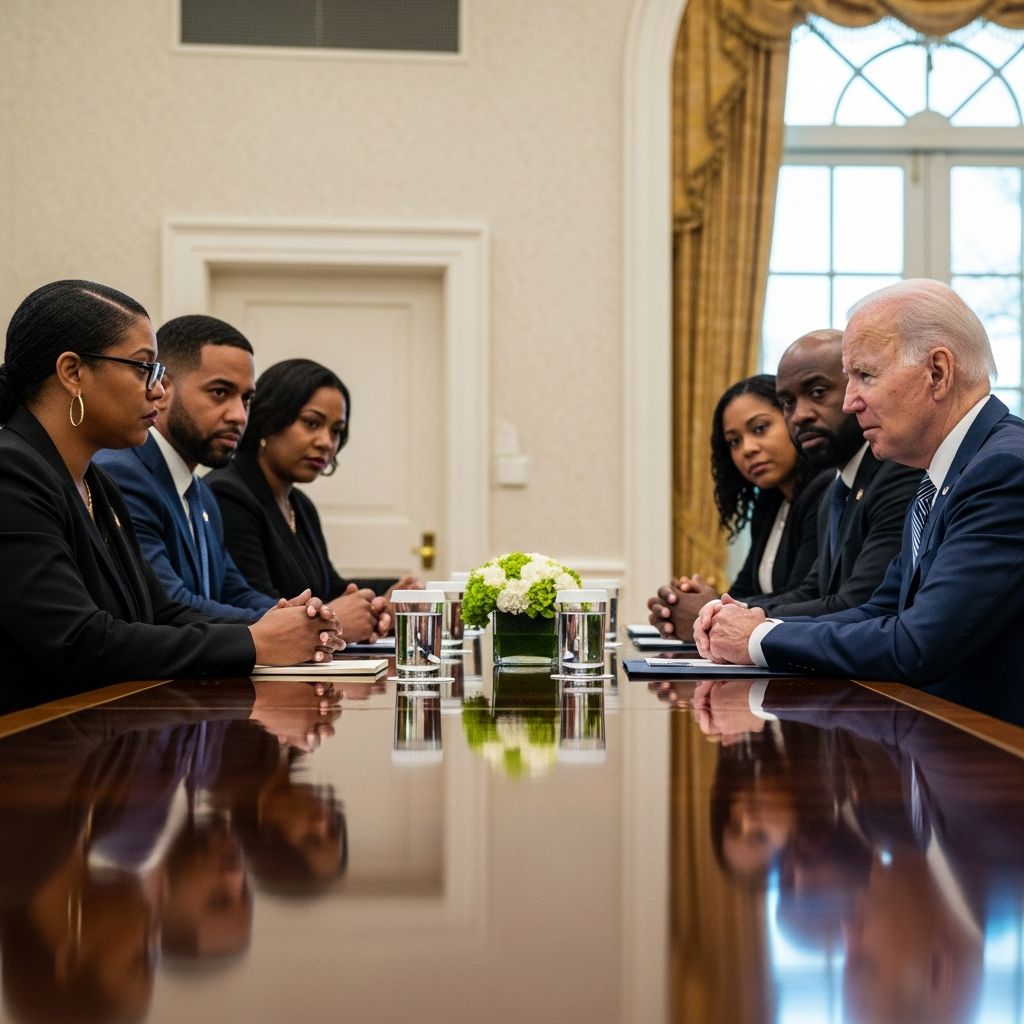
The meeting took place in the Oval Office, lasting approximately one hour. Attendees included key family members such as Floyd’s young daughter, Gianna, and her mother, Roxie Washington. Vice President Kamala Harris and congressional leaders from both parties were also present, creating a bipartisan atmosphere amid tense negotiations.
Family members shared personal stories of loss and their vision for a safer future. Biden listened intently, offering condolences and recommitting to the fight against injustice. The presence of Gianna, just seven years old at the time, added a deeply human element, symbolizing the generational impact of Floyd’s death.
- Key participants: President Biden, VP Harris, Gianna Floyd, Roxie Washington, congressional representatives.
- Duration: About 60 minutes in the Oval Office.
- Tone: Emotional, focused on remembrance and reform advocacy.
Police Reform Legislation at a Crossroads
Central to the discussions was the George Floyd Justice in Policing Act, a bill aimed at banning chokeholds, ending no-knock warrants, and creating a national database for police misconduct. Despite passing the House, it stalled in the Senate due to Republican opposition and filibuster concerns.
Biden expressed hope that passing the bill would honor Floyd’s legacy. However, with negotiations in limbo, the meeting served as both a memorial and a strategic push. Family advocates urged lawmakers to prioritize accountability measures, emphasizing that delays perpetuated cycles of violence.
| Bill Provision | Purpose | Status (2021) |
|---|---|---|
| Ban on chokeholds | Prevent deadly restraints | Passed House, Senate stalled |
| No-knock warrant restrictions | Reduce raid risks | Passed House, Senate stalled |
| National misconduct database | Track officer behavior | Passed House, Senate stalled |
| Qualified immunity reform | Enable civil suits | In negotiation |
Family’s Voice in the Fight for Change
George Floyd’s relatives have emerged as powerful advocates. Beyond the Oval Office, they met with Capitol Hill leaders to lobby directly. Their message was clear: reform is not just policy—it’s personal. Gianna’s innocent perspective reminded all of the human cost, while siblings and cousins spoke of community healing.
Post-meeting, the family addressed reporters, expressing gratitude for Biden’s support but frustration with legislative gridlock. They called for unity, stressing that police reform benefits everyone by fostering trust between communities and law enforcement.
Biden Administration’s Commitment
The Biden-Harris administration positioned the meeting as a step toward executive actions where Congress faltered. Initiatives included increased funding for community policing and mental health crisis response teams as alternatives to armed interventions.
VP Harris, drawing from her background as a former prosecutor, emphasized de-escalation training and bias reduction. The administration vowed to use the anniversary as momentum for bipartisan talks, though skeptics noted the challenges of a divided Senate.
Broader Implications for Racial Justice
This gathering reflected America’s polarized response to racial injustice. While 2020 saw unprecedented protests, sustaining momentum proved difficult. The meeting highlighted intersections with other issues like voting rights and economic equity, all under the umbrella of systemic reform.
Public opinion polls at the time showed majority support for the Justice in Policing Act, yet political realities hindered progress. Critics argued that symbolic gestures, like the meeting, must translate to action to avoid disillusionment.
Progress and Setbacks Since the Anniversary
Looking back from 2026, the path has been uneven. While the bill didn’t pass in its original form, elements influenced state-level changes and executive orders. Derek Chauvin’s conviction provided some closure, but ongoing incidents underscore the need for federal standards.
George Floyd’s family continues advocacy through the George Floyd Memorial Foundation, supporting youth programs and officer training. Their resilience inspires, but they remind us that true justice requires sustained effort.
Public Reaction and Media Coverage
News outlets extensively covered the event, with live streams capturing family statements. Social media amplified voices, trending hashtags like #JusticeForGeorgeFloyd. Reactions ranged from hope in Biden’s empathy to criticism of inaction.
Community leaders praised the family’s poise, viewing the meeting as a bridge between grief and policy. However, activists demanded bolder moves, like ending qualified immunity outright.
Challenges in Achieving Bipartisan Reform
Partisan divides complicate reform. Republicans often prioritize law enforcement support, fearing reforms weaken public safety. Democrats push for accountability, citing data on disproportionate impacts on Black Americans.
Finding common ground involves compromises, such as enhanced training without overhauling immunity. The meeting’s bipartisan attendees signaled potential, but filibuster reform loomed large.
The Role of Youth and Future Generations
Gianna Floyd’s participation symbolized hope. Children’s involvement in these discussions humanizes abstract policies, pressuring adults to act responsibly. Programs educating youth on rights and civic engagement stem from such moments.
Executive Actions as a Bridge
With legislation stalled, Biden issued orders improving federal policing standards. These included body camera mandates and diversity hiring, setting examples for states. While not comprehensive, they addressed immediate gaps.
Global Perspectives on U.S. Police Reform
Internationally, Floyd’s death drew condemnation, with countries like the UK reforming their own practices. This scrutiny pressures U.S. leaders to align domestic policy with global human rights norms.
FAQs
What was the main goal of the Biden-Floyd family meeting?
The meeting aimed to honor George Floyd’s memory on his death’s anniversary and urge passage of police reform legislation.
Who attended the Oval Office discussion?
President Biden, VP Harris, Gianna Floyd, Roxie Washington, and congressional leaders from both parties.
Why did the police reform bill stall?
It passed the House but faced Senate opposition over filibuster rules and partisan disagreements on provisions like qualified immunity.
What progress has been made since 2021?
State reforms, Chauvin’s conviction, and executive orders advanced some goals, though federal legislation remains elusive.
How has the Floyd family contributed to reform?
Through lobbying, foundations, and public advocacy, they keep pressure on lawmakers for accountability and community programs.
Paths Forward for Lasting Change
Moving ahead requires compromise, data-driven policies, and community input. Investing in alternatives to policing, like social services, could reduce incidents. The Floyd family’s enduring voice ensures the conversation persists.
Ultimately, Biden’s meeting was a catalyst, reminding us that justice demands vigilance. As America grapples with division, such moments foster unity toward equity.
References
- Biden Meets With George Floyd’s Family On 1st Anniversary Of His Death — WGBH News. 2021-05-25. https://www.wgbh.org/news/national/2021-05-25/biden-meets-with-george-floyds-family-on-1st-anniversary-of-his-death
- Biden Met With George Floyd’s Family With Policing Bill Stuck In Limbo — Maine Public. 2021-05-25. https://www.mainepublic.org/2021-05-25/biden-met-with-george-floyds-family-with-policing-bill-stuck-in-limbo
- Family of George Floyd Meets with President Biden, VP Harris, and Capitol Hill Leaders — Beatty House. 2021-05-25. http://beatty.house.gov/media-center/in-the-news/family-of-george-floyd-meets-with-president-biden-vp-harris-and-capitol-hill-leaders-to-push-for-police-reform