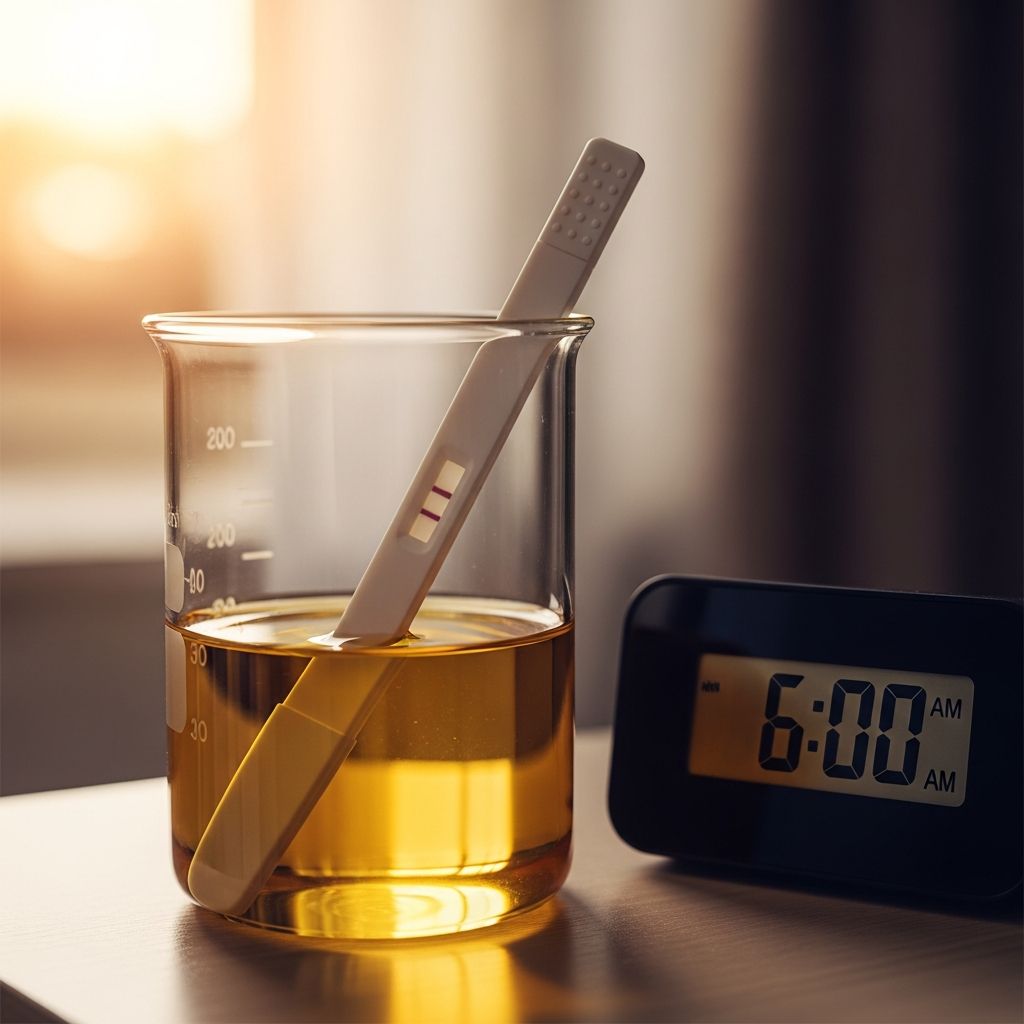
Home pregnancy tests offer a quick way to confirm pregnancy by detecting human chorionic gonadotropin (hCG), a hormone produced after implantation. However, the timing and concentration of urine play crucial roles in result reliability. This guide explores why specific urine samples enhance detection, backed by medical insights.
The Science of hCG and Urine Concentration
hCG levels rise rapidly post-implantation, doubling every 48-72 hours in early pregnancy. Urine tests measure this hormone, but dilution from fluids or frequent urination can lower concentrations, potentially leading to false negatives.
First thing in the morning, after overnight without urination, urine is naturally concentrated. This amplifies hCG presence, allowing even low-sensitivity tests to detect it sooner. Studies show morning samples improve early detection rates, especially before a missed period.
- hCG buildup: Overnight, kidneys concentrate urine, raising hormone levels per milliliter.
- Dilution risks: Daytime hydration spreads hCG thinly, mimicking non-pregnant states.
- Threshold matters: Tests require 25 mIU/mL or less; concentrated urine meets this easier.
Ideal Testing Windows Throughout the Day
While morning urine reigns supreme for early testing, other times work with precautions. Wait at least 3-4 hours after last urination to rebuild concentration. Avoid excessive fluids beforehand to prevent dilution.
| Time of Day | Pros | Cons | Best For |
|---|---|---|---|
| First Morning | Highest hCG concentration | May need to wake early | Early detection (pre-period) |
| Midday (after 4hr hold) | Convenient | Lower concentration | Post-missed period confirmation |
| Evening | Relaxed setting | Most diluted | High-sensitivity tests only |
For irregular cycles, count 21 days post-unprotected sex before testing. Sensitive tests like those detecting 6.3 mIU/mL yield over 99% accuracy post-missed period.
Choosing the Right Pregnancy Test Sensitivity
Tests vary by hCG detection threshold. Early-detection models spot tiny amounts (e.g., 6-25 mIU/mL), ideal for morning use. Standard ones need higher levels, suiting later testing.
- Ultra-sensitive: Positive 5-6 days pre-period in 60-77% cases.
- Standard: Reliable day-of or after missed period.
- Digital: Reduces interpretation errors with clear yes/no.
Always check packaging for sensitivity and instructions. Brands like First Response excel early.
Common Pitfalls Leading to Inaccurate Results
Even perfect timing fails without proper use. False negatives dominate due to low hCG or errors; false positives are rarer.
False Negatives:
- Testing pre-implantation (hCG absent).
- Diluted urine from overhydration.
- Expired or faulty tests.
- User errors: Insufficient urine, mis-timing reads.
False Positives: Rare, from recent miscarriage, fertility drugs with hCG, or conditions like cysts.
A Washington University study found some tests give 5% false negatives in pregnant samples due to design flaws, underscoring quality choice.
Step-by-Step Guide to Reliable Testing
- Gather supplies: Fresh test, timer, clean cup if needed.
- Prepare: Use FMU or hold urine 4 hours; limit fluids.
- Collect sample: Midstream for sticks; full for cups.
- Test promptly: Follow exact timing (e.g., 3-5 min wait).
- Read results: At specified time; evaporation lines mislead later.
- Confirm negatives: Retest in 2-3 days or see doctor for blood test.
Blood tests at clinics detect hCG earlier (25 mIU/mL serum) and quantify levels, serving as gold standard.
Special Scenarios and Considerations
Irregular Cycles/Fertility Treatments: Wait longer; hCG injections interfere up to 10 days.
Perimenopause/Menopause: Rare hCG from cysts can confuse.
Recent Loss/Ectopic Risk: Positive warrants ultrasound; ectopics produce hCG but threaten health.
Medications like birth control don’t affect tests, per NHS guidelines.
When to Seek Professional Confirmation
Negative but symptoms (nausea, fatigue)? Retest or visit provider. Blood tests confirm quantitatively. Positive? Schedule prenatal care promptly.
Home tests hit 99% accuracy post-missed period when used right.
Frequently Asked Questions
Can I test anytime, or must it be morning?
Morning is best for concentration, but sensitive tests work anytime post-missed period. Hold urine 3-4 hours otherwise.
What if I get a negative but miss my period?
Retest in 2 days; hCG may need time to rise. See a doctor if persistent.
Does drinking water ruin the test?
Excessive amounts dilute urine; normal hydration is fine.
How soon after conception can I test?
Implantation takes 6-12 days; test 10-14 days post-ovulation or 21 days post-sex.
Are all tests equally accurate?
No; sensitivity varies. Early ones detect lower hCG.
Empowering Your Pregnancy Journey
Armed with timing knowledge, approach testing confidently. Combine with tracking apps for ovulation and symptoms. Joy of confirmation awaits accurate execution.
References
- Early Morning – The Most Accurate Time for a Pregnancy Test — Fairhaven Health. Accessed 2026. https://www.fairhavenhealth.com/blogs/fairhaven-health-library/early-morning-the-most-accurate-time-for-a-pregnancy-test
- How Does Taking a Pregnancy Test at Different Times of Day Affect the Result? — Carolina Pregnancy Center. Accessed 2026. https://carolinapregnancy.org/how-does-taking-a-pregnancy-test-at-different-times-of-day-affect-the-result/
- Pregnancy Testing — NewYork-Presbyterian. Accessed 2026. https://www.nyp.org/womens/pregnancy-and-birth/family-planning/pregnancy-testing
- Pregnancy Test: When To Take, Types & Accuracy — Cleveland Clinic. 2023-10-25. https://my.clevelandclinic.org/health/diagnostics/9703-pregnancy-tests
- Understanding the Accuracy of Pregnancy Tests — First Response. Accessed 2026. https://www.firstresponse.com/en/articles-listings/accuracy-and-knowing-sooner
- When is the best time to take a pregnancy test? — Clearblue. Accessed 2026. https://www.clearblue.com/pregnancy-tests/when-is-the-best-time-to-take-a-pregnancy-test
- Flaw in many home pregnancy tests can return false negative results — Washington University School of Medicine. 2023-01-01. https://medicine.washu.edu/news/flaw-in-many-home-pregnancy-tests-can-return-false-negative-results/