When your baby feels warm or extra fussy, a reliable thermometer is one of the most important tools you can reach for. Knowing your child’s actual temperature helps you decide when to watch and wait at home and when it is time to call your pediatrician or seek urgent care.
This guide explains the main thermometer types for babies, when each is recommended, and how to get readings you can trust. It is inspired by common questions new parents ask but offers a fully fresh take, with step-by-step tips and evidence-based advice.
Why Having the Right Thermometer Matters
A fever itself is not an illness; it is a sign that the body is fighting an infection. Still, in young babies, accurate temperature readings are crucial for safe decision-making.
- Accuracy: Some methods are more precise than others for infants.
- Speed: Shorter measurement times mean less stress for you and your baby.
- Comfort: A calmer baby makes it easier to get a correct reading.
- Hygiene: Proper cleaning and storage help prevent the spread of germs.
Health organizations and pediatric experts consistently note that the most accurate method for young children is a digital rectal temperature, especially in infants under 3 years old.
Overview of Baby Thermometer Types
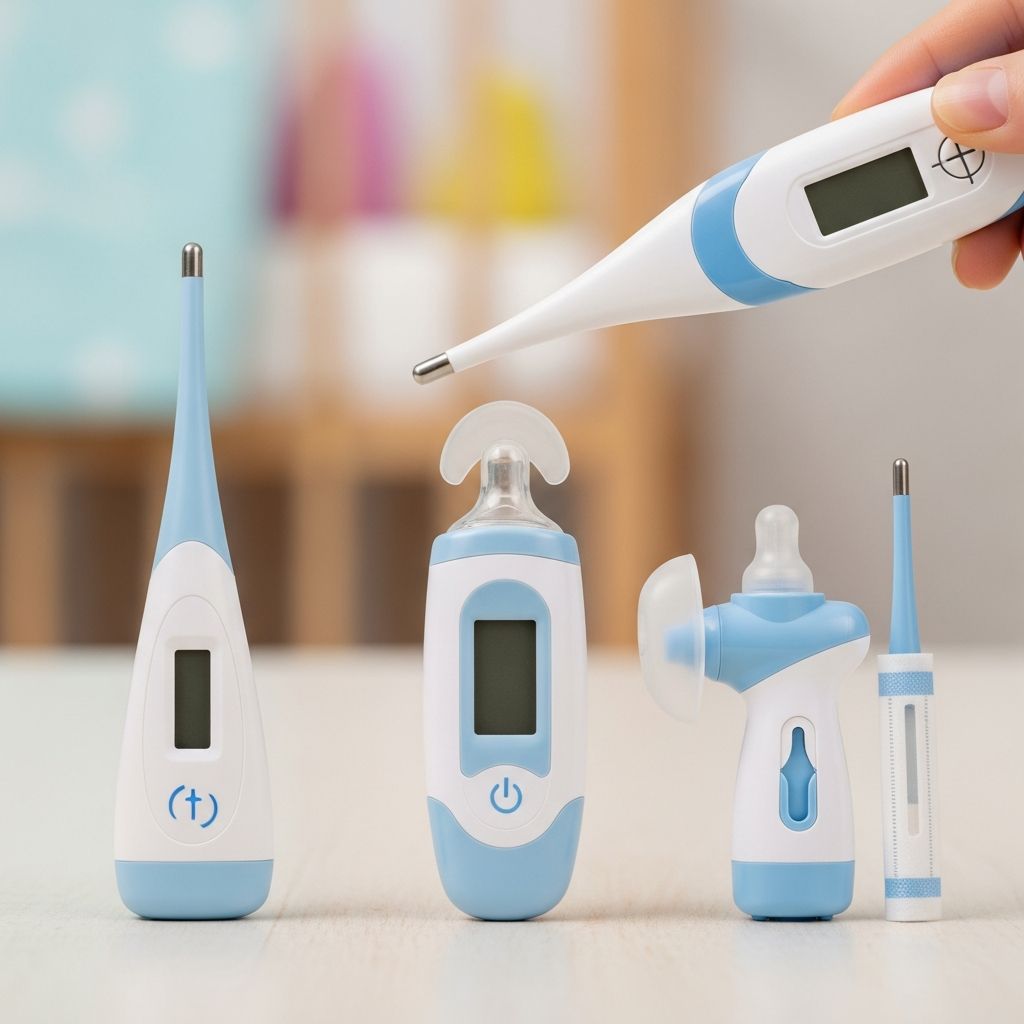
There is no single thermometer that is best for every situation. Instead, it helps to understand the strengths and limitations of each style.
| Thermometer Type | Common Use | Key Advantages | Main Drawbacks |
|---|---|---|---|
| Digital rectal | Infants < 3 years | Most accurate for babies; recommended for infants | Invasive; some parents uncomfortable with use |
| Digital oral | Children about 4+ years | Accurate in older cooperative kids; low cost | Not reliable for babies who cannot hold it correctly |
| Axillary (underarm) | All ages, mostly for screening | Non-invasive; easy to use | Less accurate; may need confirmation by another method |
| Ear (tympanic) | Toddlers and older | Fast; often well accepted by children | Requires exact placement; not ideal for very young babies |
| Forehead (temporal artery) | All ages as a quick check | Non-contact or gentle swipe; very fast | Can be slightly less accurate than rectal or oral |
Age-Based Recommendations for Temperature Checks
Pediatric experts recommend choosing your thermometer type based on your child’s age and ability to cooperate.
Newborns to 3 Months
For the youngest infants, an exact temperature is essential, because even a slight fever can signal a serious infection.
- Preferred method: Digital rectal thermometer for the most accurate reading.
- Use forehead or underarm only as a quick screening; confirm any concern with a rectal reading.
- Call your doctor immediately if a baby under 3 months has a rectal temperature of about 38.0 °C (100.4 °F) or higher.
3 Months to 3 Years
As babies grow into toddlers, rectal readings remain the reference standard but other options become more practical.
- Most accurate: Rectal digital thermometer.
- Alternative: Forehead (temporal artery) thermometer for quick checks, with rectal confirmation if the child seems very unwell.
- Ear thermometers can be used with care, but are less reliable in children under about 6 months and require good positioning in the ear canal.
4 Years and Older
Once children can reliably hold a thermometer under their tongue with their mouth closed, oral readings become a strong option.
- Preferred method: Digital oral thermometer for cooperative kids 4 years and up.
- Secondary options: Ear or forehead thermometers for rapid checks, especially at night.
- Rectal readings are rarely needed for older children unless directed by your healthcare provider.
Digital Rectal Thermometers: Still the Gold Standard for Babies
Although many parents find them intimidating at first, rectal thermometers remain the most precise way to check a baby’s core temperature.
Benefits
- Measures temperature close to the body’s core, reducing the effect of room temperature or clothing.
- Recommended by pediatric professionals for infants and toddlers 3 years and younger when accurate readings are needed.
- Helps your doctor interpret the result with more confidence.
Practical Safety Tips
- Use a digital model only; avoid older glass and mercury devices.
- Label one thermometer clearly for rectal use and keep it separate from oral thermometers to prevent cross-contamination.
- Always apply a small amount of water-based lubricant or petroleum jelly to the tip for comfort.
- Insert only the tip, gently, and stop if you feel resistance.
- Hold your baby securely and never force the thermometer.
Forehead Thermometers: Fast and Gentle
Forehead thermometers measure the heat from the temporal artery on the side of the forehead. Some models lightly touch and slide across the skin; others are non-contact and scan from a short distance.
Strengths
- Quick readings, often in just a second or two.
- Minimal disturbance of a sleeping or sick child.
- Helpful for frequent checks during an illness.
Limitations
- May be slightly less accurate than rectal or oral readings, especially if the device is used incorrectly or the child is very sweaty.
- Some models are more sensitive to room temperature or placement.
- Pediatricians may ask you to confirm a concerning forehead reading with a rectal measurement in young infants.
Ear Thermometers: Rapid Results for Toddlers and Older Kids
Ear (tympanic) thermometers use infrared technology to measure heat coming from the eardrum. Because they are fast, they are popular in both homes and clinics.
When They Work Best
- Generally more suitable for babies over about 6 months, toddlers, and older children.
- Useful when children cannot or will not keep an oral thermometer in place.
- Good option for nighttime checks in older kids.
Important Considerations
- The probe must be aimed correctly at the eardrum; improper angle or a shallow placement can give inaccurate results.
- Earwax and small ear canals in young babies can affect accuracy.
- Do not use immediately after a child has been lying on one ear, as it can warm that side slightly.
Oral and Underarm Thermometers: Reliable Tools for Bigger Kids
Standard digital thermometers can be used in the mouth or under the arm, depending on your child’s age and cooperation level.
Oral Temperatures
- Best for children 4 years and older who understand instructions.
- Ask your child to keep the thermometer under their tongue with their lips fully closed until it beeps.
- Wait at least 15 minutes after eating or drinking before taking an oral temperature.
Underarm (Axillary) Temperatures
- Simple and non-invasive for all ages.
- Less accurate and more sensitive to movement and room conditions; often used as an initial screening check.
- Generally, if an underarm reading suggests a fever, confirm with a rectal or oral method (depending on age).
Key Features to Look for in a Baby Thermometer
Once you have chosen the type of thermometer that suits your baby’s age, compare models using these practical features.
- Clear display: Large, backlit screens are easier to read at night or when you are tired.
- Fast response time: Especially important for rectal, ear, and forehead models, where you want the reading finished quickly.
- Beep or signal: An audible cue when the reading is complete prevents guesswork.
- Memory function: Storing the last reading helps you track whether a fever is rising or falling.
- Fever indicator: Some devices color-code or signal if a reading is within a fever range, which can be reassuring for new parents.
- Easy cleaning: Smooth, sealed designs are simpler to clean with soap and water or alcohol wipes.
- Age-appropriate modes: A few thermometers allow you to select your child’s age, adjusting how they interpret the temperature reading.
How to Get an Accurate Reading: General Tips
Technique matters almost as much as the device. To improve reliability:
- Read the manufacturer’s instructions closely, especially for ear and forehead models.
- Use the thermometer in the recommended environment (not immediately after a bath or time outdoors in extreme temperatures).
- Check that batteries are fresh and contacts are clean.
- Take a second reading if the first result does not match how your child looks or feels.
- When in doubt, especially in infants, confirm with a rectal measurement if you have been taught how to do so safely.
When to Call the Doctor About a Fever
Every baby and illness is different, but professional guidance offers some general thresholds and warning signs.
- Contact your healthcare provider if an infant under about 3 months has a rectal temperature of around 38.0 °C (100.4 °F) or higher, even if they appear comfortable.
- Seek urgent care for any child with a high fever plus difficulty breathing, persistent vomiting, confusion, seizures, or extreme lethargy.
- Use your thermometer reading as one piece of information along with your child’s behavior, feeding, and alertness.
Always follow your own doctor’s specific advice, as recommendations can vary based on your baby’s medical history.
Frequently Asked Questions (FAQs)
How many thermometers do I really need for my family?Most households do well with at least two: a dedicated rectal digital thermometer for babies and a separate oral or multiuse digital thermometer for older children and adults. Keeping rectal and oral devices separate is important for hygiene.
Q: Are non-contact forehead thermometers accurate enough for newborns?
Non-contact forehead thermometers are convenient and gentle, but for newborns and young infants, pediatric experts still rely on rectal readings when precise numbers are needed. You can use a forehead device as a quick screen, then confirm any concerning result rectally if advised by your doctor.
Is it safe to use an ear thermometer for a 2-month-old?
Ear thermometers require a clear line of sight to the eardrum and properly sized ear canals. In very young babies, those canals are small, and results can be unreliable. Many pediatric specialists prefer rectal measurements for infants under about 3 months and use ear thermometers more often in older babies and toddlers.
My child moves a lot. Which thermometer style is best?
For active toddlers and older kids, fast-acting forehead or ear thermometers are often easier than oral or underarm devices. For infants who wiggle, a quick digital rectal reading—performed calmly and safely—may still be more accurate than repeatedly trying another method.
How often should I replace a baby thermometer?
Thermometers do not expire quickly, but they can be damaged or become less reliable if dropped or exposed to moisture. Replace your device if the display is dim, buttons fail, readings seem inconsistent, or the manufacturer recommends an update. Changing batteries and cleaning regularly also help maintain accuracy.
References
- Most accurate thermometers for kids — Cleveland Clinic Health Essentials. 2021-02-19. https://health.clevelandclinic.org/which-thermometer-is-best-for-taking-your-childs-temperature
- Thermometers: Understand the options — Mayo Clinic Staff. 2022-08-31. https://www.mayoclinic.org/diseases-conditions/fever/in-depth/thermometers/art-20046737
- Best Thermometer Buying Guide — Consumer Reports. 2023-10-05. https://www.consumerreports.org/babies-kids/thermometers/buying-guide/
- The Best Baby and Kids’ Thermometers — BabyGearLab. 2024-01-10. https://www.babygearlab.com/topics/health-safety/best-baby-and-kids-thermometer
- The Best Baby Thermometers — Babylist. 2024-06-18. https://www.babylist.com/hello-baby/best-baby-thermometers