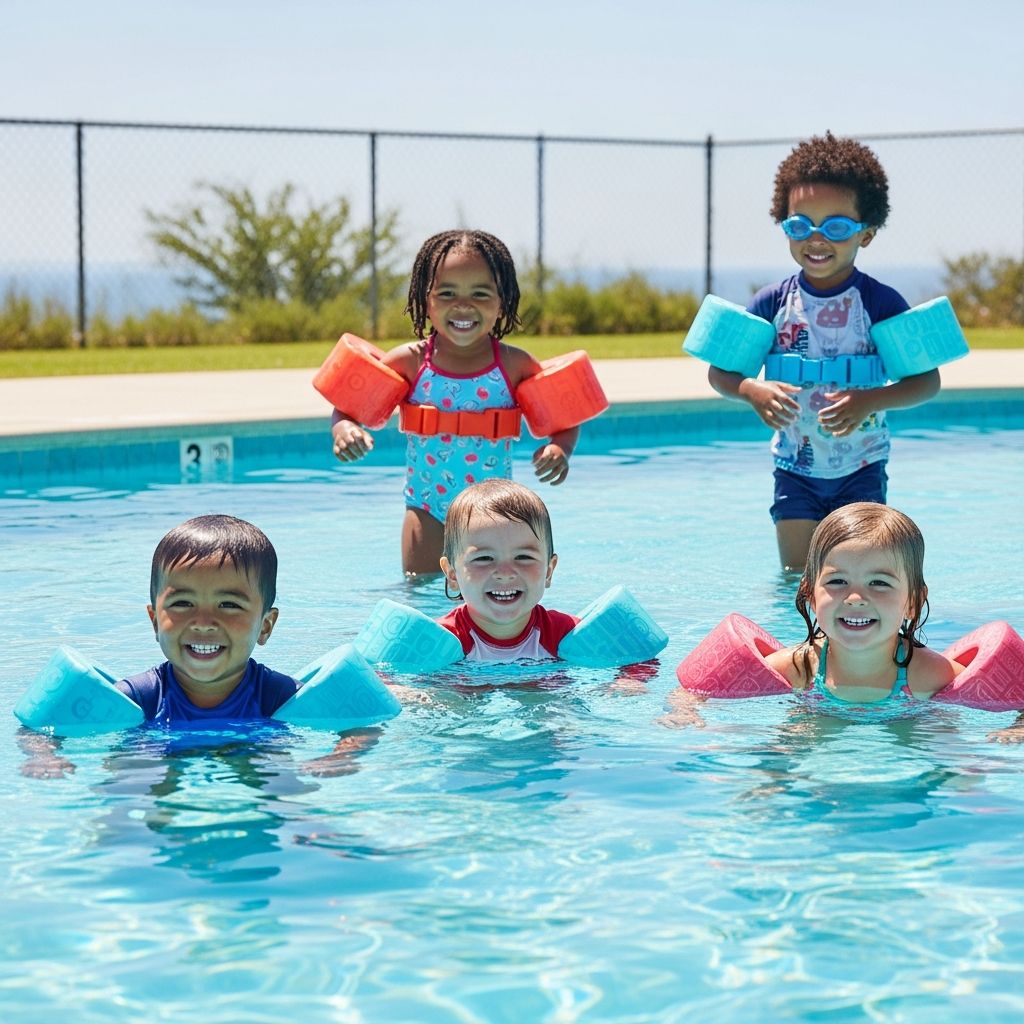
When toddlers and preschoolers fall in love with the water, many parents look for swim devices that keep little bodies more buoyant while kids build skills and confidence. While no floatation aid can replace close adult supervision, the right gear can make pool time and beach days more comfortable, fun, and productive for young learners.
Why Swim Devices Matter for Little Kids
Swim devices for toddlers and preschoolers are designed to offer an extra layer of buoyancy so that children can explore the water in a more supported way while they practice kicking, paddling, and basic body positions. Parents often use them to bridge the gap between being held in an adult’s arms and swimming with independent, strong skills.
However, these aids are not substitutes for lessons or life jackets in open water; they are tools to assist learning and play in controlled settings. Understanding what each type of device does well, and where it falls short, helps families choose options that fit their child’s age, temperament, and swimming environment.
The Five Main Types of Swim Devices
There are many products on the market, but most fall into five broad categories commonly used for toddlers and preschoolers:
- Inflatable arm bands (water wings/floaties)
- Combination vest-and-arm-float systems
- Foam swim vests and life-jacket-style aids
- Back float trainers
- Kickboards and pool noodles as learning tools
Each category supports kids in the water in a different way. The following sections break down what parents need to know about how they work, typical age ranges, and key pros and cons.
1. Inflatable Arm Bands (Water Wings)
Inflatable arm bands, often called water wings or floaties, are one of the most familiar swim devices for young children. They slide onto the upper arms and are inflated to provide lift, helping keep a child’s head and shoulders higher in the water while freeing the hands for splashing and experimenting with strokes.
Many parents gravitate toward arm bands because they are inexpensive, easy to pack, and simple to share between siblings or friends of similar size. That said, the way they position the child in the water and their dependence on air pressure come with notable limitations.
Pros of Inflatable Arm Bands
- Lightweight and highly portable; they fit easily into a beach bag or suitcase.
- Quick to put on and take off once adjusted to the child’s arm size.
- Allow children to move their legs and experiment with basic kicks and arm motions.
- Affordable entry-level option for families who just want extra buoyancy at the pool.
Cons and Safety Considerations
- They can slip off if not snug or if a child raises arms overhead while wet.
- Punctures or slow leaks may suddenly reduce buoyancy without obvious warning.
- They tend to keep kids in a vertical “bobbing” posture rather than a horizontal swimming position.
- They are not certified life-saving devices and should not be relied on in deep or open water.
Arm bands work best in shallow, supervised pools where an adult can remain within arm’s reach. Parents should check inflation and fit frequently and remember that these devices are only a support, not a guarantee of safety.
2. Vest-and-Arm-Float Systems
Another popular option for toddlers and preschoolers is a combined vest-and-arm-float system. These products usually feature foam arm bands attached to a buoyant chest panel that straps around the torso, often with a buckle at the back to prevent kids from unfastening it themselves.
This design tends to offer more secure coverage than basic water wings, since buoyancy is distributed around the upper body, not just on the arms. Many of these systems are marketed as learn-to-swim aids and are intended for pool play under direct supervision.
Advantages of Vest-and-Arm-Float Devices
- Combined chest and arm flotation usually results in stronger support than arm bands alone.
- Back buckles and adjustable straps help keep the device in place and reduce the chance of removal by the child.
- Some children feel more secure having a chest panel in front of them, especially if they are nervous about the water.
- Foam-based designs do not rely on inflation, which avoids puncture risks.
Limitations to Keep in Mind
- They may tilt kids into a more vertical position, which is comfortable for playing but less ideal for true stroke development.
- Bulkier designs can limit arm range of motion and make it harder for children to practice proper strokes.
- Not all versions are coast-guard-approved safety devices; parents should check labeling carefully if using near boats or open water.
- Size and weight limits matter; a poor fit can compromise comfort and buoyancy.
Parents often choose vest-and-arm-float systems when they want a more secure option than inflatable wings but still want their child to feel free enough to paddle, splash, and jump in the shallow end.
3. Foam Swim Vests and Life-Jacket-Style Aids
Foam swim vests and compact life-jacket-style aids are designed to provide buoyancy around the torso and are typically fastened with zippers, buckles, or both. Some are coast-guard-approved for boating and open water, while others are made more specifically for pool practice and swim lessons.
For toddlers and preschoolers, a properly fitted foam vest can provide a secure sense of support, particularly if the child is wary of water. These vests keep buoyancy close to the core, encouraging a more natural body alignment compared to high-riding arm-only devices.
Strengths of Foam Swim Vests
- Buoyancy does not depend on air, so there is no risk of deflation or punctures.
- Secure closures and snug fit can make it harder for the vest to slip off accidentally.
- Help promote a more balanced body position in the water than some inflatable devices.
- Some models are approved for use on boats or in open water, adding versatility for family outings.
Potential Drawbacks
- Vest thickness can restrict arm movement, making it harder to practice full swim strokes.
- If the vest is too big, it may ride up toward the child’s chin, which is uncomfortable and can affect face position.
- Children may become dependent on the strong lift and hesitate to transition to less support.
- Vests can be warm and may feel bulky in very hot weather or heated indoor pools.
Foam vests suit families who want a sturdy, reliable option that offers more coverage and security than small floaties. They are especially helpful when combining casual play with cautious exploration of deeper areas under direct supervision.
4. Back Float Swim Trainers
Back float swim trainers are usually foam blocks attached to a strap that fastens around the child’s torso at the back. The blocks provide buoyancy behind the swimmer rather than on the chest or arms, promoting a more horizontal body position and encouraging kids to use their arms and legs in a natural swimming motion.
Some designs allow parents to remove foam layers over time, gradually reducing buoyancy as the child’s confidence and skill increase. This adjustability makes back floats particularly attractive as training tools during the transition from assisted play to more independent swimming.
Benefits of Back Float Devices
- Support behind the body encourages kids to lean forward into a swimming posture rather than bobbing upright.
- Children’s arms and legs remain unrestricted, which is ideal for learning coordinated strokes.
- Adjustable layers allow parents to decrease support gradually as skills improve.
- Slim profile makes it easier for kids to practice climbing out of the pool and moving around on their own.
Points to Consider
- Children who are anxious about water may initially feel less secure without floatation in front of them.
- Correct strap placement and snug fit are essential so that the float stays in the right position on the back.
- Back floats are usually not approved as life-saving devices and are intended for structured lessons and practice, not unsupervised play.
- Kids may roll or twist in the water if they are very energetic, so close proximity of an adult remains crucial.
Back float trainers often shine in lesson environments or when parents actively coach their child through drills like kicking, gliding, and basic arm pulls. They are geared more toward skill development than casual lounging.
5. Kickboards and Pool Noodles as Learning Tools
Kickboards and pool noodles are not worn on the body, but they are invaluable tools for helping toddlers and preschoolers practice key elements of swimming like kicking, floating, and balance. Instructors and parents frequently use them alongside or instead of wearable devices for short, focused activities.
A kickboard is a small, rigid board that children hold with their hands while kicking behind it, while a pool noodle is a flexible foam cylinder that can be used in many creative ways, such as under the arms, across the chest, or behind the back for support.
Advantages of Kickboards and Noodles
- Encourage children to engage their own strength and coordination, especially in the legs.
- Highly versatile; the same tool can be used for floating, kicking practice, and imaginative games.
- Easy to share among children of different sizes and ages.
- Simple, durable construction with no straps, buckles, or inflation valves to manage.
Limitations of These Tools
- They are hand-held or body-positioned, so children may let go or slip off unexpectedly.
- They do not provide consistent, fixed buoyancy like a vest or back float.
- Very young toddlers may struggle to hold a kickboard flat or keep a noodle in a steady position without adult assistance.
- They are best used as part of active instruction rather than passive floatation.
While these items may not be “devices” in the wearable sense, they play a powerful role in helping young swimmers gain strength, control, and comfort in the water. Many families keep a mix of noodles and boards on hand throughout the swim season for both practice and play.
Quick Comparison of Common Swim Devices
The table below offers a high-level comparison of the five types of devices covered, focusing on how they are typically used with toddlers and preschoolers.
| Device Type | Primary Buoyancy Location | Typical Use | Main Strength | Key Limitation |
|---|---|---|---|---|
| Inflatable arm bands | Upper arms | Casual pool play in shallow water | Lightweight and inexpensive | Can slip off or deflate |
| Vest-and-arm-float system | Chest and arms | Play and early water confidence | More secure coverage than arm bands | Encourages more vertical posture |
| Foam swim vest | Torso | Pool use and some open-water settings | Reliable buoyancy with secure fit | May restrict arm movement |
| Back float trainer | Back/torso | Swim lessons and skill development | Promotes horizontal swimming position | Less immediately comforting for anxious kids |
| Kickboard or pool noodle | External tool held or positioned | Practice kicking, floating, and balance | Builds strength and technique | Can be dropped or slip away |
General Safety Tips for Using Swim Devices
Regardless of which type of swim device a family chooses, certain safety principles apply across the board. Young children should always be within arm’s reach of a capable adult when using any floatation aid, particularly in or near deep water.
Parents should routinely inspect devices for wear and tear, verify that weight and size ranges are appropriate for their child, and never assume that even the most supportive product replaces formal swimming instruction and attentive supervision.
- Check straps, buckles, and seams before each use.
- Confirm that the device is used in settings for which it is intended (for example, pool vs. open water).
- Teach kids that the device is a helper, not a toy that makes them invincible in the water.
- Pair device use with regular, device-free practice in shallow water to build true swimming ability.
FAQs About Swim Devices for Toddlers and Preschoolers
Are swim devices safe for toddlers?
Swim devices can be used safely when they fit correctly, are in good condition, and are paired with constant adult supervision. They are intended to support buoyancy and comfort, not to prevent drowning, so caregivers still need to stay close, stay alert, and avoid distractions when little ones are in or near the water.
Which type of device is best for learning to swim?
Devices that promote a more horizontal body position, such as back floats, kickboards, and some low-profile vests, generally support stronger stroke development. Many families use a combination over time, starting with more secure options and gradually introducing tools that require kids to do more of the work themselves as their confidence grows.
At what age can my child use these devices?
Age guidelines vary from product to product, but many devices are labeled for specific weight ranges and approximate age brackets. Toddlers often start with more supportive vests or vest-and-arm-float systems, while preschoolers who are ready for formal lessons may benefit more from back floats, kickboards, and noodles that encourage independent movement.
Do I still need swimming lessons if we use floatation aids?
Formal swimming instruction is strongly recommended even if a child uses floatation aids regularly. Lessons teach children how to float, roll, and move through the water without devices, which is critical for safety. Swim aids can support practice and boost confidence but should never be the only strategy for water safety.
Should I choose a coast-guard-approved device?
If a family plans to spend time on boats, docks, lakes, or the ocean, a coast-guard-approved life-jacket-style device appropriate for the child’s size is essential. For backyard pools and structured swim lessons, non-approved training aids are often used, but they should remain in the pool environment and never be seen as substitutes for certified safety gear in open water.