Toddler mealtimes can feel like a contact sport: flying peas, flipped bowls, and a floor that looks like a salad bar exploded. While mess is a normal part of learning to eat, the right suction plates, bowls, and placemats can dramatically cut down on spills and stress while still encouraging independence.
Why Mealtime Turns Messy With Toddlers
Toddlers are wired to explore with their hands, which means dishes become toys long before they are simply containers for food. Pulling, pushing, and testing boundaries is part curiosity and part classic toddler behavior. Mealtime gear that slides easily—or lifts with one grab—only amplifies the chaos.
Instead of trying to eliminate mess altogether, a more realistic goal is to create a setup that channels your child’s urge to explore while giving you fewer full-scale cleanups. Suction-based dishes and placemats do exactly that by making it harder to launch plates and bowls across the room.
How Suction Plates and Bowls Actually Work
Most suction plates and bowls use a simple but effective design: a flexible base that presses down and creates a partial vacuum between the dish and the surface. When the air is pushed out and the seal holds, your toddler can tug and tap without the dish sliding easily.
The strength of the hold depends on three main factors: how flat the surface is, how well the base is pressed down, and the quality and thickness of the suction material, usually silicone. A stronger, wider base typically means better stability and fewer mid-meal disasters.
Key Benefits for Parents and Toddlers
Suction dishes and placemats do more than keep food off the floor. They support important developmental skills while protecting your sanity and your furniture. Here are a few core advantages.
- Less slipping and flipping: The dish stays anchored, so your toddler can focus on eating instead of re-positioning the plate every few bites.
- More successful self-feeding: When the plate doesn’t skid away, it is easier for little hands to scoop food with fingers, spoons, or forks.
- Reduced cleanup time: Fewer spills and thrown bowls mean less time scrubbing floors, chairs, and walls after every meal.
- Safer mealtimes: A stable dish lowers the chance of broken plates, hot food spills, and slippery puddles under the high chair.
- Clearer boundaries: When the plate stays put, it subtly signals that dishes are for eating, not for tossing, without constant verbal battles.
Types of Suction Mealtime Gear
Not all non-slip products work the same way. Knowing the differences helps you pick tools that match your child’s age, eating habits, and your kitchen setup.
Suction Plates
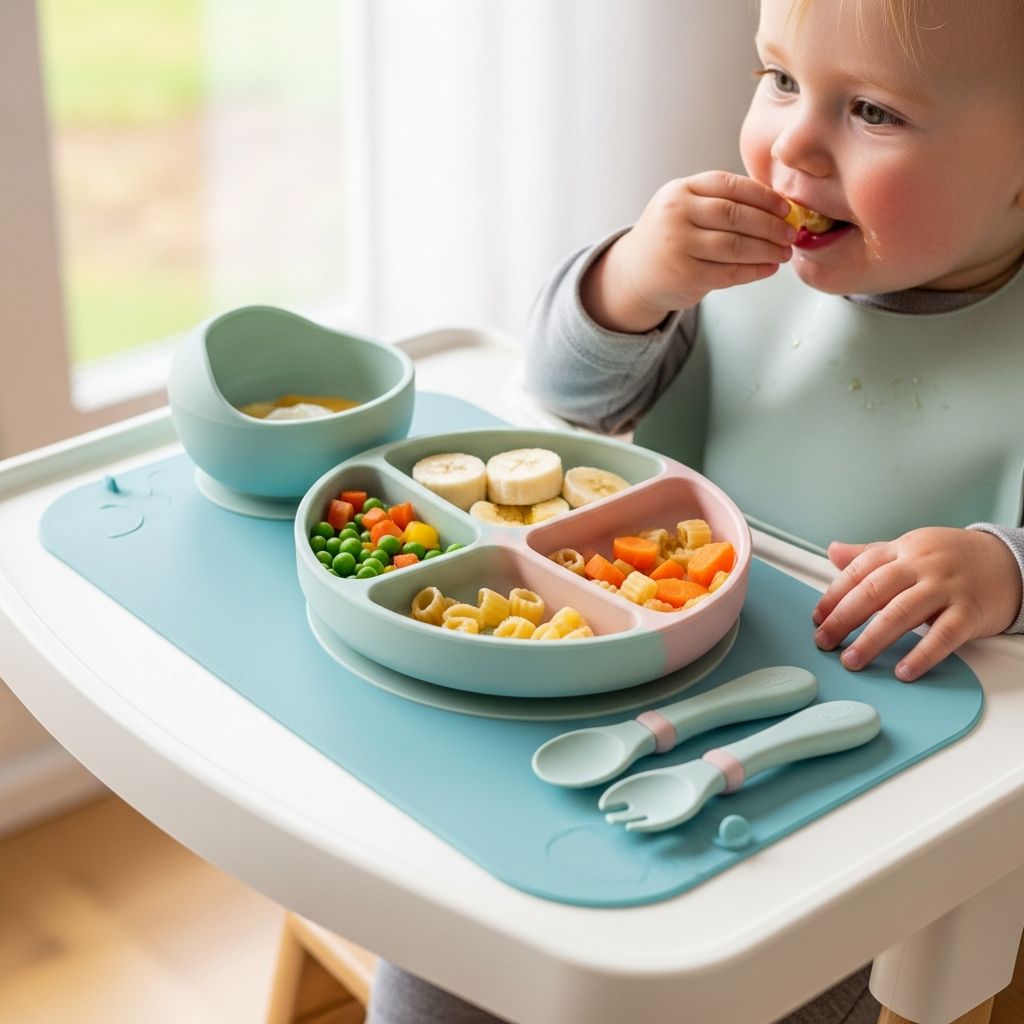
Suction plates usually have a broad, low profile with divided sections or a single open surface. They are especially useful once your toddler starts eating full meals alongside the family and enjoys seeing separate food groups.
- Best for toddlers who regularly eat table-style meals with multiple foods.
- Great when you want to offer variety without mixing everything in one bowl.
- Work well for children practicing with forks and learning to spear bites.
Suction Bowls
Suction bowls are deeper than plates and are ideal for foods that roll, slip, or have more liquid, such as soups, yogurt, pasta, and cereal. The suction base helps toddlers scoop without the bowl chasing the spoon.
- Best for messy or slippery foods that require scooping motions.
- Helpful in the early self-feeding stage when coordination is still developing.
- Often come with lids, making leftovers easy to store in the same container.
Suction Placemats and All-in-One Mats
Suction placemats cover a larger area of the tray or table and may include built-in plate “wells” or bowl shapes. They function as both surface protector and dish, which can be especially useful on shared tables or when eating away from home.
- Protect tables and high-chair trays from staining and scratches.
- Combine dish and mat in one piece, reducing the number of items to wash.
- Can be rolled or folded for restaurants, travel, or grandparents’ houses.
Materials: Silicone, Plastic, and Beyond
Suction plates and bowls come in a few main materials, each with pros and cons. Taking a moment to understand them helps you choose gear that fits your cleaning habits and safety preferences.
| Material | Main Advantages | Things to Consider |
|---|---|---|
| Food-grade silicone | Flexible, durable, high heat resistance, typically dishwasher- and microwave-safe. | Can attract dust or lint; lower-quality silicone may retain odors over time. |
| BPA-free plastic | Lighter, often less expensive, widely available in many shapes and colors. | May scratch more easily, may have lower heat tolerance depending on brand. |
| Hybrid (silicone base with plastic top) | Combines firm rim with strong suction; can feel more like a traditional dish. | Multiple materials may require more attention to cleaning around seams. |
Whichever style you choose, look for clear labeling that indicates the materials are food-safe and free from common additives you prefer to avoid, such as BPA or certain plasticizers. If you frequently reheat food in the same dish, check that both the top and base are rated for microwave use.
What to Look For When Buying
There are countless options on the market, but a few core features separate the dishes that truly help from the ones that barely stick to the table. Use this checklist as a quick guide when you compare products.
- Strong, wide suction base: A broad base with minimal ridges usually forms a more reliable seal on flat surfaces.
- Simple release mechanism: A small tab or corner that parents can easily lift—but toddlers struggle to grip—keeps you in control.
- Appropriate size and depth: Shallow sections support finger foods; deeper walls help with scooping and liquid-heavy meals.
- Compatibility with your surfaces: Check whether it sticks well to your high-chair tray, kitchen table, or countertop material.
- Easy-to-clean design: Smooth surfaces, minimal crevices, and dishwasher-safe labeling save time and prevent buildup.
- Age-appropriate sections: Very young toddlers may do best with single-compartment dishes; older toddlers may enjoy sectioned plates.
Setting Up for Success at Mealtime
Even the best suction dish will struggle if crumbs or moisture get between the base and the table. A few small habits before meals can dramatically improve performance and extend the life of your gear.
- Wipe the tray or table completely dry before attaching the suction base.
- Make sure the underside of the suction pad is free of dust, crumbs, or oily residue.
- Press down firmly in the center and around the edges to create a full seal.
- Place the dish within easy reach of your toddler’s hands to reduce tugging and twisting.
- Pair the setup with a comfortable, stable seat so your child is not leaning or pulling for balance.
Cleaning and Care Tips
Regular cleaning is essential, not just for hygiene but for maintaining the suction power over time. Residue from soaps, oils, or hard water can slowly weaken grip if it is allowed to build up on the base.
- Rinse off heavy food debris before placing items in the dishwasher to avoid sticky layers.
- Occasionally hand-wash suction bases with warm water and mild soap, paying attention to edges and underside.
- Let dishes dry fully before storing to prevent trapped moisture or odors.
- If the base starts to feel less grippy, wash it thoroughly and dry it completely before using again.
Safety Considerations Every Parent Should Know
Suction dishes are tools, not toys. Used wisely, they can complement broader safety practices at the table and support healthy eating habits from an early age. A few simple rules go a long way.
- Always supervise your child while eating, regardless of how secure the dish appears.
- Avoid using suction dishes on unstable or lightweight tables that tip when pulled.
- Check dishes regularly for cracks, tears, or loose parts that could pose a hazard.
- Be mindful of food temperature; strong suction does not prevent burns from overly hot meals.
- Teach gentle use over time: model how dishes stay on the table and redirect if your toddler pries at the edges.
Integrating Suction Gear Into a Calmer Mealtime Routine
Gear alone will not transform your toddler into a neat, eager eater—but it can support a calmer rhythm at the table. A consistent mealtime routine, paired with tools that reduce chaos, helps your child know what to expect and how to behave.
- Start with predictable steps: wash hands, sit down, attach the plate or mat, then serve food.
- Offer small portions so the dish does not look overwhelming, and add more as needed.
- Keep distractions, such as screens and toys, away from the table to help your child focus on eating.
- Use simple, calm language about table expectations: “Food stays on the plate,” “Plates stay on the table.”
- Accept reasonable mess as part of learning and focus your energy on the biggest problem behaviors.
Frequently Asked Questions About Suction Plates, Bowls, and Placemats
1. At what age should I start using suction dishes?
Many families introduce suction bowls and plates when babies begin exploring solids and finger foods, often around the second half of the first year. By the toddler stage, suction gear becomes especially useful because curiosity and strength make ordinary dishes easy to toss or tip.
2. My toddler keeps pulling up the suction tab. What can I do?
Some children quickly figure out the release tab and treat it like a button to push. Try positioning the tab away from your child’s main reach point, such as closer to you at the far edge of the tray, and keep your reaction neutral if they manage to pull it up so it does not become a game.
3. Why will the plate stick to the high-chair tray but not to my wood table?
Suction works best on smooth, non-porous surfaces, such as plastic, glass, or sealed stone. Natural wood or textured tables often have tiny gaps or grooves that let air seep in under the base, which weakens the vacuum seal and makes the dish easier to lift or slide.
4. Can I put suction plates and bowls in the dishwasher and microwave?
Many silicone-based products are both dishwasher- and microwave-safe, but this is not universal. Always check the specific care instructions for each item, paying attention to maximum temperature recommendations and whether the suction base and the dish itself share the same limits.
5. Are suction dishes worth the extra cost?
While suction plates and bowls are often more expensive than plain dishes, many parents find the trade-off worthwhile because of the time saved on cleaning and the decrease in daily frustration. If budget is a concern, consider starting with one or two versatile pieces that can handle both meals and snacks.
6. How many suction dishes do I really need?
Most families manage well with a small collection: one or two suction plates, one or two bowls, and maybe a travel-friendly placemat. The goal is to have enough items to cover a full day of meals and snacks without needing to wash dishes between every use.
7. Do suction placemats replace plates entirely?
All-in-one mats with built-in wells can stand in for separate plates, especially at younger ages, but you may still want traditional plates or bowls for certain meals. Many parents use a mix, relying on mats for very messy meals and portable setups, and dishes for quick snacks or table meals.
Final Thoughts: Aim for “Less Mess,” Not “No Mess”
No product can erase the fact that toddlers learn through mess. Suction plates, bowls, and placemats are best seen as allies that make the learning process more manageable rather than gadgets that eliminate spills entirely.
By choosing sturdy, well-designed pieces and pairing them with patient routines, you can protect your floors, support your child’s growing independence, and reclaim some of the joy in family meals—even when a few peas still escape the plate.