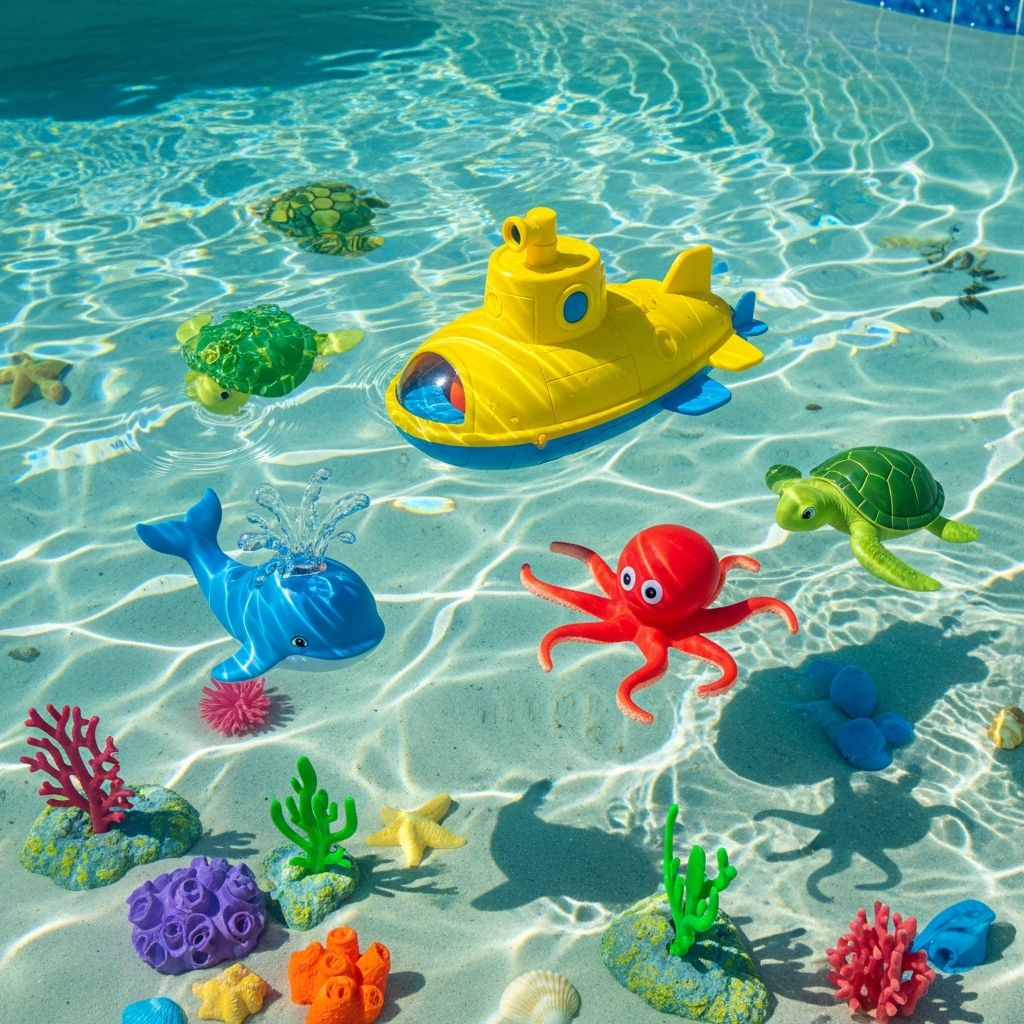
Submarine and underwater toys turn any bathtub, pool, or beach day into a tiny ocean expedition, giving kids a way to explore, imagine, and learn while they play in the water.
Why Underwater Toys Are Worth It
Water play toys do more than entertain; they help kids feel comfortable in the water and build basic motor skills. Pressing buttons, winding propellers, and steering small submarines trains hand–eye coordination and problem-solving in a low-pressure way.
Underwater toys also encourage storytelling and imaginative play, letting kids invent missions, rescue operations, and ocean adventures. When children feel in control of their environment—even a bath—they often become more confident and relaxed around water.
Key Types of Submarine and Underwater Toys
Not all water toys are equal, and different settings call for different designs. Thinking about where and how your kids will play helps narrow down your options quickly.
Mini Submarines for the Bathtub
Small submarines designed for the tub are usually lightweight and simple enough for toddlers to operate. Many float on the surface until pushed down, some submerge briefly, and a few have simple mechanical or battery-powered propellers.
- Compact size that fits easily in a child’s hand.
- Rounded edges and soft plastics or silicone parts.
- Minimal electronics, or sealed battery compartments if lights or movement are included.
Pool-Ready Underwater Explorers
For older kids who are comfortable in the pool, slightly heavier submarines that sink and glide can make diving practice more exciting. These toys may include adjustable buoyancy or fins that change the way they move underwater.
- More durable materials to handle deeper water and rougher play.
- Brighter colors and high-contrast designs for visibility.
- Optional removable weights so you can set different dive depths.
Remote-Control and Motorized Submarines
Older kids and tweens may enjoy remote-control submarines that let them steer, dive, and surface on command. These toys often work best in calm water such as pools or large bathtubs.
- Wireless controllers designed to stay dry while the toy submerges.
- Rechargeable battery packs to reduce ongoing costs.
- Features like lights, propeller guards, and auto-shutoff when removed from water.
Dive-and-Retrieve Toys
Some submarine-shaped toys are specifically made to sink quickly and rest at the bottom of the pool, so kids can swim down to collect them. These are great for swim lessons, breath control practice, and underwater races.
- Weighted bottoms so they land upright.
- Simple shapes that are easy to grip under water.
- Numbered or color-coded sets that support games and scoring.
Age-Appropriate Picks at a Glance
Choosing the right toy for your child’s age keeps water play safe and satisfying. The table below outlines typical features that work well for different stages, though you should always consider your individual child’s abilities and comfort level.
| Age Range | Best Toy Styles | Key Features to Look For | What to Avoid |
|---|---|---|---|
| Toddlers (1–3 years) | Floating minis, simple pour-and-scoop submarines, soft bath boats | Large parts, no small detachable pieces, easy-grip handles, soft edges | Tiny accessories, exposed batteries, hard-to-clean hollow areas |
| Preschoolers (3–5 years) | Wind-up submarines, simple dive toys, themed play sets with figures | Mechanical movement (no complex controls), bright colors, sturdy plastic | High-speed propellers, sharp edges, toys labeled for older ages |
| Early school age (5–8 years) | Basic motorized subs, dive-and-retrieve sets, beginner RC models | Clear on/off switches, sealed battery compartments, easy-to-read instructions | Advanced RC gear meant for deep water or large open water spaces |
| Tweens (8–12 years) | Advanced RC submarines, multi-piece underwater “mission” kits | Longer battery life, adjustable speed or depth settings, repairable parts | Very cheap electronics with no safety certifications or unclear ratings |
Essential Safety Considerations
No matter how simple the toy, water safety always comes first. Active adult supervision should never be replaced by any gadget, flotation device, or underwater toy.
Before purchasing, read the age recommendations, weight limits, and any notes about safe use depth. Avoid products with vague labels, and check for certifications or testing standards where available.
Safe Design Details
- Secure battery compartments with screws or robust latches.
- Propellers covered with guards or recessed into the body of the toy.
- Drainage holes that allow water to escape, reducing mold and mildew growth.
- Stable buoyancy so the toy does not pop unexpectedly out of the water toward a child’s face.
Supervision and Setup Tips
- Introduce new toys in shallow water so kids can discover how they move without feeling overwhelmed.
- Set clear rules about where the toys can be used—bath only, pool only, or no use in lakes or the ocean unless adults are close by.
- Have kids sit down in the bath or on the pool steps to play with motorized submarines instead of chasing them in deeper water.
How Underwater Toys Support Learning and Development
Submarines and underwater toys naturally introduce early science concepts like buoyancy, cause and effect, and simple mechanics. When a child presses a button and sees the toy dive or light up, they make a direct connection between action and outcome.
These toys also help strengthen social and emotional skills. Sharing pieces in a set, taking turns with an RC controller, and collaborating on make-believe missions teaches cooperation and communication in a fun context.
STEM Skills in Disguise
- Experimenting with adding or removing weights shows how density affects whether something sinks or floats.
- Adjusting fins or angles teaches basic ideas about direction and drag in water.
- Following a simple instruction sheet promotes sequencing and early reading skills.
Features That Make a Submarine Toy Stand Out
Many underwater toys look similar at first glance, but subtle design choices can make the difference between a toy that is used once and one that kids reach for all season.
Durability and Materials
- Thick, BPA-free plastic or silicone that resists cracking after repeated submersion.
- Sturdy hinges and joints that do not loosen quickly.
- Minimal tiny seams or crevices where grime can accumulate, especially for bath toys.
Ease of Use for Kids and Parents
- Simple controls with one or two buttons clearly marked.
- Recharge ports or battery panels that open only with a tool, yet are straightforward for adults.
- Quick-rinse designs that let you flush out soapy bath water, chlorine, or sand.
Engaging Extras
- LED lights that glow underwater or blink during “missions.”
- Removable figures like divers or sea animals that can be positioned in and around the submarine.
- Sound effects that are loud enough to delight kids but not overwhelming in an echoing bathroom.
Matching Toys to Play Environments
The same submarine that thrills kids in the bathtub might get lost in a deep pool or behave very differently in the ocean. Choosing toys specifically for each water setting reduces frustration and helps toys last longer.
Best Choices for Bath Time
- Lightweight floating submarines that stay near the surface and are easy to grab.
- Clever designs that double as pour cups or water wheels when held under the faucet.
- Soft textures that will not scratch the tub or hurt if kids bump into them.
Best Choices for Pools
- Brilliantly colored submarines and dive toys that stand out against blue water.
- RC or motorized toys with enough power to move against gentle pool currents.
- Weighted toys clearly visible on the pool floor, shaped so feet will not easily trip over them.
Best Choices for Lakes and Beaches
- Toys without electronics that can handle sand, small stones, and waves.
- Larger models that are easier to spot if they drift away.
- Simple boats or submarines that float rather than sink deeply, to reduce loss in unclear water.
Care, Cleaning, and Storage
Proper care extends the life of underwater toys and keeps them safe for repeated use. Moist environments can quickly lead to mold if toys are not dried thoroughly between play sessions.
Make a habit of rinsing toys in clean water after use, especially after contact with chlorine, salt, or bubble bath. Shaking out excess water and leaving them to air-dry in a well-ventilated area protects both the toy and your child’s health.
Quick Maintenance Tips
- Open any accessible drain plugs or compartments after play so water can escape.
- Stand toys upright or hang them in a mesh bag to let gravity help with drying.
- Inspect seals, battery covers, and moving parts regularly for cracks or rust.
- Rotate toys in and out of use so kids appreciate them more and parts get a break.
Simple Game Ideas to Extend the Fun
You do not need elaborate gear to unlock imaginative underwater play. A single submarine and a few small props can become the centerpiece of countless water games.
Mission-Based Play
- Rescue Run: Place floating figures or balls around the tub or pool and have kids pilot the submarine to “rescue” each one in a set order.
- Treasure Hunt: Hide dive toys at different depths and assign each a point value. Kids can steer an RC submarine to spot them before swimming down to collect.
- Ocean Research Lab: Encourage kids to narrate what their submarine “discovers” under the sea—new animals, mysterious caves, or underwater plants.
Skill-Building Challenges
- Time how long it takes for kids to retrieve a set of dive submarines from the pool floor.
- Practice controlled breathing by having kids watch the toy dive, then surface when it does.
- Ask children to predict whether adding a small removable piece will make the toy sink or float, then test together.
Frequently Asked Questions
Are motorized underwater toys safe for younger kids?
Motorized toys can be safe if they are clearly labeled for your child’s age group and used under close supervision. Look for slow-moving designs with covered propellers and secure battery compartments, and introduce them in shallow water so kids can observe how they work without needing to swim after them.
How do I prevent mold inside bath submarines?
Choose toys with large drainage holes or removable parts so you can rinse and dry the interior. After each bath, squeeze out as much water as possible, rinse in clean water, and let toys dry completely in an open, ventilated space rather than storing them in a closed tub or basket.
Can pool submarines be used in the bathtub?
Many pool toys work fine in the bath, but some are too heavy or large for a small tub. Check the size and weight before bringing a pool-specific toy indoors, and avoid toys with rough or abrasive edges that could scratch the tub surface.
What is the best way to choose a gift submarine toy?
Start with the child’s age and where they usually play—bath, backyard pool, community pool, or beach. Then look for a theme that matches their interests, such as explorers, sea animals, or science, and prioritize durable materials and clear safety labeling over flashy packaging.
Are remote-control submarine toys worth the investment?
RC submarines can be a great choice for older kids who enjoy gadgets and more complex play. They tend to cost more, but the added control and longer-lasting interest can make them worthwhile if your child is ready for basic controls and careful handling.
Final Thoughts on Choosing the Right Underwater Toy
When picking submarine and underwater toys, focus on three pillars: safety, age-appropriateness, and the kind of play your child enjoys. A simple, sturdy bath submarine may inspire just as much joy as a high-tech RC model, especially when paired with imaginative stories and attentive adults.
By paying attention to key features like materials, buoyancy, and ease of cleaning, you can build a small fleet of underwater toys that support confidence, learning, and family fun every time your kids dip into the water.