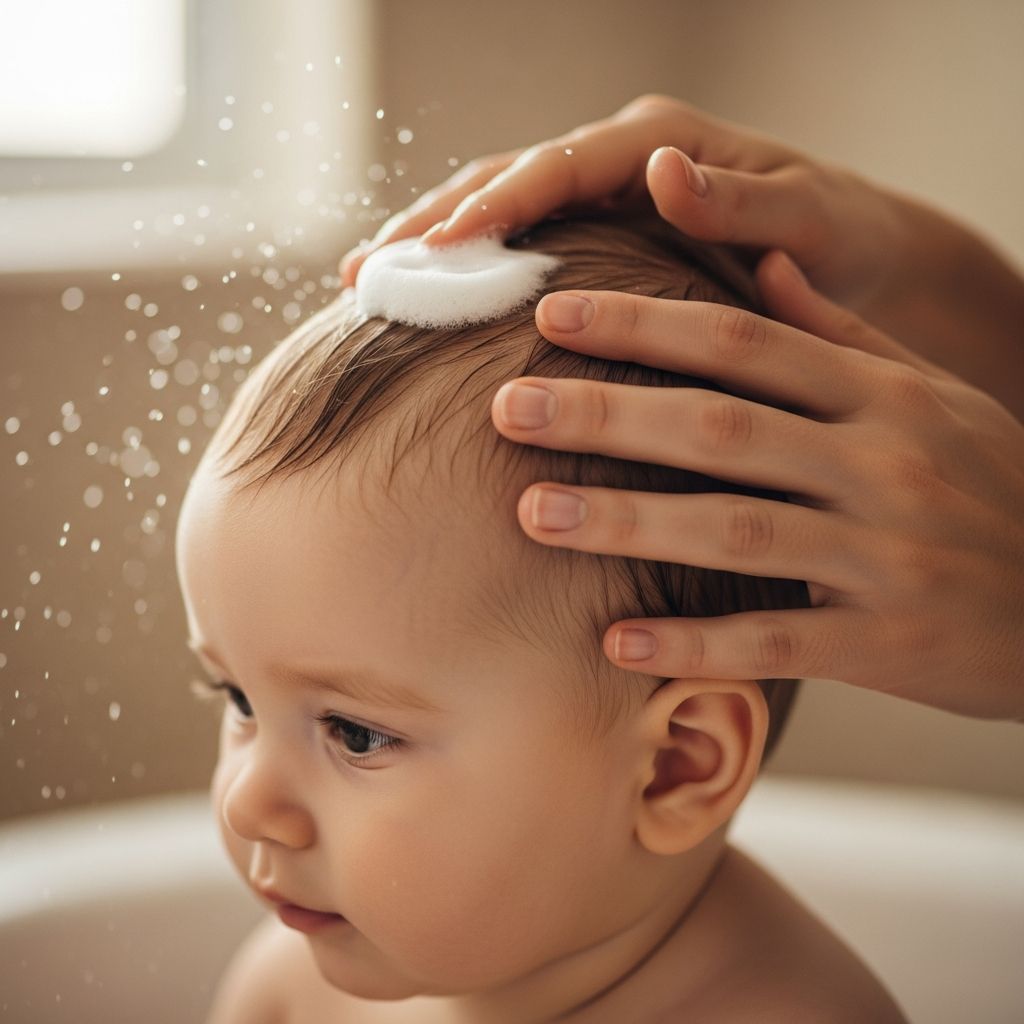
Cradle cap can look alarming, but it is a very common and usually harmless scalp condition in young babies. Pediatric dermatology resources describe it as a form of infantile seborrheic dermatitis that causes greasy scales and flakes on the scalp, sometimes with mild redness. The right shampoo routine can help soften and lift these scales while keeping your baby’s skin comfortable and protected.
What Exactly Is Cradle Cap?
Cradle cap is the everyday name for infantile seborrheic dermatitis, a non-contagious condition that causes yellow or white scales on a baby’s scalp. It typically appears in the first few months of life and often resolves on its own within the first year.
The affected skin often looks greasy or waxy, with scales that may cling to the hair and scalp. In many babies it does not seem itchy or painful, and most infants act completely unbothered by it.
Common Signs Parents Notice
- Thick, greasy, or waxy scales on the scalp that may be white or yellow.
- Flaky skin that looks like dandruff on the head or in the hair.
- Mild redness under or around the scales, especially on the scalp or eyebrows.
- Scales or patches extending to the eyebrows, behind the ears, or into skin folds such as the neck and diaper area.
Because atopic dermatitis (eczema) can also cause scaly, red skin, health sites stress that cradle cap is usually less itchy and tends to be greasier rather than dry and cracked.
What Causes Cradle Cap?
Experts have not identified a single cause, but several factors are thought to contribute. Many medical sources note that maternal hormones may stimulate the baby’s oil glands, leading to extra sebum production after birth. When excess oil mixes with skin cells that would normally shed, those cells can clump together and form visible scales.
A type of yeast that lives naturally on the skin, often identified as Malassezia, may also play a role when it grows in the oily environment on the scalp. Cradle cap is not due to poor hygiene and does not spread from person to person.
Why Shampoo Choice Matters
Gentle cleansing helps loosen and remove scales without damaging your baby’s delicate skin barrier. Medical organizations recommend mild baby shampoos and emollients to reduce irritation and avoid making symptoms worse.
The wrong shampoo—especially products that are very fragranced, harsh, or meant for adults—can dry or irritate the scalp. Choosing a formula designed for babies or for sensitive skin reduces the chance of redness, stinging, or further flaking.
Key Features of a Cradle Cap-Friendly Shampoo
When you select a shampoo for a baby with cradle cap, look beyond marketing claims and focus on ingredients, gentleness, and how you plan to use it.
- Mild, tear-free base: Baby shampoos are typically formulated to be less irritating to the eyes and skin than adult products.
- Fragrance-free or low fragrance: Perfumes can provoke irritation in sensitive or inflamed skin, so many health sites recommend fragrance-free options.
- Suited for frequent use: Because some routines involve daily or near-daily washing, the shampoo should not be overly drying.
- Clear usage instructions: Medicated shampoos, especially antifungal or steroid-containing ones, must be used exactly as advised by a doctor.
Comparing Common Cradle Cap Approaches
| Approach | How It Works | Pros | Considerations |
|---|---|---|---|
| Gentle baby shampoo | Cleanses oil and loose scales from the scalp. | Easy to use; suitable for most babies; can be used regularly. | May take time and consistency; not always enough for severe cases. |
| Emollient or mineral oil + shampoo | Softens thick crusts before washing them away with shampoo. | Helps with stubborn, thick scales; inexpensive options available. | Oil must be rinsed thoroughly; leaving it on can worsen greasiness. |
| Medicated antifungal shampoo | Targets yeast on the scalp, often using ketoconazole or similar agents. | Helpful for more persistent or widespread cases when prescribed. | Use only under medical guidance; avoid eye contact; limited duration. |
| Topical steroid lotion or cream | Reduces inflammation and redness in more inflamed cases. | Can quickly ease irritation when clearly indicated. | Prescription or doctor-directed; not for routine use without supervision. |
Step-by-Step Cradle Cap Shampoo Routine
A simple, consistent washing routine can gradually improve cradle cap while minimizing stress for both you and your baby. Many pediatric resources suggest a combination of gentle washing and soft brushing.
- Prepare the bath. Use comfortably warm water and a non-slip setup so you can keep one hand on your baby for safety.
- Moisten the scalp. Gently wet your baby’s hair and scalp with your hand or a small cup.
- Apply a small amount of shampoo. Use a pea-sized amount of mild baby shampoo and massage it onto the scalp with the pads of your fingers, not nails.
- Massage to loosen scales. Very gentle circular motions can help lift flakes without scratching or picking.
- Use a soft brush or comb. After lathering, you may use a soft-bristled baby brush or a fine-toothed baby comb to loosen flakes further before rinsing.
- Rinse thoroughly. Carefully rinse all shampoo from your baby’s hair and scalp, making sure no residue or bubbles remain.
- Pat dry. Gently pat the scalp dry with a soft towel; avoid vigorous rubbing.
Most health sites emphasize not scratching or forcibly picking off crusts because that can leave raw skin and raise the risk of infection.
Using Oils or Emollients Before Shampooing
Some clinicians recommend applying a light layer of mineral oil, baby oil, or another emollient before shampooing to soften stubborn scales. After allowing the oil to soak in for a short period, parents can gently brush and then wash the area with baby shampoo.
It is important to rinse thoroughly and avoid leaving a heavy film of oil on the scalp, as this may contribute to ongoing greasiness and scaling. If the skin appears very red, swollen, or weepy, discuss oil use with a health professional before continuing.
Natural and “Gentle” Options: What to Know
Many families prefer products labeled as natural, hypoallergenic, or plant-based, but these still need to be chosen carefully. Even botanically derived fragrances and extracts can irritate sensitive skin in some babies. A short ingredient list and fragrance-free labeling are often more helpful indicators of gentleness than marketing buzzwords.
If you switch to a new product, monitor the scalp over several days for increased redness, oozing, or discomfort. Stop using any shampoo or oil that seems to make the skin worse and contact your child’s doctor if you are concerned.
When Medicated Shampoos May Be Suggested
In most cases, regular baby shampoo and home care are enough to manage cradle cap. For more severe, persistent, or widespread cases, clinicians may recommend medicated options such as antifungal shampoos that contain ingredients like ketoconazole.
These medicated products are usually used a limited number of times per week and left on the scalp for a short contact time before rinsing, as directed by a health professional. Parents should follow instructions closely, avoid getting the product in the baby’s eyes, and promptly report any signs of irritation or allergic reaction.
How Often to Wash Your Baby’s Hair
There is no universal rule, but many medical guidelines suggest washing a baby’s hair with gentle shampoo several times per week, and in some cradle cap cases daily for a short period. The goal is to balance removing excess oil and scales with preserving the natural moisture barrier of the scalp.
If the skin becomes drier or more irritated with frequent washing, discuss adjusting the schedule with your child’s doctor. Babies with less hair or very sensitive skin may need fewer washes, focusing more on gentle brushing and occasional use of emollients.
Warning Signs That Need Medical Attention
While cradle cap is typically mild, certain changes mean it is time to seek medical advice. National health services and pediatric hospitals highlight several red flags that should not be ignored.
- Cradle cap that spreads widely beyond the scalp or covers large areas of the body.
- Skin that looks very red, swollen, or warm, or that leaks fluid or pus.
- Crusts that bleed or become very sore, or a scalp that smells bad.
- Blisters, fever, or your baby appearing generally unwell.
These signs may indicate infection or another condition, such as atopic eczema or scabies, and may require antibiotic, antifungal, or other targeted treatments.
Gentle Do’s and Don’ts for Parents
- Do use a mild, baby-formulated shampoo as part of your routine.
- Do use soft brushes or combs and light pressure to lift flakes gradually.
- Do talk with your pediatrician before using medicated shampoos or steroid creams.
- Don’t scratch, pick, or peel scales with your fingernails.
- Don’t use adult anti-dandruff shampoos or strong medicated products unless specifically recommended for your baby.
- Don’t continue any product that seems to worsen redness, swelling, or discomfort.
Frequently Asked Questions About Cradle Cap Shampoo
Is cradle cap painful for my baby?
Cradle cap usually does not cause pain and often does not even itch, which is why many babies seem unbothered by it. If your baby appears very fussy when the scalp is touched, or if the skin looks inflamed or oozes, speak with a doctor to rule out infection or another condition.
Can I just leave cradle cap alone without shampoo?
In many babies, cradle cap clears on its own over weeks or months, even with minimal treatment. However, gentle shampooing and soft brushing can improve the appearance sooner and help prevent thick, hard crusts from forming.
Are medicated shampoos safe for infants?
Medicated antifungal or steroid-based shampoos can be safe when prescribed or recommended by a pediatrician and used exactly as directed. They are typically reserved for more stubborn, widespread, or inflamed cases rather than for every mild cradle cap episode.
Can cradle cap spread to other parts of the body?
Cradle cap itself is not contagious, but similar seborrheic dermatitis can affect areas such as the eyebrows, behind the ears, neck folds, armpits, and the diaper region. If you see greasy scales or red patches in many areas, ask your doctor whether any additional treatments are needed.
When will my baby’s cradle cap go away?
Most infants improve sometime between 6 and 12 months of age, although some develop cradle cap slightly later or have mild flaking for longer. As long as your baby is otherwise healthy and the skin is not infected or very inflamed, time and consistent gentle care usually lead to resolution.
Reassurance for Parents
Seeing flakes and crusts on your baby’s scalp can be unsettling, but medical organizations consistently describe cradle cap as a benign and manageable condition. A calm routine built around a gentle shampoo, soft brushing, and watching for warning signs is usually all that is needed to support healthy skin and a comfortable baby.