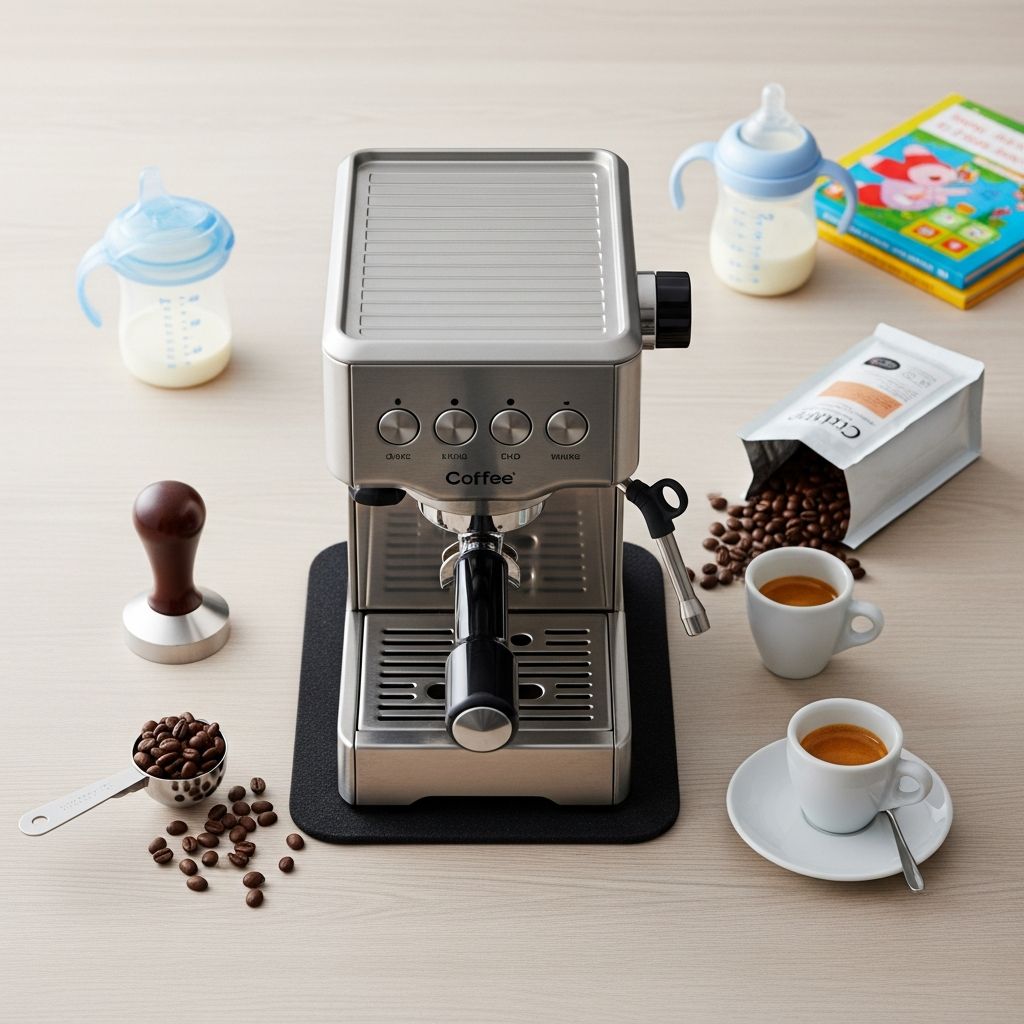
For many parents, mornings feel like a race: packing lunches, locating lost shoes, and answering a million tiny questions before the first sip of caffeine. An espresso machine on your counter will not magically make the kids cooperate, but it can reliably deliver strong, flavorful coffee fast enough that you feel human again before the school run. Instead of juggling travel mugs from a café drive-through, you can pull rich shots and steam milk at home with a machine that becomes as familiar as your favorite mug.
Most modern pump espresso machines are designed for regular people, not professional baristas. With a little practice, you can get predictable results that are good enough to replace your daily coffee shop habit and flexible enough to satisfy everyone from the straight-espresso drinker to the caramel-latte fan in your household.
Espresso at Home: What It Actually Means
Owning an espresso machine does not mean you are required to weigh every gram of coffee or memorize café jargon. It simply means you brew concentrated coffee by forcing hot water through finely ground beans at high pressure, usually around 9–15 bars. The result is a small but intense shot you can drink straight or use as a base for lattes, cappuccinos, mochas, and iced drinks.
For a busy household, the real benefit is versatility. One person can have a quick doppio (double shot) before work, another can sip a milky cappuccino, and older teens might enjoy iced espresso with milk over ice cubes—all from the same machine and the same batch of beans.
Key Benefits for Busy Families
- Speed on hectic mornings: A pump espresso machine heats quickly and pulls a shot in under a minute, helping you beat the clock when you are already running late.
- Consistent routine: Once you dial in your preferred grind and dose, you can repeat the same drink every day with minimal thought, which is comforting when mornings are chaotic.
- Budget friendliness over time: Beans plus milk usually cost less per cup than café drinks, especially if two or more people drink coffee daily.
- Customization for everyone: You control shot size, milk amount, and sweetness, which is helpful when preferences differ across family members.
- Small rituals that feel like self-care: The simple act of tamping coffee and watching the crema form can become a calming moment in an otherwise noisy house.
Understanding Pump Espresso Machines
A pump espresso machine uses an electric pump to push hot water through compacted coffee grounds in a portafilter. Unlike stovetop makers or manual levers, an electric pump provides stable, repeatable pressure so your shots are more consistent with less effort. For home users, this translates into fewer bad cups and less frustration.
Entry-level pump machines often include a portafilter, water reservoir, and steam wand in one compact unit. More advanced models may add features like pressure gauges, programmable shot volumes, or temperature control, but even basic designs can produce tasty espresso for everyday use.
Essential Features That Actually Matter
Manufacturers love long feature lists, but a family-oriented buyer usually needs only a handful of practical capabilities. Instead of chasing every bell and whistle, focus on the elements that directly affect taste, convenience, and durability.
- Pump pressure: Look for a machine designed for true espresso pressure (often labeled 9–15 bars). More is not always better, but insufficient pressure can lead to weak coffee.
- Portafilter quality: A sturdy, primarily metal portafilter holds heat better and stands up to daily use, while flimsy parts can crack or warp over time.
- Steam wand usability: If your household loves milk drinks, make sure the wand is easy to reach, swivels comfortably, and can produce enough steam for silky foam, not just bubbly hot milk.
- Removable water tank: A tank that lifts out is much easier to refill at the sink than one that must be filled with a pitcher over the counter.
- Simple controls: Clear buttons or switches for brewing and steaming reduce the learning curve, which is especially helpful when multiple adults will use the machine.
Feature Comparison Cheat Sheet
| Feature | Why It Matters | What to Look For |
|---|---|---|
| Pump Pressure | Determines how efficiently water is pushed through coffee for proper extraction. | Rated for true espresso; typically listed around 9–15 bars, with stable performance more important than a huge number. |
| Portafilter Size & Build | Affects durability, heat retention, and compatibility with accessories like tampers. | Solid, mostly metal construction; comfortable handle; clearly marked baskets for single and double shots. |
| Steam Wand | Essential for lattes and cappuccinos; weak steam leads to flat, uninspiring milk. | Swiveling wand with a simple knob or lever, capable of producing fine microfoam rather than large bubbles. |
| Water Reservoir | Impacts how often you need to refill and how easy it is to keep the machine clean. | Removable tank with visible level markings and a lid to prevent dust from entering. |
| Heating System | Controls how quickly the machine warms up and how stable the temperature remains. | Reliable warm-up time with indicator lights; ability to switch from brewing to steaming without long delays. |
| Footprint & Design | Determines whether the machine fits under cabinets and on crowded counters. | Compact body, reasonable height, and a flat top you can use as a small cup-warming surface. |
Setting Realistic Expectations Before You Buy
Even a user-friendly espresso machine requires a short learning period. The first few drinks may taste different from your usual café order, and that is normal. Over a week or two, you will discover how your beans, grind size, and tamping pressure interact with your particular machine.
It also helps to decide what matters most: absolute café-level perfection or a major step up from basic drip coffee that you can reproduce consistently at 6 a.m. Most families land happily in the second category, valuing convenience and reliability over chasing tiny technical improvements.
Basic Workflow: From Beans to Cup
Once your machine is on the counter and the manual is safely out of reach of spilled milk, it is worth building a simple step-by-step routine. A consistent order of operations means fewer mistakes when you are still half asleep and trying not to burn breakfast.
- Warm up: Turn on the machine and let it fully heat. Many units have indicator lights to show when they are ready to brew or steam.
- Grind and dose: Use freshly ground coffee if possible, aiming for a texture finer than drip but not powdery. Fill the portafilter basket evenly, following the recommended dose for your machine.
- Tamp consistently: Press down firmly and evenly to create a level puck of coffee, which helps water flow uniformly through the grounds.
- Lock and brew: Attach the portafilter, place a pre-warmed cup underneath, and start the pump. Time your shots so they do not gush out too quickly or drip too slowly.
- Steam milk (if needed): Switch to steam mode, purge a small amount of water from the wand, then steam milk until it is hot and slightly glossy, with a gentle swirl.
- Assemble and enjoy: Combine the espresso and milk as desired, add any syrups or sweeteners, and take a moment to taste before rushing out the door.
Making the Machine Work for the Whole Household
In homes where more than one adult drinks coffee, an espresso machine quickly becomes shared territory. Agreeing on a loose routine—who cleans, who refills, who buys beans—prevents small annoyances from building up. Some families even set up a small “coffee station” with mugs, sugar, and syrups near the machine to contain the morning chaos.
Kids often become curious about the process as well. While younger children should not operate the machine, they can help with safe steps like placing cups or wiping the counter, turning coffee time into a brief shared ritual instead of a solitary scramble.
Maintenance Habits That Keep Coffee Tasting Great
Good espresso is impossible with a grimy machine. Fortunately, maintenance can be broken into small, manageable habits that add only a few seconds to your routine. Think of it as brushing your machine’s teeth so it stays healthy and reliable.
- After every use: Knock out used coffee grounds, rinse the portafilter and baskets, and wipe the steam wand immediately after steaming milk.
- Daily or every few uses: Empty and rinse the drip tray, top up the water tank, and check for any stray grounds on the countertop.
- Weekly: Run a plain water cycle through the machine to flush internal parts and wipe down the exterior surfaces.
- Regular descaling: Follow the manufacturer’s instructions to remove mineral buildup, especially if you live in an area with hard water.
Common Problems and Simple Fixes
Even a well-made machine will occasionally misbehave. The good news is that many everyday issues have straightforward solutions. Learning to read the signs—too fast, too slow, too sour, too bitter—will help you adjust without panic.
- Shots gush out quickly and taste weak: Try a finer grind, slightly more coffee in the basket, or firmer tamping to slow the flow.
- Shots drip slowly or barely come out: Use a coarser grind, a slightly smaller dose, or gentler tamp to open up the path for water.
- Sour, sharp flavor: The shot may be under-extracted. Lengthen the extraction time or adjust grind and dose so water spends more time in contact with the coffee.
- Bitter, harsh flavor: Often a sign of over-extraction. Shorten the run time or adjust to a slightly coarser grind.
- Weak steam for milk: Ensure the machine is fully in steam mode, purge water from the wand before steaming, and give the system time to recover between drinks.
Money, Space, and Other Practicalities
Beyond coffee quality, practical concerns like cost and counter space will influence which machine is right for you. Measuring your available space—including cabinet height—and planning a realistic budget upfront prevents disappointment later. Remember to account for a grinder if your machine does not include one, since pre-ground coffee stales quickly once opened.
In many families, the cost argument becomes convincing when you compare café prices to home-made drinks over a few months. Even a modest pump espresso machine can pay for itself if it replaces several takeout coffees per week, and it delivers the extra convenience of being ready the moment you wake up.
Simple Recipe Ideas to Get You Started
Once your technique is consistent, experimenting with drinks makes the process more fun. You do not need complicated syrups or professional latte art to impress your taste buds; a few basic combinations can satisfy most cravings.
- Classic latte: One or two shots of espresso topped with steamed milk and a thin layer of foam. Adjust the milk-to-espresso ratio until it tastes balanced to you.
- Homestyle cappuccino: Equal parts espresso, steamed milk, and foam. Sprinkle a little cocoa or cinnamon on top for a café-inspired finish.
- Iced espresso with milk: Pull espresso shots directly over ice, then add chilled milk or a milk alternative for a refreshing option in warmer weather.
- Weekend mocha: Stir a spoonful of chocolate sauce or cocoa mix into the hot espresso before adding steamed milk for a treat-like drink.
Frequently Asked Questions
Do I need an expensive grinder to use a home espresso machine?
A high-end grinder is not strictly necessary to start, but consistent grinding does make a noticeable difference. If you are on a budget, look for a simple burr grinder rather than a blade grinder, as burrs produce more uniform particles that help espresso extract evenly. Over time, upgrading the grinder often improves flavor more than replacing the machine itself.
Can a beginner really learn to make good espresso at home?
Yes. A beginner can absolutely learn to pull satisfying shots with a bit of patience and repetition. Most of the learning curve involves understanding how grind size, dose, and time relate to taste, and this becomes intuitive once you have brewed several dozen cups and made small adjustments along the way.
Is an espresso machine worth it if I usually drink lattes?
If you primarily drink milk-based drinks, an espresso machine with a capable steam wand can be especially worthwhile. Instead of paying for flavored lattes at a café, you gain the ability to customize milk temperature, foam texture, and sweetness to your liking at home.
How loud are pump espresso machines?
Most pump machines make some noise when the pump engages, but the sound is usually brief and comparable to other kitchen appliances. If you are concerned about waking sleeping family members, placing a small mat beneath the machine can reduce vibration and echo.
What if I only drink one cup of coffee a day?
Even single-cup drinkers can benefit from an espresso machine if they value flavor and speed. A compact unit that heats quickly and cleans up easily may be more appealing than a larger, more complex system designed for heavy use, so prioritize simplicity when shopping.
Turning Coffee Time into a Daily Ritual
A home espresso machine is more than a gadget; it is an anchor for a small daily ritual. In the middle of a busy life, that one consistent moment—hearing the pump start, watching the dark stream form, holding a warm mug—can ground you before the rest of the day unfolds. With reasonable expectations and a bit of practice, almost anyone can learn to make reliable, enjoyable espresso at home.
Whether you are replacing a worn-out drip brewer or finally ready to cut back on café visits, a well-chosen pump espresso machine offers a blend of practicality and pleasure that fits naturally into family life. It delivers energy when you need it most and, just as importantly, gives you a reason to pause and savor a few quiet sips before the next wave of activity begins.