As pregnancy progresses, sleep often becomes more challenging, and the right pregnancy pillow can transform restless nights into genuinely restorative rest.
Why Sleep Gets Harder During Pregnancy
Growing a baby changes how you sit, stand, and especially how you sleep. As your bump expands and your center of gravity shifts, the muscles and joints in your back, hips, and pelvis work harder than usual. That extra strain often shows up at night as hip pressure, lower back pain, leg cramps, and constant tossing and turning.
Many pregnant people also find it harder to breathe comfortably when lying flat, or they wake repeatedly trying to prop up their bump or cushion their knees. Without extra support, even a good mattress may not be enough to keep your spine aligned and your muscles relaxed.
Key Benefits of Using a Pregnancy Pillow
A dedicated pregnancy pillow is designed to work with a pregnant body instead of against it. By filling the gaps between your body and the mattress, it helps distribute weight more evenly so that no single area bears all the pressure.
Although every person and every pregnancy is different, most people use these pillows for a similar set of benefits.
- Better spinal alignment: When your knees, hips, and shoulders are supported, your spine rests in a more neutral position, which can ease back and pelvic discomfort.
- Reduced hip and pelvic pressure: Placing part of the pillow between your knees and under your bump helps keep your hips stacked instead of twisting toward the mattress.
- Support for side sleeping: Side-lying is often the most comfortable and recommended position in later pregnancy; a well-shaped pillow keeps you in that position without constant effort.
- Gentle bump cradling: As your abdomen grows heavier, a pillow under the bump relieves the pull on abdominal and back muscles.
- Less rolling and tossing: A larger pillow creates a supported “nest,” making it harder to roll onto your back without noticing.
- Multi-purpose comfort: After birth, many people continue using the pillow for postnatal recovery, feeding support, or just general lounging.
Common Types of Pregnancy Pillows
Pregnancy pillows vary widely in length, shape, and firmness. Knowing the main categories makes it easier to match a design to your favorite sleep position and your available bed space.
Below is an overview of popular styles and how they are typically used.
Wedge Pregnancy Pillows
A wedge pillow is a compact, triangular or crescent-shaped cushion that targets one specific area at a time. It can slide under your bump, behind your back, or even under your knees for elevation.
- Best for small beds or travel, since it takes up minimal space.
- Useful if you are mostly comfortable but need focused support in one problem area.
Straight Body Pillows
A straight body pillow looks like a long, narrow cushion you can hug from head to toe. It usually supports your head, bump, and knees on one side of your body.
- Popular with side sleepers who like to wrap their arms and legs around a pillow.
- More streamlined than full surround styles but still offers substantial support for the front of the body.
U-Shaped Pregnancy Pillows
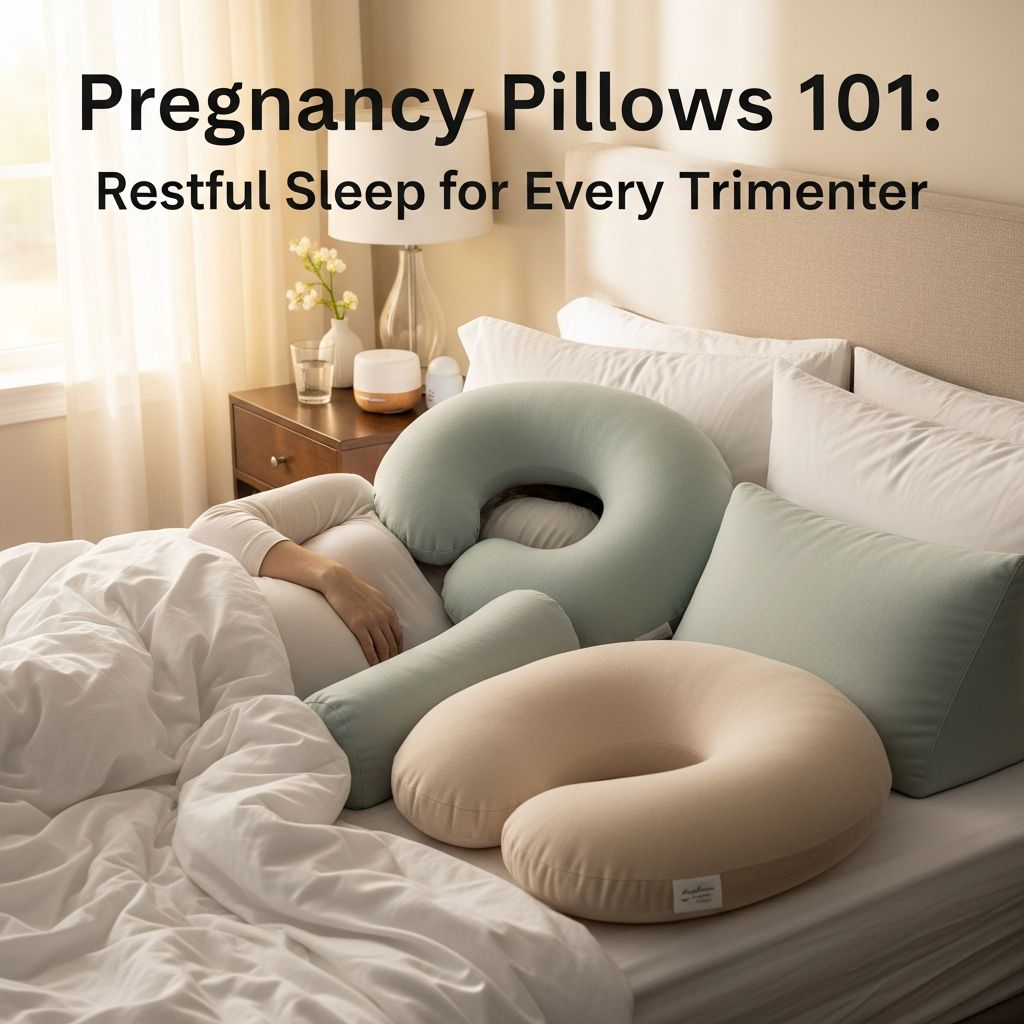
U-shaped pillows curve around both sides of your body, often providing complete head-to-toe support. You lie in the center of the “U,” using one side for your back and the other for your front.
- Good for restless sleepers who change sides frequently, because you can roll from left to right without lifting or flipping the pillow.
- Offers back and belly support at the same time, which can be especially welcome late in pregnancy.
C-Shaped and Other Curved Designs
Curved or C-shaped pillows wrap around part of your body, often tucking between your legs at one end and cradling your head and shoulders at the other. Many are flexible enough to twist into feeding or lounging positions.
- Helpful for people who want full-body support without a pillow occupying both sides of the bed.
- Often easier to move around and reposition than a large U-shaped option.
Modular and Adjustable Systems
Some modern pregnancy pillows use multiple connected cushions or adjustable inserts. You can rearrange or remove sections to target different aches as your body changes.
- Useful if you prefer to fine-tune firmness or height over time.
- Can adapt from pregnancy to postpartum, reducing the need to buy separate specialty pillows.
Materials, Firmness, and Cooling Features
Shape is only half the story. The material inside and outside your pregnancy pillow strongly influences comfort, temperature, and durability.
Understanding the most common fills and covers will help you balance softness, support, and breathability.
Typical Fill Materials
- Polyester fiberfill: Fluffy, soft, and usually budget-friendly. It tends to feel plush and moldable but may compress over time and need fluffing.
- Shredded foam: Offers more structure and contouring than fiberfill, and the shredded pieces can sometimes be added or removed for adjustable loft.
- Solid memory foam (often for wedges): Firm and supportive with pronounced contouring, ideal for targeted support under the bump or back.
- Microbeads or specialty fills: Allow the pillow to flow and adapt to your body shape, sometimes with a squishier feel and reduced weight.
Cover Fabrics and Breathability
- Cotton or cotton blends: Soft and familiar, with good breathability for most climates.
- Bamboo or similar viscose fabrics: Often promoted for moisture wicking and a cool, smooth feel.
- Velour and plush covers: Cozy and luxurious to the touch, but may feel warmer in hot environments.
Firmness Considerations
Firmer pillows keep their shape and provide more lift, which can be especially valuable for back pain or hip support. Softer pillows, by contrast, offer a cushy, nest-like feel but may flatten more quickly under the weight of your bump and legs.
Many people find that a medium-firm pillow works well in the second trimester, while the third trimester may call for slightly more structured support, especially around the hips and lower back.
Choosing the Right Pregnancy Pillow for Your Needs
No single pillow is best for everyone. The best choice depends on how you sleep, where you hurt, and how much room you share with your partner or pets. Considering these factors up front can help you avoid trial-and-error purchases.
Use the table and questions below as a quick decision aid before you shop.
| Type | Best For | Pros | Potential Drawbacks |
|---|---|---|---|
| Wedge | Targeted bump or back support; small beds; travel | Compact, affordable, easy to move, works with regular pillows | Does not support the whole body; may need extra pillows for knees and head |
| Straight body pillow | Side sleepers who hug a pillow; moderate space | Supports head, bump, and knees on one side; simple to position | Minimal back support; requires turning pillow if you change sides |
| U-shaped | Full-body support; frequent side-switchers | Supports front and back at once; reduces tossing and turning | Bulky, takes up significant bed space, often higher in price |
| C-shaped / curved | Full-body support with one side of bed open | Versatile positions; can double as a lounging or nursing pillow | May require some experimentation to find your ideal configuration |
| Modular / adjustable | Changing needs across trimesters; customizable support | Adaptable height and firmness; useful during and after pregnancy | Can be more complex to set up; price may be higher |
Questions to Ask Before You Buy
- What is your usual sleep position when you are not pregnant, and is that changing?
- Where do you feel the most discomfort: back, hips, pelvis, legs, or general restlessness?
- How much space do you have in bed, and how will a large pillow affect your partner?
- Do you tend to sleep hot and need a cooling cover or breathable fill?
- Would you like a pillow that can double as a breastfeeding or recovery pillow later?
- How much time and effort are you willing to spend on maintenance, like washing large covers or reshaping the fill?
How to Use a Pregnancy Pillow Effectively
The most supportive pillow will not help much if it is not positioned correctly. Small changes to where you place the pillow can make a big difference in comfort, especially as your bump grows.
Below are general setups that many people find useful; feel free to adjust them according to your own body and sleep style.
Basic Side-Sleeping Setup
- Rest your head on the top of the pillow or a separate standard pillow, ensuring your neck feels neutral rather than tilted up or down.
- Place a section of the pillow between your knees to keep them stacked and reduce twisting at the hips.
- Tuck part of the pillow gently under your bump so the weight no longer pulls straight down toward the mattress.
Extra Back Support
- If you use a U-shaped design, lean your back against one side while your front rests on the other for full surround support.
- With a wedge or curved pillow, slide part of the pillow behind your back to prevent you from rolling fully onto it while you sleep.
- Experiment with slight angle changes, tilting your torso a bit forward or backward until your lower back muscles feel relaxed.
Elevating Legs and Reducing Swelling
- Use part of the pillow under your calves or ankles to gently raise your legs if swelling is a concern.
- A wedge or folded body pillow can provide just enough elevation without feeling like your legs are perched on a hard shelf.
- Mix leg elevation with side-sleeping, moving the pillow as needed if you change sides during the night.
Care, Cleaning, and Longevity Tips
Because pregnancy pillows are often used nightly and for lounging during the day, they tend to collect sweat, skin oils, and crumbs from the occasional snack in bed. Good maintenance preserves the fabric and keeps allergens down.
Before washing anything, read the product label carefully, since some pillows have removable covers while others must be spot-cleaned only.
- Choose pillows with removable, machine-washable covers to simplify weekly or biweekly cleaning.
- Air out the pillow regularly by placing it near an open window or in a dry, shaded area to release trapped moisture and odors.
- Fluff fiberfill pillows by hand to redistribute the filling and restore loft, especially after they have been compressed under your body weight.
- Avoid high heat in the dryer unless the instructions explicitly allow it, since excess heat may damage foam or shrink covers.
- Consider using a second cover or a large pillowcase as an extra barrier if you tend to sweat at night or share the pillow with pets.
Frequently Asked Questions About Pregnancy Pillows
When should I start using a pregnancy pillow?
You can start using a pregnancy pillow whenever your usual sleeping setup stops feeling comfortable, which for many people is sometime in the late first or early second trimester. Others wait until their bump becomes heavier or hip pain begins, and then transition to a more supportive arrangement.
Do I really need a special pillow, or can I use regular pillows?
Stacking regular pillows can work in the short term, especially if you only need light bump support or a cushion between your knees. However, pregnancy-specific pillows are shaped to stay in place and support several areas at once, so they often require less nighttime rearranging and can feel more stable.
Is it safe to sleep on my back if I am using a pregnancy pillow?
Many pregnant people prefer to avoid flat-on-the-back positions later in pregnancy, especially if they notice dizziness, shortness of breath, or increased discomfort when lying that way. Using a pillow to keep your body angled to the side or slightly propped can help you maintain a position that feels more comfortable and supported.
Will a large pillow fit in my bed if I share it with a partner?
Full-size U-shaped or oversized curved pillows can take up a lot of space, particularly in a double or full-size bed. If space is tight, you might prefer a body pillow, a slimmer curved style, or a compact wedge setup so both you and your partner can sleep comfortably.
Can I keep using my pregnancy pillow after the baby is born?
Yes, many people continue using their pregnancy pillow well into the postpartum period. It can support your body during recovery, help you find comfortable positions for feeding, and double as a cozy bolster for reading or resting, long after pregnancy has ended.
A good pregnancy pillow does not replace medical advice, but it can become one of the most practical comfort tools you own during pregnancy. By choosing a pillow that matches your sleep style, space, and support needs, you give yourself a better chance at deeper, more restorative rest in every trimester.