Sliding back into jeans after giving birth can feel like a huge milestone — but it should never come at the cost of comfort, recovery, or your sanity. This guide walks through how to choose postpartum-friendly jeans that support your healing body and your everyday life with a new baby.
Why Postpartum Jeans Feel So Different
Pregnancy, birth, and the early weeks of postpartum change your body in visible and invisible ways. Muscles are softer, your core is tired, your hips may be wider, and your belly often needs gentle support instead of tight compression. Expecting jeans to fit like they did a year ago usually leads to frustration.
Instead of forcing your pre-pregnancy wardrobe to work, treat postpartum jeans as a temporary — but important — part of your recovery toolkit. The right pair can help you feel put-together for appointments, visitors, or a quick coffee run, without digging, rubbing, or making you constantly adjust your waistband.
Core Features of Comfortable Postpartum Jeans
Not all denim is created equal, especially when your body is healing. As you shop, focus less on the number on the tag and more on these comfort-driven features.
- Soft, stretchy fabric: Look for jeans with a blend that includes elastane, spandex, or another stretch fiber. Rigid denim is more likely to pinch or feel restrictive on a tender abdomen.
- Gentle, flexible waistband: A wide, elastic, or partially elastic waistband will move with your body instead of cutting into it when you sit, nurse, or bend down.
- Higher rise for coverage: Mid- to high-rise styles can offer support to your midsection and prevent the dreaded “muffin top” effect when you move around.
- Room through the hips and thighs: Many women find they carry more volume in this area after birth. A slightly relaxed cut gives breathing room and avoids constant tugging.
- Soft seams and minimal hardware: If you had a cesarean birth or are dealing with sensitivity, pay attention to where seams, buttons, and zippers hit your skin.
Rise, Waistbands, and Support: What Matters Most
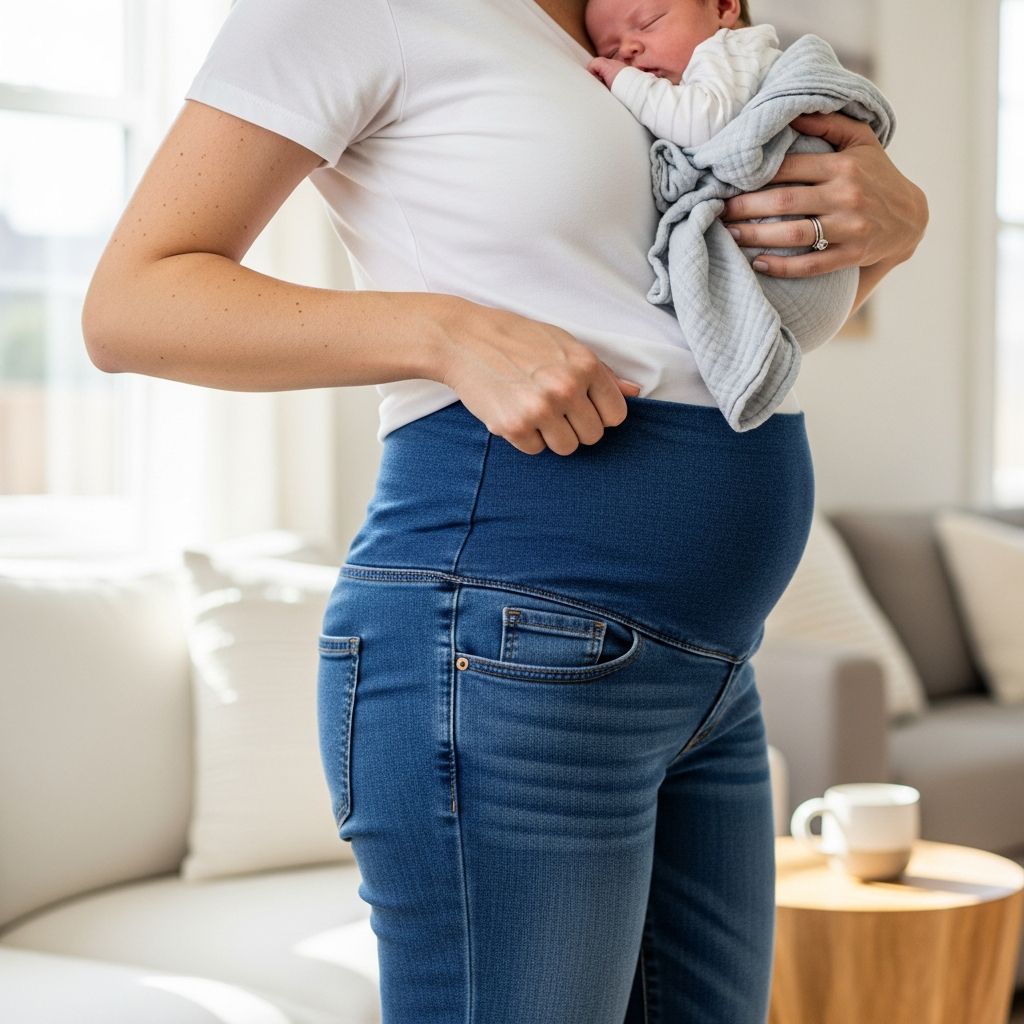
The waistband is where jeans feel great or fail completely, particularly in the first months postpartum. A supportive but forgiving waistband can make denim feel more like loungewear while still looking polished.
- High-rise waistbands: These sit above the belly button, offering a held-in feeling that many new moms find comforting. They also pair well with nursing tanks and basic tees.
- Mid-rise waistbands: If your belly is especially sensitive, a mid-rise that hits below an incision or pressure point may feel better than very high-rise options.
- Elastic or hybrid waistbands: Some postpartum jeans use elastic panels or a hidden stretch band at the back. This allows the jeans to adapt as your body changes week to week.
- Soft internal lining or panels: A smooth, stretchy inner panel can lightly hug the abdomen without the intense squeeze of shapewear.
Fabric and Stretch: Decoding the Denim Blend
When you are getting dressed on two hours of sleep, the last thing you need is stiff, unyielding denim. Fabric content plays a huge role in how kind your jeans will feel on your postpartum body.
- Look for a cotton blend: A high percentage of cotton with a small amount of elastane or spandex (often 1–3%) usually offers a good mix of breathability and stretch.
- Avoid ultra-rigid fabrics at first: Traditional 100% cotton denim can feel great later, but in the early months it may be too tight across the belly and hips.
- Prioritize softness: If you can, feel the fabric or read reviews specifically mentioning softness. Softer weaves are more comfortable against skin that may already be irritated from waistbands or postpartum pads.
Popular Postpartum Jean Styles Explained
Different silhouettes solve different comfort and style needs. You do not need every style in your closet, but understanding the options makes it easier to pick a pair you will actually wear.
1. Soft Skinny or Slim Jeans
Skinny and slim jeans can still work postpartum if they are made with generous stretch and a forgiving waistband. These pair easily with tunics, oversized sweaters, and nursing-friendly tops, and they can tuck into boots or be worn with sneakers.
- Choose a fabric with noticeable bounce-back so knees and seat do not bag out too quickly.
- Skip ultra-tight ankle openings if swelling is still an issue in your lower legs.
2. Straight-Leg Jeans
Straight-leg styles are a great middle ground between skinnies and wide-leg jeans. They skim over the hips and thighs without clinging, which can visually balance your shape while still feeling modern.
- Look for a cut described as “relaxed” or “comfort” straight rather than sharply tailored.
- These work with both sneakers and low heels, making them versatile for everyday wear.
3. “Mom” or Vintage-Inspired Cuts
Many modern “mom” jeans are designed with a higher rise, roomier thighs, and a slightly tapered leg. This can be extremely flattering on postpartum bodies, particularly if you like a casual, slightly retro look.
- Pair with a half-tucked tee or cropped sweatshirt for a simple but intentional outfit.
- If the fabric is more rigid, consider sizing up to keep the waistband comfortable.
4. Jeggings and Pull-On Jeans
If you are not ready for full-on zippers and buttons, pull-on jeans and jeggings offer a soft, stretchy middle ground. They look like denim but feel closer to leggings, often featuring a wide elastic waistband.
- Ideal for early postpartum weeks when you still want something easy to pull on and off.
- Great for long days at home, pediatrician visits, or low-key outings.
5. Hybrid or Transitional Maternity-Postpartum Jeans
Some maternity jeans are designed to be worn after birth as well, with panels or bands that can be folded down. This can be a cost-effective option if you already own a pair that still feels good.
- Use these as a bridge while your body continues to change.
- When the belly panel starts to feel unnecessary, you can transition into more traditional jeans.
Quick Comparison of Postpartum-Friendly Features
The table below compares common postpartum jean categories and how they perform across comfort, support, and style flexibility.
| Style Type | Waist Comfort | Support Level | Best For |
|---|---|---|---|
| Stretchy skinny / slim | High (if elastic or soft waistband) | Moderate tummy support with high rise | Layering under long tops, going-out outfits, tucking into boots |
| Straight-leg | High, especially with relaxed cut | Light to moderate support depending on rise | Everyday errands, casual work environments, family visits |
| “Mom” / vintage-inspired | Moderate to high (can feel snug if rigid) | Good coverage and structure through the core | Trendy casual looks with tees, knits, or crop-length tops |
| Jeggings / pull-on | Very high due to soft band | Light, gentle hold without compression | Early postpartum weeks, lounging, long car rides |
| Hybrid maternity–postpartum | Very high with over- or under-belly panels | Adjustable support depending on how panels are worn | Transition period when maternity pieces still feel best |
Choosing the Right Size Without Stress
Postpartum sizing can be emotionally loaded, but a size is simply a tool, not a judgment. Most women do not return to their pre-pregnancy size immediately — and many discover their shape has changed even if the scale numbers look familiar.
- Start with your current measurements rather than guessing from old jeans. Use a tape measure for waist and hips and compare to the brand’s size chart.
- Consider ordering two sizes. Keep the one that feels comfortable when you sit, squat, and move, not just when standing still.
- Expect change. Choose jeans that feel good right now, even if you anticipate more body changes in the coming months.
Outfit Ideas for Real-Life Postpartum Days
Once you have a pair (or two) of jeans that work, building outfits becomes much easier. Think in terms of simple formulas you can repeat on autopilot, mixing and matching a few trusted pieces.
- Casual home day: Soft jeggings or straight-leg jeans + nursing tank + open cardigan + cozy socks or slip-on sneakers.
- Doctor or pediatrician visit: High-rise jeans + drapey tee + light jacket + comfortable flats. Add a crossbody or diaper backpack for hands-free ease.
- Coffee with a friend: “Mom” jeans + fitted ribbed tank + oversized blazer or denim jacket + low-heel boots or clean sneakers.
- Return-to-work transition: Dark-wash straight jeans (if allowed in your dress code) + structured blouse or knit top + loafers.
Practical Shopping Tips for New Moms
Between feedings, naps, and diaper changes, you may not have the time or energy for long shopping trips. Use these strategies to make the process easier and less overwhelming.
- Check return policies: Look for brands or retailers with generous return windows and free returns so you can try pieces on at home.
- Read reviews by other parents: Comments that mention postpartum bodies, C-section comfort, or stretch can be particularly helpful.
- Start with one or two pairs: There is no need to overhaul your entire wardrobe at once. One great, versatile pair of jeans is more valuable than five uncomfortable ones.
- Prioritize comfort over trends: A slightly more classic cut that you actually wear is worth more than a trendy style that never leaves the drawer.
Mindset Matters: Jeans and Body Image After Birth
Jeans can stir up big feelings about size, shape, and identity, especially after pregnancy and birth. Remember that your body has done something monumental, and expecting it to instantly match old clothes is neither realistic nor fair.
- Try to treat postpartum jeans as supportive tools rather than a test you have to pass.
- Give yourself permission to own items that fit the body you have right now, not the one you think you “should” have.
- Focus on how you feel — able to move, to breathe deeply, to sit on the floor with your baby — more than how a tag or number reads.
Frequently Asked Questions About Postpartum Jeans
How soon after birth can I wear jeans?
The answer is different for everyone. Many people start experimenting with very soft, stretchy pull-on jeans or jeggings a few weeks after birth, while others wait longer, especially after a cesarean. Listen to your body: if waistbands cause pain, pressure, or irritation, it is too soon.
Are high-waisted jeans safe after a C-section?
High-waisted styles can work well after a C-section as long as they do not press directly and firmly on your incision area. Look for soft waistbands, extra stretch, and smooth internal seams, and try them on at home so you can sit and move around without time pressure.
Should I keep wearing my maternity jeans?
Absolutely, if they feel good. Many maternity jeans are intentionally designed to be worn both during pregnancy and in the early postpartum period. If your maternity pair still feels supportive and comfortable, there is no rush to switch.
Do I need specially labeled “postpartum” jeans?
Not necessarily. Some brands market jeans specifically for postpartum, often with extra support panels, but you can also look for regular denim styles with stretch, higher rises, and comfortable waistbands. The label matters less than how the jeans feel on your body.
How many pairs of postpartum jeans do I really need?
For most new moms, one to three pairs is plenty. One everyday pair, one slightly dressier option, and possibly a very soft pull-on style for the earliest weeks will cover most situations without overwhelming your closet.
Postpartum jeans are not about snapping back — they are about supporting the person you are right now: tired, powerful, healing, and learning a new kind of life. Choosing denim that respects your changing body is a small but meaningful way to care for yourself in the middle of caring for everyone else.