When you are up at 2 a.m. with a wide-awake newborn, the right swaddle can feel less like a piece of fabric and more like survival gear. This guide walks through four popular modern styles of swaddles and helps you figure out which one is most likely to work for your baby and your sanity.
Why Swaddling Matters for Newborn Sleep
Swaddling is meant to imitate the snug, contained feeling of the womb so that sudden arm and leg movements do not constantly startle a baby awake. A well-fitted swaddle can extend stretches of sleep, reduce fussiness, and make it easier for caregivers to lay a baby down without them instantly popping their eyes open again.
That said, each baby responds differently. Some relax as soon as their arms are wrapped; others protest any restriction. The goal is not to find a magic product, but to discover which style best matches your baby’s temperament and your own comfort with using it during long, sleepy nights.
The Four Modern Swaddle Styles Covered Here
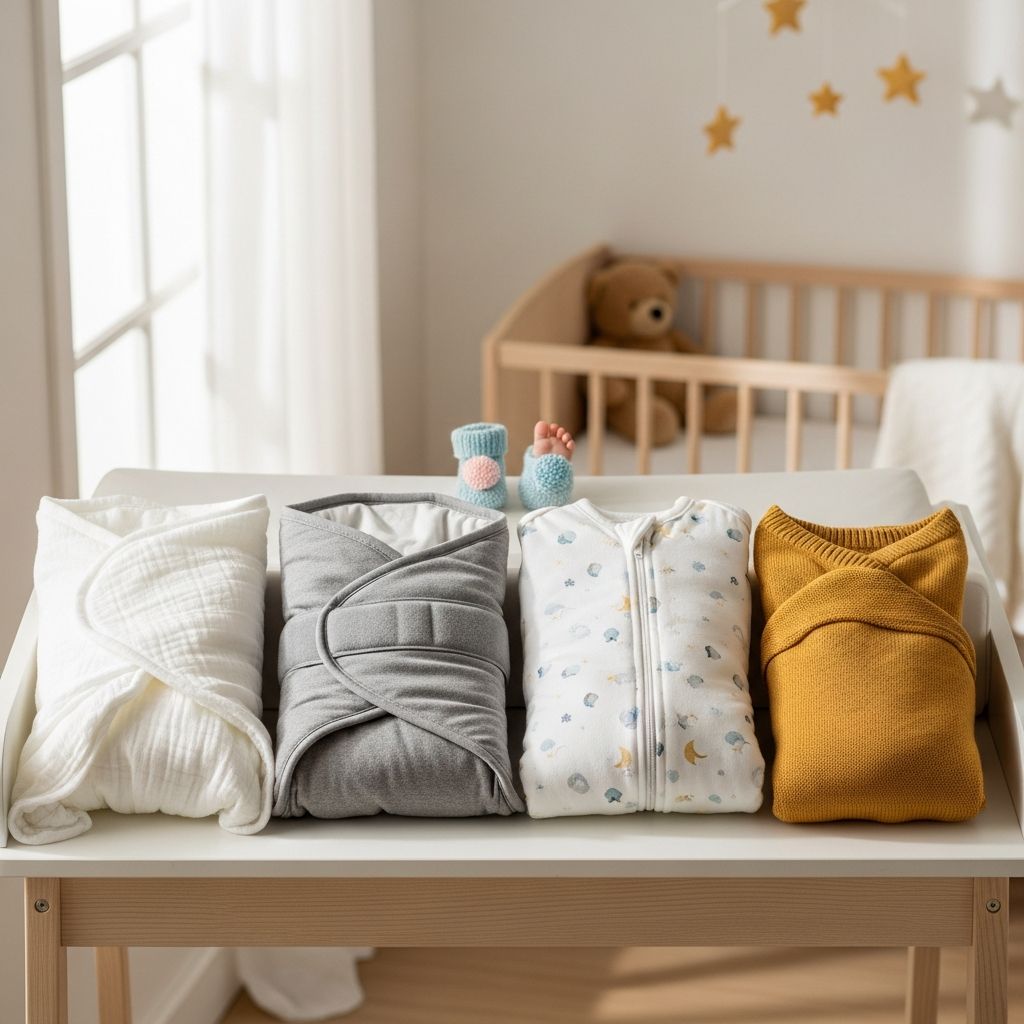
There are many brands and variations, but most of the well-known newborn swaddles fall into one of four categories. Understanding the basic style is more useful than memorizing product names, because it helps you adjust when your baby’s needs change.
- Structured wrap swaddles that use fabric wings and internal flaps instead of complicated blanket folding.
- Zippered cocoon swaddles that work like stretchy pods and require almost no skill to put on.
- Velcro-based wrap swaddles that close with hook-and-loop tabs for quick, secure wrapping.
- Lightly weighted swaddles that combine soft fabric with gentle weight over the chest or sides.
Each of these categories can be represented by a well-known brand, but the key is to pay attention to design features rather than labels alone.
Structured Wrap Swaddles: For Escape-Artist Babies
Structured wrap swaddles look like long fabric rectangles with extra inner flaps or pockets for the baby’s arms and legs. Instead of a square blanket you have to fold into a perfect baby burrito, the fabric is pre-shaped so you follow a repeatable wrapping pattern every time.
This design usually wraps around the baby several times, creating a snug, layered hold that is particularly good for babies who break out of simple blankets in seconds. Because there are no zippers or Velcro, the fit depends entirely on how carefully you wrap.
Benefits of structured wraps
- Excellent for very wiggly babies who defeat ordinary blankets.
- No noisy fasteners, so middle-of-the-night adjustments are silent.
- Durable design with no hardware to wear out over multiple babies.
Potential drawbacks
- Steeper learning curve; takes several tries to wrap quickly and correctly.
- Diaper changes can require unwrapping and starting over from the beginning.
- Can feel too restrictive for babies who prefer a little arm movement.
If your baby flails themselves awake, seems to love very firm pressure, and regularly busts out of every blanket, a structured wrap swaddle can be worth mastering. It shines most in the first few months when the startle reflex is strong.
Zippered Cocoon Swaddles: Fast and Foolproof
Zippered swaddles are shaped like a stretchy sleeping bag. You place your baby inside, zip up, and often that is the entire process. Some versions allow arms up by the face, while others keep the arms by the sides inside the pod.
These cocoon styles are built for speed and simplicity, which is especially appealing to exhausted parents, nighttime caregivers, or anyone who finds traditional wrapping confusing. Many include two-way zippers that open from the bottom for quick diaper changes.
Benefits of zipper pods
- Extremely easy to use; nearly impossible to wrap incorrectly.
- Consistent snugness each time, so you do not have to guess about tightness.
- Stretchy fabric often allows small, soothing movements inside the swaddle.
Potential drawbacks
- Fixed sizes, so you may need multiple sizes as your baby grows.
- Some babies dislike having their arms fixed in one particular position.
- Zippers can be chilly or bothersome if they rub near the chin unless the design guards against it.
Choose a cocoon-style swaddle if you want something that goes on in seconds the same way every time and you value minimal fuss over maximum customization.
Velcro Wrap Swaddles: Quick, Adjustable Wrapping
Velcro-based swaddles look like shaped fabric wings that close around the baby’s torso with hook-and-loop tabs. You place your baby on the pouch, tuck any inner flap over the chest, and then fasten the outer wings across the front.
This approach combines the speed of a pod with the flexibility of a wrap. You can adjust how tightly the wings cross the chest, and many caregivers find they can swaddle securely even when they are half asleep.
Benefits of Velcro wraps
- Fast and simple once you understand where each wing goes.
- Easy to achieve the same snugness night after night.
- Often more affordable than highly specialized zipper or weighted options.
Potential drawbacks
- Hook-and-loop can be noisy when you open it, which may startle a light sleeper.
- Tabs must be aligned carefully so they do not rub on delicate skin.
- Babies who roll or fight the swaddle strongly may pop the wings open if not fitted correctly.
Velcro wraps are a practical middle ground: faster and more beginner-friendly than a complex blanket, but more adjustable than some zippered pods.
Lightly Weighted Swaddles: Gentle Pressure for Sensitive Sleepers
Lightly weighted swaddles incorporate small areas of extra padding or beads to create a gentle, soothing pressure over the chest or sides. The idea is to mimic the reassuring weight of a caregiver’s hand resting on the baby.
Many of these designs also include features like detachable arm sections or the ability to convert into a sleeveless sleep sack once a baby starts rolling and can no longer be fully swaddled.
Benefits of weighted designs
- Subtle pressure can help some babies settle more quickly and stay asleep longer.
- Transitional forms allow arms-out use, reducing the need to buy entirely new gear when swaddling ends.
- Softer, more flexible fit may suit babies who dislike feeling tightly bound.
Potential drawbacks
- Parents must pay close attention to size, weight guidelines, and safe-sleep recommendations.
- Usually more expensive than basic wraps and pods.
- Not every baby responds noticeably to the added pressure, even when used correctly.
For babies who sleep lightly, flail often, or seem to calm when a hand rests on their chest, a lightly weighted swaddle can be worth exploring, as long as manufacturer instructions and current safety guidelines are followed.
Feature Snapshot: How These Swaddles Compare
While brand names vary, the main questions parents ask tend to be the same: how easy is it to use, how secure does it feel, how long will it last, and does it work for a squirmy baby? The table below looks at these features from a style-by-style perspective.
| Swaddle Style | Ease of Use | Best For | Adjustability | Typical Price Range |
|---|---|---|---|---|
| Structured wrap | Low at first, higher with practice | Babies who routinely break out of other swaddles | High; you control tightness with folds | Moderate upfront, good long-term value |
| Zippered cocoon | Very high; zip and go | Caregivers who want virtually no learning curve | Low; fit is mostly determined by size and fabric stretch | Moderate to higher, especially for multiple sizes |
| Velcro wrap | High once you learn wing placement | Parents who want a balance of speed and customization | Medium; tabs can tighten or loosen the wrap | Generally budget-friendly |
| Lightly weighted | Medium; similar to other wraps with extra considerations | Babies who settle with gentle pressure and need a smoother transition later | Medium; some convert to arms-out sleep sacks | Higher due to specialized construction |
How to Match a Swaddle to Your Baby
There is no universal “best” swaddle. The most helpful mindset is to match the swaddle style to your baby’s personality and your own tolerance for nightly fussing with fabric and fasteners. A baby who can sleep through anything may do fine in most styles, while a high-energy baby may require more experimentation.
Before buying several of the same kind, consider starting with one or two different styles and watching how your baby responds over several naps and nights. Notice whether they seem calmer with their arms firmly tucked, prefer arms near the face, or become frustrated by tight wrapping.
Questions to ask yourself
- Does my baby constantly work their hands free, or do they relax when wrapped?
- Do I mind following a multi-step wrapping process, or do I need something I can put on in ten seconds?
- Am I more comfortable with soft fabric only, or am I open to gentle weighted panels if they meet safety guidance?
- How quickly is my baby growing, and will this style last more than a few weeks?
Pay attention to how your own stress level changes. The best swaddle for your family is one that both soothes your baby and feels manageable to you at three in the morning.
Practical Tips for Using Any Swaddle
Regardless of which product you choose, there are some universal best practices that make swaddling safer and more effective. These small details often matter more than the logo on the tag.
- Keep hips loose. The upper body can be snug, but the hips and legs should be able to bend and move freely to protect healthy joint development.
- Monitor temperature. Overheating is a real risk; dress your baby lightly underneath the swaddle and feel the back of the neck to check for sweat or flushed skin.
- Lay baby on the back. Always place a swaddled baby down on their back on a firm, flat sleep surface free of extra bedding.
- Retire the swaddle at early signs of rolling. Once a baby can intentionally or repeatedly roll, switch to arms-out sleep gear.
- Practice during the day. Try new swaddles for naps first so you are not learning under pressure in the middle of the night.
Suggested Swaddle Pairings for Common Situations
Parents often face similar challenges: a baby who breaks free, a baby who hates arm restriction, or caregivers with very different wrapping skills. Thinking in terms of situations can simplify the decision.
- “My baby busts out of everything.” Start with a structured wrap or a snug Velcro wrap swaddle that offers multiple layers around the torso.
- “We need something grandparents or sitters can use easily.” A zippered cocoon or simple Velcro wrap reduces the chance of user error.
- “Baby likes hands near the face.” Consider a pod-style swaddle that allows arms-up positioning or a convertible design with removable sleeves.
- “We are preparing for the end of swaddling.” Look at lightly weighted or hybrid swaddles that can transition to arms-out or sleep sack mode.
Having more than one style on hand can be reassuring. Many parents discover that one swaddle works beautifully for the newborn stage, while another is better once their baby becomes more active.
SEO-Friendly FAQs About Swaddling and Swaddles
How many swaddles does a newborn really need?
Most families get by with three or four swaddles in rotation. This allows one on the baby, one in the wash, one clean and ready, and a spare for messy nights or travel. If you experiment with different styles, those numbers may rise, but you can start small.
Is a swaddle blanket better than a zippered swaddle?
Neither is automatically better; they simply suit different needs. A blanket or structured wrap offers more custom tightness and can last across growth spurts, while a zippered pod offers speed and consistency. The right choice depends on your baby’s behavior and how much effort you want to invest in learning a wrapping technique.
Can swaddling be unsafe?
Swaddling can become unsafe if it is done too tightly around the hips, if the baby overheats, or if swaddling continues after the baby begins rolling. The safest approach is snug around the chest and arms, loose at the hips, with lightweight clothing underneath and a prompt switch to arms-out sleep gear when rolling starts.
What if my baby hates being swaddled?
Some babies initially resist the process but then relax once they are fully wrapped and rocked. Others remain distressed by any restriction. Try different arm positions—both in, one arm out, or both out in a snug sleep sack—and shorten the amount of time you expect your baby to stay swaddled. If swaddling consistently increases crying, it is acceptable to stop and focus on other soothing methods.
When should I stop using a swaddle?
Most babies phase out of swaddling between two and four months, but the key milestone is the first sign of deliberate rolling. Once rolling appears, gradually transition to an arms-out option, such as a sleep sack or a convertible swaddle, to reduce the risk of a baby becoming trapped facedown.
Final Thoughts: Be Flexible and Kind to Yourself
Swaddles are tools, not tests of parenting skill. If one style does not work, it simply means your baby has different preferences, not that you are doing anything wrong. With a bit of experimentation and attention to safety basics, you will find a setup that supports better rest for your baby and for you.
Remember that newborn sleep is naturally unpredictable. A thoughtfully chosen swaddle will not erase every wake-up, but it can make those long nights more manageable and give your little one a comforting, familiar sleep environment.