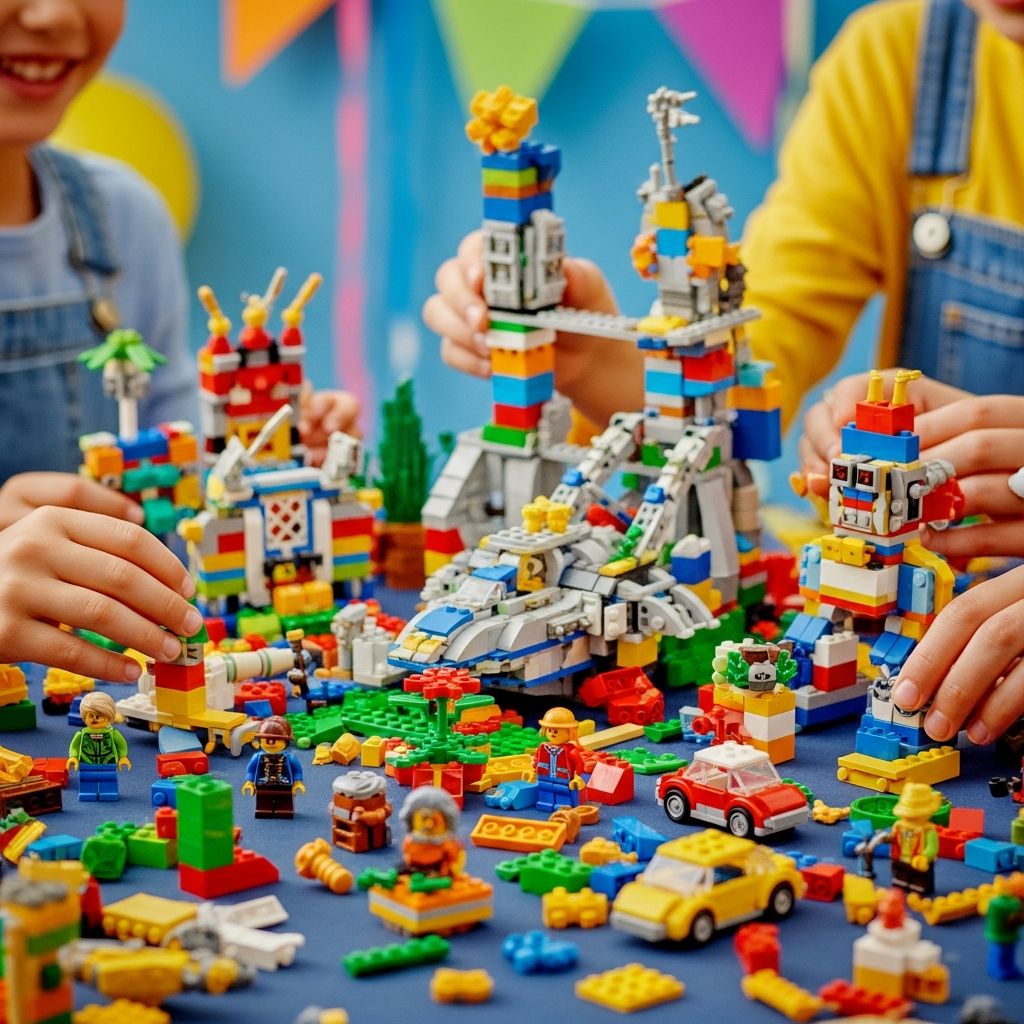
LEGO bricks are more than toys; they are tiny building blocks for imagination, problem-solving, and connection. With a little planning, you can turn a pile of bricks into a full party program or a memorable family game night that keeps kids engaged from start to finish.
Why LEGO Games Make Parties Better
LEGO-based games work beautifully at parties because they are flexible, easy to adapt for different ages, and do not require expensive equipment. Guests can join in at any moment, which is perfect for events where families arrive at different times.
Unlike single-use decorations or toys, LEGO bricks can be reused endlessly, making them a budget-friendly option for hosts who want meaningful, screen-free entertainment. In addition, building together naturally encourages conversation, cooperation, and creativity among kids who may not know each other well yet.
Planning Your LEGO Game Session
A successful LEGO party or game night does not have to be complicated. Focus on a simple structure: warm-up activities, a few main challenges, and a calm wind-down project. You can run everything in one room with a table and some open floor space.
Prepare in advance by sorting bricks into containers, printing any reference cards you need, and deciding how you will signal the end of each round. A music track, timer, or simple countdown can help kids transition smoothly between games.
Basic Supplies Checklist
- A large assortment of standard LEGO bricks in a variety of colors and sizes
- Baseplates (optional but helpful for stability)
- Small containers or bowls for sorting and game stations
- Index cards or paper for prompts, scores, or instructions
- Timer or phone stopwatch to run short, energetic rounds
- Name tags or colored stickers if you want to form teams quickly
Quick-Start LEGO Icebreakers
Icebreakers help guests feel comfortable, especially when not everyone knows each other. These simple activities work as kids arrive and do not require strict rules or scoring. Keep the tone light and praise effort over perfection.
Color Connection Warm-Up
Spread a pile of bricks on a table and invite each child to pick three pieces: one favorite color, one shape they find interesting, and one completely random piece. Then ask them to build something small that tells a story about themselves.
- Prompt idea: “Build something that shows what you like to do after school.”
- Prompt idea: “Create a tiny object that represents a favorite place.”
- Encourage kids to share their builds in pairs or small groups instead of in front of everyone if they are shy.
One-Minute Micro Builds
Set a timer for one minute and call out simple prompts such as “tower,” “bridge,” or “robot sidekick.” At the end of each minute, everyone holds up their creations for a quick, no-pressure show-and-tell. Then everyone disassembles and gets ready for the next round.
This fast pace helps kids relax about making mistakes and gets them used to the idea that builds do not have to be perfect or permanent. It also creates fun energy for the more structured games that follow.
Structured LEGO Building Challenges
Once everyone is warmed up, introduce a few structured challenges that have clear goals but still allow creativity. These games work well for birthday parties because you can easily declare winners or simply celebrate all participants equally.
Height vs. Strength Tower Duel
Divide players into small teams, each with an equal number of bricks and at least one base. Their task is to create the tallest tower that can survive a gentle “shake test.” This encourages experimentation with stable foundations and bracing techniques.
- Round 1: Build the tallest tower possible in five minutes.
- Round 2: Adjust and reinforce the tower so it can withstand a light tap or wiggle of the table.
- Round 3 (optional): Limit the number of studs that may touch the baseplate to increase difficulty.
Theme Build Showdown
Pick a theme that fits your party, such as “space rescue,” “underwater city,” or “future playground.” Give everyone the same time limit and invite them to build something that fits the theme in their own way. At the end, walk around as a group and celebrate the variety of ideas.
To keep judging fair and fun, use light-hearted categories like “Most Creative Use of a Tiny Piece,” “Funniest Idea,” or “Most Colorful Build.” Kids feel recognized for different strengths without direct comparison.
Blindfold & Guide Challenge
Pair players so one is the “builder” and the other is the “guide.” With eyes closed or lightly covered (safety first), the builder must assemble a simple structure using verbal instructions only. Switch roles so both players experience guiding and building.
- Use very simple models: a short wall, a small car, or a basic creature.
- Remind guides to use precise language about color, size, and position.
- Focus on teamwork and communication, not speed or perfection.
Active LEGO Games for High Energy
For kids who need to move, mix in activities that combine building with physical action. These games are ideal for yards, gyms, or living rooms with furniture pushed aside. Always do a quick safety check of the play area before starting.
Brick Relay Races
Set a container of bricks on one side of the room and an empty bowl on the other. Players move one brick at a time using a fun method, such as hopping, tiptoeing, or walking backward. After a set time, teams use the transported bricks to build something together.
- Assign different movements each round to keep the game fresh.
- Make sure paths are clear of tripping hazards and sharp edges.
- Instead of rewarding only the fastest team, recognize teamwork and creative building.
Target Toss with Bricks
Place a few shallow boxes or circles of masking tape on the floor and assign each one a point value. Players stand behind a line and gently toss bricks, trying to land them in the targets. Young kids can stand closer, while older kids or adults move back.
To extend the game, allow players to spend the points they have earned to “buy” special bricks for a later building challenge. This adds a light strategic element and connects activities into a longer narrative.
LEGO Scavenger Sprint
Hide specific pieces around a safe area and give each team a card that lists the items they must find, such as “2 red 2×4 bricks” or “1 window piece.” Once they find everything, the team uses those pieces as the core of a creative build.
- Mark hidden spots clearly if playing with younger children so the activity stays fun, not frustrating.
- Set a time limit and call everyone back to share what they built with their discoveries.
- Rotate roles so different children get chances to read clues or manage the checklist.
Calm, Screen-Free LEGO Games
After active play or cake, many hosts appreciate quieter options that still feel engaging. Calm LEGO games are perfect for small groups, mixed ages, or the final stretch of a party when energy naturally dips.
Shape Copy Cards
Create simple blueprint cards by drawing small brick patterns on index cards. Players choose a card and try to replicate the pattern exactly using real bricks. You can increase difficulty by limiting colors or time.
- Offer separate card sets labeled “easy” and “tricky” so kids can choose their challenge level.
- Let older kids design new cards for younger ones as a leadership activity.
Story Scene Studio
Invite kids to build a scene that illustrates part of a story, such as “the moment before a rocket launches” or “the quietest place in the forest.” When they finish, they explain what is happening in their scene in one or two sentences.
This type of game develops storytelling skills and gives kids who prefer narrative play a chance to shine. It also creates great photo opportunities for parents who want to remember the party.
Brick Sorting & Pattern Puzzles
Sorting may sound simple, but for younger guests it can be a deeply satisfying challenge. Provide trays or muffin tins and ask children to group bricks by color, size, or shape, then use those sorted sets to build specific patterns.
- Ask kids to create repeating sequences like “blue-yellow-blue-yellow” or “square-rectangle-square.”
- Turn it into a quiet competition by timing how long it takes to complete a given pattern.
Cooperative LEGO Team Missions
Many parties focus on winning and losing, but cooperative missions can be just as exciting. In these games, the whole group works toward a shared goal, making them especially good for siblings who tend to compete intensely.
One Big City Project
Set out a large base or several plates pushed together and challenge everyone to build one connected city. Assign loose roles such as “roads,” “homes,” “parks,” or “vehicles,” and let kids negotiate with each other about how to fit everything together.
As the city grows, encourage kids to build stories: Who lives where? How do they travel? What problems does the city need to solve? This transforms free building into a shared, evolving narrative.
Bridge Across the Gap
Place two chairs or boxes a short distance apart and ask teams to construct a bridge from one side to the other using only LEGO bricks. The bridge must support a small object such as a toy car or figurine for a few seconds without falling.
- Increase the distance slightly in each round to follow the group’s progress.
- Encourage teams to test designs and adjust rather than starting over completely each time.
Rescue Mission Build
Create a simple story in which a character is stuck somewhere—on top of a tower, across a river, or in a cave. The group’s job is to design a device that can help, such as a vehicle, ladder, or flying machine.
Because there are countless solutions, kids can collaborate in small clusters and then share their ideas with the whole group. This reinforces the idea that creative problems rarely have a single correct answer.
Sample LEGO Party Flow
To help you visualize how these ideas fit together, here is a sample 90-minute LEGO party schedule. Adjust times based on the ages of your guests and whether you are serving food.
| Time | Activity | Focus |
|---|---|---|
| 0:00–0:10 | Free play with bricks | Arrival, warm-up |
| 0:10–0:20 | One-Minute Micro Builds | Icebreaker, laughter |
| 0:20–0:35 | Height vs. Strength Tower Duel | Teamwork, engineering |
| 0:35–0:50 | Brick Relay Race | Movement, energy release |
| 0:50–1:05 | Snack or cake break | Rest and reset |
| 1:05–1:25 | Theme Build Showdown | Creative focus |
| 1:25–1:35 | Story Scene Studio | Calm storytelling |
| 1:35–1:40 | Group photo with builds | Memories and closure |
Safety, Inclusivity, and Cleanup Tips
Even the best games fall flat if kids are distracted by discomfort or mess. A few small decisions about safety, inclusivity, and cleanup will help your party run smoothly from beginning to end.
Keeping Everyone Safe
- Be mindful of age: standard bricks pose a choking risk for toddlers, so set aside a separate area with larger blocks if very young siblings are present.
- Check the floor frequently for stray pieces that could cause slips or hurt bare feet.
- Use gentle language around competition to prevent hurt feelings and conflicts.
Making Games Inclusive
Some guests may feel less confident about building or may have motor or sensory challenges. Offer different roles—idea creator, piece finder, storyteller, or stabilizer—so everyone can contribute meaningfully without pressure.
When possible, avoid ranking builds from best to worst. Focus instead on celebrating unique ideas, creative problem-solving, and teamwork. This helps kids remember the event as fun rather than stressful.
Speedy Cleanup Strategies
- Turn cleanup into a final game: time how quickly the group can sort bricks into designated bins.
- Use shallow trays or baking pans at each station so you can quickly stack and move leftover pieces.
- Have labeled containers ready beforehand (by color or type) to make post-party organization faster.
Frequently Asked Questions About LEGO Party Games
How many bricks do I need for a LEGO party?
For a small group of four to six children, a standard household collection is often more than enough, especially if you focus on challenges that use limited sets of pieces. If you expect a large group, consider borrowing bricks from friends, buying a mixed brick box, or setting up stations that use different subsets of your collection.
What ages are best for structured LEGO games?
Most structured LEGO party games work well for kids ages six and up, who can follow multi-step instructions and handle small pieces safely. Younger children can still participate with simplified tasks, extra supervision, and fewer rules.
How can I manage big age gaps in one group?
When you host siblings or cousins of different ages, use mixed-age teams so older kids can help younger ones with tricky parts. Choose games that emphasize creativity and story rather than technical perfection to keep the experience enjoyable for everyone.
Do I need to give prizes or party favors?
Prizes are optional; many hosts simply print fun certificates with titles like “Inventive Builder” or “Team Spirit Star.” If you want tangible favors, consider small bags of assorted bricks or mini builds that fit your theme instead of single-use trinkets.
How do I adapt these ideas for a quiet child?
Offer solo or paired challenges like Shape Copy Cards or Story Scene Studio, where kids can focus quietly and share only if they feel comfortable. Let them choose when to join louder, high-energy games so they never feel pushed beyond their comfort level.
With a mix of creative challenges, active games, and calm building time, LEGO bricks can turn any gathering into an unforgettable shared adventure. Adjust these ideas to suit your space, age group, and schedule, and you will have a toolkit you can reuse for birthdays, holidays, and rainy afternoons all year long.