Supporting healthy weight gain in infants requires a focus on calorie-dense, nutrient-rich foods tailored to their developmental stage. From exclusive breastfeeding in the early months to introducing solids around six months, strategic nutrition ensures steady growth without compromising health.
Understanding Normal Infant Growth Patterns
Infants typically double their birth weight by five to six months and triple it by their first birthday. Newborns may lose 7-10% of birth weight initially, regaining it within two weeks. Slow weight gain, defined as falling below the growth curve or minimal weekly increases (e.g., 5-7 ounces after the first month), warrants attention but is often addressed through dietary adjustments.
Factors like frequent feeding, efficient milk transfer, and absence of medical issues (e.g., reflux, allergies) are key. Always track growth via WHO or CDC charts and consult pediatricians for personalized percentiles.
Nutrition Foundations: Breast Milk and Formula
For babies under six months, breast milk or formula remains the cornerstone, providing 20-24 calories per ounce. Feed every 2-3 hours, aiming for 8-12 sessions daily to maximize intake. Lactation-supporting foods like oats and fenugreek can boost supply for breastfeeding mothers.
Formula-fed infants benefit from iron-fortified options. Transition to higher-calorie formulas (24-27 cal/oz) only under medical guidance if growth lags. Never introduce cow’s milk before one year due to digestion risks.
Introducing Solids for Calorie Boost
Around six months, solids complement milk feeds, adding 200-300 daily calories. Prioritize smooth purees progressing to mashes. Key principle: fats supply 40-50% of calories for brain development, so incorporate healthy sources liberally.
- Fat Addition: Drizzle 1 tsp olive, avocado, or coconut oil per meal after 7 months.
- Frequency: Offer solids 2-3 times daily, milk on demand.
- Portion Progression: Start with 2-4 tbsp per meal, increasing as tolerated.
Top Calorie-Rich Foods by Age Group
Select foods high in healthy fats, proteins, and carbs. Introduce one new item every 3-5 days to monitor allergies (e.g., to eggs, nuts, dairy).
Birth to 6 Months: Milk-Focused
- Breast milk/formula exclusively.
- Cluster feed during growth spurts (10-14 feeds/day).
6-9 Months: First Purees
| Food | Calories (per 100g) | Preparation Tips | Nutrients |
|---|---|---|---|
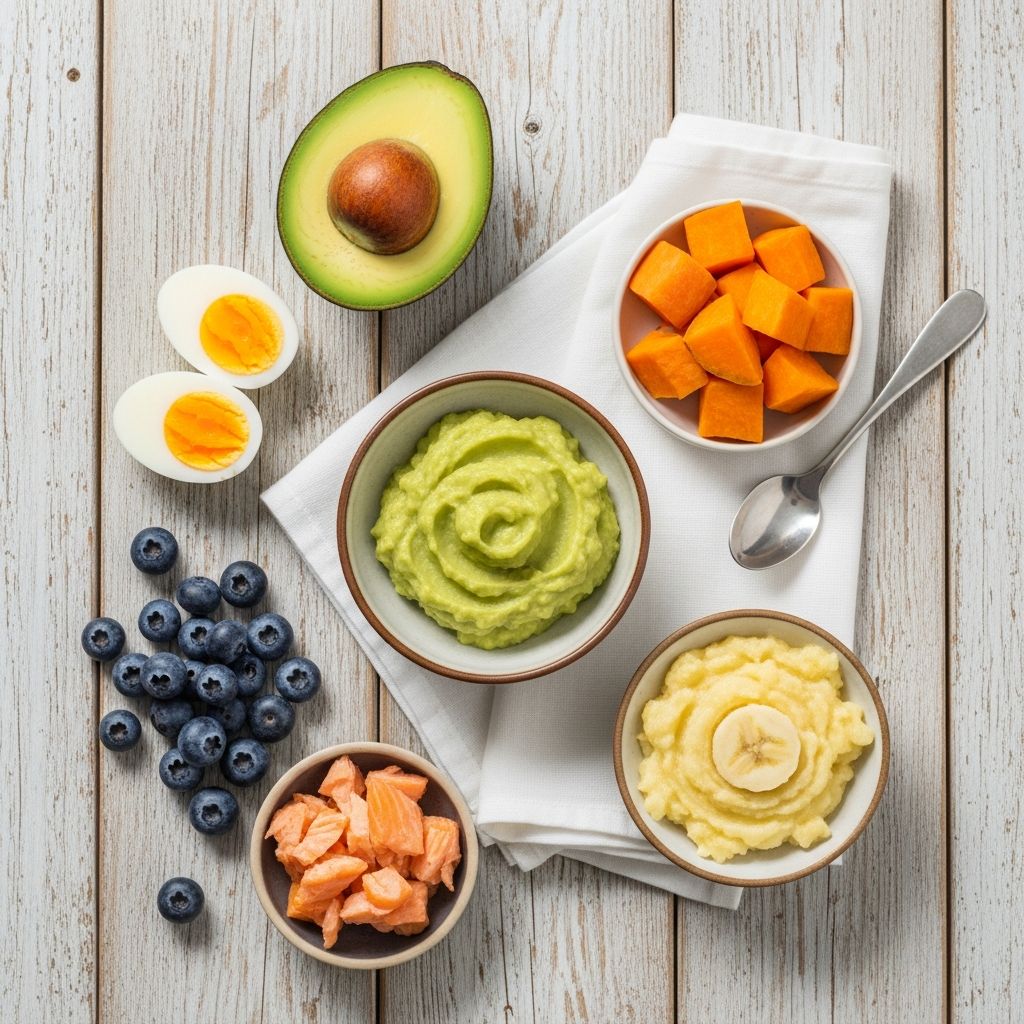
| Avocado | 160 | Mash plain or mix with breast milk | Monounsaturated fats, vitamin E, fiber |
| Banana | 89 | Puree ripe bananas | Potassium, vitamin C, natural sugars |
| Oatmeal | 68 (cooked) | Cook in formula for creaminess | Beta-glucan for immunity, iron |
| Sweet Potato | 86 | Steam and puree | Vitamin A, complex carbs |
9-12 Months: Mashes and Finger Foods
| Food | Calories (per 100g) | Preparation Tips | Nutrients |
|---|---|---|---|
| Full-Fat Yogurt | 61 | Mix with pureed fruits | Probiotics, calcium, protein |
| Egg Yolk | 322 | Hard-boil and mash (from 7 months) | Iron, choline, fats |
| Peanut Butter (smooth) | 588 | Thin with breast milk (if no allergy risk) | Protein, healthy fats |
| Pureed Lentils | 116 | Cook with veggies | Protein, fiber, iron |
After 12 months, expand to full-fat cheese, nut butters, and oils (4-7ml daily).
Meal Ideas for Steady Weight Gain
Sample Daily Menu (7-Month-Old, ~800-1000 cal)
- 6 AM: 6 oz breast milk/formula.
- 8 AM: 4 tbsp avocado puree + 2 oz milk.
- 10 AM: 6 oz milk.
- 12 PM: Oatmeal cooked in formula + mashed banana.
- 2 PM: 6 oz milk.
- 4 PM: Sweet potato puree with 1 tsp oil.
- 6 PM: 6 oz milk.
- 8 PM: Yogurt mixed with pureed mango.
- 10 PM: Cluster feed/night feed as needed.
Adjust based on appetite; aim for 30-50g fat daily.
Enhancing Calories Without Empty Fillers
Avoid low-calorie fillers like rice cereal alone. Instead:
- Add powdered seeds (chia, flax) to smoothies post-9 months.
- Puree meats (chicken, beef) for protein punch.
- Incorporate dry fruits (ground almonds) in porridges after 10 months.
Track intake: High-calorie foods should dominate 50% of solids.
Recognizing and Addressing Feeding Challenges
Common hurdles include oral aversions, reflux, or allergies. Signs of inadequacy: Fewer wet diapers (<6/day), lethargy, poor head control. Medical causes like cystic fibrosis impair absorption—rule out via pediatric evaluation.
Strategies:
- Skin-to-skin for better milk let-down.
- Paced bottle feeding to prevent overfeeding cues.
- Fortified foods under dietitian guidance.
Monitoring Progress and Professional Guidance
Weigh weekly at home or monthly at checkups. Expect 0.5-1 oz daily gain post-newborn phase. If percentiles drop two lines, seek help promptly.
Pediatricians may recommend supplements (e.g., MCT oil) or failure-to-thrive protocols. Multidisciplinary input from lactation consultants optimizes outcomes.
Frequently Asked Questions (FAQs)
What if my 6-month-old isn’t gaining weight on solids?
Ensure 24-32 oz milk daily alongside 2-3 solid meals. Add fats; consult for calorie-dense formula if needed.
Can I give nut butters early?
From 6 months if low allergy risk; thin and test small amounts. High-risk babies need doctor approval.
How much fat is safe daily?
30-50g for 7-12 months, from avocados, oils, dairy—not exceeding 40% calories.
Is yogurt okay before 8 months?
Full-fat plain yogurt from 6-8 months boosts probiotics and calories.
When to worry about slow gain?
If below 5th percentile or stagnant 4 weeks; see pediatrician to exclude issues.
References
- 10 Best Food For Baby To Gain Weight — Redcliffe Labs. 2023. https://redcliffelabs.com/myhealth/food-creative/10-best-food-for-baby-to-gain-weight/
- The Best Foods for Your Baby to Gain Weight — Healthline. 2023-10-12. https://www.healthline.com/nutrition/food-for-baby-to-gain-weight
- What should a 6-month-old baby eat to gain weight? — Vinmec International Hospital. 2024. https://www.vinmec.com/eng/blog/what-should-a-6-month-old-baby-eat-to-gain-weight-en
- High Calorie Diet for Infants and Toddlers — UW Health Patient. 2022. https://patient.uwhealth.org/healthfacts/343
- High calorie, high protein diet for babies — Children’s Healthcare of Atlanta. 2023. https://www.choa.org/-/media/Files/Childrens/teaching-sheets/high-calorie-high-protein-diet-for-babies.pdf
- Slow Weight Gain in Infants and Children — Boston Children’s Hospital. 2024-01-15. https://www.childrenshospital.org/conditions-treatments/slow-weight-gain-infants-and-children
- High-Calorie Nutrition — GiKids (NASPGHAN). 2023. https://gikids.org/digestive-topics/high-calorie-nutrition/
- High energy eating (infants 6–12 months) factsheet — Sydney Children’s Hospitals Network. 2024. https://www.schn.health.nsw.gov.au/high-energy-eating-infants-6-12-months-factsheet