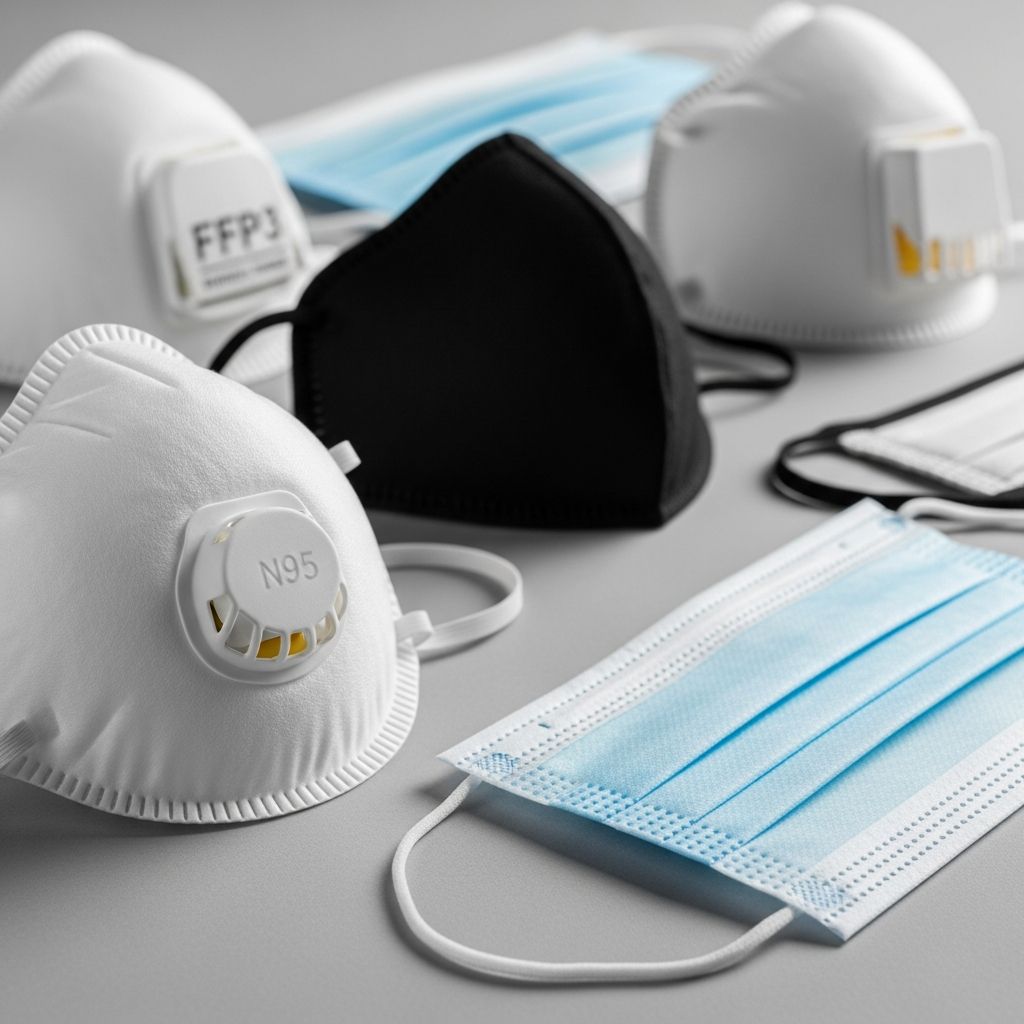
Understanding the Evolution of Face Mask Recommendations
The landscape of personal protective equipment has undergone significant transformation as medical professionals have gained deeper insights into viral transmission and aerosol dynamics. Healthcare providers and public health organizations have increasingly emphasized that not all face coverings offer equivalent levels of protection. The distinction between basic cloth masks and more sophisticated filtration systems has become a central focus for those seeking to minimize their exposure to respiratory viruses and protect vulnerable populations in their communities.
Medical professionals recognize that mask effectiveness extends beyond simply covering one’s face. The relationship between a mask and the wearer’s facial contours, combined with the material composition and construction methodology, collectively determines the actual protective value offered. This understanding has prompted healthcare leaders to provide more nuanced recommendations regarding which types of protective equipment deserve consideration for everyday use.
The Science Behind Mask Effectiveness
The protective capacity of face masks operates through two interconnected mechanisms: physical filtration and environmental sealing. Filtration capability describes how effectively the mask material can trap microscopic particles expelled during breathing, speaking, coughing, or sneezing. The seal or fit component refers to how well the mask adheres to facial contours, preventing air from flowing around rather than through the filtering material.
Research demonstrates that these two factors work synergistically. A mask with excellent filtration properties provides minimal benefit if air leaks around the edges. Conversely, a well-sealed mask with poor filtration materials cannot effectively trap harmful particles. Healthcare professionals emphasize that optimizing both elements simultaneously creates substantially better protection than focusing on either component alone.
Particle Blocking Capacity Across Different Mask Types
Laboratory studies have quantified the differences in protective capability among various mask styles. A surgical mask worn alone blocks approximately 42% of particles from respiratory events like coughing. Cloth masks constructed from common materials achieve similar performance, blocking roughly 44% of particles. However, when a cloth mask is layered over a surgical mask, the combined protection increases dramatically to approximately 92.5% of particles.
This exponential improvement illustrates why healthcare professionals increasingly recommend layering strategies or selecting masks specifically designed with multiple filtration components. The multiplicative effect of stacking different material types creates barriers that far exceed what any single layer can accomplish.
Practical Strategies for Optimizing Mask Fit
Achieving superior protection does not necessarily require purchasing expensive equipment or complex systems. Healthcare professionals have identified several straightforward techniques that individuals can implement immediately to enhance their existing masks.
Adjustable Nose Wire Application
Many masks include a malleable wire element running along the top edge. Properly molding this wire to conform precisely to nasal contours and bridge geometry eliminates a common leakage point. The nose area presents particular challenges because of its prominent shape and the natural gaps that form when standard masks are applied without adjustment. Taking moments to personalize the wire shape to individual facial anatomy significantly improves seal integrity.
Ear Loop Modification Techniques
Disposable surgical masks often feature excess material along the sides where ear loops attach. Medical professionals recommend knotting these loops at their attachment points and then carefully folding and flattening the resultant slack material against the cheeks and sides of the face. This technique reduces the vertical gap between mask edges and facial skin, substantially minimizing particle escape pathways during breathing cycles.
External Anchoring Systems
Mask fitters and braces represent purposefully engineered solutions designed to compress masks tightly against facial surfaces. These accessories eliminate gaps that typically form around the perimeter of the mask, particularly around cheekbones, chin, and temple regions. Healthcare facilities have adopted these tools to ensure consistent protection for staff members during prolonged patient interactions.
Comparing Respiratory Protection Options
| Mask Type | Particle Filtration Rate | Certification Standard | Recommended Use |
|---|---|---|---|
| Basic Cloth Mask | 44.3% | None (unregulated) | General public, low-risk settings |
| Surgical Mask (Single) | 42% | FDA regulated | Healthcare settings, everyday use |
| Surgical Mask + Cloth Layer | 92.5% | FDA regulated plus supplemental | High-risk environments, crowded spaces |
| N95 Respirator | 95% (0.3+ microns) | NIOSH certified | Healthcare workers, medical professionals |
| KN95 Respirator | 95% | Chinese standard (some FDA EUA) | General public alternative, higher protection |
| KF94 Respirator | 94% | South Korean standard | Emerging option for enhanced protection |
Medical-Grade Masks versus Consumer Alternatives
The distinction between masks manufactured and regulated through medical supply chains and those produced for general consumer use carries significant implications for protection levels. Medical or surgical masks undergo FDA oversight and must meet specific performance standards before distribution. These masks are designed and tested to provide consistent filtration characteristics.
In contrast, homemade cloth masks and many consumer-grade face coverings lack regulatory oversight. While these masks may reduce the probability that the wearer transmits respiratory pathogens to others (source control), they provide limited protection for the wearer themselves. Healthcare professionals emphasize this distinction because it affects decision-making for vulnerable individuals and those with high-risk exposures.
Protection Direction Matters
Not all masks function equally in both directions. Some designs prioritize preventing the wearer from transmitting illness to others, while others emphasize protecting the wearer from environmental threats. Individuals selecting masks should consider their specific circumstances and whether they seek primarily to protect themselves, others, or both.
Advanced Filtration Technologies: N95, KN95, and KF94 Respirators
N95 Respirators in the United States Context
N95 masks represent the gold standard for respiratory protection in American healthcare settings. These devices filter 95% of particles as small as 0.3 microns, with certification managed by the National Institute for Occupational Safety and Health (NIOSH). Before receiving medical-grade approval, N95 respirators undergo rigorous inspection and testing protocols.
However, healthcare organizations typically reserve N95 masks for medical professionals rather than recommending them for general public use. This guidance reflects supply chain constraints and the prioritization of protecting frontline healthcare workers who face concentrated occupational exposures. Additionally, proper N95 use requires medical assessment, specialized training, and individual fit testing to ensure the wearer achieves an appropriate seal.
KN95 Respirators as Chinese Alternatives
The KN95 mask represents the Chinese equivalent filtration standard, theoretically filtering 95% of particles similar to N95 technology. Unlike N95 masks, KN95 devices are not overseen by NIOSH and lack the same certification rigor. Some KN95 masks have received emergency use authorization from the FDA, making them accessible to general consumers.
Research indicates that even KN95 masks failing to meet NIOSH standards for filtration efficacy typically provide superior protection compared to basic surgical masks or cloth coverings. For individuals unable to access NIOSH-certified N95 respirators, KN95 options represent a meaningful upgrade in protective capability.
KF94 Respirators from South Korea
KF94 masks represent newer filtration technology originating from South Korean manufacturing and testing standards. These respirators offer comparable filtration rates to N95 and KN95 designs while featuring different construction methodologies. As supply chains diversify and international options become more available, KF94 masks have emerged as an additional consideration for individuals prioritizing respiratory protection.
Avoiding Counterproductive Mask Features
Not all mask innovations improve protection. Healthcare professionals specifically caution against masks featuring exhalation valves. These valves allow exhaled air to bypass the filtering material, significantly compromising source control capabilities. While exhalation valves may increase wearer comfort by reducing breathing resistance, they substantially diminish the mask’s effectiveness in preventing transmission to others.
Additionally, masks that are overly restrictive to airflow can paradoxically reduce effectiveness. When masks create excessive breathing resistance, wearers frequently adjust, remove, or improperly reposition them throughout the day. This frequent manipulation and improper positioning undermine the mask’s protective value despite its theoretical capability.
Decision Framework for Selecting Appropriate Masks
Healthcare professionals recommend evaluating masks across three primary dimensions when making selection decisions:
- Fit Quality: Assess how well the mask conforms to facial contours without gaps. Consider whether adjustable components or external fitters could enhance sealing.
- Filtration Capability: Recognize that material composition and construction directly influence filtration efficiency. Multi-layer designs typically outperform single-layer alternatives.
- Layer Configuration: Understand that additional layers, whether through mask stacking or inherent multi-ply construction, geometrically improve protective performance.
Contextual Considerations for Mask Selection
The optimal mask choice varies depending on individual circumstances and environmental conditions. Individuals with compromised immune systems, healthcare workers, or those in high-transmission settings benefit from selecting respirators with enhanced filtration capability. Those in lower-risk environments may achieve adequate protection through properly fitted surgical masks or well-constructed multi-layer cloth alternatives.
Healthcare professionals emphasize that consistent, correct mask use matters substantially. A well-fitted mask worn improperly provides minimal benefit, while a basic mask worn consistently with proper technique offers meaningful protection. The behavioral component of mask wearing—proper placement, secure sealing, minimal adjustment—significantly influences actual protective outcomes.
Special Populations and Mask Safety Considerations
Certain populations require modified guidance regarding mask use. Very young children, individuals with cognitive or physical disabilities affecting mask management, and those with specific respiratory conditions may face safety concerns with respiratory protective equipment. Medical consultation proves essential before implementing comprehensive masking strategies for these populations.
Additionally, masks should never be applied to individuals who cannot independently remove them if experiencing discomfort or breathing difficulty. Unconscious individuals and infants represent vulnerable populations for whom respiratory protective equipment can create rather than mitigate medical risks.
Frequently Asked Questions
Can I reuse disposable masks multiple times?
Single-use masks may lose filtration efficiency with repeated use, though some respirators like KN95 and KF94 designs can be reused if they remain clean and undamaged. Replace masks if they become wet, soiled, or physically damaged, as these conditions compromise protective capability.
Does mask material type significantly affect protection?
Yes, substantially. Multilayer filtration materials perform significantly better than single-layer alternatives. Medical-grade materials engineered specifically for filtration far exceed effectiveness of casual fabrics like cotton or nylon.
Should I wear masks if I have no respiratory symptoms?
Healthcare professionals recommend mask wearing in crowded indoor settings, particularly when COVID-19 transmission rates are elevated in your area, even without symptoms. Individuals can transmit respiratory viruses asymptomatically, so masks benefit both personal protection and community health.
Are N95 masks appropriate for everyday public use?
Healthcare organizations typically recommend reserving N95 masks for healthcare professionals due to supply limitations and the need for proper fit testing. KN95 or KF94 alternatives provide enhanced protection for general public use without consuming medical supply stocks.
How do mask modifications like knotting ear loops actually affect protection?
These modifications can reduce wearer exposure by more than 90% compared to unmodified mask use by eliminating gaps around facial perimeters. Small adjustments to fit yield substantial protective improvements.
What makes layering masks so effective?
Stacking different material types creates multiplicative filtration effects rather than additive ones. Particles must penetrate multiple material layers with different fiber densities and electrostatic properties, dramatically increasing interception probability.
References
- Upgrading Your Face Mask Can Make a Difference — FC Neurology. 2021. https://www.fcneurology.net/upgrading-your-face-mask-can-make-a-difference/
- Why You Should Be Wearing Better Face Masks — Weill Cornell Medicine. https://weillcornell.org/news/why-you-should-be-wearing-better-face-masks
- Centers for Disease Control and Prevention: COVID-19 Prevention Strategies — U.S. Department of Health and Human Services. 2024. https://www.cdc.gov/coronavirus/2019-ncov/prevent-getting-sick/
- How well do face masks protect against COVID-19? — Mayo Clinic. 2024. https://www.mayoclinic.org/diseases-conditions/coronavirus/in-depth/coronavirus-mask/art-20485449
- Why Doctors Wear Masks — Yale Medicine. https://www.yalemedicine.org/news/why-doctors-wear-masks