Conditioning Your Body for the Physical Demands of Labor
Pregnancy transforms your body in profound ways, and childbirth represents one of the most physically demanding experiences you will encounter. Proper physical conditioning during pregnancy can meaningfully influence your birth experience by reducing the duration of labor, helping you manage pain more effectively, and building the muscular endurance necessary to sustain you through contractions and pushing. This comprehensive movement guide outlines evidence-based exercises designed to prepare your musculoskeletal system, strengthen your cardiovascular capacity, and mentally ready you for the birthing process.
The foundation of effective birth preparation lies in understanding that your body requires targeted conditioning across multiple systems. Your pelvic floor, hip joints, lower back, and cardiovascular system all play critical roles during labor. By strategically engaging these areas through consistent movement practices, you create physiological advantages that translate into practical benefits during delivery.
The Role of Pelvic Floor Strengthening in Birth Preparation
Your pelvic floor muscles form a supportive network that extends from your pubic bone to your tailbone, creating a muscular sling that holds your pelvic organs in place. During pregnancy, these muscles experience increased pressure and stretching as your growing uterus expands. Strengthening these muscles before labor contributes to better control during delivery and supports faster recovery afterward.
Pelvic floor exercises, commonly known as Kegel exercises, involve rhythmic contraction and relaxation of these deep muscles. These exercises can be performed discreetly at any time during your day—while sitting at your desk, standing in line, or lying in bed. The beauty of pelvic floor training lies in its accessibility and the significant returns on minimal time investment. Consistent practice builds endurance and body awareness that proves invaluable when you need precise muscle control during the pushing phase of labor.
Beyond isolated Kegel exercises, functional movements that engage your pelvic floor in integrated patterns offer additional benefits. Movements that emphasize controlled breathing, gentle resistance, and mindful engagement create a foundation of muscular stability that supports you throughout labor and beyond.
Lower Body Strengthening and Optimal Positioning
The strength and flexibility of your lower body directly influence your ability to adopt and maintain optimal positions during labor. Strong legs and flexible hips allow you to move freely and find positions that ease discomfort, encourage fetal descent, and facilitate labor progression.
Deep Squatting Movements
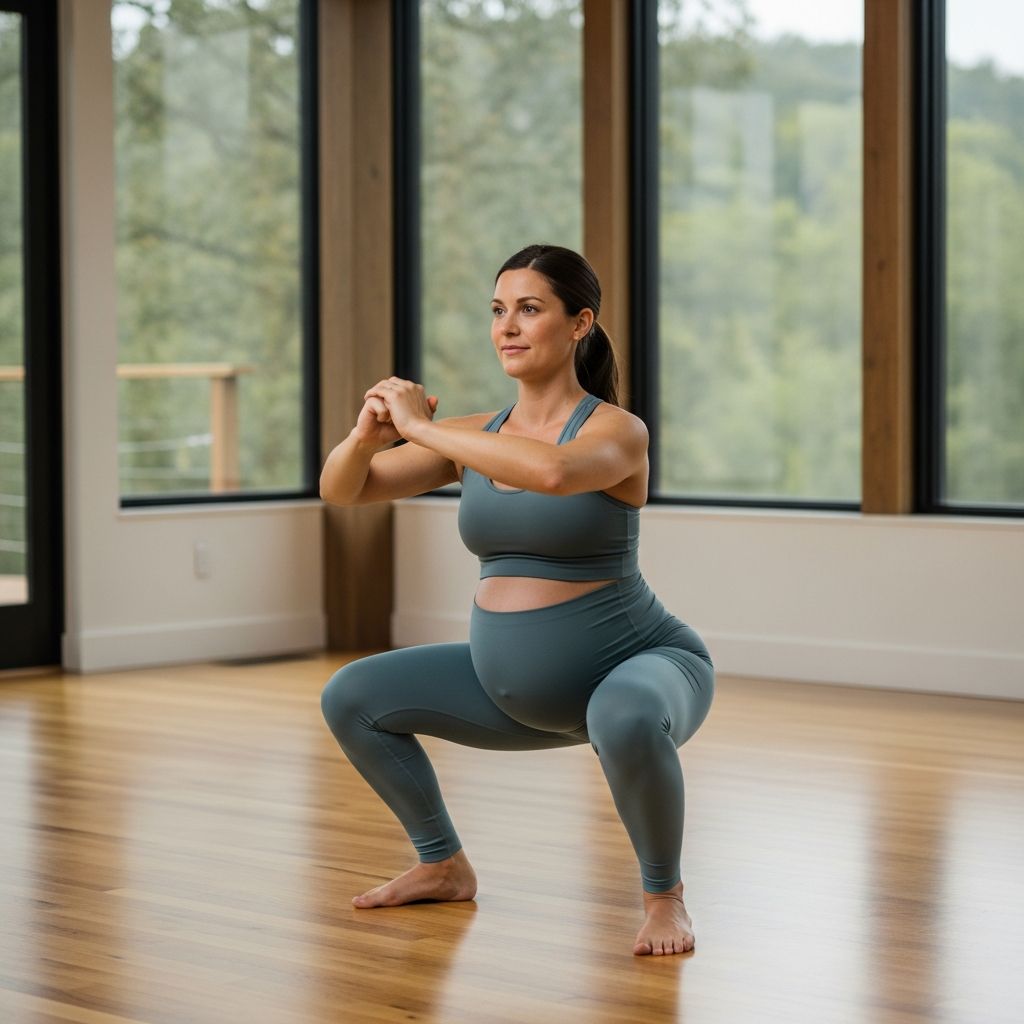
Squatting represents one of the most functional and beneficial exercises for birth preparation. This movement pattern strengthens your quadriceps and glutes while simultaneously improving pelvic flexibility and opening. When performed correctly, deep squats lengthen and relax your pelvic floor muscles while creating physical space within your pelvis—a physiological advantage during labor.
A proper squatting technique begins with your feet positioned slightly wider than hip-width apart, with your toes pointing forward or angled slightly outward. As you lower your body, maintain an upright torso and allow your knees to track over your toes rather than collapsing inward. For many pregnant individuals, placing elbows on the inside of your thighs and pressing palms together creates a supported position that feels more sustainable.
You can perform squats throughout your entire pregnancy unless your healthcare provider advises otherwise. Beginners might hold onto a stable surface like a chair back or kitchen counter for balance. As you develop strength and confidence, you can reduce reliance on support. Some practitioners find that lifting heels slightly or placing a rolled towel under them facilitates comfort and depth. Aim for consistent practice multiple times weekly to build the strength and neuromuscular patterns that serve you during labor.
Hip Flexibility and Opening Movements
Your hip joints contain numerous muscles and connective tissues that require mobility for optimal labor positioning. Restricted hip mobility can limit your ability to access positions that encourage proper fetal alignment and ease discomfort during contractions. Hip circles and rotational movements train your hips through complete ranges of motion while building proprioceptive awareness.
Hip circles performed while standing involve placing your hands on your hips and generating large, controlled circular motions. Execute approximately ten complete circles in one direction, then reverse. For a more dynamic version, perform hip circles while seated on a birth ball—a specialized exercise ball designed for pregnant individuals. The unstable surface of the ball engages your core stabilizers while allowing your hips unrestricted movement.
Lunges represent another valuable hip opener. Forward lunges challenge your balance, strengthen your legs, and stretch the muscles of your hip flexors—tissues that often tighten during pregnancy. Walk into a controlled lunge position, ensuring your front knee remains directly above your ankle and your back heel lifts naturally. Hold this position through several breaths before stepping forward to the next repetition.
Spinal Mobility and Back Health During Pregnancy
As pregnancy progresses, your center of gravity shifts forward, placing increasing stress on your lower back and lumbar spine. Maintaining spinal mobility through gentle flexion, extension, and rotation exercises alleviates discomfort and prevents the postural dysfunction that pregnancy naturally encourages.
Cat-Cow Flowing Movements
The cat-cow sequence represents an accessible yet powerful exercise for maintaining spinal health throughout pregnancy. This movement coordinates spinal motion with coordinated breathing, creating a meditative quality while delivering tangible physical benefits.
Begin on your hands and knees with wrists directly beneath your shoulders and knees under your hips. For the cow phase, inhale deeply as you gently arch your lower back, lifting your gaze slightly and tilting your pelvis forward. This extension creates gentle lengthening through the front of your spine and stretches your abdominal muscles.
On the exhale, reverse the movement by rounding your spine, drawing your chin toward your chest, and tilting your pelvis under. This flexion phase stretches your back extensors and gently mobilizes each segment of your spine. Perform this undulating movement slowly and deliberately, allowing your breath to guide your pace. Ten to twelve complete cycles typically suffice, though you can extend this based on comfort and available time. Practicing cat-cow movements throughout pregnancy maintains spinal flexibility and reduces the lower back pain that frequently accompanies pregnancy.
Pelvic Tilts and Core Engagement
Pelvic tilts train your ability to consciously articulate your pelvis—a skill that translates directly to labor positioning and pushing technique. Lie on your back with knees bent and feet flat on the floor. Slowly tilt your pelvis backward, pressing your lower back gently into the floor while engaging your deep abdominal muscles. Hold this position briefly before releasing back to neutral. Perform ten to fifteen repetitions, focusing on the quality of muscle engagement rather than speed.
For an integrated version practiced in functional positions, perform pelvic tilts while on your hands and knees. This variation engages your deep core muscles while practicing pelvic articulation in a position similar to positions you might use during labor. Exhale as you engage your core and draw your belly button toward your spine, creating a gentle lift and drawing your baby closer to your body. Inhale as you fully release, allowing your belly to relax and the weight of your baby to move slightly away. Complete ten cycles of this mindful engagement and release.
Gentle Restorative Positions for Pelvic Floor Lengthening
While strengthening your pelvic floor serves important purposes, equally vital is the ability to lengthen and relax these muscles. Labor requires both the strength to contract purposefully and the flexibility to release and accommodate fetal descent. Restorative positions train your pelvic floor to lengthen and soften.
Child’s Pose for Pelvic Release
Child’s pose originates from yoga traditions and offers significant benefits for pregnancy comfort and birth preparation. This gentle posture helps lengthen pelvic floor muscles while simultaneously easing tension in your lower back and hips.
To practice child’s pose, begin on your hands and knees. Bring your big toes together and spread your knees wider than your hips. Slowly shift your hips back toward your heels while extending your arms forward along the floor. Your forehead can rest on the mat, a pillow, or your hands if that feels more comfortable. As pregnancy progresses and your belly grows, you may need to spread your knees increasingly wider to create adequate space. Hold this position for five to ten breaths, focusing on deep diaphragmatic breathing. Many pregnant individuals find child’s pose profoundly comforting, and it can serve as both a restorative practice and a positioning option during early labor.
Targeted Perineal Preparation for Tissue Health
The perineum—the tissue between your vagina and rectum—stretches significantly during vaginal delivery. Preparing this tissue through specific techniques can reduce tearing risk and supports faster healing postpartum.
Perineal Massage Protocol
Perineal massage represents an evidence-based technique that lengthens and softens perineal tissues, building elasticity and tissue resilience. Begin this practice around thirty-five weeks of pregnancy, performing the massage once daily for approximately ten minutes.
Prepare by taking a warm bath or applying a warm compress to the perineal area for ten minutes—warmth increases tissue pliability and promotes relaxation. Settle into a comfortable reclined or seated position. Apply a water-soluble lubricant to your thumbs and the perineal area. Insert your thumbs one to one and a half inches inside your vagina, positioned toward the center. Press gently downward toward the rectum and to the sides until you feel a mild burning, stinging, or tingling sensation—this feedback indicates appropriate pressure. Maintain this pressure for two minutes, allowing the tissue to acclimate and become slightly numb. While continuing the downward pressure, slowly and gently massage back and forth in a U-shaped pattern over the sides of your vagina for three minutes. After completing this cycle, release pressure and rest briefly before performing the entire sequence once more.
Perineal Bulging Exercises
Perineal bulging exercises train your ability to bear down and relax your pelvic floor in preparation for the pushing phase. Practice these movements in positions you anticipate using during labor. Sit on a small towel positioned lengthwise from front to back. Gently press your perineal body into the towel, imagining the sit bones—the bones you feel in your glutes—moving apart and your tailbone extending away from your pubic bone.
Cardiovascular Conditioning for Labor Endurance
Labor demands sustained cardiovascular effort over extended periods. Building aerobic fitness during pregnancy conditions your heart and circulatory system for the physical demands of contractions and pushing.
Walking represents the most accessible and universally recommended cardiovascular activity during pregnancy. Regular walking—whether a leisurely stroll or a moderate-paced walk—maintains cardiovascular fitness while being low-impact on your joints. Aim for consistent walking most days of the week, adjusting intensity based on your comfort and medical clearance.
Other approved cardiovascular activities might include stationary cycling, swimming, or prenatal-specific aerobic classes, depending on your fitness level before pregnancy and your healthcare provider’s recommendations. The goal involves maintaining your baseline fitness while listening carefully to your body’s signals regarding fatigue and overexertion.
Breathing Techniques and Mental Preparation
Beyond physical conditioning, controlled breathing patterns provide essential tools for managing pain and maintaining focus during labor. Diaphragmatic breathing—deep, intentional breathing that engages your full diaphragm—activates your parasympathetic nervous system, promoting relaxation and reducing the stress response that amplifies pain perception.
Practice slow, deep breathing during your exercise routine. Inhale through your nose for a count of four, hold briefly, then exhale through your mouth for a count of four or longer. This pattern can be revisited during labor contractions to maintain composure and manage discomfort. Coupling rhythmic breathing with movement creates a meditative quality that many pregnant individuals find grounding and empowering.
Exercise Frequency and Progression Guidelines
Consistency matters more than intensity when preparing your body for labor through exercise. Ideally, practice these movements daily or at minimum most days of the week. A typical session might require twenty to thirty minutes, making regular practice accessible within most schedules.
Progress gradually throughout pregnancy, respecting your changing body and energy levels. What feels comfortable at twenty weeks may require modification at thirty-six weeks. Your healthcare provider or prenatal physical therapist can personalize recommendations based on your individual circumstances and any complications or contraindications specific to your pregnancy.
When to Seek Professional Guidance
While general prenatal exercise benefits most pregnant individuals, certain circumstances warrant professional consultation. A prenatal physical therapist can assess your individual movement patterns, pelvic floor function, and birth-specific goals, providing customized recommendations. Consulting with your obstetrician or midwife before beginning a new exercise program ensures medical clearance and allows discussion of any pregnancy-specific considerations.
Frequently Asked Questions
Q: When should I start doing birth preparation exercises?
A: Most exercises can begin early in pregnancy and continue throughout. However, perineal massage typically begins around thirty-five weeks. Your healthcare provider can recommend optimal timing based on your individual circumstances.
Q: Can I continue these exercises if I had a sedentary lifestyle before pregnancy?
A: Yes, but progress gradually and consult your healthcare provider. Pregnancy is not the time to dramatically increase exercise intensity, but gentle, consistent movement provides significant benefits regardless of your prior fitness level.
Q: How do these exercises help during actual labor?
A: Strengthened muscles provide endurance for contractions, improved flexibility facilitates position changes that ease discomfort and encourage fetal descent, and practiced breathing techniques help manage pain and maintain focus throughout labor.
Q: Are these exercises beneficial after delivery?
A: Yes. Many of these movements support postpartum recovery by maintaining pelvic floor strength, promoting cardiovascular fitness, and gradually rebuilding core stability. Always obtain clearance from your healthcare provider before resuming exercise postpartum.
Q: Should I use a birth ball during these exercises?
A: A birth ball offers excellent support for hip circles and certain stretches, but many exercises can be performed with or without one. A birth ball is optional but many pregnant individuals find it helpful and comfortable.
References
- Exercises to Prepare for Natural Childbirth — Samson Physical Therapy. 2024. https://www.samsonphysicaltherapy.com/blog/exercises-to-prepare-for-natural-childbirth
- 5 Exercises and Techniques to Train for Childbirth — UT Southwestern Medical Center. 2024. https://utswmed.org/medblog/prepare-body-labor-delivery/
- Exercises to Prepare for Natural Childbirth — The Vagina Whisperer. 2023. https://thevagwhisperer.com/2023/09/19/exercises-to-prepare-for-natural-childbirth/
- A Physical Therapist’s Guide to the Best Exercises to Prepare for Birth — Sol Fuel Wellness. 2024. https://www.solfuelwellness.com/2024/05/23/best-exercises-to-prepare-for-labor/
- Daily Activities for Pregnancy – Easier Birth — Spinning Babies. 2024. https://www.spinningbabies.com/pregnancy-birth/daily-activities/
- Pregnancy Exercises — Mayo Clinic. 2024. https://www.mayoclinic.org/healthy-lifestyle/pregnancy-week-by-week/in-depth/pregnancy-exercises/art-20546799
- Exercises to Prepare for Labor & Delivery — Kaiser Permanente. 2024. https://healthy.kaiserpermanente.org/health-wellness/maternity/healthy/fitness/pre-labor-exercises