Preparing your body for labor through targeted exercises can significantly enhance your physical readiness, reduce discomfort, and promote a more efficient delivery process. These movements focus on strengthening key muscle groups, improving flexibility, and fostering relaxation skills essential for childbirth.
Why Physical Preparation Matters for Childbirth
Regular prenatal fitness routines help expectant mothers develop the endurance and mobility needed during labor. By targeting the pelvic floor, core, hips, and lower body, these exercises create optimal conditions for the baby’s descent and passage through the birth canal. Squatting, for instance, widens the pelvis, while pelvic floor training supports tissue integrity and aids postpartum recovery. Studies and health guidelines emphasize that consistent practice lowers the risk of interventions and eases common pregnancy pains like backaches and swelling.
Beyond physical benefits, these workouts build mental resilience. Breathing integrated into poses encourages mindfulness, helping manage contractions effectively. Always consult your healthcare provider before starting, especially if you have high-risk factors.
Core Foundations: Pelvic Floor Strengthening
The pelvic floor muscles act as a supportive hammock for your organs, playing a critical role in labor and recovery. Weakness here can lead to issues like incontinence, but targeted training fortifies them.
- Kegel Contractions: Identify the muscles by stopping urine mid-flow. Sit or lie comfortably, contract for 5 seconds while exhaling, then relax fully for 5 seconds inhaling. Aim for 10-15 reps, three times daily.
- Quick Flicks: Rapidly squeeze and release 10 times to build response speed, ideal for sudden labor pressures.
- Elevator Lifts: Imagine lifting muscles in stages—like an elevator from floor one to five—holding at each level for better control.
Incorporate these into daily life: tighten before coughing or laughing. The NHS recommends three sets of eight daily, progressing to 10-second holds.
Daily Movement: Walking and Low-Impact Cardio
Simple walking stands out as a powerhouse for labor prep due to its accessibility and multifaceted benefits. It boosts circulation, maintains stamina, and encourages the baby into a head-down position.
Start with 20-30 minutes daily on even terrain, swinging arms naturally. Progress to brisk paces or inclines as fitness allows. Stationary marching in place works indoors, lifting knees high to engage hips.
- Benefits include improved oxygen flow to muscles and baby, reduced swelling, and enhanced mood via endorphins.
- Pair with deep belly breaths: Inhale for four steps, exhale for four, mimicking labor patterns.
Avoid overexertion; stop if dizzy or short of breath. Mayo Clinic endorses this for overall pregnancy health.
Ball-Based Mobility: Stability Ball Routines
A large exercise ball (birth ball) offers gentle, effective ways to loosen the pelvis and strengthen stabilizers. These movements mimic labor positions, promoting hip opening and core engagement.
- Bouncing: Sit tall, feet flat, bounce softly for 5-10 minutes to relax joints and descend the baby.
- Pelvic Circles: Rotate hips clockwise then counterclockwise, 10 reps each, to mobilize sacroiliac joints.
- Figure-Eights: Trace infinity shapes with pelvis, targeting obliques for rotational strength.
- Tilts: Rock pelvis forward-back 15 times to ease lower back tension.
Do sessions twice daily. This practice not only preps for birth but alleviates third-trimester aches.
Lower Body Power: Squats and Lunges
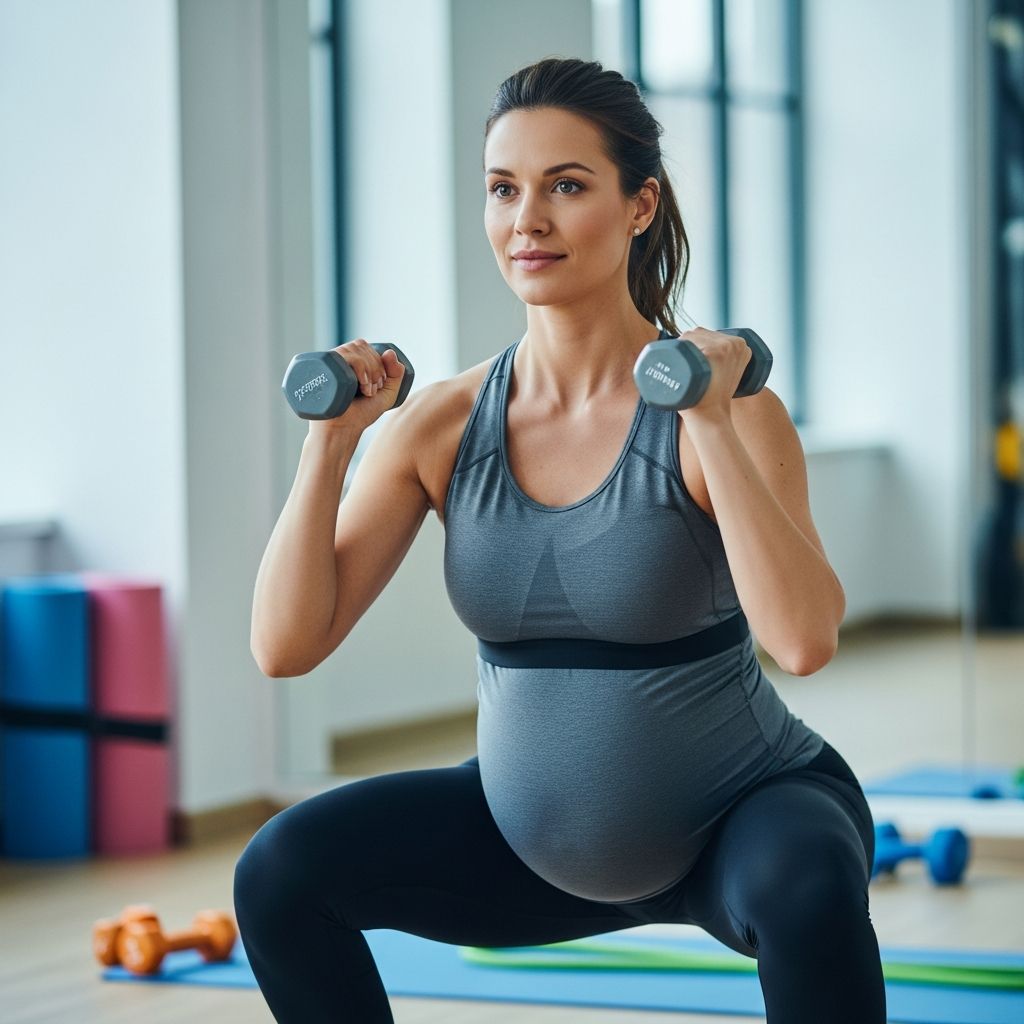
Functional strength in legs and glutes is vital for pushing stages. These exercises widen the pelvic outlet by up to 30% in squat positions.
| Exercise | Steps | Reps/Sets | Benefits |
|---|---|---|---|
| Supported Squat | Feet wider than hips, toes out, lower until thighs parallel to floor, hold wall or partner for support. | 10 reps, 3 sets | Opens pelvis, strengthens quads/glutes. |
| Forward Lunge | Step forward, lower until both knees bend 90 degrees, alternate legs. | 8 per leg, 2 sets | Improves balance, hip flexibility. |
| Wall Squat | Back against wall, slide to 90-degree knee bend, hold 20-30 seconds. | 3 holds | Builds endurance safely. |
Use a chair for depth control if needed. Kaiser Permanente highlights squats for delivery prep.
Flexibility Focus: Prenatal Yoga and Stretches
Yoga combines poses, breathwork, and meditation for holistic prep. It targets tight areas like hips and hamstrings, fostering calm.
- Cat-Cow Flow: On hands and knees, alternate arching and rounding spine, 10 breaths.
- Warrior II: Wide stance, bend front knee, arms extended—hold 30 seconds per side for hip strength.
- Wide-Legged Fold: Stand feet wide, fold forward supported, 2-3 minutes to relax inner thighs.
- Child’s Pose: Knees wide, fold forward, arms extended—breathe deeply for pelvic release.
Practice 20-30 minutes, three times weekly. Avoid deep twists or inversions.
Aquatic Advantages: Swimming and Water Workouts
Water’s buoyancy reduces joint stress, allowing full-range movements. It’s ideal for cardio without impact.
- Freestyle laps for endurance.
- Water squats or kicks for leg strength.
- Jogging in shallow end for core activation.
Aim for 30 minutes, two-three times weekly. Excellent for sciatica relief.
Core Activation: Safe Abdominal Training
Maintain core integrity without strain using gentle activations.
- Deep Core Breath: Hands under shoulders/knees on all fours, exhale drawing belly to spine, inhale release—10 reps.
- Bird-Dog: Extend opposite arm/leg, hold 10 seconds, alternate.
These prevent diastasis recti while supporting posture.
Building Your Personalized Routine
Combine exercises for balance: 10 minutes pelvic floor/walking morning, ball work afternoon, yoga evening. Track progress, adjust for energy levels. Hydrate, warm up, and cool down.
| Week | Focus | Duration |
|---|---|---|
| 1-12 | Build basics: Kegels, walks | 20 min/day |
| 13-28 | Add ball, light squats | 30 min/day |
| 29-Due | Yoga, lunges, water | 40 min/day |
Frequently Asked Questions
When should I start labor prep exercises?
Begin in the second trimester, or earlier with doctor approval. Consistency yields best results.
Are these safe for all pregnancies?
Most are, but high-risk cases need modifications. Consult your provider.
How often should I do Kegels?
Three sets daily, integrating into routines.
Can exercises turn a breech baby?
Ball circles and lunges may encourage positioning.
What if I feel pain?
Stop immediately and seek medical advice.
References
- Exercises to Prepare for Labor: A Practical, Confidence-Boosting Guide — First Steps Chiropractic. 2026-01-08. https://www.firststepschiropractic.com/2026/01/08/exercises-to-prepare-for-labor/
- A PT’s Guide to the Best Exercises to Prepare for Birth — Sol Fuel Wellness. 2024-05-23. https://www.solfuelwellness.com/2024/05/23/best-exercises-to-prepare-for-labor/
- Preparing for Labor with Strength Training and Prenatal Fitness — The Sis Fit. N/A. https://www.thesisfit.com/post/preparing-for-labor-with-strength-training-and-prenatal-fitness
- Pregnancy Exercises — Mayo Clinic. N/A. https://www.mayoclinic.org/healthy-lifestyle/pregnancy-week-by-week/in-depth/pregnancy-exercises/art-20546799
- Exercise in Pregnancy — NHS. N/A. https://www.nhs.uk/pregnancy/keeping-well/exercise/
- Exercises to Prepare for Labor & Delivery — Kaiser Permanente. N/A. https://healthy.kaiserpermanente.org/health-wellness/maternity/healthy/fitness/pre-labor-exercises