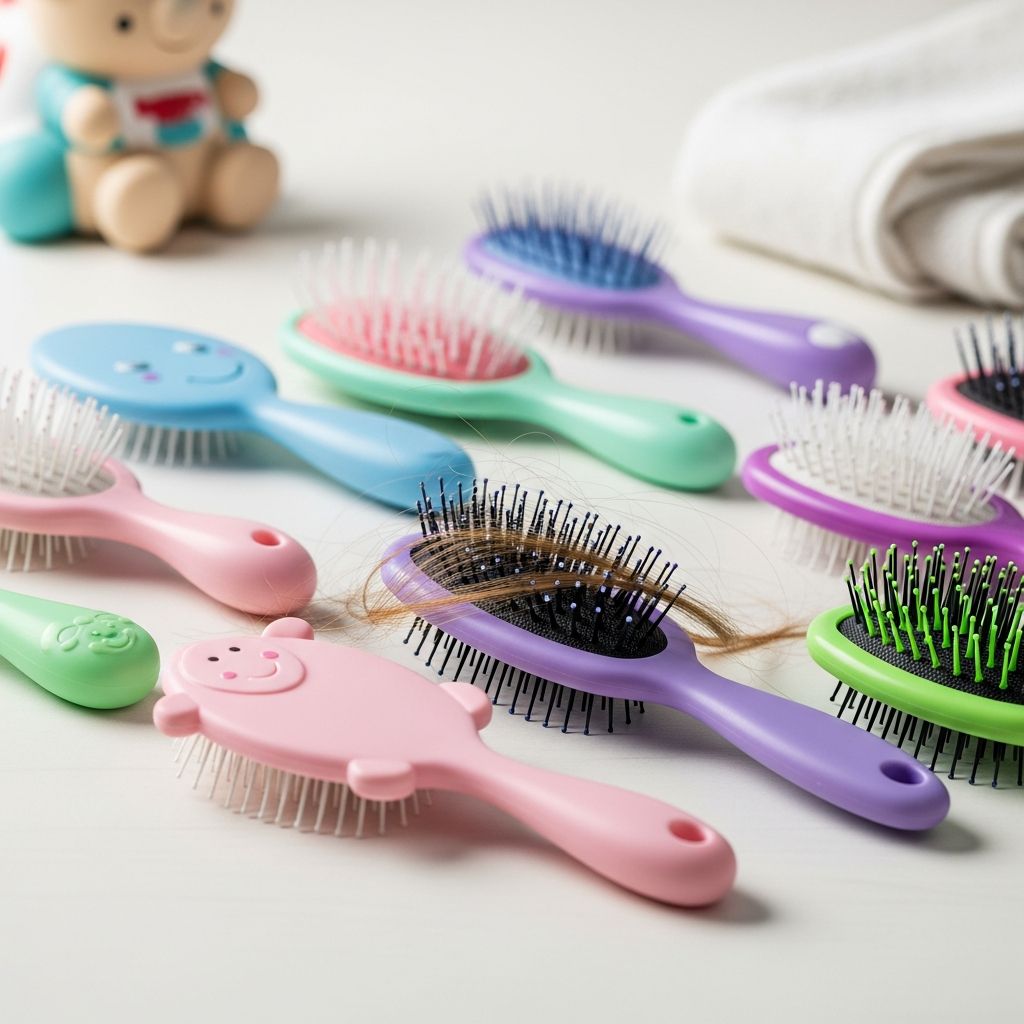
Knotted hair and teary eyes often go hand in hand, especially when you are brushing a child’s hair in a rush before school. The right detangling hairbrush and a gentle routine can turn that daily struggle into a quick, mostly drama-free task.
This guide explains how detangling brushes work, how to choose the best one for your child’s hair type and sensitivity, and how to brush knots out safely without damaging hair or causing pain.
Why Children’s Hair Tangles So Easily
Children’s hair is often finer and more delicate than adult hair, which makes it more prone to tangles and breakage when handled roughly. Play, sleep, friction from clothing, and wind all contribute to knots forming quickly.
- Fine strands: Thin hair fibers wrap around each other easily.
- Active days: Running, rolling, and climbing all create friction and matting.
- Sleeping: Tossing in bed rubs hair against pillows and sheets.
- Curly or wavy textures: Spiral shapes naturally interlock and can form tight knots.
Because the outer protective layer of the hair shaft (the cuticle) is delicate, aggressive brushing can lift or damage it and lead to breakage. That is why a brush designed to glide and flex is helpful for kids.
What Makes a Brush a “Detangling” Brush?
Detangling brushes are engineered to move through knots with less pulling on the hair and scalp than traditional rigid brushes. They typically rely on a combination of flexibility, bristle design, and ergonomics.
Key Design Features
- Flexible bristles: Bristles that bend instead of staying rigid help strands separate gradually instead of being yanked all at once.
- Mixed bristle lengths: Different heights allow the brush to work on surface tangles and deeper knots in a single stroke.
- Cushioned base: A soft, padded backing absorbs some of the force and is gentler on the scalp.
- Curved or vented bodies: A slightly curved shape or vents can help the brush mold to the scalp and move through hair more easily.
- Ergonomic handles: A comfortable grip allows adults (and kids) to control pressure more precisely, which reduces tugging.
How Detangling Brushes Protect Hair
Research on grooming tools shows that combing or brushing wet hair with tools that have smooth, widely spaced teeth reduces breakage compared with using fine or damaged bristles. Flexible bristles and wide spacing help distribute mechanical force so individual strands are less likely to snap or be pulled from the scalp.
Matching Brush Types to Hair Types
Different hair types benefit from different brush structures. Choosing a brush that suits your child’s texture can make a noticeable difference in comfort and speed.
| Hair Type | Recommended Brush | Why It Helps |
|---|---|---|
| Fine, straight | Soft, flexible detangling brush with thin bristles | Glides without tearing delicate strands; minimal tension on scalp. |
| Thick, straight or wavy | Paddle-style detangling brush; mixed bristle lengths | Covers more surface area and reaches deeper layers of hair. |
| Curly or coily | Wide-tooth detangling comb or brush with widely spaced flexible bristles | Separates curls without disrupting the curl pattern or causing frizz. |
| Very long hair | Brush with cushioned base and long bristles | Helps reach from mid-lengths to ends without excessive strokes. |
| Fine but very tangle-prone | Ultra-soft detangling brush plus spray-on conditioner | Combination of slip and flexibility minimizes pain and breakage. |
Choosing a Detangling Brush for Sensitive Scalps
Some children feel every tug; others are less bothered. When a child has a very sensitive scalp, prioritize comfort over speed.
Features to Look For
- Very soft bristles: Bristles should bend easily when you press them with your finger.
- High bristle density: More bristles spread tension across more strands, reducing pressure on any one hair.
- Rounded tips: Ensure the bristle ends are smooth and rounded so they do not scratch the scalp.
- Lightweight design: A lighter brush helps the adult maintain a gentle hand.
- Kid-friendly size: Slightly smaller brushes are easier to maneuver around small heads and behind ears.
Signs a Brush Is Too Harsh
- Redness on the scalp after brushing.
- Broken hairs visible on the brush or around the sink.
- Complaints of burning or stinging rather than brief pulling.
- Child consistently refuses brushing even with a calm routine.
If you see any of these, try a softer detangling brush, more conditioner, or smaller sections of hair.
Wet vs. Dry Detangling: When and Why
Hair is more elastic and vulnerable when it is wet. That means it can stretch more before breaking, but it also means aggressive brushing on wet hair can cause cuticle damage and long-term breakage if you are not careful.
Detangling Wet Hair
- Always add slip: Use a rinse-out conditioner or a leave-in product before brushing so strands can slide past each other more easily.
- Start with fingers: Gently pull apart the biggest knots with your fingers before using a brush.
- Use wide teeth: For curls and coils, begin with a wide-tooth comb or an extra-wide detangling brush to avoid stretching curls too much.
- Support the hair: Hold the section above the knot to avoid pulling directly on the scalp.
Detangling Dry Hair
- Best for: Very fine straight hair or hair that tends to frizz when brushed wet.
- Use a detangler spray: Spritz a lightweight detangling mist or diluted conditioner on dry hair for extra slip.
- Avoid over-brushing: A few careful passes are usually enough; too many strokes can cause static and frizz.
Step-by-Step: Brushing Without Tears
A gentle technique is as important as the brush itself. Pediatric and dermatology guidance consistently emphasizes starting at the ends, using conditioner, and avoiding rough pulling to protect both hair and scalp.
- Prepare the hair.
Apply a conditioner or detangling spray, then lightly towel-blot excess water if the hair is dripping. - Divide into sections.
Split the hair into 2–6 sections depending on thickness and length. Clip or tie the unused sections out of the way. - Start at the ends.
Take one section, hold it a few centimeters above the ends, and begin brushing the last few centimeters only. Once the ends are smooth, move your hand and brush higher. - Work upward gradually.
Continue moving toward the scalp, always holding the hair above where you are brushing to buffer any tension on the roots. - Be patient with stubborn knots.
If you hit a tight tangle, stop and gently use your fingers to loosen it. Adding a drop of conditioner directly to the knot can help it slip apart. - Finish with smoothing strokes.
Once all sections are detangled, give the hair a few gentle strokes from roots to ends to distribute natural oils.
Daily Habits That Help Prevent Tangles
Good habits between brushings can significantly cut down on the number and severity of knots.
- Protective bedtime styles: Loose braids, twists, or a bun reduce friction against the pillow.
- Silk or satin pillowcases: Smooth fabrics cause less rubbing and tangling than cotton.
- Regular trims: Removing split ends makes hair less likely to snag and knot on itself.
- Appropriate shampooing: Gentle cleansing focused on the scalp and not over-scrubbing the lengths helps prevent roughness and matting.
- Condition every wash: A conditioner formulated for children or for sensitive scalps can improve slip and shine.
Involving Kids in Their Own Hair Care
When children feel some control over the process, they are often more cooperative. Turning hair care into a predictable and friendly routine can ease resistance.
Simple Ways to Encourage Cooperation
- Let them choose the brush color or pattern: A favorite color or character can make the brush feel special.
- Offer a mini brush: Give your child a small detangling brush so they can “help” by brushing the ends while you work closer to the roots.
- Use distraction: Audiobooks, songs, or short videos can help them sit still during longer detangling sessions.
- Talk through what you are doing: Explain each step so they know what to expect and can tell you if something hurts.
- Celebrate small wins: Praise them for sitting calmly or helping with a section of hair.
Safety and Hygiene Tips for Hairbrushes
Proper care of brushes not only keeps them working well but also reduces the risk of scalp irritation and infection.
- Clean regularly: Remove hair from the bristles after every use. Wash brushes with mild soap and warm water every 1–2 weeks, or more often if you use a lot of styling products.
- Avoid sharing brushes: Sharing brushes can spread head lice and some fungal infections.
- Inspect bristles: Replace a brush if bristles become bent, sharp, or broken; damaged bristles can scratch the scalp and roughen the hair cuticle.
- Store properly: Keep brushes in a dry place; prolonged moisture can harbor bacteria or mold.
Frequently Asked Questions (FAQs)
How often should I brush my child’s hair?
For most children, brushing once or twice a day is enough. Very curly or coily hair may only need detangling on wash days or a few times per week to avoid frizz and preserve curl definition.
Is it better to detangle my child’s hair wet or dry?
It depends on the hair type. Straight or slightly wavy hair can be detangled either wet or dry with a suitable brush and detangler. Curly and coily hair generally responds better to gentle detangling while damp and coated with conditioner, as this reduces friction and breakage.
Are detangling brushes safe for very young children and toddlers?
Yes, as long as you choose a brush with very soft bristles, rounded tips, and use a gentle technique. Always support the hair near the scalp and avoid aggressive strokes. If a child seems distressed, stop and reassess your tools and routine.
My child hates brushing. Could there be an underlying problem?
Some resistance is common, but if your child reacts strongly every time or complains about scalp pain, talk with a pediatrician or dermatologist. Occasionally, scalp conditions, very sensitive skin, or sensory processing differences can make grooming more uncomfortable.
Do I really need a special detangling brush, or will any brush work?
Many standard brushes can remove tangles, but detangling brushes are designed to reduce pulling and breakage, which is especially important for children’s finer, more fragile hair. If brushing frequently leads to tears or visible hair damage, switching to a dedicated detangling brush is usually worthwhile.
References
- Caring for Your Child’s Hair — American Academy of Pediatrics. 2022-04-01. https://www.healthychildren.org/English/healthy-living/hygiene/Pages/Caring-for-Your-Childs-Hair.aspx
- Hair care tips for kids — American Academy of Dermatology Association. 2023-03-15. https://www.aad.org/public/everyday-care/hair-scalp-care/hair-care/hair-care-children
- Hair Product Use, Age at First Use, and Prevalence of Hair Product-Related Chemical Exposures in a Racially and Ethnically Diverse Sample of Pregnant Women — Barrett ES et al., Environmental Health Perspectives. 2018-04-09. https://doi.org/10.1289/EHP316
- Hair and scalp care for children: advice for parents and caregivers — Nemours KidsHealth. 2021-06-10. https://kidshealth.org/en/parents/hair-care.html