Flaky, yellowish scales on a baby’s scalp can be worrying for new parents, but in most cases this harmless condition—commonly called cradle cap—is easy to manage at home. A well-designed cradle cap brush can be a useful tool to gently lift flakes, support scalp health, and turn bath time into a calming ritual for your little one.
This guide explains how cradle cap brushes work, how to choose the best option for your baby, and how to use one safely and effectively as part of your daily routine.
Understanding Cradle Cap
Cradle cap is the everyday term for infantile seborrheic dermatitis, a common skin condition that appears in the first months of life. It usually shows up as:
- Greasy or waxy yellow or brown scales on the scalp
- Flaky, white dandruff-like patches
- Mild redness around affected areas
- Patches that may extend to the eyebrows, eyelids, or behind the ears
Despite its appearance, cradle cap typically:
- Is not itchy or painful for most babies
- Does not indicate poor hygiene
- Often improves on its own within weeks to months
Because the scales can become thick and adherent, many parents look for gentle ways to loosen them. Regular washing with mild shampoo and the optional use of a cradle cap brush are common, pediatrician-supported strategies.
What Is a Cradle Cap Brush?
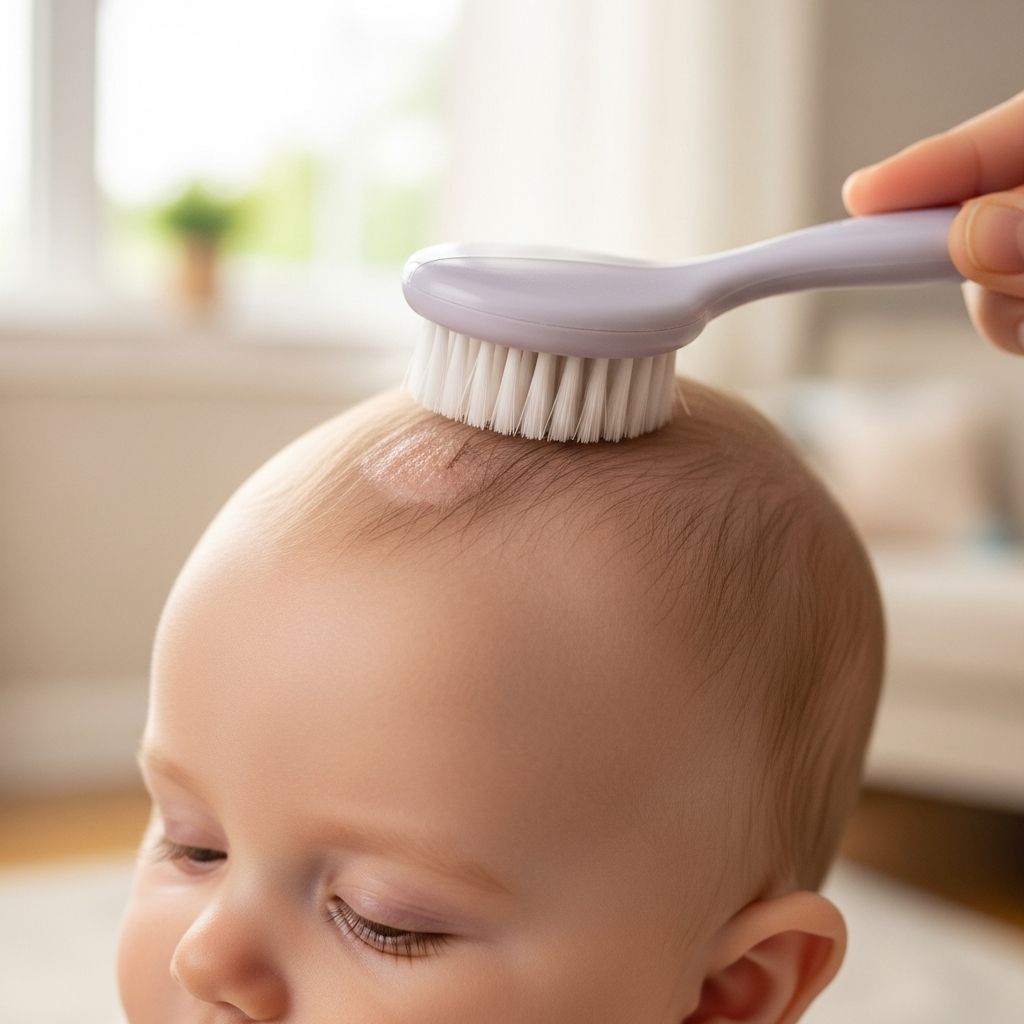
A cradle cap brush is a baby-safe grooming tool designed to help loosen and lift the scales associated with cradle cap without damaging the delicate skin underneath.
Although it may look similar to a standard baby hairbrush, a cradle cap brush usually has:
- Softer bristles or nubs to avoid scratching the skin
- Materials like natural fibers, silicone, or very soft plastic
- Designs that make it easy to use during bath time and simple to clean
These brushes can be used both in and out of the bath. During shampooing, they help distribute cleanser and gently exfoliate flakes. Between baths, they may be used dry or with a light oil to help lift softened scales, if recommended by your health provider.
How a Cradle Cap Brush Helps
Cradle cap brushes are considered an adjunct to other care, not a cure. When used properly, they can:
- Loosen scales and build-up that cling to the scalp
- Help lift flakes after they have been softened with shampoo or oil
- Support gentle exfoliation without picking at the skin
- Provide light massage that some babies find soothing
- Maintain general scalp cleanliness as part of regular grooming
Medical guidance emphasizes that parents should not scratch or pick at cradle cap plaques with their fingernails, as this can break the skin and increase the risk of infection. A soft brush used with light pressure is a safer way to encourage flakes to shed gradually.
Common Types of Cradle Cap Brushes
Cradle cap tools come in a variety of shapes and materials. The best choice depends on your baby’s skin, hair type, and your own preferences.
| Brush Type | Main Material | Typical Benefits | Best For |
|---|---|---|---|
| Soft-bristle brush | Natural fibers (e.g., goat hair) or ultra-soft synthetic | Very gentle on newborn scalp; good for daily grooming and mild flakes | Newborns, babies with very sensitive skin |
| Silicone scrubber | Food-grade silicone nubs | Easy to clean; resists mold; works as a scrubber and brush in the bath | Parents who want a multi-purpose bath tool |
| Combination systems | Sponge + brush + fine comb | Stepwise approach: soften, loosen, then lift flakes | Stubborn or thicker cradle cap under medical guidance |
| Stiffer bristle brush | Denser natural or synthetic bristles | More mechanical exfoliation; should be used very gently | Older infants or thicker hair, as advised by a clinician |
How to Use a Cradle Cap Brush Safely
Before adding new products or tools to your baby’s routine, it is sensible to review basic, medically supported approaches to cradle cap care.
General Home Care Steps
Many pediatric centers suggest starting with simple measures:
- Wash the scalp regularly with a mild baby shampoo—frequency is usually a few times a week, or as advised by your clinician.
- Allow the shampoo to sit for a few minutes to help soften the scales.
- Rinse thoroughly with lukewarm water.
- Use a soft brush to gently loosen flakes while shampoo is on or right after rinsing.
Step-by-Step Brush Technique
Once the scalp is clean and the scales are softened, you can follow a gentle routine:
- Ensure the scalp is damp. Brushing is typically kinder to the skin when done on a moist scalp, during or immediately after bathing.
- Hold the brush lightly. Grasp it as you would hold an egg—firm enough not to drop, but not tight enough to press hard.
- Use small, circular motions. Move across the affected areas with tiny circles or short strokes, applying very light pressure.
- Stop if the skin reddens or baby protests. Any signs of irritation, crying, or skin breakdown mean you should stop and consult a health professional.
- Rinse or wipe away lifted flakes. You can use water, a soft washcloth, or follow your pediatrician’s advice on medicated shampoo or emollients if prescribed.
Some families also use a small amount of baby oil or another emollient before bathing to help soften thick scales; this should be done in line with medical advice, as overuse of oils can occasionally worsen scaling for some babies.
When Medical Treatment Is Needed
Most cases of cradle cap are mild and respond to home care. However, professional evaluation is important if you notice:
- Spreading red, inflamed, or very itchy rash
- Cracked, weeping, or bleeding skin
- Signs of possible infection (pus, warmth, or fever)
- Rash extending to the diaper area or body folds with significant redness
- No improvement after several weeks of gentle care
In these situations, clinicians may recommend medicated shampoos or topical treatments, such as those containing antifungal or anti-inflammatory agents, which are used for limited periods under supervision. A brush can still play a role in removing loosened scales, but medical treatment becomes the primary focus.
Choosing the Right Cradle Cap Brush
When comparing products, it helps to think through your priorities and your baby’s specific needs.
Key Features to Look For
- Softness of bristles: Newborns and young infants benefit from very soft bristles or silicone nubs that bend easily under light pressure.
- Easy cleaning: Brushes that can be rinsed thoroughly and dried quickly are preferable to reduce the risk of mold or bacterial growth.
- Comfortable handle: An ergonomic grip or strap makes it easier to hold the brush securely with wet hands.
- Material safety: Look for food-grade silicone or trusted natural fibers, and avoid rough or sharp components that could scratch the skin.
- Multi-use potential: Some brushes double as body scrubbers, while others are designed mainly for scalp grooming; choose what fits your routine best.
Matching the Brush to Your Baby’s Scalp and Hair
- Very fine or sparse hair: A soft bristle or goat-hair style brush can distribute natural oils and lightly massage the scalp.
- Thicker hair or curls: A slightly more structured silicone scrubber or combination set may help access the scalp more easily.
- Highly sensitive skin: Choose the gentlest option available, use infrequently at first, and monitor closely for any irritation.
Integrating the Brush into a Calming Routine
Beyond its practical role in cradle cap care, a brush can also be part of a soothing bonding routine. Gentle touch and repetitive strokes can be relaxing for many infants and may complement other calming strategies such as baby massage and consistent bedtime rituals.
Consider incorporating your cradle cap brush into:
- Bath time: Use it when lathering shampoo as a predictable, gentle step.
- Pre-bed wind-down: After the bath, a few light strokes with a soft brush can become part of the transition to sleep, alongside dim lights and quiet voices.
- Daily check-ins: As you brush, you naturally observe your baby’s scalp and skin, which can help you notice any changes early and discuss them with your healthcare provider as needed.
Frequently Asked Questions (FAQs)
Do I have to use a cradle cap brush, or will the cradle cap go away on its own?Many mild cases of cradle cap resolve spontaneously without special tools. A cradle cap brush is optional; it simply offers a gentle way to help loosen flakes and keep the scalp clean when combined with regular washing.
Q: How often should I brush my baby’s scalp?
There is no single schedule that fits every baby. For most families, using a soft brush a few times a week during bath time is sufficient. If the skin looks irritated, reduce frequency and consult your pediatrician.
Can I use the same brush if my baby has very sensitive skin or eczema?
Babies with sensitive skin or eczema may be more prone to irritation. Use only the softest brush, apply minimal pressure, and check with your child’s clinician before starting, especially if there are areas of broken or inflamed skin.
Is it safe to use oils with a cradle cap brush?
Some care plans involve applying a small amount of mineral oil, baby oil, or another emollient to soften thick scales before shampooing. If your pediatrician recommends this, you may gently brush after the oil has had time to work, then wash thoroughly to remove residue. In some cases, frequent oil use can worsen build-up, so follow professional guidance.
When should I stop using the cradle cap brush?
You can taper use once the scales have cleared and the scalp looks healthy. Many parents continue to use a soft baby brush for regular grooming and bonding, even after cradle cap has resolved, while avoiding any vigorous scrubbing.
References
- Cradle Cap (Seborrheic Dermatitis in Infants) — Cleveland Clinic. 2022-03-24. https://my.clevelandclinic.org/health/diseases/15786-cradle-cap-seborrheic-dermatitis-in-infants
- Pediatrician’s Guide to Using a Cradle Cap Brush for Babies — Happy Cappy. 2023-01-10. https://happycappyshampoo.com/cradle-cap-brush/
- The 9 Best Baby Hair Brushes — Healthline Parenthood. 2022-05-18. https://www.healthline.com/health/baby/baby-hair-brush
- Cradle Cap Causes & Treatment — Nationwide Children’s Hospital. 2019-09-01. https://www.nationwidechildrens.org/conditions/cradle-cap
- Atopic Dermatitis (Eczema) in Children — American Academy of Dermatology Association. 2023-02-15. https://www.aad.org/public/diseases/eczema/childhood
- Dry Scalp or Cradle Cap: What’s the Difference? — Mustela. 2022-04-06. https://www.mustelausa.com/blogs/mustela-mag/baby-dry-scalp