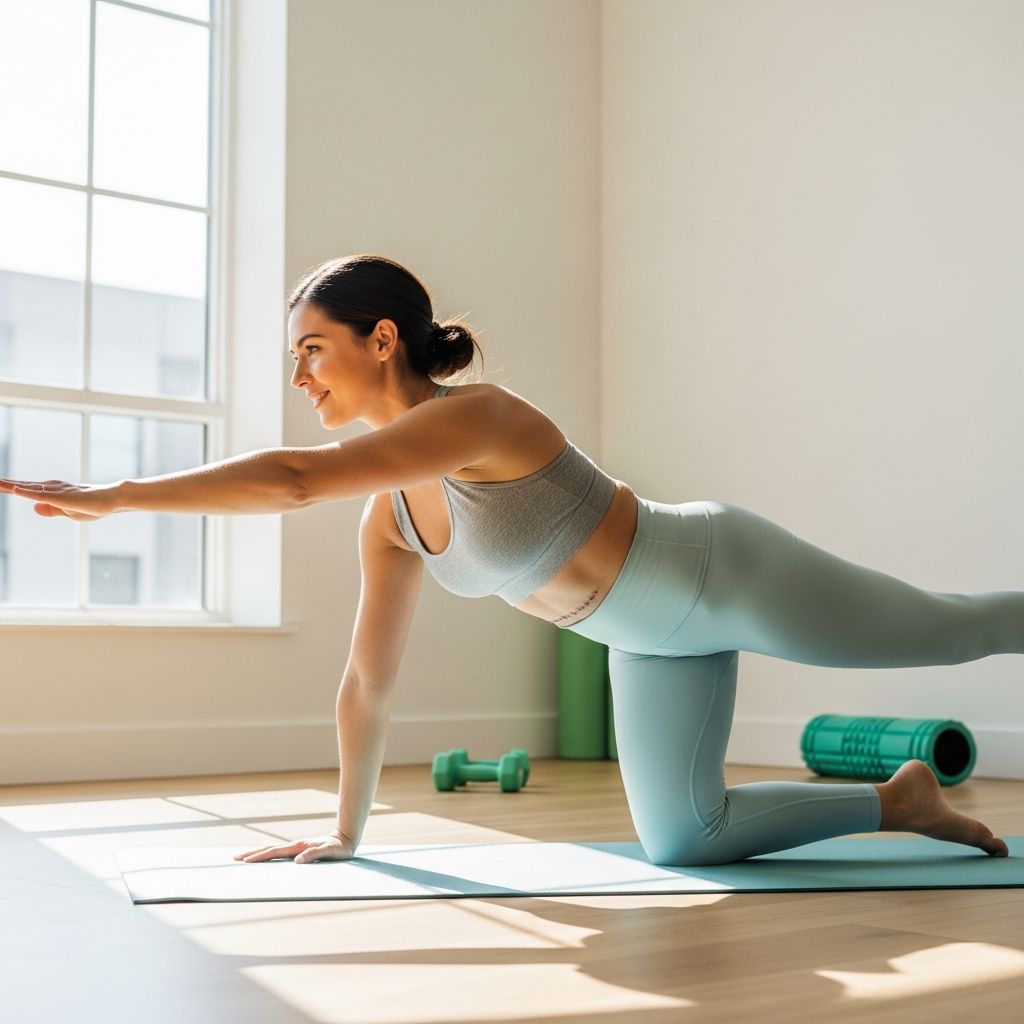
Understanding Your Core System After Cesarean Birth
A cesarean delivery represents major abdominal surgery, and your body requires time and intentional movement to heal properly. Many new mothers underestimate the importance of systematic core restoration during the postpartum period. Your core is not simply your six-pack muscles; it is a complex network of structures working in harmony. This system includes your transverse abdominis (the deepest abdominal layer), your pelvic floor muscles, your lower back musculature, and your respiratory diaphragm. After ten months of pregnancy and the trauma of surgical delivery, these structures need careful retraining to function optimally again.
The fascia, a connective tissue layer, links your abdominal muscles directly to your pelvic floor, allowing them to function as an integrated unit. When you strengthen one area, you support the others. This understanding is foundational because it explains why isolated abdominal crunches are insufficient and potentially harmful during early recovery. Instead, you need exercises that activate multiple core components simultaneously while respecting your surgical incision.
Timeline for Safe Exercise Progression
Medical professionals recommend a staged approach to postpartum exercise rather than jumping into vigorous activity. During the first six to eight weeks after cesarean delivery, your focus should be exclusively on gentle movement that promotes circulation without placing stress on your healing incision. This early phase is critical for establishing neuromuscular awareness and initiating the reconnection between your brain and your core muscles.
Between weeks six and twelve postpartum, you can gradually introduce low-intensity exercises that challenge your core and pelvic floor more substantially. Walking and gentle strengthening activities become appropriate during this window. Higher-impact activities such as running, jumping, weightlifting, and high-intensity interval training should be delayed until at least twelve weeks postpartum and often until six months postpartum, depending on individual healing and professional guidance.
This conservative timeline exists because high-impact activities place enormous demands on your pelvic floor and abdominal structures while they are still in recovery. Returning too quickly to intense exercise increases your risk of complications including pelvic floor dysfunction, diastasis recti worsening, and incision complications.
Essential Early-Stage Exercises for Core Activation
The following exercises form the foundation of postpartum recovery and can generally begin around six to eight weeks after your cesarean delivery, with clearance from your healthcare provider.
Diaphragmatic Breathing
Breathing exercises represent the most fundamental starting point for core reactivation. This technique reestablishes the connection between your respiratory system and your deep abdominal muscles. Unlike shallow chest breathing, diaphragmatic breathing requires your belly to expand outward as you inhale, then contract inward as you exhale.
How to perform: Lie on your back on a comfortable surface with your knees bent and feet flat on the floor. Place one hand on your chest and one on your belly. Breathe in through your nose, allowing your belly to rise while your chest remains relatively still. Exhale slowly through your mouth while gently pulling your navel toward your spine. Hold this contraction for approximately three seconds before relaxing. Repeat this cycle five to ten times, performing the exercise three times daily. This exercise specifically targets your transverse abdominis while promoting relaxation and blood flow to your healing tissues.
Pelvic Floor Contractions and Kegel Exercises
Your pelvic floor muscles require direct attention during recovery. These muscles support your bladder, bowel, and uterus while contributing to core stability. Kegel exercises activate these muscles through purposeful contraction and release.
Proper technique: Imagine the sensation of stopping the flow of urine midstream or preventing gas from escaping. You can practice this seated with feet flat on the floor, lying on your back with knees bent, or lying on your side. Squeeze the pelvic floor muscles by drawing them upward and inward, then hold this contraction. Start with five-second holds and progress to longer durations as your strength improves. Perform eight to twelve contractions with two minutes of rest between repetitions, completing two sets daily. Include both long, sustained squeezes and rapid, short squeezes in your routine, as these train different muscle fiber types.
Transverse Abdominis Activation
The transverse abdominis functions like a natural corset, wrapping around your midsection to support your spine and organs. Activating this muscle properly is crucial for preventing compensatory patterns that create dysfunction elsewhere.
Method: Lie on your back with knees bent. Imagine gently drawing your hip bones toward each other and visualize drawing the area surrounding your surgical scar inward toward your spine. This contraction should be very subtle; you are not bracing hard but rather engaging the deep layer of abdominal muscle. Exhale as you perform this contraction, holding for a few seconds before relaxing on the inhale. Repeat for ten repetitions. This exercise trains neuromuscular control without creating excessive pressure on your healing incision.
Ball Squeeze Exercise
Contracting your inner thigh muscles activates your pelvic floor and transverse abdominis simultaneously through the natural muscle connections in your body.
Steps to follow: Lie flat on your back with knees bent and feet resting on the floor. Position a yoga block, small ball, or soft pillow between your knees. Inhale to prepare your body. As you exhale, gently squeeze the object between your knees while simultaneously drawing your lower abdomen and pelvic floor inward. Inhale and release. Repeat this pattern for ten repetitions. This exercise is highly accessible because it can be performed in a reclined position and requires no special equipment.
Progressive Strengthening Exercises
After mastering foundational exercises, you can introduce movements that challenge your core against gravity, preparing your muscles for functional daily activities.
Bridge Exercise
The bridge movement engages your glutes, lower back, and core while maintaining a supported position that protects your incision.
Execution: Lie on your back with knees bent and feet flat on the floor, positioned about hip-width apart. Press through your heels to lift your hips toward the ceiling, creating a straight line from your knees through your hips to your shoulders. Squeeze your glute muscles at the top of the movement. Hold for a few seconds before lowering back down. Begin with ten repetitions and progress to two or three sets as your strength improves.
Kneeling Hip Thrusts
This exercise progresses from the bridge by requiring you to stabilize your core while working against gravity in a different position. It mimics functional movements you perform during daily parenting activities.
Proper form: Start in a kneeling position with your bottom sitting on your heels and your upper body upright. Inhale to prepare. As you exhale, lift your bottom away from your heels by engaging your glutes, simultaneously drawing your abdominal muscles toward your spine and tightening your pelvic floor. Inhale as you lower back down. Repeat for ten repetitions, progressing to multiple sets. This exercise teaches your body to activate multiple core components together while functioning in an upright position.
Wall Sit
This isometric exercise activates all core muscles and lower body muscles simultaneously in a weight-bearing position.
Instructions: Stand with your feet one to two feet away from a wall. Slowly lean back toward the wall, lowering yourself into a sitting position where your hips and knees are at ninety-degree angles. Engage your core by imagining pulling your belly button toward the wall. For additional benefit, contract your pelvic floor by performing a Kegel while maintaining this position. Hold for as long as possible, starting with shorter durations and building endurance. Rest for one minute, then repeat five times.
Leg Slides
This gentle core exercise helps activate your transverse abdominis while your body remains in a supported position.
How to perform: Lie on your back with knees bent and feet flat on the floor. Take a deep breath, then as you exhale, contract your abdominal muscles by pulling your belly button toward your spine without changing the curve of your lower back. While maintaining this contraction, slowly extend one foot away from your body until the leg is fully extended. Slowly bring it back to the starting position. Complete ten repetitions on each side, performing once daily.
Progressive Routine Structure
Begin by performing one set of ten repetitions of each foundational exercise daily. As your strength and confidence increase, progress to two or three sets of ten repetitions. Gradually increase the hold time of isometric exercises to five seconds. This progression should occur over several weeks as your body adapts to the demands.
Once you reach eight weeks postpartum with proper clearance, you can incorporate additional activities including yoga, Pilates, swimming, cycling, and elliptical training. These low-impact activities provide cardiovascular benefits while continuing to build core strength.
Important Precautions and Warning Signs
Discontinue any exercise immediately if you experience pain, sharp sensations, heaviness in the pelvic region, or increased incision discomfort. These symptoms indicate you are exceeding your current capacity. Consulting with a pelvic floor physical therapist is highly valuable during your recovery journey, as these specialists can assess your individual healing progress and modify exercises accordingly.
Never return to high-impact activities based solely on how much time has passed. Your incision healing and muscular strength recovery operate on individual timelines. Pushing too quickly significantly increases your risk of complications that could set back your recovery by months.
Frequently Asked Questions
Q: When can I begin exercising after a cesarean delivery?
A: Light activities like walking can begin almost immediately with medical clearance, typically around two weeks postpartum. However, targeted strengthening exercises should wait until six to eight weeks postpartum. Always consult your obstetrician before beginning any exercise program.
Q: Will exercising affect my incision healing?
A: Gentle movement actually promotes blood flow and healing. However, exercises that create excessive tension on your incision should be avoided during early recovery. Proper form and progression ensure that exercise supports rather than compromises healing.
Q: How long until I can return to running and high-impact exercise?
A: Most healthcare providers recommend waiting at least twelve weeks postpartum before attempting running, with many suggesting six months as a safer timeline. This allows adequate time for core and pelvic floor strengthening before introducing high-impact demands.
Q: Can I do these exercises if I had complications during my cesarean delivery?
A: Complications may require modified timelines and exercise selection. Work with your healthcare team and consider pelvic floor physical therapy to ensure your program is appropriate for your specific situation.
Q: What is diastasis recti and how do these exercises help?
A: Diastasis recti is separation of the abdominal muscles that commonly occurs during pregnancy. Core-strengthening exercises, particularly those targeting the transverse abdominis, help reconnect these muscles and restore functional strength.
Q: Do I need equipment to perform these exercises?
A: No. These exercises require no specialized equipment. A yoga block or soft pillow can be used, but household items work equally well.
Long-Term Recovery and Maintenance
Recovery from cesarean delivery extends beyond the initial postpartum weeks. Consistent core strengthening over months helps prevent long-term issues including chronic back pain, pelvic floor dysfunction, and reduced quality of life during physical activities. Once you have regained substantial strength, continue performing pelvic floor exercises at least once daily to maintain function. Integrate regular physical activity into your lifestyle, choosing activities you enjoy to ensure consistency.
Your body accomplished something remarkable by growing and delivering a child. Investing time in systematic recovery ensures you can enjoy your child and engage in activities you love without physical limitations. Patience with your body during this process leads to optimal outcomes.
References
- 5 Core-Building Exercises to Do After C-Section — The Bump. Accessed January 2026. https://www.thebump.com/a/ab-exercises-after-c-section
- 5 Exercises to Help with Your C-Section Recovery — Healthline. Accessed January 2026. https://www.healthline.com/health/pregnancy/c-section-recovery-exercises
- Exercise After a C-Section — Brisbane Spine Clinic. Accessed January 2026. https://www.brisbanespineclinic.com.au/blog/exercise-after-a-c-section/