For many families, a baby carrier is essential during the newborn months, but the need for hands-free carrying does not disappear just because a baby grows into a curious, chunky toddler. A compact, ultra-light carrier designed for older babies, like the Ergobaby Away–style carrier, fills the gap between bulky everyday carriers and going without one altogether. This guide explores how a slim, foldable carrier can save your back, your schedule, and your sanity when you are on the move.
The Role of a “Backup” Baby Carrier
Traditional soft-structured carriers are wonderful for long walks and newborn snuggles, but their size and weight can make them inconvenient once your child prefers walking or riding in a stroller most of the time. A backup carrier solves a different problem: it is not the star of the show every day, but it is ready in seconds whenever a tired toddler refuses to walk or a stroller becomes impractical.
Instead of planning your day around gear, a just-in-case carrier lets you travel light while giving you a safety net for surprise meltdowns, missed naps, crowded spaces, or stairs. Because it folds down small and weighs about as much as a filled water bottle, it does not feel like an extra thing to haul around.
Key Features of a Travel-Ready Carrier
A travel-focused carrier for older babies is built around compactness and ease of use rather than newborn-specific features. While each brand has its own design, many share a similar core feature set that makes them ideal as a stash-and-go option.
When comparing models, look for practical details that support quick, stress-free use at the park, in the airport, or on public transit. The right combination of support and packability is what turns a carrier from “nice idea” to actually-used tool.
- Lightweight construction: Many compact carriers weigh just over 1 pound, keeping your diaper bag from feeling like a gym bag.
- Small packed size: Folded dimensions are often around the size of a large paperback book, so the carrier fits into most backpacks and stroller baskets.
- Integrated storage: Some designs fold into their own attached zippered pouch, while others tuck into a built-in pocket or included bag.
- Simple strap system: Lightly padded shoulder straps and a stable waistband distribute weight without layers of bulky foam.
- Age and weight range: Many travel carriers are meant for babies roughly 4 months to 3 years, often with a minimum weight around 12 pounds and a maximum around 35 pounds.
| Feature | Everyday Structured Carrier | Compact “Away” Style Carrier |
|---|---|---|
| Primary Purpose | Long-duration daily use, from newborn through toddler | Backup or travel use for older babies and toddlers |
| Typical Weight | Heavier, with extensive padding and multiple panels | Just over 1 lb, with lighter materials and simpler design |
| Pack Size | Bulky; usually worn or stored in a larger bag | Folds into a compact pouch; fits in small backpack or stroller basket |
| Carry Positions | Multiple (often including outward-facing and hip) | Typically 2 positions: front inward-facing and back carry |
| Best For | Daily walks, long outings, frequent babywearing | Quick errands, travel days, backup when the stroller is not enough |
When a Compact Carrier Shines in Real Life
Parents rarely regret having a backup carrier on hand, but they often remember the outings when they wished they had one. Thinking through typical scenarios can help you decide whether a compact model deserves a permanent spot in your car or diaper bag.
Because these carriers are designed for older babies who can already hold their heads up, they work well in situations where you expect your child to walk or ride in the stroller but want insurance if plans change.
Everyday Errands
- Quick grocery runs: When your child refuses the cart seat or the store is crowded, popping them into a carrier can keep them close and calm.
- Parking challenges: If parking is far away or involves stairs, carrying your child on your body is safer and more efficient than juggling a stroller.
- Doctor and dentist visits: Waiting rooms and small exam rooms often leave little space for wheels; a soft carrier can be less disruptive.
Travel and Adventures
- Airports and train stations: Security lines, escalators, and boarding tunnels are all easier when your hands are free.
- Public transit: Buses and subways can be crowded, and a compact carrier makes standing with a child safer and more comfortable.
- Short hikes and city walks: Even a strong-willed toddler may tire quickly; having a backup carrier keeps the outing fun instead of frustrating.
Front Carry vs. Back Carry: What Parents Need to Know
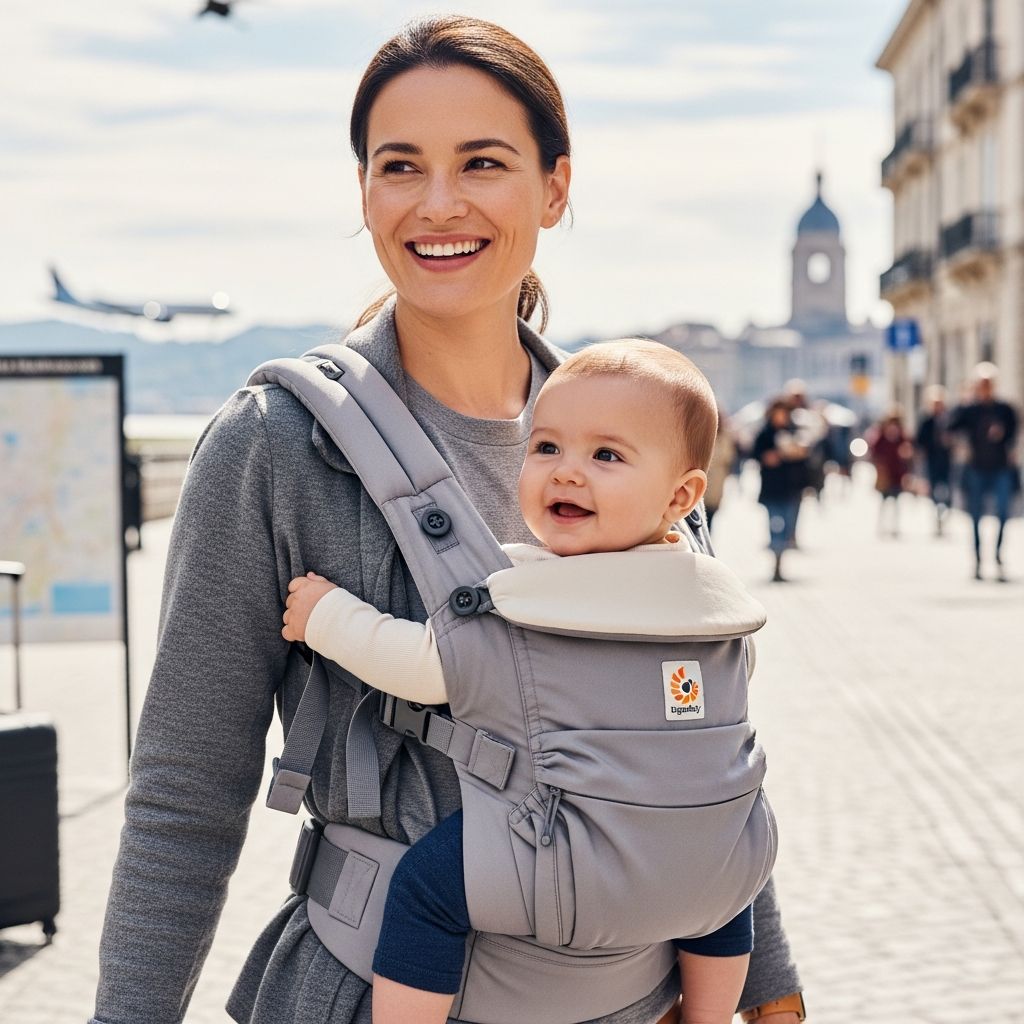
Most compact carriers aimed at older babies offer two primary positions: front inward-facing and back carry. Outward-facing positions are usually reserved for more robust everyday carriers, since travel-focused designs prioritize simplicity and ergonomic support.
The best position depends on your child’s age, developmental milestones, and your own comfort. Safety guidelines often recommend that babies can sit unassisted before being worn on the back, which for many children happens around 6 months and beyond.
Front Inward-Facing Carry
The front inward position is usually the earliest option, with common weight limits starting around 12 pounds and extending up to about 35 pounds. It keeps your child close to your chest, which is reassuring for younger babies and helpful when navigating crowds.
- Ideal for babies who are 4 months and older with strong head and neck control.
- Helpful when your child is overstimulated, sleepy, or seeking comfort.
- Allows easier visual checks on your baby’s airway and positioning.
Back Carry
The back carry position typically requires that your baby can sit upright without support and meet a slightly higher minimum weight, often around 17–18 pounds. Parents appreciate this option for longer walks or when they need maximum freedom of movement.
- Better for toddlers and older babies who enjoy looking around and have strong trunk control.
- Places weight on the hips and core instead of only the shoulders, improving comfort.
- Works well for tasks around the house or at the park when you need both hands.
Comfort and Safety Considerations
Even lightweight carriers must support healthy positioning for both the parent and child. Paying attention to fit and posture will keep babywearing pleasant rather than painful, especially as your child approaches the upper end of the weight range.
Compact carriers designed with ergonomic shape aim to support the baby’s thighs from knee to knee and promote a gentle “M” position, while distributing weight across the adult’s hips and shoulders instead of straining the lower back.
Ergonomic Fit for Baby
- Baby’s knees should sit higher than their bottom, with hips spread in a natural, supported squat.
- The carrier panel should reach from one knee to the other without forcing the legs straight.
- Ensure the baby’s face is visible and their chin is not pressed into their chest to protect their airway.
Ergonomic Fit for Parent
- Fasten the waistband snugly at or just above your hip bones to transfer weight to your core.
- Adjust shoulder straps so the baby sits high on your chest—close enough to kiss the top of their head.
- Use any included chest clip or strap to prevent the shoulder straps from sliding outward.
How to Pack and Store a Foldable Carrier
The real magic of a compact carrier lies in how little space it takes up when you are not using it. Clever design details make it easy to fold, stash, and retrieve in seconds, even while wrangling a squirmy toddler.
Some models use an attached pouch that turns the entire carrier inside out, while others have a dedicated pocket or rely on a separate small bag. Whichever style you choose, the goal is for the carrier to live in your car or diaper bag so it is always within reach.
Simple Packing Routine
- Lay the carrier flat and smooth out the straps.
- Fold the shoulder straps inward so they lie over the main panel.
- Roll or fold the waistband toward the center, creating a compact bundle.
- Stuff the bundle into the integrated pouch or slip it into a zippered compartment.
- Secure zippers or snaps, and use any attached loop to hang the carrier on a stroller handle or hook.
What to Consider Before You Buy
Because a compact carrier is usually a “second” carrier, it pays to think clearly about your lifestyle and your child’s stage of development. The right choice should complement the gear you already own rather than duplicate it.
Parents who travel frequently, rely on public transit, or juggle multiple children tend to get the most use out of a foldable, just-in-case carrier. That said, even car-based suburban families appreciate having one tucked in the trunk for spontaneous errands.
- Baby’s age and size: Check the recommended weight range and make sure your child meets the minimum guidelines.
- Frequency of use: If you wear your baby daily, you might pair a compact carrier with a more supportive everyday model.
- Climate and fabric: Breathable, quick-drying materials are ideal for hot climates and travel.
- Budget and value: Because this is a backup carrier, look for quality construction and comfort at a price that makes sense for occasional use.
FAQ: Compact Travel Carriers for Older Babies
Can I use a travel-style carrier from birth?
Most compact carriers designed in the style of the Ergobaby Away are meant for older babies, not newborns. They typically have a minimum weight guideline around 12 pounds and specify that babies should have reliable head and neck control before use.
Is outward-facing carrying possible in these designs?
Travel-focused carriers often limit positions to front inward-facing and back carry to keep the structure lightweight and ergonomic. If outward-facing is a priority, an everyday structured carrier with more robust support is usually a better match.
How long can I use a compact carrier in one stretch?
Duration depends on your comfort, your baby’s tolerance, and the specific carrier’s design. Although these carriers are safe for extended use when used correctly, many families reserve them for short to moderate outings and rely on more padded models for all-day wear.
Can I breastfeed in a compact carrier?
Some parents successfully nurse in a front inward-facing position by loosening the straps slightly and lowering the baby to breast height. This takes practice, and it is wise to try first at home or in a quiet, safe environment before attempting it in public.
Do I still need a stroller if I own a backup carrier?
A compact carrier is not usually meant to replace a stroller, especially for long outings or in hot weather. Instead, think of it as a flexible companion to wheels—something you can reach for when a stroller is awkward, your toddler is done walking, or your arms need a break.
Making the Most of a Lightweight Baby Carrier
A foldable, travel-ready carrier is only helpful if you remember to bring it. Establish a simple habit: keep it packed in your everyday bag or car, and treat it like a non-negotiable item along with diapers and wipes. Over time, you will likely find yourself using it in situations you did not anticipate, from surprise rainstorms to navigating festivals or museum visits.
By viewing a compact carrier as a small piece of insurance rather than a bulky commitment, you give yourself the freedom to say yes to more outings with your child. Less time wrestling gear means more time exploring, connecting, and enjoying the adventure of parenting—hands free, but heart full.