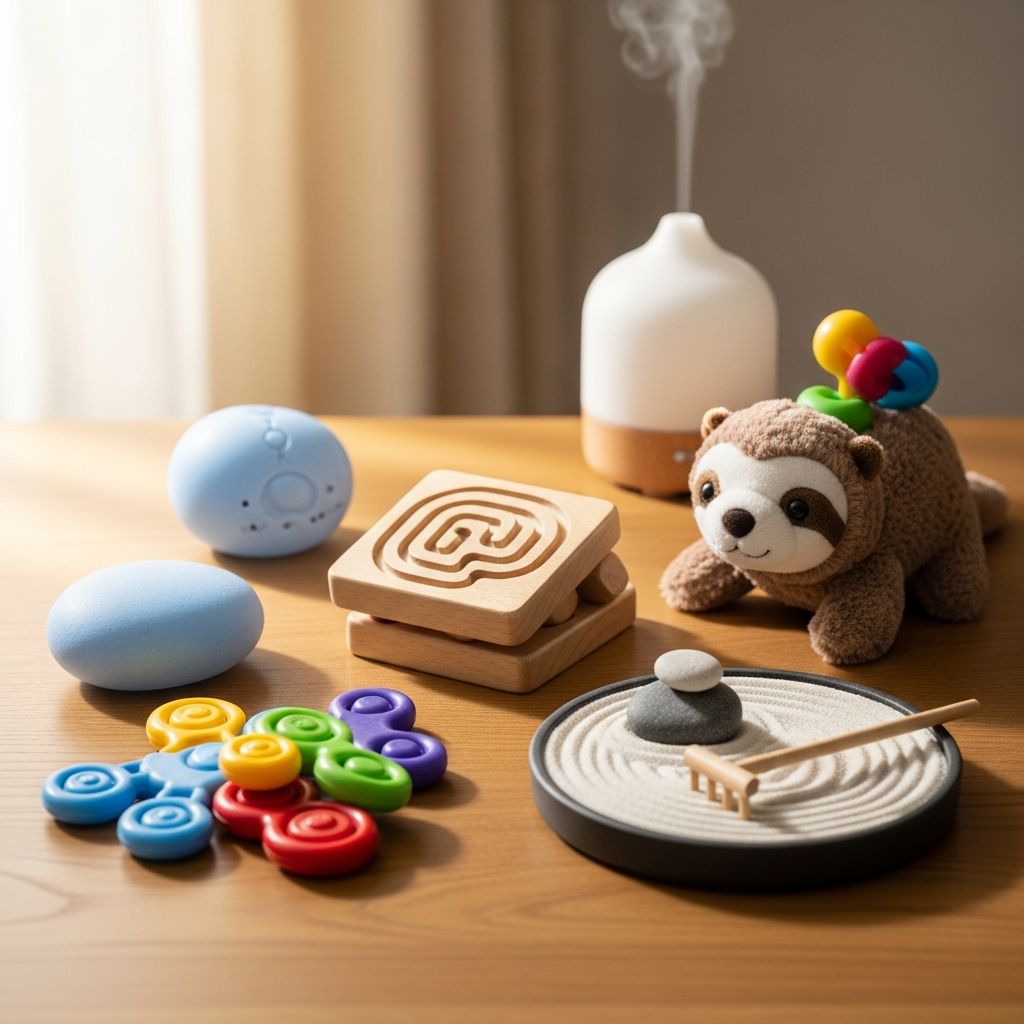
Children often face moments of heightened worry or overwhelm, whether from school pressures, social interactions, or sensory sensitivities. Calming playthings, such as fidget tools and sensory items, offer a playful yet powerful way to help kids regulate emotions and regain focus. These toys provide tactile, visual, or proprioceptive input that soothes the nervous system, promoting relaxation without screens or medication.
Research shows that engaging with these items can lower heart rates, reduce muscle tension, and enhance concentration, making them valuable for daily use at home, school, or therapy sessions. This guide explores the science, types, and practical applications of these toys, empowering parents to select options that fit their child’s unique needs.
Understanding Anxiety in Children and the Role of Play-Based Relief
Anxiety manifests in kids through fidgeting, restlessness, or difficulty concentrating, often exacerbated in those with ADHD, autism, or sensory processing challenges. Unlike passive distractions, calming playthings actively engage the senses to foster self-regulation. For instance, repetitive motions from fidgeting activate neural pathways linked to impulse control and motivation.
Sensory toys help children achieve a balanced state, countering overload by delivering controlled input. This is particularly effective for neurodiverse kids, where such tools improve emotional stability and social interactions. Parents report noticeable improvements in focus during homework or playdates when these items are accessible.
Key Benefits of Anxiety-Relief Toys for Young Minds
These playthings offer multifaceted advantages, supported by studies and clinical observations. Here’s a breakdown:
- Stress and Anxiety Reduction: Gentle pressure or tactile stimulation calms the autonomic nervous system, mimicking deep touch therapy to ease worries.
- Enhanced Focus and Attention: For children with attention difficulties, subtle movements channel energy productively, boosting task performance without disruption.
- Motor Skill Development: Grasping, squeezing, and manipulating builds fine and gross motor abilities, aiding overall physical growth.
- Emotional Regulation: Toys encourage mindfulness, teaching kids to recognize and manage feelings through play.
- Social and Language Growth: Shared play promotes turn-taking, descriptions of sensations, and peer interactions.
A 2006 study highlighted how stress balls improved students’ attention, writing, and attitudes, demonstrating tangible academic gains. Similarly, weighted items provide security, reducing sensory overload.
Top Categories of Calming Toys and Their Mechanisms
Diverse options cater to different preferences. Below, we categorize popular types with selection tips.
Fidget and Tactile Tools
Designed for hands-on relief, these occupy restless fingers discreetly. Examples include spinners, cubes, and stretchy strings, which release pent-up energy while maintaining engagement on tasks.
- Stretchy strings: Durable, non-toxic for twisting and pulling.
- Fidget cubes: Multiple buttons and switches for varied stimulation.
- Stress balls: Squeezable for quick tension release.
Weighted and Pressure-Based Items
These deliver deep pressure, akin to a hug, promoting calm via proprioceptive feedback. Ideal for bedtime or meltdowns.
- Weighted plush animals: Microwaveable with lavender for soothing warmth.
- Weighted blankets (child-sized): For cozy security during rest.
Sensory Exploration Toys
Visual and auditory elements captivate without overwhelming. Sensory bottles with glitter or beads create mesmerizing flows, doubling as timers.
- Bubble tubes: Colorful, bubbling displays for focus.
- Textured mats or playdough: For sensory integration.
Mindfulness and Breathwork Aids
Integrating emotional skills, these guide breathing and poses.
- Yoga dice: Random pose prompts for active relaxation.
- Breathing buddies: Plush guides for diaphragmatic breaths.
- Mindfulness card decks: Portable exercises for calm corners.
Comparative Overview of Popular Anxiety-Relief Toys
| Toy Type | Primary Benefit | Best For | Age Range | Portability |
|---|---|---|---|---|
| Fidget Spinner | Quick focus boost | School, travel | 5+ | High |
| Weighted Plush | Deep calm | Bedtime, therapy | 3+ | Medium |
| Sensory Bottle | Visual soothing | Quiet time | 2+ | High |
| Yoga Dice Set | Mindful movement | Active kids | 4+ | High |
| Stress Putty | Tactile release | Sensory seekers | 3+ | High |
This table highlights versatility; choose based on your child’s sensory profile and scenarios.
Integrating Toys into Daily Routines for Maximum Impact
Effectiveness grows with consistency. Create a ‘calm kit’ for desks or bags, introducing toys during transitions like car rides. Pair with routines: use breathing buddies pre-bedtime or fidget tools during reading.
For school, collaborate with teachers on discreet use. Home setups like sensory corners with mats and bottles encourage independent regulation. Track progress: note reduced meltdowns or better attention to refine choices.
Safety matters—opt for non-toxic, durable items without small parts. Consult occupational therapists for personalized recommendations, especially for special needs.
Real-World Applications: Success Stories and Tips
Parents share how a simple putty transformed homework battles into focused sessions. For autistic children, weighted toys minimized overload during outings. Start small: observe preferences, rotate toys to prevent boredom, and model use to normalize them.
DIY options like filled bottles extend accessibility, blending creativity with therapy.
Frequently Asked Questions
Are these toys suitable for all children?
Most are, but tailor to age and needs; supervise young ones and seek professional advice for sensory disorders.
Can fidget toys really improve school performance?
Yes, studies show gains in attention and writing when used appropriately.
How do weighted toys work for anxiety?
They provide calming pressure, regulating senses and promoting security.
What’s the best age to start?
From toddlerhood with soft items, advancing to complex fidgets by school age.
Do they replace professional therapy?
No, they complement it, enhancing self-regulation alongside interventions.
Choosing the Right Toy: A Parent’s Guide
Assess your child’s triggers: hyperactivity suits fidgets; overload favors weighted or visual aids. Prioritize quality materials, easy cleaning, and multi-use designs. Budget options abound, from affordable putties to splurge-worthy kits. Trial periods help identify favorites.
Long-term, these toys build resilience, teaching coping independent of adult intervention. As kids grow, transition to advanced mindfulness tools.
In summary, calming playthings bridge fun and function, turning anxiety into manageable moments. By harnessing sensory science, parents equip children with lifelong regulation skills.
References
- Benefits of Sensory Toys — Building Blocks Therapy. 2023. https://www.buildingblockstherapy.org/blog/benefits-of-sensory-toys?9bf6ab19_page=3
- Fidget Facts: Using Fidget Tools to Stay Focused — Orchid Pediatrics. 2023. https://orchidpediatrics.com/fidget-facts-using-fidget-tools-to-stay-focused/
- The Benefits of Weighted Toys for Stress Relief — Sensory Assist. 2023. https://sensoryassist.com.au/blogs/sensory-blogs/the-benefits-of-weighted-toys-for-stress-relief
- 5 Benefits of Stress Relief Toys Where To Get Them — Balancing Elephants. 2023. https://balancingelephants.com/stress-relief-toys-for-kids-with-anxiety/
- The Science Behind Fidget Toys — SensoryEdge. 2023. https://blog.sensoryedge.com/the-science-behind-fidget-toys/