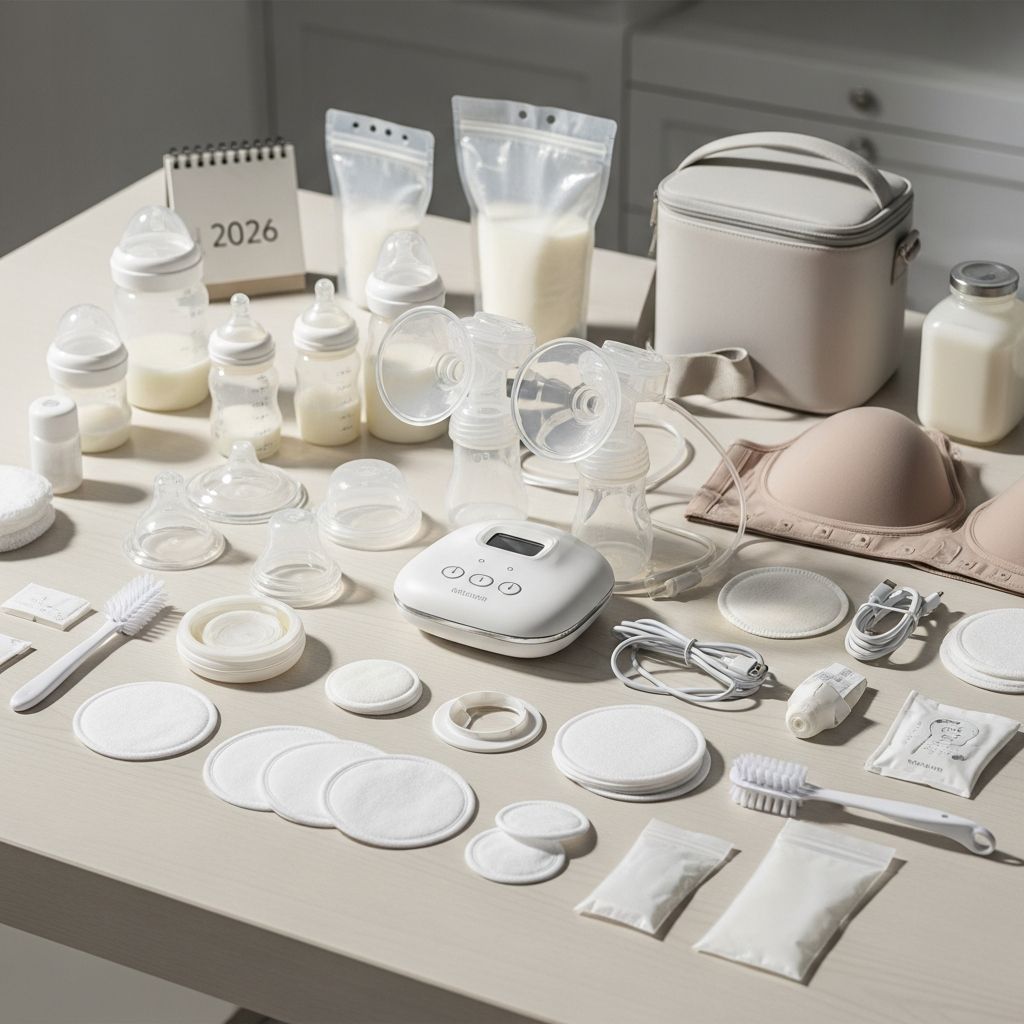
Breast pumping empowers parents to provide breast milk flexibly, whether at work, traveling, or multitasking at home. This comprehensive guide highlights essential equipment, from high-performance pumps to clever accessories, helping you build an efficient setup. Updated for 2026, it draws on lab-tested reviews and expert recommendations to ensure reliable milk supply maintenance.
Choosing the Right Breast Pump
The foundation of any pumping routine is a reliable breast pump. Electric double pumps dominate for their efficiency in mimicking a baby’s suckling pattern, extracting more milk in less time compared to manual options. Key factors include suction strength, cycle speeds, portability, and noise levels.
Hospital-grade models like the Spectra S1 Plus stand out for their rechargeable batteries, customizable settings, and quiet operation, ideal for frequent use. Lab tests confirm it ranks among the top for output and comfort. Similarly, Medela Pump In Style offers proven reliability with features like massage modes to initiate letdown. For mobility, wearable pumps like Elvie or Baby Buddha allow discreet pumping without cords.
| Pump Model | Type | Key Features | Best For |
|---|---|---|---|
| Spectra S1 Plus | Double Electric | Rechargeable, hospital-grade suction, quiet | Daily pumping, travel |
| Medela Pump In Style | Double Electric | Massage function, tote bag included | Office use |
| Elvie Pump | Wearable | App-connected, fully portable | Hands-free mobility |
| Baby Buddha | Portable Electric | Compact, strong suction | Working parents |
Select based on your schedule: double electrics for volume, wearables for convenience. Always verify flange fit—too large or small reduces efficiency.
Hands-Free Pumping Bras and Supports
Transitioning to hands-free pumping revolutionizes productivity. These bras secure flanges and bottles, freeing hands for work, driving, or chores. Look for adjustable straps, breathable fabrics, and compatibility with major pump brands.
- Simple Wishes Hands-Free Bustier: A bustier-style design clips flanges securely, supporting multiple pump sizes. Users praise its stability during active sessions.
- Bravado Designs Hands-Free Bra: Layers over nursing bras for added security, with front panels that drop easily.
- Medela Easy Expression: Standalone option eliminates extra bras, ideal for quick sessions.
Pro tip: Test fit with your pump before purchase. These bras reduce spillage and enhance comfort over traditional methods.
Essential Pump Parts and Maintenance
Accessories like flanges, duckbill valves, tubing, and backflow protectors ensure hygiene and performance. Proper sizing prevents pain and maximizes yield—measure nipples accurately.
- Flanges: Available in 17mm to 32mm; extras prevent downtime.
- Duckbill Valves: Replace every 1-3 months to maintain suction.
- Backflow Protectors: Block moisture from entering pumps, extending motor life.
- Tubing and Connectors: Keep spares for travel.
Cleaning routines are critical: sterilize daily with boiling water or microwave bags, air-dry thoroughly. Stock milk storage bags (BPA-free, 5-6oz sizes) for fridge/freezer organization.
Portable Coolers and Storage Solutions
Maintain milk freshness with insulated coolers. Gel packs keep temperatures below 40°F for 12+ hours, fitting 6-12 bottles or bags.
- PackIt Freezable Coolers: Slim designs with phase-change packs, machine-washable.
- Backpack Coolers: Multi-use for diapers and pumps, like Petunia Pickle Bottom styles with separate compartments.
Freeze flat bags for stackable storage; thaw in fridge overnight. Label with dates to rotate stock using FIFO method.
Organization and Travel Bags
Stylish totes and backpacks organize gear discreetly. Features to seek: insulated pockets, laptop sleeves, waterproof linings.
- Convertible backpacks double as coolers.
- Modular inserts hold parts neatly.
For air travel, TSA-compliant bags with clear sections speed security checks.
Building and Maintaining Supply Tips
Optimize output with power pumping (10-min on/off cycles mimicking cluster feeding), hydration (100oz water daily), and skin-to-skin contact. Track sessions via apps for patterns.
Common pitfalls: mismatched flanges (causes low yield), infrequent part replacement (reduces suction), poor posture (leads to discomfort).
Frequently Asked Questions
How often should I pump at work?
Aim for 2-3 sessions per 8-hour shift, every 3 hours, to match baby’s feeding schedule and sustain supply.
What’s the difference between single and double pumps?
Double pumps halve session time by extracting from both breasts simultaneously, better for supply maintenance.
Can I pump into storage bags directly?
Yes, with compatible adapters; ensures sterile collection and space-saving storage.
How do I clean pump parts efficiently?
Use dishwasher-safe bags or steam sterilizers; focus on valves and membranes daily.
Are wearable pumps as effective as hospital-grade?
Modern wearables match output for many but verify via trial; electrics excel for high-volume needs.
Setting Up Your Pumping Station
Create a dedicated workspace with comfortable seating, extension cords, phone stands, and white noise. Invest in a pumping apron for privacy.
For returns-to-work, practice sessions pre-maternity leave to establish supply baseline.
References
- The Best Breast Pumps | Lab Tested & Ranked — BabyGearLab. 2026. https://www.babygearlab.com/topics/nursing-feeding/best-breast-pump
- Best Breast Pumping Products and Accessories of 2026 — Babylist. 2026. https://www.babylist.com/hello-baby/best-pumping-products-accessories
- Pumping Essentials: 10 Things Every Pumping Mama Needs — Mommy Labor Nurse Blog. 2023. https://blog.mommylabornurse.com/pumping-essentials
- Breast Pumping Must Haves — Mom Mode. 2024. https://itsmommode.com/blog/breast-pumping-must-haves