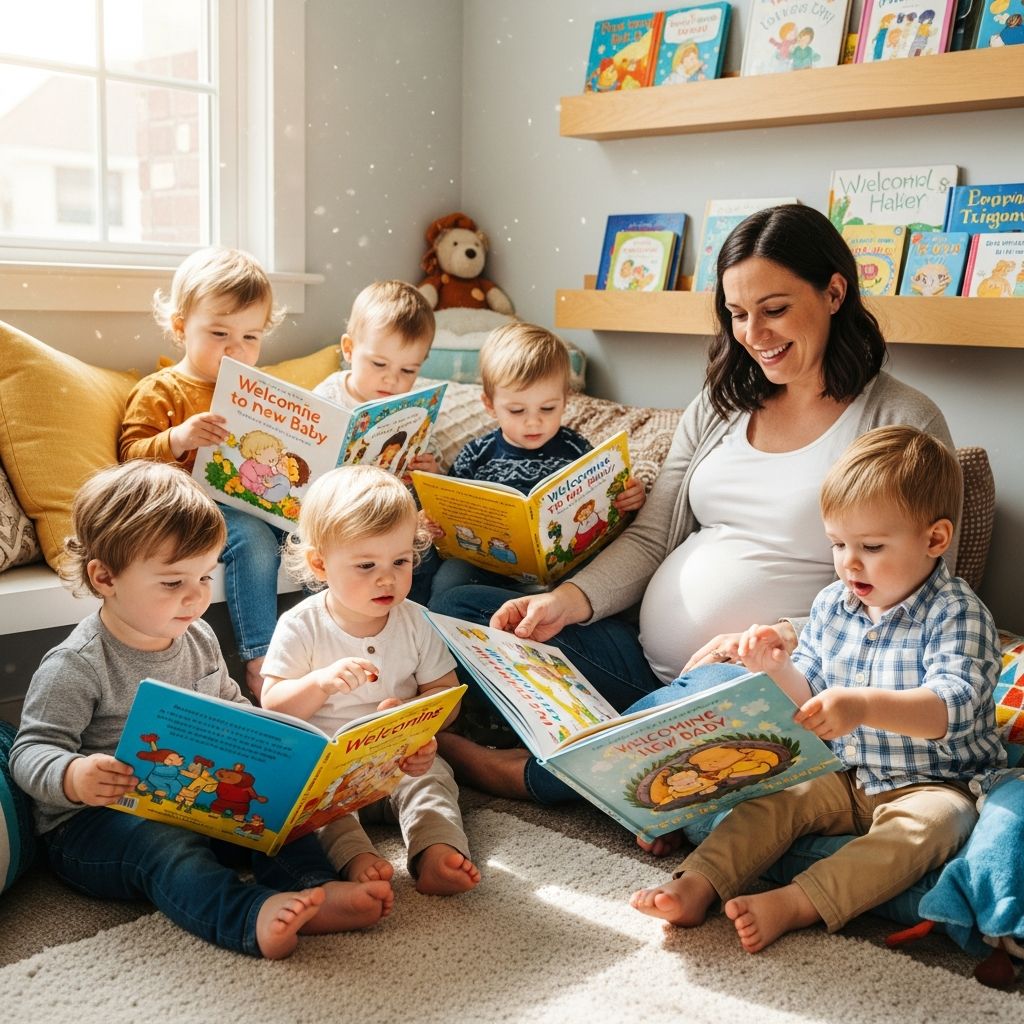
When a new baby is on the way, toddlers often feel a mix of excitement, confusion, and worry. Picture books can make this big transition feel safer and more understandable by giving children stories, images, and words for what is happening in their family.
This guide explains how to choose and use books to prepare your toddler for a new sibling and offers practical tips grounded in what child-development and pediatric experts recommend about transitions, routines, and emotional support.
Why Books Are So Powerful During Big Changes
Reading about a new baby does more than entertain your toddler. Storybooks can:
- Normalize big feelings like jealousy, anger, and confusion by showing characters who feel the same way.
- Introduce realistic expectations about newborn behavior, such as crying, sleeping a lot, and needing frequent feeds.
- Model kind responses and helpful behaviors older siblings can try in real life.
- Give language for emotions so your toddler can say “I feel left out” instead of acting out.
- Offer predictable routines—the same story, again and again—which can feel grounding when everything else is changing.
What Toddlers Need to Understand About a New Baby
Before you even pick specific titles, it helps to know what concepts you want books to cover. Pediatric and early childhood experts highlight a few core themes that matter most for toddlers facing a new sibling:
| Key Idea | What Your Toddler Needs to Learn |
|---|---|
| Babies are different from big kids | Babies cry, sleep a lot, and can do very little at first. That does not mean parents love the baby more. |
| Your role as big sibling | Being a big brother or sister can be special, with new responsibilities and privileges suited to their age. |
| Feelings are okay | It’s allowed to feel sad, mad, or jealous, and grown-ups are there to listen and help. |
| Routines continue | Bedtime stories, hugs, and playtime still exist, even if some things change around the baby. |
| Family safety | Gentle touch, safe ways to “help,” and rules like not sharing small toys or food with the baby. |
How to Choose Books About New Siblings
When you browse books about new babies and big siblings, look for titles that match your child’s age and personality. Consider:
- Simple, concrete language for younger toddlers, with short sentences and clear pictures.
- Stories that reflect your family (for example, single parents, same-sex parents, blended families, twins, adoption, or C-sections).
- Diverse characters representing different races, cultures, and body types so your child sees many kinds of families.
- Realistic depictions of newborn life—some crying, lots of caregiving—not only the cute, cozy parts.
- A range of emotions in the story rather than only joy. This helps your child know that mixed feelings are normal.
- Interactive features (flaps, textures, repeated phrases) that keep wiggly toddlers engaged.
Different Types of New-Sibling Books (and When to Use Them)
It can help to think of new-sibling books in a few broad categories. Using a mix from these groups covers both feelings and practical realities.
1. Stories That Focus on Big Feelings
These books show older siblings feeling proud, jealous, angry, or confused—and eventually finding ways to cope. They are especially helpful for toddlers who act out or regress (for example, wanting a bottle again or having more tantrums) when the baby arrives, a response experts consider normal.
- Look for stories where a parent calmly names emotions and reassures the older child.
- Notice books that show repair: an argument or meltdown, followed by comfort and connection.
- Choose titles that avoid shaming and instead highlight that feelings are okay, but hurting others is not.
2. Books That Explain What Babies Are Like
Many toddlers expect a baby who can immediately play. Books that describe newborn behavior can prevent unrealistic expectations.
- Good books show babies crying, feeding, being carried, and sleeping a lot.
- Some include sound effects (“wah-wah,” “glug-glug”) to make it fun while staying realistic.
- Pages comparing what the baby can do versus what the big sibling can do (eat ice cream, run, talk) help reduce jealousy.
3. Stories That Celebrate the Big-Sibling Role
Celebratory books emphasize how important and capable the older child is. Research suggests that special one-on-one time and highlighting an older sibling’s unique abilities can reduce jealousy and behavior problems after the baby arrives.
- Look for books where the big sibling gets to “teach” the baby (later), show them toys, or make them laugh.
- Pick stories where adults still prioritize connection with the older child, not just their helpfulness.
- Pay attention to whether the book uses inclusive language such as “our baby”—a phrasing that experts recommend to foster connection rather than competition.
4. Practical, Step-by-Step Books About What Will Happen
Some books walk through the baby’s arrival in a more factual way: the pregnant belly, a hospital stay, visitors, and the baby coming home. Many toddlers feel more secure when they know what to expect in advance.
- Use these books to talk about who will care for your toddler when you give birth and what the hospital might look like.
- Connect each step in the book to what will happen in your own family (“Grandma will pick you up like this picture shows”).
- Re-read in the weeks leading up to your due date so the sequence feels familiar.
Timing: When to Start Reading About the New Baby
Hospitals and parenting experts commonly recommend beginning age-appropriate conversations about the new sibling several months before birth, then repeating them often.
- Early in pregnancy: Introduce the idea that a baby is growing, using simple words and pointing to your belly.
- Mid-pregnancy: Start regular reading about babies and big siblings a few times per week.
- Final weeks: Shift to concrete “what will happen” books and talk about caregivers, schedules, and hospital plans.
- After birth: Keep using the same books to revisit feelings and explain why the baby behaves the way they do.
Making Reading Time Feel Special (Not Like a Lesson)
Toddlers learn best through warmth, repetition, and playful interaction, not lectures. You can turn new-sibling books into a comforting ritual by:
- Protecting one-on-one reading time daily, even if it is only 10–15 minutes, which research shows can support attachment and reduce sibling jealousy.
- Letting your toddler choose which baby-related book to read; feeling some control can reduce anxiety.
- Inviting questions (“What do you think the big sister feels here?”) without forcing conversation.
- Connecting to your family (“Our baby will sleep in a crib like this too.”).
- Acting out scenes with stuffed animals or dolls after the story, which helps toddlers rehearse gentle touch and caregiving.
Using Books to Talk About Safety and Boundaries
Books are a low-pressure way to introduce safety rules around the newborn, something sleep and pediatric specialists strongly encourage.
- Pause on pages where the big sibling touches the baby and talk about gentle hands and safe body parts to touch (tummy, feet) rather than face or head.
- Use any picture of toys or food to remind your child that small toys and snacks are only for big kids, not for babies, to prevent choking risks.
- If the book shows the baby sleeping, briefly introduce safe-sleep ideas—baby on their back, no loose toys or blankets in the crib—based on medical guidance.
Combining Books With Other Preparation Strategies
Books work best as part of a broader plan for helping your toddler adjust. Pediatric and parenting organizations recommend combining stories with real-life practice:
- Role-play with dolls or stuffed animals after reading: feeding, diaper changes, stroller walks, and gentle holding.
- Involve your toddler in baby prep by choosing a blanket, board book, or outfit “from the big sibling.”
- Practice short separations with trusted caregivers so time apart during labor and delivery feels more familiar.
- Keep core routines stable—mealtimes, naps, bedtime stories—since predictability helps toddlers feel safe amid change.
- Create a small “big kid” basket of quiet activities that only comes out when you are feeding or settling the baby, giving your toddler a positive focus.
Sample Reading Plan by Age
Every child is different, but the table below offers a rough guide to the types of books and reading approaches that often work well at different toddler ages.
| Age | Book Features to Look For | How to Read Together |
|---|---|---|
| 12–24 months | Sturdy board books, single words or short phrases, large baby pictures, touch-and-feel elements | Label pictures (“baby,” “crying,” “milk”), keep sessions brief but frequent, repeat the same books often. |
| 2–3 years | Simple stories with clear plots, repeated refrains, obvious emotions on characters’ faces | Pause to ask “What is happening?” or “How do you think they feel?”, connect to your family’s plans. |
| 3–4 years | More detailed narratives, humor, realistic sibling conflict and repair | Talk openly about jealousy and anger, brainstorm kind choices, and let your child retell the story. |
Frequently Asked Questions (FAQs)
How many new-sibling books does my toddler really need?
You do not need a huge collection. A small set of 3–6 thoughtfully chosen books, revisited often, is usually enough. Toddlers learn through repetition, so reading the same stories many times matters more than having dozens of different titles.
What if my toddler refuses to read books about the baby?
Avoid forcing the topic. Instead, leave the books accessible on low shelves and mix them with your child’s favorite non-baby stories. You can also weave in the theme gently—read one familiar book first, then offer a short new-sibling book, keeping the mood light and playful.
My toddler seems more upset after we read about the new baby. Should I stop?
Feeling upset can mean the stories are touching on real worries. Rather than stopping entirely, slow down and use the book as a doorway into conversation: “This part made you sad. Are you worried I won’t have time for you?” If distress continues, balance baby books with extra one-on-one time and plenty of comforting, non-baby topics.
How long should we keep reading these books after the baby arrives?
Keep them in rotation for at least the first year. Many children experience new waves of jealousy or clinginess when the baby hits milestones like crawling or walking, and revisiting familiar stories can help them process these changes.
Can books replace a sibling class or professional guidance?
Books are an excellent tool but not a complete plan. When available, sibling preparation classes, guidance from your pediatrician, and support from mental health or early-childhood professionals can add tailored strategies, especially if your toddler has very intense reactions or other developmental needs.
References
- How to Prepare Your Child to Become a Big Sibling — Cincinnati Children’s Hospital Medical Center. 2020-06-16. https://blog.cincinnatichildrens.org/healthy-living/how-to-prepare-your-child-to-become-a-big-sibling/
- How to Prepare Your Toddler for a New Sibling — Taking Cara Babies. 2023-02-01. https://www.takingcarababies.com/blogs/toddlers/how-to-prepare-your-toddler-for-a-new-sibling
- Preparing Siblings for the Arrival of a Baby — L.A. Care / L.A. Best Babies Network Community Clinic. 2022-04-12. https://lbucommunityclinic.org/preparing-siblings-for-the-arrival-of-a-baby/
- How to Prep Your Toddler for a New Baby Sibling — Big Little Feelings. 2022-08-09. https://biglittlefeelings.com/blogs/blf/how-to-prep-your-toddler-for-a-new-baby-sibling
- How to Help Your Toddler Prepare for the New Baby — The Mom Psychologist. 2022-05-18. https://www.themompsychologist.com/2022/05/18/how-to-help-your-toddler-prepare-for-the-new-baby/
- 9 Tips to Prep Your Toddler for a New Baby Sibling — Parent.com. 2021-06-10. https://www.parent.com/blogs/conversations/2021-9-tips-to-prep-your-toddler-for-a-new-baby-sibling
- New baby: helping toddlers & preschoolers — Raising Children Network (Australian Government–funded). 2023-03-15. https://raisingchildren.net.au/toddlers/family-life/new-baby-in-the-family/new-baby-toddlers-preschoolers