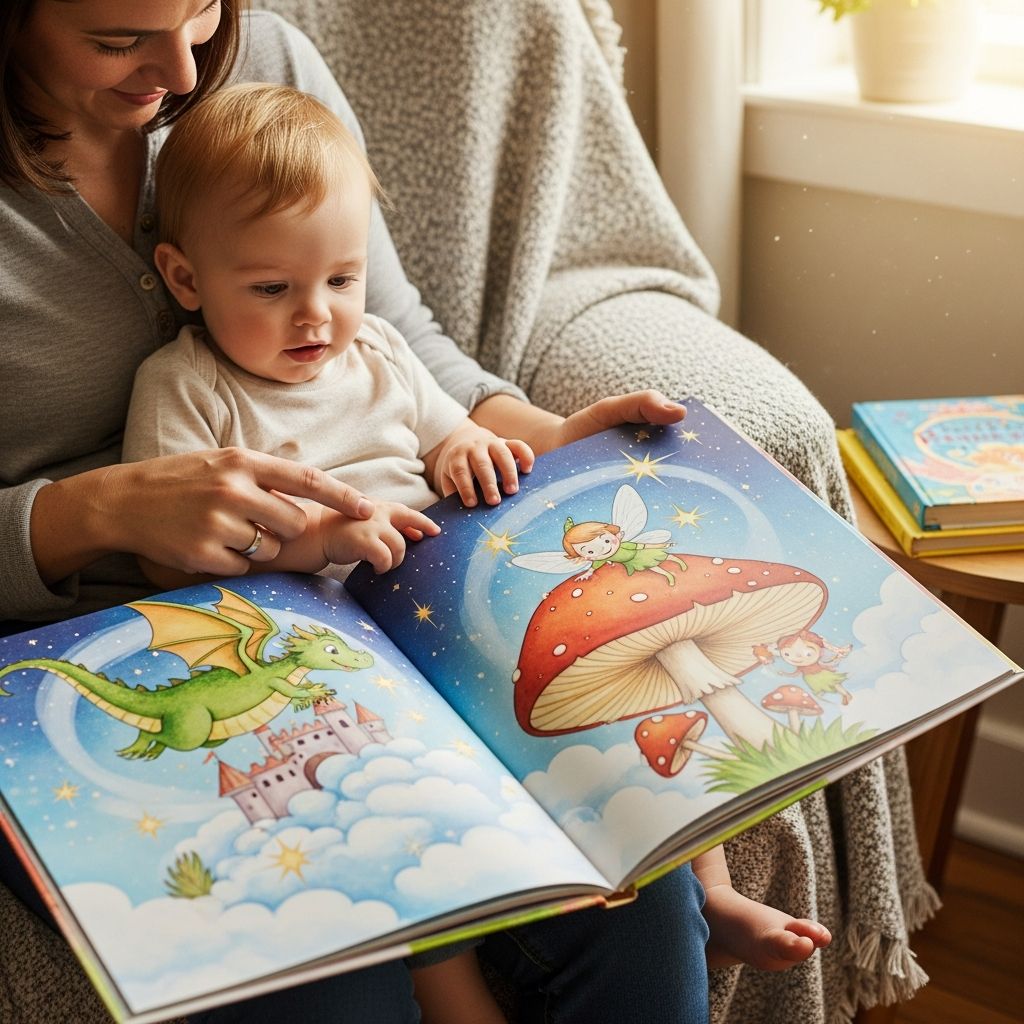
Choosing books for a one-year-old can feel surprisingly complicated: you want stories that survive chewing and throwing, pictures that capture attention, and words that help language blossom, all without overwhelming your child or your budget.
This guide walks you through what to look for, the main types of books that work well between 12 and 24 months, a sample daily reading routine, and simple strategies to make reading together a favorite part of your day.
Why One-Year-Olds Need Their Own Kind of Books
At around one year, children are rapidly expanding their vocabulary, experimenting with sounds, and becoming much more mobile and curious. The right books support this growth by pairing simple language with strong visuals and hands-on elements.
Well-chosen books also give toddlers a safe way to explore feelings, routines, and the wider world. They turn everyday moments—like bedtime or snack time—into predictable, comforting rituals that build both security and early literacy skills.
Core Features of Great Books for One-Year-Olds
Rather than chasing every recommendation, it helps to understand the core features that make a book work for this age. Use the checklist below when you’re browsing online or at the library.
Durability and Safety
- Sturdy board pages that withstand chewing, bending, and enthusiastic page-turning.
- Rounded corners and non-toxic materials appropriate for mouthing and rough play.
- Compact size that small hands can hold without constant adult help.
Clear, Simple Design
- Large, uncluttered illustrations with high contrast and obvious focal points.
- Minimal text: short phrases or very simple sentences on each page.
- Predictable, repetitive structures that help your child anticipate what comes next.
Opportunities for Interaction
- Elements to touch, lift, slide, or trace, encouraging fine motor practice.
- Built-in prompts for making sounds, identifying pictures, or doing simple actions.
- Stories that invite pointing, clapping, stomping, or making faces together.
Types of Books That Shine Between 12 and 24 Months
Different kinds of books support different skills. Aim for a balanced mix so your toddler encounters a variety of words, images, and experiences through reading.
| Book Type | What It Focuses On | Why It Helps |
|---|---|---|
| First Word Books | Everyday objects, animals, foods, and actions with labels | Builds vocabulary, supports pointing and naming games |
| Rhyming & Rhythm Books | Short, musical phrases and repeated patterns | Helps sound awareness, attention, and memory |
| Interactive Books | Flaps, textures, sliders, and sound prompts | Keeps wiggly toddlers engaged, supports fine motor skills |
| Routine & Bedtime Stories | Daily activities like bath, meals, and sleep | Creates predictability and eases transitions |
| Emotion & Social Stories | Feelings, sharing, and early friendships | Gently introduces emotional vocabulary and empathy |
Example Titles to Start Your One-Year-Old’s Library
The following example titles illustrate the kinds of books that usually work well for this age group. You do not need these exact books; focus instead on finding similar features and themes at your local library or bookstore.
Engaging First Word and Concept Books
- Picture dictionaries with clear photos of real objects, grouped by themes like “At Home,” “Animals,” or “Things That Go.”
- Body-part books that name eyes, nose, fingers, toes, and tummy, inviting your child to point to each part on themselves or a caregiver.
- Color and shape books that show only one bold shape or object per page, avoiding visual overload.
Stories with Rhythm, Rhyme, and Repetition
- Board books with sing-song phrases you can chant or clap along to.
- Short rhymes about animals, vehicles, or bedtime, repeated on each page with a small twist.
- Stories where one repeated line appears throughout, so your toddler can eventually “fill in” the missing words.
Interactive Books for Busy Hands
- Lift-the-flap books where your child can reveal animals, hidden objects, or familiar family members.
- Touch-and-feel books featuring soft fur, bumpy scales, or shiny textures to explore with fingertips.
- Action-based books that explicitly ask your child to tickle, poke, tap, blow, or shake the book as part of the story.
Comforting Routine and Bedtime Books
- Stories following a child through a simple day of waking up, eating, playing, and sleeping.
- Books that show caregivers giving hugs, kisses, and cuddles around bedtime.
- Gentle stories about darkness, lullabies, or the moon, with quiet, soothing language and slower pacing.
Books That Celebrate Feelings and Family
- Simple books about happy, sad, mad, and scared, paired with expressive faces.
- Stories featuring diverse families and caregivers, including grandparents, siblings, and different family structures.
- Gentle introductions to sharing toys, waiting turns, and saying hello or goodbye.
How to Read with a One-Year-Old (Without Stress)
Reading with a one-year-old rarely looks like sitting still through an entire story. Instead, think of it as a conversation and a shared playtime centered around a book.
Follow Your Child’s Lead
- Let your toddler turn pages, even if it means skipping parts of the story.
- Pause whenever they point or babble, and respond as if you are having a back-and-forth discussion.
- Stop reading when they clearly lose interest; many short moments across the day matter more than one long session.
Make Reading Multi-Sensory
- Use different voices for characters and exaggerate animal sounds or vehicle noises.
- Act out simple instructions such as waving, clapping, or pretending to sleep.
- Let your child hold a toy that matches the book’s theme (a stuffed animal, a small car) while you read.
Turn Pages into Conversations
- Ask questions with obvious answers, such as “Where is the dog?” or “Can you find the ball?”
- Label what your child looks at: “You see the big red truck” or “That’s a yellow duck.”
- Connect book events to real life: “You have pajamas like that” or “We went to the park too.”
A Simple Daily Reading Routine for Toddlers
You don’t need an elaborate plan to make reading a habit. A few predictable moments are enough to anchor books into your family rhythm.
| Time of Day | What to Read | How to Keep It Fun |
|---|---|---|
| Morning wake-up | Short routine or good-morning book | Cuddle in bed, point to familiar objects like sun, pajamas, or breakfast foods |
| After snack or lunch | Interactive flap or touch-and-feel book | Let your child choose the book and control the page-turning |
| Afternoon quiet time | Word book or animal book | Practice sounds, ask your toddler to point to specific pictures |
| Bedtime | One or two soothing stories | Dim the lights, slow your voice, and read the same favorites most nights |
Building an Affordable, Flexible Toddler Library
You don’t need shelves overflowing with brand-new books to support your one-year-old’s love of reading. A small, rotating collection is more than enough.
Start Small and Rotate Often
- Begin with 8–12 sturdy books that cover different types: words, stories, rhymes, and interactive titles.
- Rotate a few into storage every couple of weeks and bring them back later; they feel “new” all over again.
- Visit the library for variety, using a tote bag just for your toddler’s books to build excitement.
Choose Books That Grow with Your Child
- Look for stories simple enough now but with details your child will notice later.
- Favor characters and subjects that can stay relevant into the preschool years, such as animals, vehicles, and family life.
- Pick books that encourage talking and storytelling even after your child has memorized the text.
Common Questions About Books for One-Year-Olds
How many books should I read each day?
There is no perfect number, but aim to sprinkle reading throughout the day instead of focusing on a single long session. Two or three short moments—five minutes here, seven minutes there—add up quickly and often work better for busy toddlers.
What if my child won’t sit still?
Movement is normal for one-year-olds. Try reading while your child plays nearby, pausing to show interesting pages or make silly sounds, and accept that listening and looking—even on the move—still counts as meaningful reading time.
Do I have to read every word on the page?
Not at all. Feel free to shorten sentences, skip pages, or simply talk about the pictures. The goal is connection and conversation, not finishing a book from front to back.
Are e-books and screens okay for this age?
Physical books tend to offer richer sensory and relational experiences for one-year-olds, especially when paired with cuddling and face-to-face interaction. If you use digital stories, keep sessions short and sit together so you can talk about what you see just as you would with a paper book.
When should I introduce longer stories?
Follow your child’s attention span rather than the calendar. Some toddlers enjoy simple plot-driven stories before age two, while others prefer picture-based or interactive books for longer; offering both allows your child to show you what they are ready for.
Final Thoughts: Focus on Joy, Not Perfection
The most important part of choosing books for a one-year-old is not getting every title “right,” but creating warm, positive experiences around stories. When books are associated with snuggles, laughter, and shared attention, children are more likely to see reading as a source of comfort and curiosity throughout childhood.
Start with a handful of sturdy, engaging books, follow your child’s lead, and let your shared reading time be playful and relaxed. Over time, these small, everyday moments with books become some of the most powerful building blocks for language, learning, and connection.