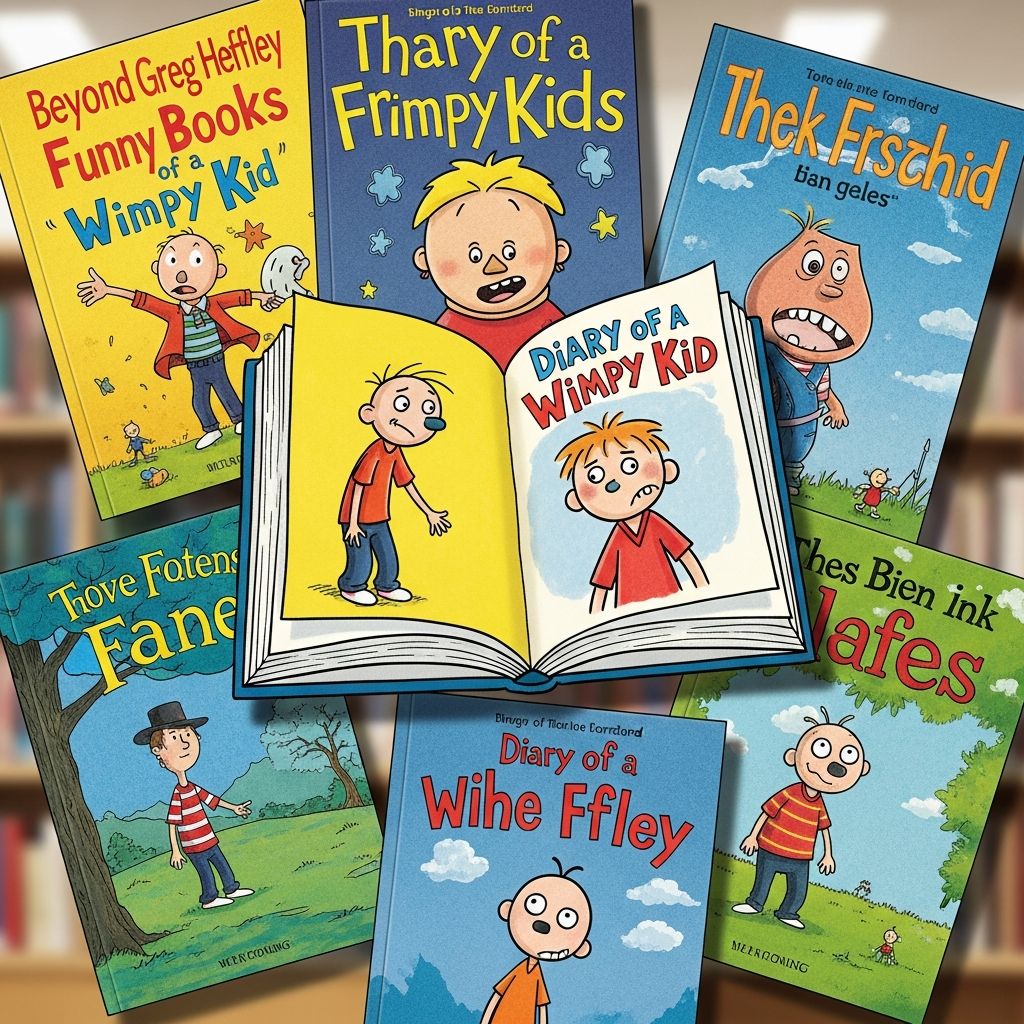
If a child in your life has devoured every single volume of Diary of a Wimpy Kid and is now wandering the library insisting that “nothing else is as good,” you are not alone. Many kids fall hard for Jeff Kinney’s blend of cartoons, short chapters, and middle-school mischief, then insist that no other book could possibly measure up.
The good news: there are plenty of funny, illustrated, and fast-paced books that scratch the same itch while nudging kids into new worlds, new formats, and even new genres. This guide offers a completely fresh set of ideas for parents and caregivers who want to keep their Wimpy Kid fans reading—and actually enjoying it.
Why Kids Obsess Over “Diary of a Wimpy Kid”
Before hunting for the next read, it helps to understand why this particular series hits so hard. Once you know what a child loves about Greg Heffley and his notebooks, you can match those preferences with other books that feel just as irresistible.
- Short, snackable chapters: Kids like the feeling of turning pages quickly and finishing a “chunk” in just a few minutes.
- Cartoon-style art: Doodles, speech bubbles, and visual jokes break up dense text and make the book feel less intimidating.
- Everyday drama: Embarrassing gym-class moments, annoying siblings, and lunchroom politics are instantly recognizable and funny.
- Honest, slightly snarky voice: The narrator says what kids are really thinking, even when it is not polite.
When kids say they “only” like Wimpy Kid, they usually mean they like this combination of voice, visuals, and short chapters—not just that exact character or storyline.
Quick Guide: Match the Reader, Not Just the Book
Every Wimpy Kid fan is a little different. Some are already strong readers who just enjoy the humor, while others are still nervous about longer books and need lots of pictures to stay motivated.
| Type of Reader | What They Love About Wimpy Kid | What to Look For Next |
|---|---|---|
| Reluctant reader | Lots of pictures, short chapters, and jokes on every page | Heavily illustrated chapter books with big fonts and plenty of white space |
| Confident but picky reader | Funny narrator and school drama | Humor-driven middle grade novels with cartoon covers and series potential |
| Comics and graphic novel fan | The doodles more than the text | Graphic novels or hybrid books that tell the story mostly through pictures |
| Young Wimpy Kid “tagalong” sibling | Wants to copy an older sibling but needs simpler language | Early chapter books with illustrations on almost every spread |
Funny Hybrid Series for Hardcore Wimpy Kid Fans
Hybrid books—stories that combine standard paragraphs with cartoons, doodles, and lists—are often the easiest sell for kids coming off of Wimpy Kid. They feel familiar but introduce new voices and settings.
- School survival journals: Look for books that follow a kid through tests, bullies, cafeteria disasters, and group projects, often written in journal or notebook form. These titles keep the “school is ridiculous” tone that kids love while shifting to new characters and art styles.
- Funny family chaos stories: Series that focus on annoying siblings, clueless parents, and awkward family trips give kids that same mix of cringe and laughter.
- Friendship and mischief sagas: Books where the main catastrophe is a prank gone wrong, a broken promise, or a misunderstanding in the friend group are perfect for Wimpy Kid fans.
When browsing, flip through a few pages together and ask the child: “Does this look more like a chapter book or a comic?” If they answer “both,” you are probably in the right section.
Illustrated Adventures for Reluctant Readers
Some Wimpy Kid fans care less about realistic school scenes and more about the feeling that a book is easy and fun to read. For these kids, stories with wild adventures and simple language—supported by lots of illustrations—can open new doors.
- Short, punchy chapters: Aim for books where most chapters are only a few pages long, giving frequent “victory moments” as the child reads.
- Black-and-white drawings: The art does not need to be fancy. Simple line art that supports the jokes is enough.
- Over-the-top plots: Aliens invading school, science experiments gone wrong, or pets causing chaos can help kids forget they are “supposed” to be reading.
Even if the child could technically handle harder text, giving them something that feels comfortably easy can rebuild confidence and remind them that reading is supposed to be fun, not a test.
Graphic Novels for Kids Who Love the Doodles
Some kids latch onto Wimpy Kid primarily because of the doodles. For them, graphic novels are often the most natural next step. These are not just “comics” in the old sense; they cover everything from silly school adventures to heartfelt family stories.
- Relatable, modern settings: Graphic novels about ordinary kids dealing with friendship drama, moving to a new school, or navigating siblings feel especially approachable.
- Clear panel layouts: For newer readers, look for books with big panels, straightforward layouts, and easy-to-follow word balloons.
- Series potential: Once kids love one volume, they often race through the rest, turning one success into a full reading habit.
If a child claims they “hate books” but will read comics for hours, consider that a win. The decoding work, vocabulary building, and story comprehension they practice with graphic novels all count as real reading.
Books with a Similar Sense of Humor
Wimpy Kid humor lives in a sweet spot: a little edgy, a little gross, and deeply tied to how kids actually talk and think. When looking for other funny books, tone matters as much as format.
- Embarrassing situations, not cruel jokes: The funniest books usually focus on disasters that happen to the main character, rather than mean-spirited teasing of others.
- Hyperbole and exaggeration: Characters who dramatically overreact to everyday frustrations can feel instantly familiar and hilarious.
- Running gags: Recurring jokes—about a teacher, a pet, or a school policy—help kids feel like they are part of the joke and reward them for paying attention.
When previewing a potential book, read a page or two aloud. If the child laughs or at least smirks, you are probably on the right track.
Series That Gently Stretch Reading Skills
Once a child is hooked on funny, illustrated books, you may want to slowly move them toward more text-heavy stories without losing their interest. The trick is to increase the challenge by tiny increments.
- Step 1: Same style, slightly more text. Choose books that still have lots of pictures but feature longer chapters or more words on each page.
- Step 2: Fewer illustrations, stronger plots. Look for stories that rely more on plot twists and character development but keep the humor rolling.
- Step 3: Humor-first novels. Introduce slim, joke-packed novels where the humor comes purely from the writing rather than from cartoons.
Approach this shift as a “level-up” in reading powers, not as homework. Highlight how grown-up it is to read books that look denser and praise effort, not just speed.
Helping Kids Choose Their Own Next Book
Even the best recommendation will flop if the child feels forced. Whenever possible, involve kids in the selection process and treat the library or bookstore like a buffet, not a prescription.
- Use the “five-finger” test: Have the child read a page. Each unfamiliar word is a finger up. If they raise more than five fingers, the book may be too hard for now.
- Let them ditch a book guilt-free: Agree that if they read the first two or three chapters and still are not into it, they can swap for something else.
- Follow their obsessions: If they are into video games, sports, or drawing, seek out funny books centered on those topics.
Kids who are included in the decision-making process are much more likely to actually read the book once you get home.
Book-Browsing Strategies for Parents and Caregivers
It can be overwhelming to walk into a children’s section and see shelves and shelves of brightly colored spines. Instead of grabbing randomly, use a few targeted strategies to track down the right books for your Wimpy Kid fan.
- Look for visual clues on covers: Handwritten fonts, doodles, and sketchy illustrations often signal a Wimpy Kid–style reading experience inside.
- Check page layouts: Open the book and make sure there is a generous amount of white space and that the text does not run wall-to-wall on every page.
- Ask for “funny middle grade” recommendations: Librarians and booksellers often know which humorous series are most beloved by reluctant readers.
If you find one winning book, glance at the shelves nearby. Bookstores and libraries usually group similar titles together by age and vibe, not just alphabetically.
Simple Reading Routines That Actually Work
Finding the right book is only half the battle. Many families also struggle to create space for reading in a day already packed with homework, sports, and screens. The trick is to make reading easy, obvious, and connected to existing habits.
- Designate “screen-off” pockets: Even 15 minutes before bed or after dinner can be enough to keep a series moving forward.
- Keep books within arm’s reach: Stash appealing titles in the car, by the couch, and near the bed so the next chapter is always right there.
- Model low-pressure reading: Let kids see adults reading for fun—magazines, cookbooks, novels, anything—without turning it into a lecture.
When reading becomes a normal part of everyday life rather than a special “assignment,” kids are more likely to reach for a book on their own.
Encouraging Kids to Create Their Own “Wimpy” Stories
One hidden superpower of illustrated diaries like Wimpy Kid is that they make storytelling look doable. Many kids start sketching their own stick-figure comics and captions, turning reading inspiration into creative output.
- Offer a blank notebook: A simple spiral notebook or sketchbook can become a personal “diary” or comic series without any rules or grading.
- Celebrate doodles and drafts: Praise the act of creating a character or a one-page comic, not just polished work.
- Mix reading and writing: After finishing a funny scene in a book, invite the child to draw “what happens next” or imagine an extra character.
This kind of low-pressure writing strengthens reading comprehension and gives kids a sense of ownership over stories, which can carry over into more traditional school assignments.
Frequently Asked Questions
Is it okay if my child only wants funny books?
Yes. Humor is often the gateway to a lifelong love of reading. Kids who feel successful and entertained by books are far more likely to branch out into other genres—mystery, fantasy, historical fiction—when they are ready. Rather than pushing “serious” books too early, keep feeding their appetite for stories that make them laugh.
What if my child keeps rereading the same Wimpy Kid book?
Rereading is not a problem; in fact, it builds fluency and boosts confidence. Once the book is practically memorized, you can gently introduce something new by saying, “Let’s find a book that’s just as funny, so you have two favorites.” Place the new pick next to the old favorite so it feels like an addition, not a replacement.
How do I know if a book is too easy?
A book is too easy only if the child finishes it in one quick sitting and seems bored or disengaged. If they are laughing, talking about the story, or asking for more in the series, it is doing its job—even if you suspect they could handle harder material. You can always supplement easy books with slightly more challenging options once their confidence is solid.
Should I worry about cartoons and doodles “holding them back”?
No. Hybrid books and graphic novels can actually support vocabulary growth, inference skills, and story structure understanding. As kids mature, they usually begin to choose more text-heavy novels on their own, especially if reading has been consistently framed as enjoyable rather than a chore.
How many books should my child be reading at this age?
There is no magic number. Some readers devour a new book every couple of days; others spend weeks on one title. Focus on consistency rather than quantity: a little time spent with an engaging book most days of the week is more important than hitting a specific page count.
Turning One Series Obsession into a Reading Life
For many kids, Diary of a Wimpy Kid is the first series that makes them feel like “real” readers. The trick for adults is to treat that obsession as a springboard, not a dead end. By paying attention to what exactly they love about the series—the humor, the artwork, the voice—you can guide them toward new books that feel just as satisfying while gradually stretching their skills.
With a little patience, some browsing, and a willingness to experiment, it is entirely possible to help a Wimpy Kid superfan build a whole shelf of favorites—and, along the way, build a reading habit that will last well beyond middle school mishaps and cafeteria drama.