Moving twins out of cribs and into their own beds is a big milestone. Done well, it can help everyone sleep better, reclaim some floor space, and create a room your toddlers actually enjoy being in. This guide walks through how to choose the right beds, set up the room, and keep safety and sanity at the center of your decisions.
Understanding the Twin Toddler Bed Stage
Most toddlers start transitioning out of a crib between 18 months and 3 years, but twins may hit this stage at slightly different times. One child may climb out early, while the other is perfectly happy in a crib; your plan needs to work for both. Instead of aiming for a perfect age, focus on signs of readiness such as climbing attempts, nighttime potty training, or clear requests for a “big kid” bed.
For twins, the timing also depends on how they interact. If they hype each other up and turn bedtime into a party, lower beds, clear boundaries, and simple layouts become especially important. If they comfort each other and settle more easily when nearby, two beds placed close together can actually make the transition smoother.
Deciding Between Toddler Beds and Twin Beds
Before you look at colors or themed headboards, decide whether you want toddler-size beds (which usually take a crib mattress) or standard twin-size beds. This choice affects your budget, how long the beds will last, and how much floor space you have for play and storage.
Think about how long you plan to stay in your current home, whether the kids will share a room long-term, and how much you’re willing to spend now versus a few years from now. That context can make it clearer which size makes more sense.
Key Pros and Cons
| Feature | Toddler-Size Bed (Crib Mattress) | Standard Twin Bed |
|---|---|---|
| Size & footprint | Smaller, leaves more open floor space in a shared room. | Larger, can make a small room feel tight with two beds. |
| Longevity | Likely outgrown in a few years; may need upgrading sooner. | Can last into preteen years or beyond with just a mattress update. |
| Initial cost | Often cheaper up front, especially if you reuse crib mattresses. | Higher initial cost but potentially cheaper over the long term. |
| Safety features | Usually lower to the ground with built-in rails. | May need added rails or a low-profile frame for safety. |
| Room layout flexibility | Easier to rearrange, angle, or tuck into small corners. | More limited layouts in small rooms, especially with two beds. |
If your twins are on the younger side, very active, or sharing a smaller room, toddler-size beds can be a gentle and space-efficient step. If they are closer to preschool age and tall for their age, going straight to twin beds with proper rails can save you from a second big furniture purchase in a few years.
Essential Safety Checklist for Twin Toddler Beds
Safety is the non-negotiable foundation of any bed decision, especially when you have two curious toddlers in one room. The goal is to reduce fall risk, prevent entrapment, and remove tempting climbing opportunities.
- Low height: Choose beds that are low to the ground so any falls are minimal and less likely to cause serious injury.
- Sturdy construction: Look for solid wood or strong metal frames rated for at least the weight of a parent sitting on the edge during bedtime routines.
- Guard rails: Opt for built-in or attachable rails, especially if your toddlers move a lot in their sleep. Ensure the rails are tall enough in relation to the mattress so they actually prevent rolling out.
- No large gaps: Check the space between the mattress and frame or between rails and headboard to avoid head, arm, or leg entrapment.
- Rounded edges: Smooth corners and edges help avoid bruises and cuts during inevitable tumbles and roughhousing.
- Non-toxic finishes: Favor low-VOC paints and finishes so chipping or teething on the rail is less of a worry.
After setup, walk around each bed and imagine all the ways a toddler might test it. Tug the rails, push the frame, and sit or kneel on different spots. Any wobble or unexpected movement is a sign that something should be tightened, reinforced, or reconfigured.
Best Room Layouts for Twin Toddler Beds
Two beds, one room, and a mountain of toys means layout matters. You want a plan that gives each child a defined sleep space while leaving enough room for movement and play.
Common Layout Options
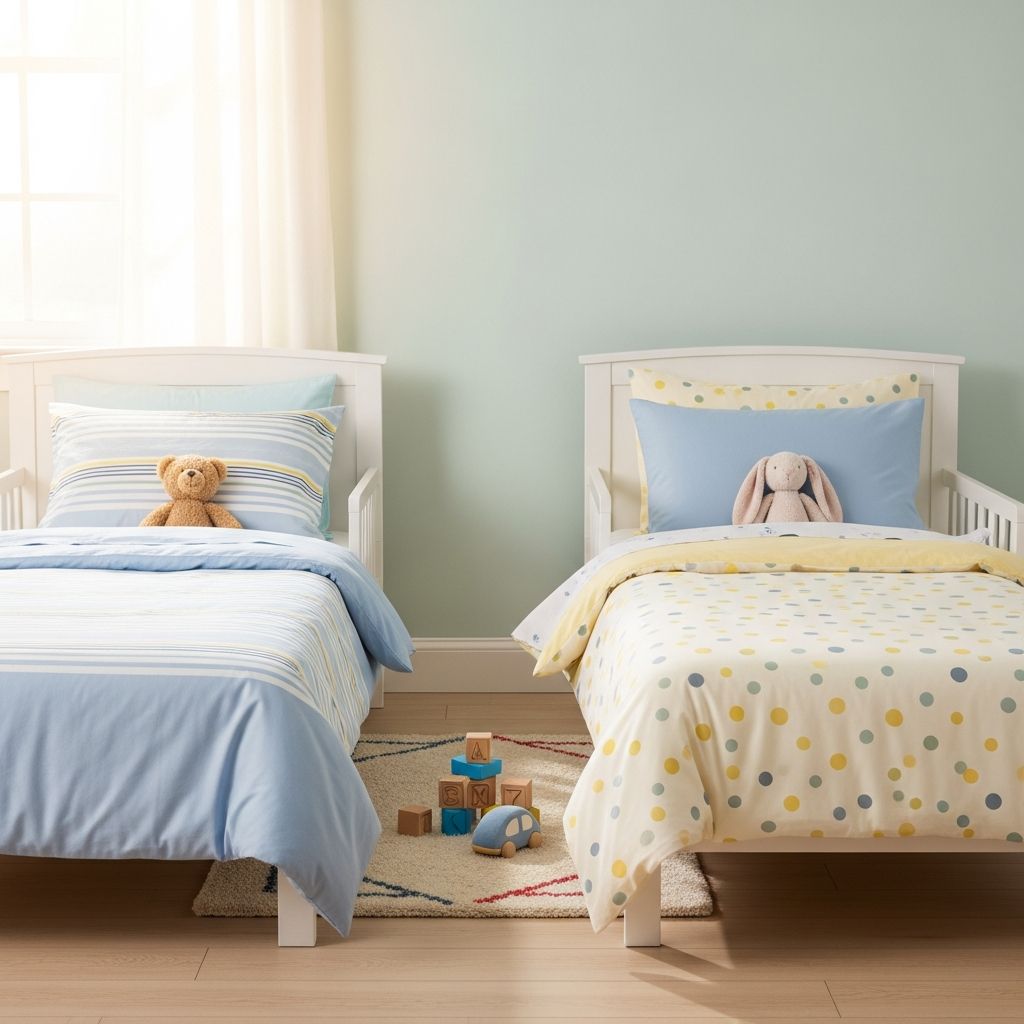
- Parallel along one wall: Place both beds side by side with a small gap or nightstand in between. This works well in longer rooms and can help twins feel close but still have their own space.
- Opposite walls: Put one bed against each long wall to create more clear walking space down the middle. This can reduce nighttime chatter and make it easier for each child to enter and exit their own bed.
- L-shaped in a corner: Arrange beds at a right angle in the same corner of the room. This can open up a large play zone on the opposite side and make the corner feel like a cozy sleeping nook.
Whichever layout you choose, clear at least a couple of feet around each bed for safe movement, especially near the foot where kids climb in and out. Keep heavy furniture like dressers anchored to the wall and away from the beds so they are not used as climbing structures.
Storage and Space-Saving Ideas for Twins
Two sets of clothing, toys, and bedtime essentials can quickly overwhelm a single room. The right beds can actually help you gain storage and keep the space more organized.
- Under-bed drawers or bins: Beds with built-in drawers or enough clearance for rolling bins are ideal for pajamas, spare sheets, and seasonal clothing.
- Shared nightstand: Place one sturdy table between two beds to hold a small lamp, water bottles, and one shared stack of bedtime books.
- Wall shelves above feet of beds: Instead of putting shelves above the head area, install them above the foot of each bed or on an adjacent wall to reduce the risk of items falling while kids sleep.
- Labelled baskets: Use color-coded or labelled baskets under the beds or in a low cubby unit so each child has a defined place for their favorite soft toys or comfort items.
Try to keep the area immediately around each bed as uncluttered as possible. Fewer objects nearby mean fewer distractions at bedtime and fewer tripping hazards on middle-of-the-night bathroom trips.
When (and When Not) to Consider Bunk Beds
Bunk beds are often the first idea that comes to mind for twins, but they are not always the best or safest choice for toddlers. Many safety guidelines advise waiting until at least school age before allowing a child to sleep on a top bunk.
For younger twins, you can plan for the future instead. Consider standard twin beds that could later be stacked or converted into bunks once both kids are older, more coordinated, and able to follow safety rules consistently.
Safer Alternatives to Early Bunks
- Low twin beds with rails: Keep both beds close to the floor but sized generously so they last for years.
- Loft + floor mattress later: If the room is very small, one child can eventually move into a low loft bed while the other sleeps on a regular twin below when they are older and ready.
- Trundle-style setups: A twin bed with a pull-out trundle can give twins separate sleeping spaces at night while occupying the footprint of a single bed during the day, but it is better for slightly older preschoolers who can manage the in-and-out motion safely.
Materials, Style, and Durability
Once safety and layout are settled, materials and design details help you narrow down options that will hold up to heavy daily use. With twins, furniture gets double the bumps, jumps, and spills, so durability really matters.
- Solid wood frames: Often more durable than very light metal or composite frames and easier to repaint or refresh later if style preferences change.
- Neutral base colors: Choosing white, natural wood, or simple tones lets you update bedding and wall art instead of replacing beds as the kids grow.
- Simplified headboards: Avoid tall, ornate designs that invite climbing or have openings that can trap little heads or limbs.
- Easy-clean finishes: Smooth, sealed surfaces make wipedowns quick after spills, snacks, or creative crayon episodes.
If you are tempted by character or theme beds, remember that toddlers’ interests change quickly. Simple, sturdy frames paired with themed bedding and artwork give you more flexibility without sacrificing safety or your budget.
Helping Twins Adjust to New Beds
The emotional side of the crib-to-bed transition is just as important as the practical side. For twins, this shift can also change how they interact at bedtime, for better or worse.
- Involve them in choices: Let each child pick a set of sheets or a pillowcase so the new bed feels personal, even if the frames match.
- Keep bedtime routines consistent: Keep the familiar elements (bath, story, song) and simply move them onto the new beds instead of reinventing everything at once.
- Practice “bed rules” during the day: Playfully rehearse staying in bed, whispering after lights out, and calling for a parent instead of roaming the house.
- Expect some testing: Especially with two children together, there will likely be giggles, escapes, and a few extra tuck-ins while everyone adjusts.
Some families find that staggering the transition—moving one twin first and the other a week or two later—reduces chaos, while others prefer doing it simultaneously so no one feels left out. There is no single right answer; choose the pace that fits your children’s temperaments.
Quick Comparison: Toddler vs Twin Beds for Twins
The table below summarizes how toddler-size and standard twin beds typically work for families with twins. Use it as a quick reference once you’ve considered your room size, budget, and long-term plans.
| Consideration | Better Choice | Why It Helps with Twins |
|---|---|---|
| Very small shared room | Toddler-size beds | Smaller footprint leaves more space for play and circulation around two beds. |
| Plan to avoid rebuying beds soon | Standard twin beds | Grow with kids into elementary years and beyond, reducing long-term costs. |
| Twins are under 2 and very active | Toddler-size or very low twins with rails | Lower height and containing rails help reduce fall risk while they test limits. |
| Room doubles as main play area | Toddler-size or one twin with trundle | Compact or tuck-away beds keep more floor area open during the day. |
| Parents sit or lie with kids at bedtime | Standard twin beds | More comfortable for adults, making long stories or sick-night snuggles easier. |
Frequently Asked Questions About Beds for Twins
Should twins share one bed or have separate beds?
Separate beds are usually safer and more practical once children move out of cribs, even if they like to be close. Individual beds reduce the risk of one child rolling onto the other, allow you to use rails more effectively, and give each twin a clear personal space. You can still place the beds close together if they find comfort in hearing or seeing each other.
How can I keep twins from jumping on their beds?
Jumping is almost inevitable, but you can set limits early by redirecting that energy to a safer item like a mini trampoline or soft play mat. Emphasize that beds are for resting, not rough play, and calmly walk them back to bed when they forget. Keeping the rest of the room engaging—with books, puzzles, or a dedicated play corner—can also reduce the urge to turn beds into playground equipment.
Do both twins need to move out of cribs at the same time?
Not necessarily. If one child is climbing out or clearly ready while the other is content and safe in a crib, you can transition them at different times. However, some parents find it easier to switch both at once to avoid jealousy and to settle into one new routine rather than two separate phases. Pay attention to each child’s personality and safety needs when deciding.
What kind of mattress is best for toddler twins?
A medium-firm, supportive mattress is usually recommended for toddlers because it keeps their growing spines well aligned while still feeling comfortable. For twins, it helps to choose similar mattresses for both beds so no one feels like they got the “less comfortable” option. Waterproof protectors are essential; they extend mattress life through spills, potty training, and illnesses.
How long will my twins use their toddler beds?
Most children outgrow toddler-size beds around age 5 or 6, depending on their height and comfort level. If your twins are on the taller side or you prefer to minimize furniture changes, you may transition to twin beds sooner. Many families choose toddler beds for a short, gentle step out of the crib, then move to twin beds once both kids handle bedtime boundaries well.