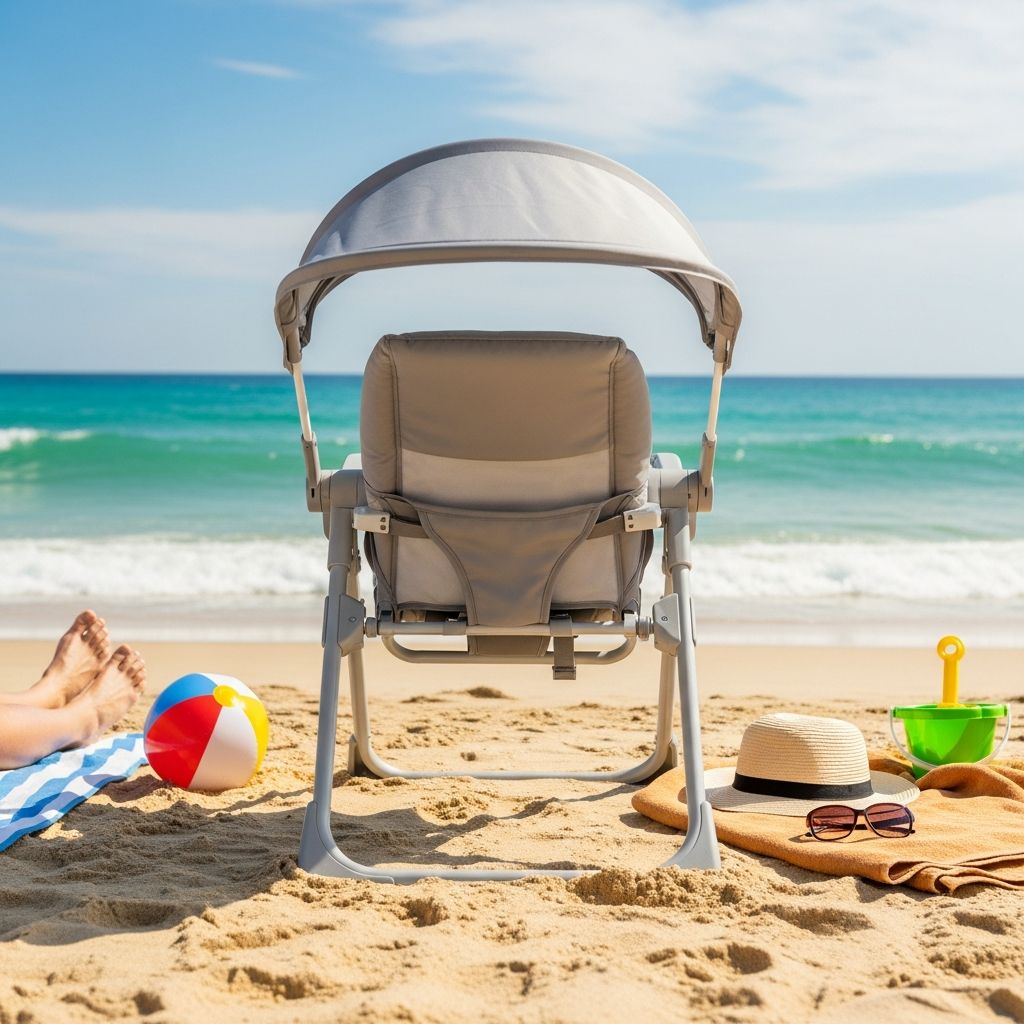
Heading to the shore with a baby can be magical, but it also comes with a lot of logistics: naps, sunscreen, snacks, and yes, sand absolutely everywhere. A well-designed baby beach chair can turn the chaos into something closer to a mini vacation, giving your child a cozy spot to sit while you actually sip that iced coffee before it melts.
This guide walks you through what to look for in a baby beach chair, how to match different designs to your child’s age and temperament, and smart ways to use the chair so your little one stays safe, shaded, and happy near the water.
Why a Dedicated Baby Beach Chair Is Worth It
It is possible to get through a beach day without a baby chair, but it usually means juggling a wriggly child in your lap, trying to feed them while balancing snacks on towels, and constantly brushing sand off everything. A baby beach chair solves several of those problems at once.
Key benefits for babies and parents
- Comfort and stability for baby: A supportive seat keeps your baby upright and off the hot, uneven sand so they can see the action without constantly tipping over.
- Hands-free moments for caregivers: Secure harnesses and stable legs mean you can reapply sunscreen, help an older sibling, or take a quick drink while your baby stays contained.
- Cleaner mealtimes: A chair with a tray or armrests creates a defined eating space so snacks are less likely to roll straight into the sand.
- Built-in shade: Many beach-friendly models include a canopy or attachable shade, which is especially helpful when umbrellas shift or the sun moves.
- Versatility beyond the beach: Most portable baby chairs also work for picnics, camping, backyard barbecues, or even quick extra seating at grandparents’ houses.
Types of Baby Seats You Can Use at the Beach
Not every family needs the same style of seat. Some parents want a dedicated beach chair, while others prefer a booster that works at restaurants or in the backyard too. Understanding the main categories helps narrow your search.
Low beach chairs for babies
These chairs sit close to the sand with wide, stable legs and a low center of gravity. They are designed so your baby can sit upright and watch the waves while staying strapped in. Many include a small tray or cup holder and sometimes a detachable canopy. They are best for babies who can sit with minimal support and are not yet running off down the beach.
Portable booster and travel high chairs
Booster-style seats are compact chairs that can sit directly on the sand or attach to an adult chair or picnic bench. They are ideal for families who move between the beach, cafes, and rental homes and do not want to carry separate gear for each situation. Look for models with sturdy straps to secure the booster to different surfaces and a harness to keep the baby contained.
Activity chairs and play centers
Some portable baby seats double as mini activity centers, with toy bars or jumping features. These can be useful for younger babies who are not yet walking but need more entertainment than just staring at the sea. They tend to be bulkier, so they are best if you drive to the beach and have trunk space.
Simple camp or mini lawn chairs for toddlers
Once your child reaches toddler age and can climb in and out of chairs with help, a small camp-style or lawn chair may be enough. These chairs usually do not have full harnesses but sometimes include lap belts. They are ultra-portable and work well for older toddlers who can follow basic safety rules.
Essential Safety Features to Look For
Any item that holds your baby off the ground deserves a careful safety check. While each brand is different, there are some universal features that indicate a safer design.
Harness and restraint design
- Three-point harness: A strap between the legs plus a belt around the waist is common for beach-friendly chairs and works well for many babies.
- Five-point harness: Adds shoulder straps for extra security, helpful for younger babies or especially wiggly kiddos.
- Easy-to-use buckles: Look for buckles that adults can open with one hand but are hard for toddlers to undo themselves.
Stability and tipping resistance
- Wide, splayed legs that spread weight evenly on soft sand.
- Low seating position to keep the center of gravity closer to the ground.
- Safety locks on folding mechanisms so the chair cannot collapse when your child shifts their weight.
Sun and heat protection
While sunscreen is important, babies also benefit from physical shade and cooler surfaces. A canopy that can adjust as the sun moves is particularly helpful, as is fabric that does not overheat quickly. Light-colored materials generally stay cooler than dark ones in full sun.
Materials and cleaning
- Easy-wipe fabrics: Seats made from smooth, water-resistant materials are easier to wipe down after sticky snacks or sunscreen spills.
- Removable covers or trays: Being able to detach and rinse or wash key parts saves time once you get home.
- Rust-resistant frames: Metal parts should withstand exposure to salty air and occasional splashes.
Matching the Chair to Your Child’s Age
Age and development matter more than the marketing label. Use the manufacturer’s age and weight guidelines as a starting point, then consider what your baby can actually do physically.
| Age / Stage | Typical Needs | Best Chair Style |
|---|---|---|
| 0–5 months (supported sitters only) | Full head and trunk support, stable reclined or semi-upright position | Reclined portable seat or activity chair with strong harness and good shade |
| 6–12 months (independent sitters) | Upright seating, secure containment, snack surface | Low baby beach chair or portable booster with tray and 3- or 5-point harness |
| 12–24 months (early walkers) | Room to move, but safe resting spot and snack station | Sturdy low beach chair or booster, possibly without tray for more freedom |
| 2+ years (confident toddlers) | Independent sitting, simple rules about staying seated | Small camp-style chair with or without basic lap belt |
Practical Features That Make Beach Days Easier
Beyond pure safety, certain design details make a big difference when you are carrying half the house across hot sand. When comparing chairs, think about the entire journey from car to shoreline and back again.
Portability and setup
- Lightweight frames that one adult can carry with a baby on the hip.
- Compact fold that fits in a trunk alongside strollers, coolers, and bags.
- Included carry bag or built-in strap so your hands remain as free as possible.
- Quick, intuitive setup without tools or complicated latching systems.
Comfort details for longer stays
- Padded seat and back for younger babies who tire easily.
- Foot openings or removable supports that grow with your child.
- Snack tray or cup holder to corral small toys and drinks.
- Mesh panels or breathable fabric that prevent overheating.
Durability and value
A baby beach chair that lasts through multiple seasons—or more than one child—offers better value than a bargain model that rusts or tears quickly. Check user weight limits, stitching quality, and how solid the legs feel when you gently shake the chair. If you plan to use the chair for camping, picnics, and travel, investing in a more robust model can pay off.
How to Use a Baby Beach Chair Safely
Even the best chair still depends on safe habits. A few simple rules can dramatically lower the risk of tip-overs, sunburns, or other mishaps.
Placement on the beach
- Set the chair on level, packed sand rather than steep slopes or soft dunes.
- Position it well away from the waterline so unexpected waves cannot reach your baby.
- Keep the chair out of high-traffic areas where older kids might run past and bump into it.
Always supervise closely
A baby beach chair is not a restraint device or a substitute for adult supervision. Stay within arm’s reach, especially if older siblings are tossing balls or if the wind is strong. Treat the chair as a helpful tool that frees your hands, not your attention.
Use harnesses and straps every time
- Buckle the harness fully, even if your baby seems calm or sleepy.
- Make sure straps lie flat and snug, not twisted or excessively loose.
- If the chair can attach to another seat or bench, always use the provided attachment straps as directed by the manufacturer.
Manage sun exposure
- Use the chair’s canopy in combination with a larger beach umbrella or tent when possible.
- Dress your baby in a wide-brimmed hat and lightweight long sleeves if the weather allows.
- Reposition the chair as the sun moves so your child’s face and legs stay shaded.
Packing Checklist: Beach Chair and Baby Essentials
Parents often say the hardest part of a beach outing is just getting out the door. A simple checklist helps you avoid arriving at the sand only to realize you left the chair’s tray or the baby’s hat at home.
Chair-related essentials
- Baby beach chair (double-check that all parts are in the car).
- Removable tray or snack surface, if the chair uses one.
- Sun canopy or shade attachment.
- Carry bag or strap.
Comfort and safety extras
- Wide-brim hat and baby sunglasses if tolerated.
- Light blanket or muslin to drape over legs for extra protection.
- Baby-safe sunscreen (for ages and areas allowed by your pediatrician).
- Change of clothes in case of spills or water play.
Food and entertainment
- Snacks in containers that close tightly to keep sand out.
- Spill-resistant sippy cup or bottle.
- One or two easy-to-rinse toys like silicone stacking cups or plastic beach tools.
Real-World Scenarios: Which Chair Fits Your Style?
Different families use the beach in different ways. Thinking through your typical day helps you decide which chair features will matter most.
For minimalist packers
If you already feel overloaded by gear, prioritize an ultra-light chair that folds very small and doubles as a travel booster for restaurants. You may choose to skip a large tray in favor of a compact design and rely on a separate picnic blanket for bigger meals.
For all-day beach families
Families who arrive early and stay until sunset often benefit from a more substantial chair with a wide base, thick padding, and an adjustable canopy. A removable, easy-clean tray and higher weight limit mean you can use the same chair as your child grows from baby to toddler.
For parents with multiple children
If you are chasing older siblings while caring for a baby, choose a chair with an especially secure harness and a stable base that resists tipping when other kids run past. A bold color or pattern also makes it easier to spot the chair quickly among towels and toys.
Frequently Asked Questions About Baby Beach Chairs
What age can a baby start using a beach chair?
Most baby beach chairs are designed for babies who can sit with support, often around six months, but always check the manufacturer’s age and weight recommendations. If your baby still slumps forward or cannot hold their head up confidently, stick to a more reclined, fully supportive seat or spend more time holding them rather than using a chair.
Are baby beach chairs safe for toddlers?
Yes, many models are suitable for toddlers as long as they fall within the weight and height limits and can sit safely without trying to climb out. For very active toddlers, look for chairs with sturdy frames, no sharp edges, and harnesses that they cannot easily undo themselves.
Can a baby nap in a beach chair?
Short, supervised catnaps sometimes happen naturally when babies relax in their chairs, but these seats are not intended as sleep products. If your baby appears deeply asleep, consider transferring them to a safer sleep surface approved for their age, such as a travel crib placed in the shade.
How do I clean a baby beach chair after a sandy day?
Start by shaking or brushing off as much dry sand as possible before folding the chair. At home, wipe down hard surfaces with mild soap and water, rinse the underside of the frame to remove salt, and, if the fabric is removable, follow the care tags for machine washing or hand-washing.
Is it better to buy or rent a baby beach chair?
Renting can be convenient for one-time trips or air travel when you want to pack light. Buying makes more sense if you live near the coast, vacation often, or plan to use the chair for camping, picnics, and backyard play over multiple seasons.
Final Thoughts: Prioritize Safety, Comfort, and Ease
The best baby beach chair is the one that fits your child’s stage of development, your family’s travel style, and your tolerance for carrying extra gear. When safety features, sun protection, and portability all align, a simple chair can transform beach days from exhausting to enjoyable, giving your baby a cozy spot to enjoy the view while the grown-ups actually get to sit down too.