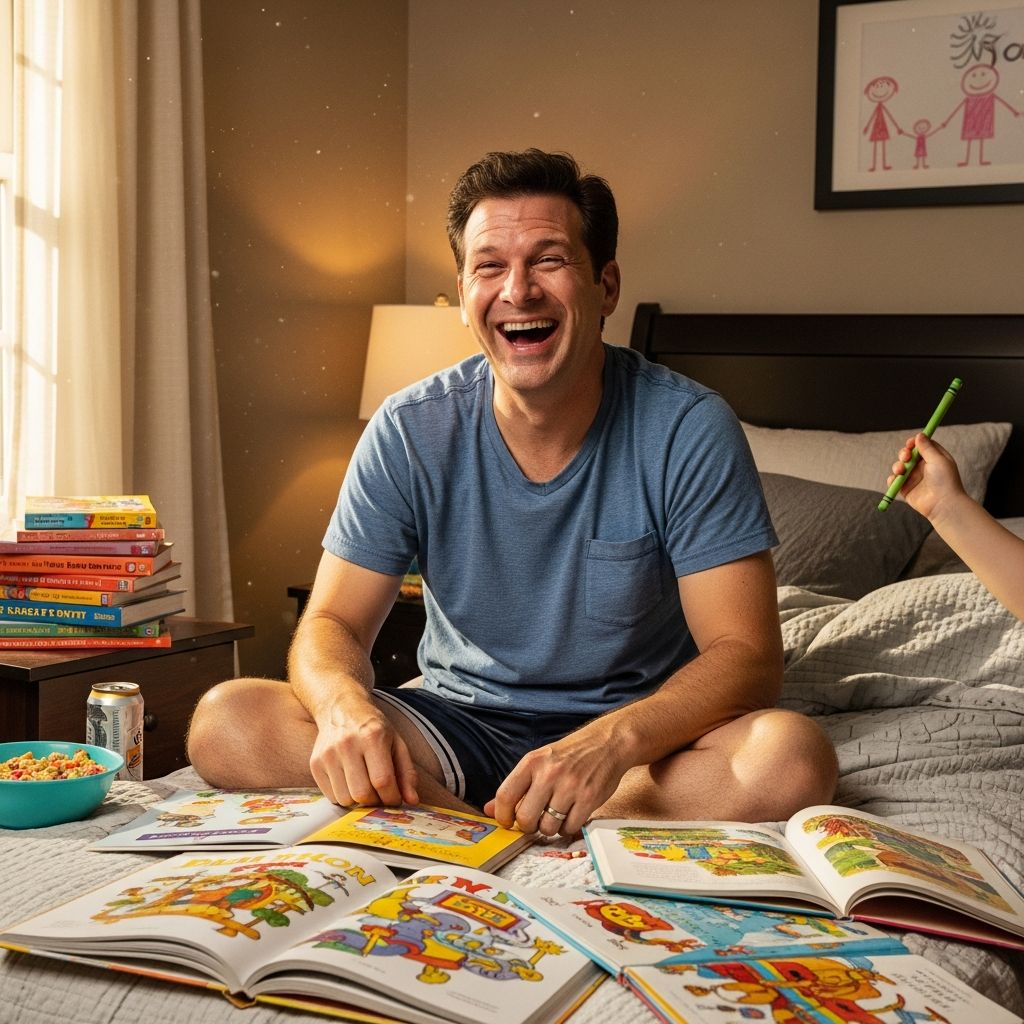
Comedian Bert Kreischer is famous for taking his shirt off on stage, telling unruly stories, and leaning into chaos, yet behind the scenes he represents a surprisingly grounded, emotionally aware approach to parenting. His life as a father shows how modern dads can be both playful and serious, both soft and strong, without pretending to have everything under control.
This article uses Kreischer’s public persona and widely discussed family life as a springboard to explore a new model of fatherhood—one that embraces messy humanity, deep connection, and a lot of laughter. It is a fully original take, inspired by but not copying any existing interview or questionnaire.
The Party Legend Who Became a Present Dad
Bert Kreischer first came to fame as the hard-partying college legend whose story allegedly inspired the film “Van Wilder,” building a reputation around excess, recklessness, and outrageous fun. Over time, as he married and had children, his act started including more stories about his wife and daughters, revealing how fatherhood reshaped his priorities without flattening his personality.
What stands out is that he did not become a completely different person when he became a father; instead, he learned to redirect the same energy, spontaneity, and love of humor toward his family. This evolution reflects a broader cultural shift in which dads are expected not just to provide but to show up emotionally and relationally for their kids.
From Stoic to Vulnerable: A New Dad Archetype
For decades, fathers were encouraged to stay emotionally distant, prioritizing discipline and authority over openness and vulnerability. Kreischer’s approach flips that script by allowing his kids to see his flaws, fears, and insecurities while still offering guidance and structure.
By talking openly about anxiety, embarrassment, and failure in his comedy, he normalizes emotional honesty for both himself and his children, making it easier for them to express their own feelings. That model of vulnerability is increasingly seen by parenting experts as vital for raising emotionally resilient kids.
Key Traits of the “Perfectly Imperfect” Dad
Modern fatherhood is less about being flawless and more about showing up consistently in imperfect ways. Kreischer’s public parenting stories highlight several qualities that define this “perfectly imperfect” dad archetype.
- Playfulness: Willingness to act silly, try odd games, and keep a sense of humor even when tired or stressed.
- Honesty: Admitting when he is wrong, apologizing when necessary, and explaining his decisions instead of hiding behind “because I said so.”
- Curiosity: Asking his kids questions about their world rather than assuming he already understands it.
- Boundaries with warmth: Setting rules and expectations but enforcing them with explanation, empathy, and consistency.
- Self-deprecating humor: Using jokes at his own expense to show that adults don’t always have the answers and that mistakes are survivable.
Balancing Spotlight and Family Life
As a touring comedian and media personality, Kreischer spends a significant amount of time on the road, which forces intentionality about how and when he connects with his family. Rather than pretending work and family never clash, he acknowledges the strain and talks about strategies he uses to stay close to his kids despite the distance.
| Challenge | Simple Strategy | Emotional Payoff |
|---|---|---|
| Frequent travel or late hours | Schedule non-negotiable video calls that focus on the child’s day, not your work. | Kids feel seen and prioritized even when you are away. |
| Missing events and milestones | Create special “makeup rituals” like a celebration breakfast or mini-trip together. | Reinforces that absence at one event does not equal disinterest. |
| Exhaustion after work | Commit to a small, repeatable connection habit—like a nightly 10-minute chat or shared show. | Builds reliable, predictable connection kids can count on. |
| Public persona vs. private values | Explain your job and its exaggerations so kids can separate performance from reality. | Reduces confusion and builds trust in who you are at home. |
Humor as a Parenting Superpower
Humor is at the core of Kreischer’s identity, and it naturally spills into his parenting, turning tense moments into teachable ones. Laughter can disarm defensiveness, help kids recover from embarrassment, and soften hard conversations without removing their seriousness.
When parents show they can laugh at themselves, they model that life’s awkwardness is survivable and even shareable. This emotional flexibility helps children approach conflicts and failures with more creativity and less fear.
- Use jokes to break ice, not to dismiss feelings.
- Avoid sarcasm that targets your child’s insecurities.
- Share funny stories about your own childhood mistakes to normalize imperfection.
- Let kids be the ones who end the joke when they are done laughing.
Radical Honesty Without Oversharing
Kreischer’s comedy often leans on radical transparency about his flaws, missteps, and habits, yet effective parenting requires a more calibrated version of that candor. Children benefit when parents admit they are tired, confused, or scared at times, but they also need age-appropriate boundaries that protect them from adult-level burdens.
The art is in sharing enough truth to build trust without turning kids into therapists or confidants for problems they cannot solve. Modern parenting research suggests that balanced openness supports healthier emotional development than either total stoicism or unfiltered oversharing.
Letting Kids See You Learn
One of the most powerful things a modern dad can do is let children witness personal growth in real time. Kreischer frequently presents himself as a work in progress, admitting that he does not always get things right on the first try.
When kids see parents apologize, adjust rules, or seek help, they learn that growth is lifelong and that changing your mind in light of new information is a strength, not a weakness. This mindset is linked with what psychologists call a “growth mindset,” which helps children persist through challenges.
Discipline with Dignity and Consistency
Even the most playful, carefree parent needs to set limits, and this can be difficult for personalities built around fun and spontaneity. The key is to enforce boundaries in a way that preserves a child’s dignity while reinforcing the message that certain behaviors have consequences.
Modern parenting frameworks encourage explaining the “why” behind rules, which aligns well with the conversational, story-driven style someone like Kreischer naturally uses. By turning discipline moments into discussions rather than monologues, dads can balance authority with respect.
- State expectations before problems arise, not only after.
- Use logical consequences that connect to the behavior itself.
- Stay calm, even if your child is not; humor can help de-escalate.
- Return to warmth and connection after consequences are complete.
Protecting Family Privacy in a Public World
Public figures who talk about their families on stage or online must constantly negotiate boundaries between storytelling and privacy. Kreischer’s situation highlights a pressure many regular parents now feel as well: deciding how much of their children’s lives to share on social media.
Experts increasingly urge parents to consider long-term digital footprints, seeking consent from kids when possible and avoiding details that could embarrass or harm them later. A thoughtful dad adapts his stories, changes names, or omits specifics to keep kids safe while still being authentic.
How Bert-Style Parenting Compares to Old-School Dad Roles
The contrast between Kreischer’s energetic, emotionally open fatherhood and earlier generations of stricter, more reserved dads highlights the evolution of parenting expectations. Many families are moving from a top-down, rule-first model to a collaborative, conversation-first approach.
| Aspect | Traditional Father Role | Modern Bert-Style Father Role |
|---|---|---|
| Emotional expression | Stoic, feelings kept private. | Openly shares emotions, admits fears and mistakes. |
| Discipline style | Top-down, “because I said so.” | Explains rules, uses humor and conversation to guide behavior. |
| Quality time | Often centered on providing and chores. | Focused on shared experiences, jokes, and storytelling. |
| Role modeling | Projects certainty and authority. | Models learning, growth, and self-acceptance. |
| Communication | Brief, task-focused conversations. | Long, narrative-based talks that invite kids’ opinions. |
Practical Takeaways for Everyday Dads
Even if you are not a stand-up comic, there are simple, practical ways to bring some of this loose, loving energy into your own home. The goal is not to imitate a celebrity dad but to borrow principles that fit your personality and your kids.
- Tell more stories: Use your life experiences, both wins and failures, to teach rather than lecture.
- Laugh at yourself: When you make a small mistake, verbalize it and chuckle instead of snapping.
- Schedule silliness: Plan recurring goofy traditions—theme dinners, bizarre costume nights, or “wrong-hand day” where everyone eats with their non-dominant hand.
- Check in emotionally: Ask questions like “What was the weirdest part of your day?” to encourage more than one-word answers.
- Be transparent about growth: When you change a rule or approach, explain why you are doing it differently now.
SEO-Friendly FAQs About Bert Kreischer and Fatherhood
Is Bert Kreischer a strict or laid-back dad?
Public stories and commentary suggest that Kreischer leans toward a laid-back, fun-loving style but still recognizes the need for structure and boundaries at home. This combination mirrors modern parenting advice that encourages warmth, humor, and flexibility while maintaining consistent expectations.
What can dads learn from Bert Kreischer’s parenting style?
Dads can learn to value vulnerability, laughter, and storytelling as tools for connection rather than trying to project an image of flawlessness. By admitting mistakes, sharing personal stories, and prioritizing emotional presence, fathers can build stronger, more trusting relationships with their kids.
Does sharing family stories in public harm kids?
Parenting experts warn that oversharing details about children’s lives online or on stage can lead to embarrassment or privacy issues later. Responsible parents find ways to anonymize details, seek consent when possible, and keep the most sensitive parts of their children’s lives offline.
How can busy fathers stay close to their kids?
Busy fathers can create small, repeatable rituals like nightly calls, weekend traditions, or shared hobbies that signal reliability and interest. Even when time is limited, consistent attention and genuine curiosity about a child’s world matter more than grand gestures.
Is humor always helpful in parenting?
Humor is helpful when it is used to connect, comfort, or lighten tension, but it can be harmful if it mocks, shames, or dismisses a child’s feelings. The most effective parenting humor is self-directed, compassionate, and sensitive to a child’s emotional state.
Embracing the Beautiful Mess of Fatherhood
Bert Kreischer’s journey from legendary party animal to deeply involved, emotionally expressive dad illustrates that great fatherhood does not require a flawless past or a perfectly controlled present. What it does require is a willingness to keep showing up—with jokes, apologies, late-night talks, and, occasionally, a little chaos.
For modern dads, the real lesson is simple: embrace your quirks, stay curious about your kids, and let them see the real you, not a carefully polished role. In that space of honesty, laughter, and shared stories, the best parts of family life tend to unfold.