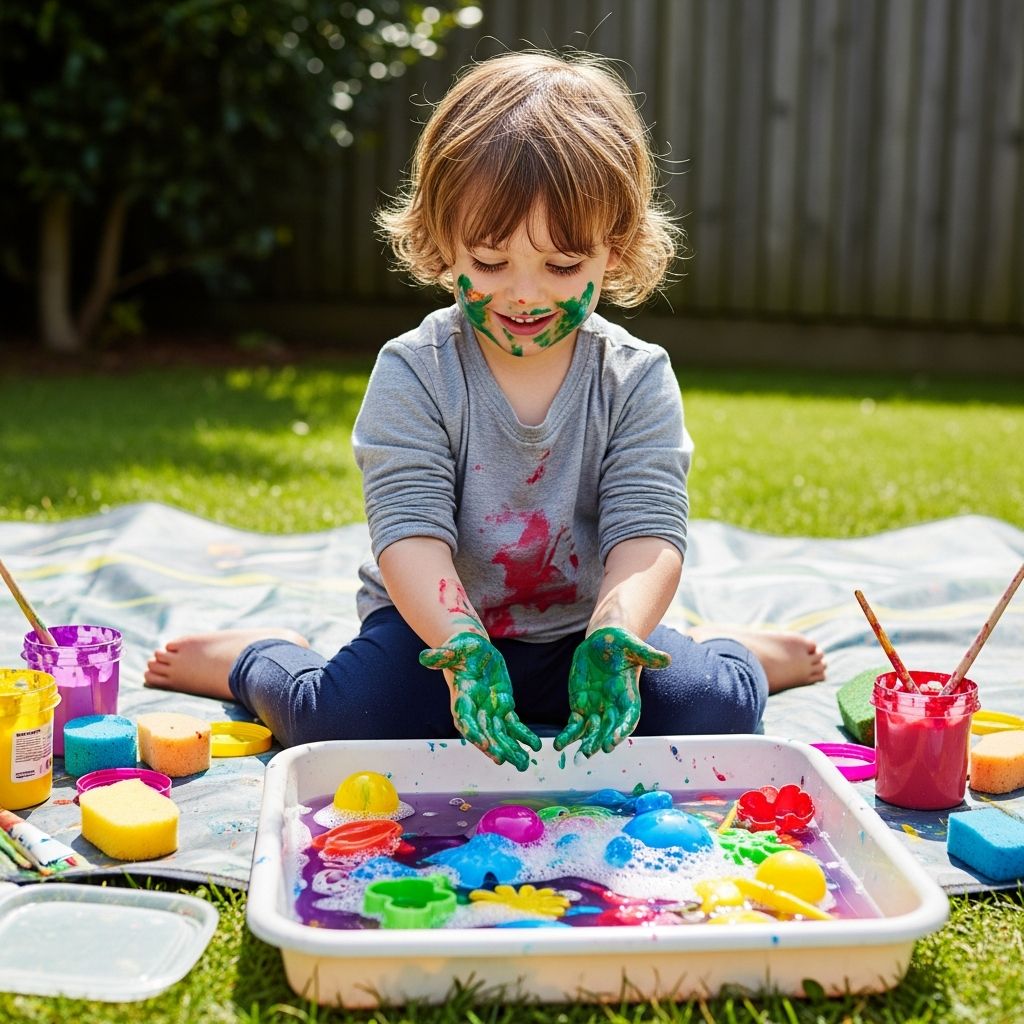
Messy play, involving activities like finger painting, mud sculpting, or sensory bins filled with slime, is far more than a simple way for children to get dirty. It serves as a powerful catalyst for holistic child development, engaging multiple senses and promoting essential skills that form the foundation for lifelong learning and emotional well-being.
The Science Behind Sensory Exploration in Messy Play
At its core, messy play stimulates the sensory system, which is crucial during early childhood when neural connections are rapidly forming. Children dive into textures such as squishy dough, gritty sand, or slippery paint, activating touch receptors and helping the brain process diverse stimuli. This multisensory engagement supports healthy brain development by strengthening pathways between sensory input and cognitive processing.
Research highlights how such activities enhance sensory integration, allowing children to better understand their environment. For instance, manipulating wet clay or dry rice refines tactile discrimination, the ability to distinguish between different sensations, which is foundational for later academic tasks like writing.
Building Fine and Gross Motor Skills Hands-On
Messy play is a natural gym for motor development. Fine motor skills sharpen through precise actions like pinching playdough or pouring water between containers, strengthening hand muscles and improving dexterity. These movements mimic the pincer grasp needed for holding pencils and buttoning clothes.
Gross motor skills benefit too, as children reach, stretch, and balance while mixing ingredients or digging in sandpits. Over time, these activities contribute to coordinated movements essential for sports and daily tasks. Parents often notice improvements in handwriting and self-feeding after consistent messy play sessions.
Sparking Creativity and Independent Thinking
Unstructured messy play liberates imagination, free from rigid rules or expected outcomes. Children invent worlds from household items—transforming oats into snowstorms or pudding into oceans—fostering divergent thinking, where multiple solutions emerge from one problem. This builds resilience as they experiment without fear of failure.
By leading their play, kids develop independence and decision-making. Choosing colors, textures, or mixing ratios instills ownership and pride, crucial for confidence. Such freedom contrasts with structured activities, allowing unique self-expression that nurtures innovative minds.
Emotional Regulation and Stress Relief
In a world of schedules and screens, messy play offers a stress-relieving escape. The immersive nature—kneading dough or splashing in water—promotes mindfulness, drawing children into the present moment. This helps regulate big emotions, providing a safe outlet for frustration without words.
Trial-and-error experiences teach coping with setbacks; a collapsed sandcastle becomes a new creation. This cultivates a growth mindset, emphasizing process over perfection, and builds emotional intelligence for navigating life’s challenges.
Strengthening Family Bonds and Positive Discipline
Participating in messy play bridges generational gaps. When parents join in, laughing through splatters, it validates children’s perspectives and deepens empathy. Role reversal, where kids direct the fun, fosters mutual respect, making discipline more effective as trust grows.
This shared joy models flexibility, showing boundaries can flex during play while holding firm elsewhere. Children internalize these lessons, becoming more cooperative in structured settings.
Practical Ideas for Messy Play at Home
Incorporate messy play daily with minimal setup:
- Sensory Bins: Fill trays with rice, beans, or water beads, adding scoops and hidden toys for discovery.
- Finger Painting: Use washable paints or yogurt dyed with food coloring for edible fun.
- Nature Play: Outdoor mud kitchens with sticks, leaves, and dirt encourage imaginative cooking.
- Kitchen Creations: Mix cornstarch and water for oobleck, exploring solid-liquid states.
- Shaving Cream Art: Squirt on trays for drawing, then rinse for easy cleanup.
Designate a ‘mess zone’ like a tarp-covered table or backyard patch to ease parental concerns. Time sessions for 20-30 minutes to match attention spans.
Age-Appropriate Messy Play Activities
| Age Group | Recommended Activities | Key Benefits |
|---|---|---|
| 0-12 months | Textured purees, water play with cups | Sensory awakening, early grasping |
| 1-3 years | Finger paints, sand trays, playdough | Fine motor refinement, imagination |
| 4-6 years | Mud pies, slime making, collage with glue | Problem-solving, emotional expression |
| 7+ years | Baking experiments, outdoor fort-building with mud | Independence, STEM concepts |
Overcoming Parental Hesitations About the Mess
Many parents cringe at cleanup, but reframing mess as learning investment helps. Use old clothes, vinyl tablecloths, or bathtubs for containment. Remember, the developmental gains outweigh temporary disorder—studies link play deprivation to increased anxiety.
Start small to build comfort, gradually embracing bigger messes. Over time, the joy of your child’s growth makes wiping counters worthwhile.
Long-Term Impacts on Learning and Behavior
Consistent messy play correlates with advanced problem-solving and creativity in school. Children who engage regularly show better focus, adaptability, and peer interactions. It lays groundwork for STEM interests, as mixing and observing reactions introduce scientific principles playfully.
Emotionally, it equips kids with tools for resilience, reducing behavioral issues by channeling energy constructively.
Frequently Asked Questions (FAQs)
What is messy play exactly?
Messy play involves open-ended activities using materials like paint, sand, mud, or slime that encourage sensory exploration and creativity without strict rules or goals.
Is messy play safe for babies?
Yes, for infants use edible, non-toxic materials like pureed fruits or water. Supervise closely to prevent ingestion of small parts.
How often should children do messy play?
Aim for 3-5 sessions weekly, 15-45 minutes each, adjusting for age and interest. Consistency yields best results.
Does messy play really help with emotions?
Absolutely—it provides a tactile way to process feelings, build frustration tolerance, and practice self-regulation through immersive, forgiving experiences.
What if I hate cleaning up messes?
Prepare with protective layers and quick-clean tools like baby wipes. Focus on your child’s delight and development to shift mindset.
Can messy play benefit older kids too?
Yes, school-age children gain stress relief, fine motor practice for academics, and creative outlets amid structured routines.
References
- Embrace the Mess: 4 Benefits of Messy Play — Teaching Strategies. 2023-10-15. https://teachingstrategies.com/blog/embrace-the-mess-4-benefits-of-messy-play/
- Why messy play is good for child development — Raising Children Network (Australian Government-funded). 2024-05-20. https://raisingchildren.net.au/toddlers/videos/messy-play-helps-development
- Embracing Messy Play: Supporting Parents Who Hate Messes — Little Roots Occupational Therapy. 2024-02-12. https://www.littlerootsot.com/blog/embracing-messy-play-supporting-parents-who-hate-messes
- The Benefits of Messy Play for Young Children — Haven Childcare. 2023-11-08. https://yourhavenlife.com/the-benefits-of-messy-play-for-young-children-encouraging-exploration-and-creativity/
- Why Messy Play is Healthy for Children — Wonders Counseling. 2024-01-30. https://wonderscounseling.com/why-messy-play-is-healthy-for-children/